
soldergrip.com
The 40-Cent Part That Burns Down Trucks
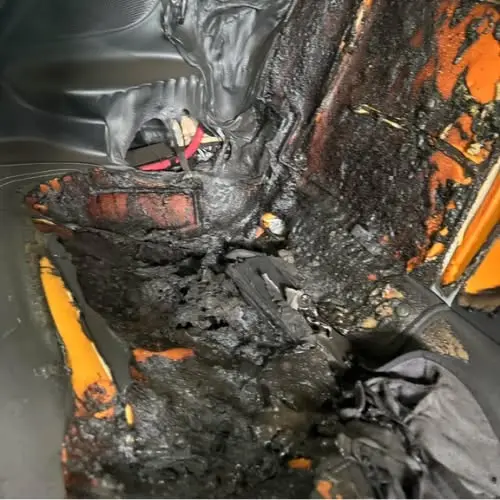
My buddy almost lost his truck in his own driveway last summer. Not a crash. Not a break-in. A wire. One bad connection he'd wrapped in electrical tape two years earlier, tucked up behind the dash where nobody ever looks. It corroded, it heated up, and one morning he came out to the smell of melting plastic and a thin line of smoke curling out from under the steering column. He got lucky. He was home. He smelled it in time, grabbed the extinguisher off the garage wall, and popped the hood and the dash panel fast enough to kill it. A scorched section of harness and a melted connector instead of a burned-out truck and a claim with the insurance company. Five more minutes and he's standing in the driveway in his boxers watching it go up. But here's what actually shook me when he told me about it: He's not careless. He's the most careful guy I know. Twenty years of doing his own work, never once paid a shop for something he could do himself. He did that repair the exact same way every single one of us was taught to do it. Strip it. Twist it. Tape it. Tuck it back up behind the dash and forget about it. And it almost burned his truck to the ground anyway. Not because he did it wrong. Because the way we were all taught to do it is wrong. By the end of this, you're gonna look at every taped connection in your garage a little differently. Because there are three things going on that nobody tells you: One a loose or corroded connection doesn't just stop working. Long before it dies, it builds resistance. And resistance builds heat. Every amp of current forced through that bad junction throws off warmth, and that connection gets a little hotter every single time you turn the key. Put that heat in the wrong spot — behind a dash wrapped in plastic and foam, or down in an engine bay packed with fuel lines — and you don't get a warning light. You get the slow setup for an electrical fire. That's the part nobody understands: these fires don't start with a spark and a bang. They start with a bad connection getting warmer and warmer over months until something finally lets go. Two — the advice every one of us follows, "just wrap it in electrical tape," is the exact thing that sets it up. Tape traps moisture against the copper. Moisture corrodes it. Corrosion adds resistance. Resistance adds heat. The fix is what feeds the failure. And three — the cheap connector kits sold as the "upgrade" are built to fail too. Wrong solder, so the plastic sleeve melts into a blob before the solder ever flows. You try it once, it fails, you decide the whole idea is junk, and you go right back to the roll of tape that started the problem. So let me tell you what I did after my buddy's driveway scare, because it changed how I wire everything. I went home that night and couldn't sleep. Around midnight I gave up, went out to the garage, grabbed a flashlight and a screwdriver, and started pulling panels on my own truck. And what I found made my stomach drop. Connection after connection I'd done over the years. Tape half unraveled and gone gummy from the heat cycles. Copper underneath gone green and chalky. One butt-connector so corroded it crumbled between my fingers when I touched it — the only thing holding that circuit together was the tape and luck. Another spot where the insulation had clearly gotten hot at some point in its life: browned, slightly bubbled, hard to the touch. The exact tell-tale sign of a connection that had been quietly cooking itself a little more every time I turned the key. That was in MY truck. The one my kids ride in to school every morning. And I'd done every single one of those repairs "right." The way my dad taught me in his garage. The way the guy at the parts counter tells you when you ask. Strip, twist, tape, pray. Same method my buddy used. Same method that nearly cost him everything. Here's the part that really got me: In all the years I've been wrenching on my own stuff, nobody ever told me there was a way to actually solder AND seal a wire in one shot — in fifteen seconds — with nothing but a heat gun. Nobody told me the cheap solder kits fail because of the wrong solder, not because the idea is bad. Nobody told me a connection could be made once and never come back to haunt me. Why would they? There's no money in a connection that lasts forever. The whole tape-and-crimp world runs on you coming back. Another roll. Another bag of crimps. Another repair on the same spot next season. A connection that outlives the truck doesn't fit that business model, so you never hear about it. So I went looking for a better way. First I tried everything the forums and the YouTube guys swear by. Crimp connectors with the heat-shrink built in. Dielectric grease packed into the joint. Liquid electrical tape painted on over the top of it. Adhesive heat-shrink doubled up for good measure. I even dragged out the old soldering iron to do it "the right way" — except it couldn't reach the spot tucked up behind the dash, the tip kept cooling off on the heavy-gauge wire, and I burned the back of my hand reaching blind into the dark. An hour of fighting it for a connection I wasn't even confident in when I was done. The crimp held for a few months. Then that same connection started acting up again — intermittent, the worst kind, the kind you chase for a week. Right back to square one. That's when I found solder-seal connectors. And honestly? The first ones I bought were complete garbage. Cheap kit, thousand pieces for twelve bucks. I stripped my wire, slid one on, hit it with the heat gun — and the plastic just shriveled into a brown blob while the solder inside never moved. Exactly like the one-star reviews I read afterward. I figured the whole concept was a scam and tossed the bag in a drawer. I was about ready to give up on it for good. Then I found a thread full of mechanics and trailer and boat guys all talking about one specific kit. SolderGrip. Real people, real photos of real repairs. One guy wrote: "Watched the solder melt right through the tube. Gave it a hard pull — didn't move. Never going back." Another: "5 years later, no failures." Somebody else just wrote: "Where have these been all my life?" So I ordered it. Still skeptical. But after what I'd seen behind my own dash, I wasn't about to trust tape again. Here's what's actually different about them, and why the cheap ones melt: Each connector has a small solder ring inside a clear tube. The solder is made to melt at a low enough temperature that it flows BEFORE the tube ever gets hot enough to burn. That's the whole game. The cheap kits get it backwards — their solder needs so much heat the plastic cooks first. So when you hit a SolderGrip connector with a heat gun, you actually watch the solder melt and flow right down onto the copper strands, right through the see-through sleeve. You see it happen. Then the tube shrinks tight and the glue rings on each end melt and seal the whole thing shut. No moisture gets in. No corrosion. No resistance building up where you can't see it. One solid, sealed piece of metal where there used to be two wires twisted together and taped over. Strip the wire. Slide the connector on. Fifteen seconds of heat. Watch it flow. Done. No iron. No crimp tool. No tape. No grease. And no connection quietly heating itself up behind your dash. I went through my whole truck that weekend. Every taped joint I'd found, I cut out and replaced. The dash. The trailer harness. The trailer plug that always gave me grief. The marker lights. The spots I could never reach with a soldering iron no matter how I contorted myself. Every add-on I'd ever wired in — the light bar, the backup camera, the stereo. One afternoon, one heat gun, one bag of connectors, and every connection on that truck was sealed, soldered, and waterproof. Then the next weekend I drove over and did my buddy's truck too. Pulled every panel, found three more taped connections just like the one that nearly torched it, and replaced all of them. The least I could do after the scare that woke me up to all of this in the first place. We sat in his garage after, drank a beer, and he said the same thing I'd been thinking for two weeks: "Why did nobody ever tell us about these?" That was over a year ago now. Not one of those connections has failed. Not one has corroded. Not one has gotten warm. I pulled on a handful of them as hard as I physically could a few months in, just to test them honestly — none of them budged a millimeter. Then I cut into an old taped joint right next to a fresh SolderGrip one to compare them side by side. The taped one was already going green and crusty inside after barely a year, the copper turning that chalky dead color. The SolderGrip one looked like the day I made it — bright copper, sealed tight under the clear sleeve, solder flowed all the way through. It went through a brutal winter. It went through a summer of towing. It went through every pothole, every car wash, every cold morning start. Nothing. I broke the cycle. I used to do the same repairs over and over, never knowing the "fix" was the thing setting up the next failure — and in my buddy's case, almost a fire. Now I do it once and never think about it again. Here's the thing I really need you to understand: A bad connection doesn't announce itself. It doesn't beep. It doesn't throw a code. It just sits there, corroding, building resistance, getting a little warmer every time you start the engine — until one day it doesn't work, or worse, it gets hot enough to do real damage. The longer that taped connection sits behind your dash or down in your engine bay, the longer it has to turn into a problem you can't ignore. And the scary ones are always the ones you couldn't see. So if you've got any of this going on: → Connections you wrapped in tape years ago and never looked at again → Green or chalky corrosion creeping up your wires → Insulation anywhere that looks browned, melted, or heat-bubbled → A connection you've cut out and redone two or three times already → Electrical tape unraveling in the heat and gumming up everything around it → Crimp connectors that pull loose or corrode out after a season → Anything wired up near fuel lines, in the engine bay, or behind the dash that you're not 100% sure about → A cheap solder kit that melted into a blob before the solder ever flowed → That nagging thought every time you park in the garage overnight ...this is the time to deal with it. Not after you smell melting plastic. Not after you're standing in the driveway with a fire extinguisher like my buddy. Now — while it's still a fifteen-second fix. The link's below. Grab the kit. The next connection you've got, strip the wire, slide one on, hit it with a heat gun for fifteen seconds, and watch the solder flow through the tube. Then pull on it as hard as you can. That's all the proof you'll need. It's under 40 bucks. Free shipping, ships in a day. Every gauge you need is in there, color-coded so you grab the right one fast. If it doesn't hold, they'll refund you — but it'll hold. You'll watch it hold with your own eyes. Because nobody's coming to check your wiring for you. And the cheap stuff is built to keep you coming back. Do it once. Do it right. Fix it once. Leave it forever. 👉 https://soldergrip.com/products/soldergrip-waterproof-solder-wire-connector-kit