
quiz2.tryhalla.com
Confession time.
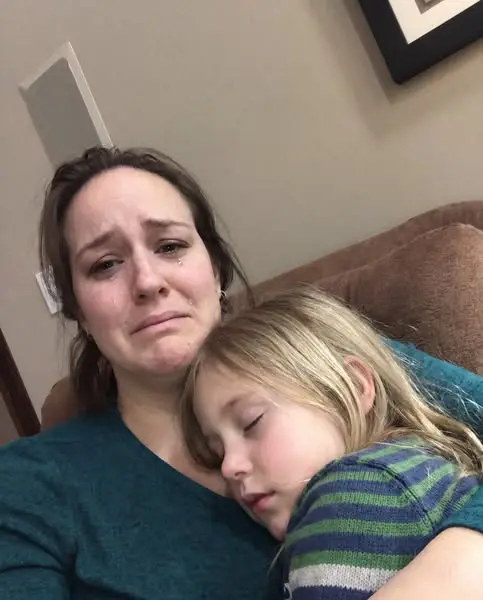
Confession time. My daughter has been on a stimulant for eighteen months. But it never touched the impulsiveness. The big emotions. The aggression. She's 9 with AuDHD — diagnosed about a year ago. At school she's perfect. Polite, calm, holds it together for six straight hours. Then she gets in my car. And her little brother, who was just telling me about his day, goes quiet. Like he already knows. Like his body learned to brace before anything even happened. He's seven. And he has a trauma response to his sister getting in the car. It wasn't always like this. A year ago she would get in the car and immediately ask to put on Taylor Swift. We'd sing the whole way home. Both of us. Loud and off-key and not caring. She'd grab my hand at a red light and just hold it. She was so easy to love in those moments. I keep trying to remember when the car rides changed. I can't pinpoint it. Anything can trigger it now. He says one wrong thing. Takes too long to answer. Breathes too loud. And she explodes on him. Screaming in his face. Sometimes throwing whatever is in her hands. Once she bit him hard enough to leave a mark. He didn't even cry. He just went still. And he just goes small. That's the image that lives in my head at night. My son going small. Because she saves every bit of anger and overwhelm for the people who love her the most. I've had food thrown at me. Doors slammed so hard the frame cracked. She slapped me across the face once because I said we weren't stopping for food on the way home. Full open hand. She was eight years old. I stood there and didn't move. But tears rolled down my cheek uncontrollably. She didn't even notice. And then twenty minutes later she was sobbing. Not the manipulative kind. The kind that comes from somewhere deep. Hyperventilating. Inconsolable. Those meltdowns would go for an hour sometimes. Hour and a half. Where she couldn't breathe, couldn't come back, couldn't hear me, couldn't hear anything. And when it was finally over she'd look at me like she'd just woken up somewhere she didn't recognize. Like she had no idea how she got there. I went back to her doctor. We nudged the dose. Tried a second medication for the afternoons. It turned her into a flat, glassy version of herself I somehow liked even less. The focus held. The explosions didn't. So I stayed quiet about it. And kept trying to fix it myself. Charts. Weighted blanket. Screens cut before dinner. OT on Thursdays. A calm corner with a beanbag she never once used while she was actually upset. Magnesium gummies that tasted like candy and did nothing I could measure. Fish oil for three months. Nothing touched the actual thing. — The worst part wasn't the explosions. It was what came after. She'd find me an hour later. Stand in the doorway. And say it. "Mommy. I know I shouldn't do that but I can't stop myself. And I know I'm hurting you and Connor and I'm so sorry." Every time. The first time she said it she was seven. I didn't have an answer then. I still don't. One night she came into my room at 11pm. Just stood there in the dark. "I keep thinking about all the mean things I said to him today. I didn't mean them. Why do I say things I don't mean?" I moved over. She got in next to me. She fell asleep. I didn't. That was the night I went looking for someone who could actually answer her question. — A mom from her swim class mentioned a doctor. She called her "the one who finally listened." I put the name in a drawer for two months. Then I dug it out. Dr. Hale. It took six weeks to get the appointment. She didn't look at her computer for the first ten minutes. She just listened. I told her about the car. The brother going quiet. The way "no" lands on my daughter like a physical blow. The angel at school and the explosion on the way home. The doorway. What she says every time. When I finished, she pulled out a piece of paper and drew two circles. One on the left. One on the right. She tapped the left one. "This is the focus system. Attention, sitting still, starting a task, getting through school. This runs on dopamine. The stimulant works here. It's doing its job." She tapped the right one. "This is the regulation system. This is the one that decides whether a small thing stays small. It runs on your daughter's stress-and-mood circuitry. Completely separate. The stimulant doesn't reach it. It was never meant to. And for AuDHD kids specifically — the autism is drawing from this system all day. By pickup time, it's completely empty." She drew a line between the two circles and crossed it out. "The stimulant works over here. It does nothing over here. That's not a failure of the medication. It was never built to reach this side. And when it wears off in the afternoon, the focus quiets down — and this side is still completely unsupported. That's your 3 o'clock." Eighteen months. That was the first time anyone had drawn me the actual reason. Then she turned the page over. "There are things the regulation system uses to settle. I can't prescribe these — they're food and supplements, not drugs. Keep her on the stimulant. This is not instead of anything. It's for the side the medication doesn't reach." She wrote four things down. Saffron extract. Standardized. Clinical dose — 30mg, 6% safranal. "Real research. Head-to-head against standard stimulant medication in children. Comparable results. What most parents don't know — the saffron in most supplements is basically useless. Underdosed. Not standardized for safranal, the active compound. You're paying for the cooking pinch." Maritime Pine Bark. "Different part of the same problem. Belongs next to the saffron." Phosphatidylserine. And Magnesium L-Threonate — the form that actually crosses into the brain. "These two are the floor the other two stand on." She pushed the sheet across. "Most parents I see have already tried a saffron pill, a magnesium gummy, fish oil separately. Felt nothing. That's not because the ingredients don't work. It's because they were the wrong dose, the wrong form, nothing aimed at the right system. Find a formula that has them together. Give it six weeks. You'll know." The last thing she said before I left: "This isn't a forever problem. The regulation system can settle. It just needs what it's been missing. Keep the medication doing its job. This is the other half." — I went home and searched. The things on Dr. Hale's notepad were in the bottle. Steady Mood Drops by Halla. The real doses. The right forms. A liquid dropper you add to juice or water at breakfast. I ordered it that night. — Week one. Almost nothing I could point to. Day nine. The afternoon flared sharper than it had in months. My husband said "you told me six weeks. It's day nine." So I kept going. Week two. She said something sharp to her brother in the car. He braced. And then she stopped herself. Looked at him. Said sorry. I nearly drove off the road. Week four. He started talking again on the car ride home. Just — talking. About his day. Like he used to. Like he forgot to be scared. Weeks five to six. The crashes still happened. But they got shorter. And she came back from them faster. And she stopped looking so frightened of herself afterward. By the second month I realized he'd stopped going quiet when she got in the car. She's still on her medication. Every single morning. This was never about taking it away. It was about the half nobody told me was missing. — Last week I picked her up from school. She got in the car and said "Mom, can I tell you something funny that happened today?" And she just — talked. The whole way home. Connor was laughing from the back seat. I kept my eyes on the road because I didn't want her to see my face. That version of her. The one who wants to tell me things. The one who makes her brother laugh. She was always in there. I just got her back. EDIT: The quiz on their site tells you if it's even the right fit before you buy anything. quiz2.tryhalla.com