
rosalica.com
Feel Like Yourself Again
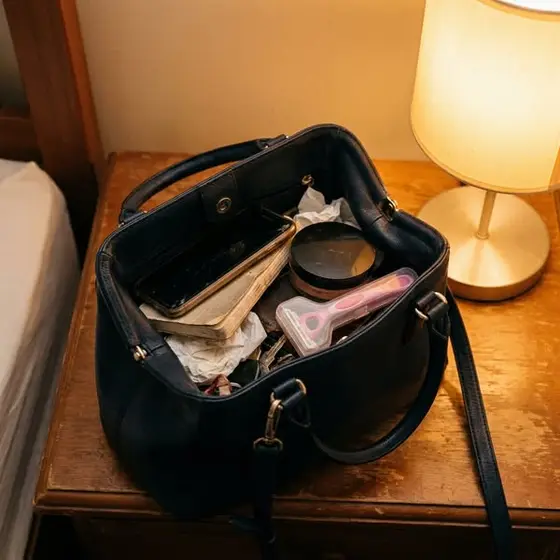
I have carried a razor in my handbag since I was 20 years old. Not because I go to the gym and forget things. Not because I travel a lot. Because I learned, at 20 years old, that the world does not pause for you to deal with something you should have dealt with before you left the house. And I could not afford, not once, to be caught unprepared. I am going to tell you why I carried it. And I am going to tell you the morning I finally took it out. My name is Layla. I'm 34. I live in Birmingham — the one in England, not Alabama — in a terraced house on a street where my neighbours know me as the quiet one who always waves but never stops to chat too long. There's a reason for that. I work in HR for an engineering firm in Solihull. I've been there seven years. I'm good at my job. I'm organised, I'm composed, I handle difficult conversations without flinching. My colleagues would describe me as someone who always looks put-together. That is not an accident. That is eleven years of work that nobody sees. My husband Tariq is an accountant. We've been married four years. He is the kindest man I have ever met and there are things about my morning routine he has never witnessed and I have made sure of that since before we got engaged. He thinks I have sensitive skin. I've never corrected him. If you are a woman who knows what I'm about to say, you know why. My mother has three sisters. All four of them have what our family calls "the hair." We don't use that phrase out loud very often. We don't talk about it at all, really. It's just something the women in our family have and manage and do not discuss, the same way you don't discuss certain other things. You just deal with it. I started dealing with it when I was sixteen. It started with one hair on my chin. I was sixteen, I was in the bathroom getting ready for school, and I saw it in the mirror. Dark. Coarse. Wrong. I plucked it. I told no one. I assumed it was a one-time thing. It was not a one-time thing. By the time I was eighteen there were enough that plucking had become a daily check. By the time I was twenty it had spread to my upper lip and the sides of my jaw and I had stopped plucking because plucking wasn't fast enough anymore. I had started shaving. I want to say that again because I think some women reading this will need a moment with it. I was twenty years old and I was shaving my face. I had a boyfriend at the time who I never let sleep over. I told him I was a light sleeper and needed my own space. What I needed was to be alone in a bathroom at 6:15 every morning so I could do the thing that had to be done before anyone saw me. I went to my GP at twenty-one. Told her about the hair, the irregular periods, the weight that wouldn't shift no matter what I did. She ran some blood tests. Came back and said I had polycystic ovary syndrome. She explained what that meant — the hormones, the insulin, the symptoms. She offered me the pill to regulate my cycle. I asked about the hair specifically. She said, "That's a symptom of the PCOS. The pill may help slow it down a little. Some women find laser effective." I said, how much does laser cost. She said, it varies, but it's not available on the NHS for this. You'd be looking at private treatment. I said okay. I went home. I looked up laser. I looked at the prices. I looked at the requirement for multiple sessions. I read the part where it said it works best on dark hair and light skin, and I looked at my skin, which is the colour it is, and I read the part where hormonal hair can regrow because the underlying hormonal signal isn't addressed. I closed the tab. I went back to the razor. I want to tell you what the years between twenty-one and thirty-four looked like. Not the big moments. The small ones. The ones that stack up. I shave every morning before Tariq wakes up. On the mornings when he's up early, I say I couldn't sleep and got up to make tea. I have a travel razor that lives in a small toiletry bag at the back of the bathroom cabinet that he has never opened because I arranged the cabinet so he doesn't need to. I do not go to sleepovers. I haven't since I was fifteen. When friends suggest a girls' trip and they mention sharing a room, I find a reason to get a separate room or not go at all. I have missed three hen dos in four years. Two of them were my close friends. I sent nice gifts and good excuses and I sat at home where my razor was. I sit in specific seats. At restaurants, at family dinners, at work meetings — I know which seats put the light behind me and which ones put it on my face. I know which angle of my face photographs safely and which ones I can't allow. I have excused myself from photos at family events and said I look tired and redirected the camera. I wear my hair down. Always. Even in summer. Even when my hair is hot against my neck and everyone else has their hair up. My hair is down because my hair covers the sides of my jaw. I have declined invitations to the swimming pool with my daughter's school friends. She is six. She asked me why we never go and I said I was busy. She accepted that because she is six and children accept things. I do not know how many more times she will accept it. That last one I haven't said out loud before. Not to anyone. Last September, at my cousin Sana's wedding in Leicester, something happened. Sana is my first cousin. Her mother and my mother are sisters. She has the hair too — I knew this because we'd shared a bathroom once at a family holiday when we were teenagers and we'd had a brief, mortified moment of mutual recognition and then never spoken of it again. That was seventeen years ago. I hadn't seen Sana properly in almost two years. She'd been living in Canada with her husband and they'd come back for the wedding, her own wedding, which she was radiant at in a way that had nothing to do with the dress. At some point in the evening I found myself near her in the corridor outside the bathroom. Away from the noise and the aunties and the photographer. Just us for a moment. I noticed her skin. I don't mean I noticed it the way you notice someone's nice earrings. I mean I looked at her jaw — because that is what women like us look at, we look at the jaw first, always, before anything else — and her skin was smooth in a way that mine has not been since before I was sixteen years old. I asked her. I didn't even build up to it. I just said, "Sana. Your skin." She looked at me. Then she looked down the corridor in both directions the way you do when you're about to say something that belongs only to this moment. She said, "I know. I was going to tell you." We sat in the stairwell of that wedding venue for twenty minutes while our families danced and the DJ played something our uncles were complaining about. She told me about the hair. Her version of it — which was my version of it, which was our mothers' version of it, which apparently was also our grandmother's version of it, a thing that had travelled through the women in our family for generations and been carried in silence each time. She told me about the years she'd spent on the same treadmill I was on. The shaving. The threading she'd tried and abandoned. The laser course she'd done in Toronto that had cost her eight hundred Canadian dollars and worked for eight months and then the hair came back because her hormones came back. Then she said, "Can I tell you what actually worked?" I said yes. She said, "It's going to sound strange. It's an oil." The oil was made from something called Cyperus rotundus. She showed me the bottle on her phone. Small, dark glass. She said her friend in Vancouver, a naturopath, had told her about it. She said the plant had been used in Ayurvedic medicine for thousands of years but that there was also real research behind why it worked, specifically for hormonal hair. I had never heard the name. I wrote it on the back of my wedding favour envelope with the tiny pencil from the table. She said, "Layla. I haven't shaved in seven months." I looked at her jaw again. I started crying in the stairwell of my cousin's wedding. Not sobbing. The quiet kind. The kind where you're embarrassed that you're crying because you're in a corridor and your mascara is expensive and you don't entirely know why this has hit you so hard, except that you do know, you know exactly, you just haven't let yourself know it until someone sat next to you and said the thing out loud. I hadn't shaved in seven months. I hadn't shaved. In seven months. Sana put her hand over mine and didn't say anything for a while. Then she said, "I know. I cried too." I went home that night and I sat at the kitchen table after Tariq had gone to bed and I looked up everything I could find. I am going to tell you what I found, the way I would explain it to someone who isn't a scientist, because I'm not a scientist either. I'm an HR manager. I understand processes and systems and what happens when one part of a system breaks and everything downstream breaks with it. Here is the system. Hair grows from follicles. Each follicle receives signals — hormonal signals — that tell it what kind of hair to grow, how thick, how fast, how dark. In women with PCOS, the hormonal environment is altered. Specifically, there's an excess of androgens — male hormones, including something called DHT, dihydrotestosterone — that shouldn't be dominant in a woman's hormonal profile but are. DHT talks to the hair follicle directly. It tells the follicle on your chin, on your jaw, on your upper lip — which are follicles that are sensitive to androgens, the same follicles that would produce a beard on a man — to grow. To grow thicker. To grow darker. To grow faster. That is why PCOS hair is not like normal body hair. It is responding to a specific signal. And that is why everything that addresses the hair itself — razors, wax, threading, even most laser — doesn't fully solve it. You are removing the hair. You are not addressing the signal. The signal keeps transmitting. The follicle keeps receiving. The hair keeps growing. What Cyperus rotundus appears to do, based on the research that exists on it, is work at the level of the follicle to inhibit the activity of an enzyme called 5-alpha reductase. That enzyme is what converts testosterone into DHT. If you reduce the activity of that enzyme at the follicle, the DHT signal is weaker. The follicle receives less instruction to produce that kind of hair. Over time, the hair that grows becomes finer. Lighter. Slower. You are not removing the hair. You are turning down the volume on the instruction the hair is receiving. That distinction took me four years of reading about PCOS to understand and nobody — not my GP, not the endocrinologist I saw once in 2019, not the aesthetician who did my laser consultations — ever explained it to me that way. The razor removes the hair. The oil addresses what the hair is being told to do. Those are not the same thing. They have never been the same thing. And the reason I spent fourteen years on the razor is that nobody told me they weren't the same thing. I ordered the oil the next morning. Sunday. Still in my clothes from the wedding. Tariq asleep upstairs. I found Rosalica Cyperus Oil. I chose it because the formulation cited the research that matched what I'd been reading, because it used a standardised extract rather than a diluted powder, and because the company offered a sixty day guarantee. If it didn't work I could return it. That mattered to me because I have spent money on things that didn't work before. I have spent a lot of money on things that didn't work. I was not doing that again without a safety net. It arrived four days later. Small dark bottle. I put it in the bathroom cabinet next to the travel razor. I applied it at night, to my chin and jaw and upper lip, the way the instructions said. Two or three drops, pressed in gently. It absorbs quickly. It doesn't smell like medicine. It smells faintly like earth, like something old, which I found I didn't mind. The first two weeks I didn't notice anything. I kept shaving in the mornings. I kept the razor in my handbag. I almost messaged Sana and told her it wasn't working but I thought about what the research said — this isn't a removal method, this is a recalibration — and I kept going. Week three, the hair on my upper lip grew back slower than it should have by that point in my cycle. That was the first sign. Small. Possibly my imagination. I noted it. Week five, I went four days without shaving my chin. I want you to understand that I have not gone four days without shaving my chin since I was eighteen years old. I went four days and the regrowth was there but it was finer. Lighter at the tips. I could cover it with foundation in a way I hadn't been able to before. Week seven, Tariq said something. We were in the kitchen on a Saturday morning. He was making eggs. I was sitting at the table with my coffee and I hadn't done my full routine yet — I'd just come down, still in my pyjamas, no makeup. He looked over at me and he said, "You look nice." I said, "I haven't even washed my face yet." He said, "I know. You look nice." He went back to his eggs. He had no idea what he'd just said. He had no idea that the woman sitting at his kitchen table in her pyjamas with no makeup was a woman he had never seen before. Not in four years of marriage. Because that woman had never let him. I sat with my coffee and I didn't say anything and I looked at the window and I thought: he can see my face. He's looking at my face and he's not seeing anything that isn't supposed to be there. I excused myself and went upstairs and I sat on the edge of the bed and I cried in a way I haven't cried since I don't know when. Not because I was sad. I am four months in now. I shave once a week. Sometimes less. The hair is still there — I want to be honest with you, it is still there — but it is finer, and slower, and lighter, and I am no longer managing an emergency. I am managing a footnote. Last month I went to my niece's birthday party. Outdoor garden party. Afternoon. The kind of event where the light comes at you from every direction and there is no good angle and the aunties want photos. I was in three photos. I did not check the angle first. Two weeks ago my daughter asked me if we could go to the leisure centre with her friend Mia and Mia's mum on Saturday. I said yes. We went on Saturday. I wore my hair up. We were in the water for two hours. My daughter sat on my shoulders and screamed when I dunked under and when she came up spluttering she grabbed my face in both her small wet hands and she laughed. She grabbed my face. I let her. The razor is still in my handbag. Old habits are hard to break completely and I am not there yet and I am being honest with you rather than telling you a fairy tale. But last week I noticed I'd been carrying it for ten days without opening the zip. Ten days. I don't think I have gone ten days without opening that zip since I was twenty years old. I think one day I'm going to take it out and not put it back. I think about what that morning will feel like. I don't need to rush it. I know it's coming. If you have PCOS. If you have been shaving or threading or waxing the same patch of skin since you were a teenager. If you have a razor somewhere on your person right now. If your husband or your partner has never seen you first thing in the morning and you have made sure of that, carefully and quietly, for years. I want you to know that there is a reason the other things haven't worked. Not because you haven't tried hard enough. Not because you haven't spent enough or found the right salon or had the right laser. Because a razor and a wax strip and a laser remove the hair. They do not speak to the follicle. They do not address what the follicle is being told. Rosalica Cyperus Oil works on the signal. It takes time. It is not dramatic. It does not happen in a week. But it is the only thing I have ever used in fourteen years that has made me feel like the process is going in a direction I'm not used to it going. The direction of less. Not more management. Less. You can try it for sixty days. If nothing changes, you return it and you get your money back. Rosalica stands behind it. That's the arrangement. The link is below. 👉 https://rosalica.com/products/cyperus-rotundus-oil-hair-reduction-formula P.S. I called Sana last week. She's back in Canada now. We spoke for almost an hour — longer than we've spoken in years. We talked about the oil. We talked about our mothers. We talked about the fact that the women in our family have been carrying this for at least three generations without ever having a name for what was happening or anything to do about it except manage. We talked about what it might have looked like if someone had told our mothers what Sana's friend told her in Vancouver. I don't want to think about that too long. I just want to be the version of this that stops here. P.P.S. The sixty day guarantee is the reason I clicked the button that Sunday morning still in my wedding clothes. I have spent money on things that didn't work. I was not doing it again on faith alone. If you're the same kind of person — careful, skeptical, burned before — the guarantee is there for you. Try it for two months. Let the oil do what it takes time to do. If your jaw looks exactly the same in sixty days, send it back. P.P.P.S. Tariq still doesn't know the full story. He knows I use the oil because I told him it's for my skin. He doesn't know about the razor in the handbag. He doesn't know about the hotel rooms I booked alone, the hen dos I missed, the fifteen years of six AM mornings. One day I'm going to tell him. I think he's going to hold my face in his hands when I do. I think I'm going to let him.