
ROXAN
+1
InactiveJun 27, 26

Video
tryroxan.com
"Dark circles, puffiness, fine lines, all in one patch. Korean skincare technology that actually absorbs, actually stays on, and actually works."
🇮🇪 🇮🇹 🇬🇫 🇳🇱+22
19 ads in 0.01s
tryroxan.com
"Dark circles, puffiness, fine lines, all in one patch. Korean skincare technology that actually absorbs, actually stays on, and actually works."

vibenestgoods.com
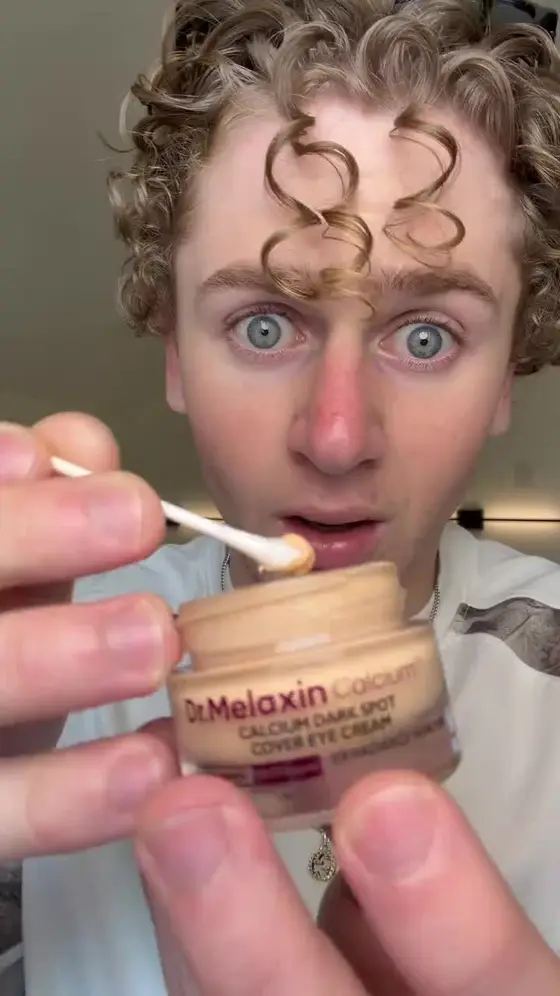
Calcium Factor Concealer Eye Cream
✨💖 Brighten, hydrate, and perfect your look! The Calcium Factor Concealer Eye Cream combines skincare and coverage in one step, helping the under-eye area look smoother, brighter, and more refreshed. 🌟 Helps conceal the appearance of dark circles and imperfections 💧 Hydrating formula keeps the eye area feeling moisturized ✨ Smooths the look of tired, dull-looking skin 💖 Lightweight texture blends naturally for everyday wear 👁️ Perfect for a fresh, radiant appearance No tired-looking eyes. No heavy makeup. No complicated routine. Just brighter, smoother, more refreshed-looking eyes every day. ✨ 👉 Shop Now and reveal a more radiant look instantly! 💖🚀👁️✨


enhancew.com
Sunscreen Breathable Baseball Cap
🏃♂️ This baseball cap is a summer essential for me! The moisture-wicking, quick-drying mesh material effectively draws away sweat and ensures excellent airflow and Its sleek, understated design provides effective sun protection while staying securely in place—without shifting—during sports or while on the Refined detailing gives it a sharp, energetic, and sporty 🧢🛒

fleava.shop
The Daily 30-Second Routine For Thicker Hair 👉
“Been using it for about 4 months now. My hairline looks fuller, my crown doesn't show nearly as much, and I don't have to think about my hair every time I see a photo. Easy to use and it's become part of my routine.” - Michael, USA. 🌱 Support Hair Regrowth Naturally: Fleava's advanced Copper Peptide Serum combines GHK-Cu, plant-based extracts, and scalp-supporting ingredients designed to help create the ideal environment for healthier, fuller-looking hair. 💪 Improve Thickness and Density: Our lightweight serum helps nourish the scalp and support weaker follicles, promoting the appearance of thicker, denser hair and improved coverage over time. 🛡️ Gentle, Non-Hormonal Formula: Fleava is designed for daily use without harsh chemicals, helping support your hair goals without disrupting your routine. Take the first step toward fuller, healthier-looking hair with Fleava.


auxiliarye.com
Clear Self Tanning Gel
Meet your new obsession: Clear Self Tanning Gel 🫧 Infused with skincare, zero transfer, no rinsing Available to shop now with a FREE mitt, but hurry, it won’t last!


neptunehealthco.com
Not Your Average Tallow Balm
Your skincare routine doesn’t need 10 steps. Neptune Tallow & Honey Balm is made with just 4 simple ingredients your skin can recognize: grass-fed tallow, Manuka honey, olive oil, and beeswax. No water. No fillers. No synthetic fragrance. Just deep, lasting moisture in one little jar. Start your 30-day tallow transformation today.


smooche.com
Why Women 50+ Are Choosing This Over Botox
In Korea — the world’s most advanced beauty market — women rely on smart formulas, not needles. This anti-aging foundation delivers an instant smoothing and lifting look that makes skin appear years younger in seconds. No injections. No $300 creams. Just visible results you can see the moment you apply.


itsbelleza.com
Rough Blow-Dry to Glass Hair
I cannot stop talking about this 😭 frizzy curly hair to glass-smooth with just a rough blow-dry. One pump of Bare Anatomy's Ultra Smoothing Serum in damp hair, that's it. ⚡ QT Charge + Omega 3-6-9 + squalane smooth + repair ✨ frizz gone, mirror shine 🪶 lightweight, all hair types Link below — you won't believe the price 👉


tripconten.com
Clear Self Tanning Gel
Meet your new obsession: Clear Self Tanning Gel 🫧 Infused with skincare, zero transfer, no rinsing Available to shop now with a FREE mitt, but hurry, it won’t last!


tryluvie.com
Flawless Skin In Seconds
Tired of wrinkles or fine lines? ✨ Get flawless, glowing skin in seconds with Luvie Glow Foundation. No caking. No filters. Just smooth, hydrated radiance. 🎁 64% OFF ONLY Today!

groundingwell.com
Feel Like Yourself Again
I was diagnosed with osteoarthritis at 38. I'm 53 now. Turns out I never had arthritis at all. For fifteen years, I "managed" a condition I didn't actually have. Fifteen years of ibuprofen that tore up my stomach lining so badly I had to take a second pill just to protect it. Fifteen years of Aleve that barely touched the pain but left me bloated and foggy headed. Fifteen years of glucosamine and chondroitin that did absolutely nothing. Fifteen years of being handed prescriptions and told "this is just part of getting older." I did everything they asked. I followed the anti inflammatory diet for two straight years. No sugar. No gluten. No dairy. No nightshades. Plain grilled chicken and steamed vegetables while my family ate normal meals. I spent over $200 a month on turmeric, fish oil, MSM, collagen peptides, and expensive joint formulas that promised "clinical strength" relief. When that didn't work, they sent me for X rays. "Some degeneration," they said. Blood work showed elevated inflammation markers. "Consistent with arthritis." An MRI showed "normal wear and tear for your age." My rheumatologist looked at the results and said, "It's osteoarthritis. Very common after 40." He prescribed meloxicam and told me to come back in six months if it got worse. I felt broken. Like my body was betraying me. The tests showed damage. The inflammation was real. But nothing I tried made any lasting difference. Every morning, my hands were so stiff I couldn't grip my toothbrush. I had to run them under hot water for five minutes just to get them working. By mid afternoon, my knees would start to ache. By evening, I was limping. Some nights, the pain in my hands and wrists woke me up. I'd lie there at 2 a.m., flexing my fingers, trying to make the stiffness go away. I started wearing slip on shoes because I couldn't tie laces anymore. Zippers became impossible. I bought clothes with elastic waistbands and magnetic buttons. I stopped going to dinner with friends because I couldn't open bottles or cut my own food without embarrassment. I stopped gardening. Stopped playing guitar. Stopped picking up my grandson because I was afraid I'd drop him. And every doctor just nodded sympathetically. "That's arthritis. It's progressive. We'll manage the pain as best we can." I tried physical therapy. Twice. Stretches and exercises that helped for an hour, then wore off. I tried acupuncture. Cupping. Red light therapy. Cryotherapy. Topical CBD creams that cost $80 a jar and smelled like a dispensary. I even got cortisone shots in both knees. They worked for six weeks. Then the pain came roaring back, worse than before. Nothing worked long term. I started to believe this was just my life now. That I'd spend the rest of my days avoiding stairs, asking people to open jars for me, and watching my independence slip away year by year. Then my physical therapist asked me a question no doctor ever had. He was different from the others I'd seen. Mid 40s. I'd only been working with him for a few weeks, but there was something about the way he moved. Confident. Pain free. Like someone who'd been through something and come out the other side. We were doing another round of resistance band exercises that weren't really helping. He watched me struggle with my grip. Saw me wince when I tried to stand up from the floor mat. Then he stopped mid session. "Can I tell you something?" he said. "I see myself in you. Every single thing you're describing, I had it. Same diagnosis. Same age, too. I was 37 when they told me I had osteoarthritis." I stared at him. He didn't move like someone with arthritis. "What happened?" He sat down across from me. "I had to stop working. The pain got so bad I couldn't demonstrate exercises anymore. Couldn't help patients. I was taking ibuprofen every four hours just to function. My hands, my knees, same as you." "What did you do?" "I went down every rabbit hole you've probably already been down. Every supplement. Every diet. Every injection. Nothing worked long term. Then I found out what was actually causing it. And once I fixed that, everything changed. I came back to PT work a year later. Pain free." "What was it?" He leaned forward. "Has anyone ever talked to you about your body's regeneration system?" I looked at him blankly. "Your mitochondria," he said. "It's the internal engine that keeps everything in your body running. Every cell in your body depends on it. Your mitochondria takes the food you eat and the oxygen you breathe and converts them into energy. Think of it like a power grid for your entire body." He pulled out his phone and showed me a diagram. "When that power grid is running strong, your cells have the energy to repair themselves. Your cartilage can regenerate. Your joints can heal. Everything works." "But after 40, that regeneration system starts breaking down. Your mitochondria start dying. Processed foods. Stress. Years of wear and tear on your body. All of it kills them faster." I was listening now. "When your mitochondria die, your cells can't produce the energy they need anymore. They're literally starving. And when your cells are starving, they can't repair your cartilage. They can't regenerate tissue. Damage accumulates faster than your body can fix it. That's when your joints start breaking down." "And the inflammation?" "Your immune system desperately trying to fix the problem. But it can't, because your cells don't have the energy to complete the repair. So inflammation becomes chronic. Pain becomes constant." "The pain, the stiffness, the swelling, those are all symptoms of cells that are starving to death." "What about the fatigue?" I asked. Because I was exhausted all the time. Not just physically tired. Bone deep fatigue that sleep never fixed. "That's your regeneration system breaking down too. When your mitochondria are damaged, every cell in your body is running on fumes. Your brain cells need massive amounts of energy, so you get foggy. Your muscles can't recover, so you feel drained. Joint pain is just one symptom. But the root cause is the same. Your cells are starving." I stared at him. Everything he was describing, the stiffness, the inflammation, the exhaustion, the progressive decline, it all matched. "You're telling me my arthritis isn't actually arthritis?" "I'm telling you that arthritis is what they call it when your joints are breaking down. But the reason they're breaking down? Your cells are starving because your regeneration system is failing. And until you fix that, nothing else is going to work long term. I know. I tried everything before I figured it out." I left that session and couldn't stop thinking about it. That night, I fell into a research rabbit hole. Mitochondrial dysfunction. Cellular energy. Joint degeneration. I found clinical studies showing that mitochondrial damage was a primary driver of osteoarthritis. That restoring mitochondrial function could reverse cartilage breakdown. That the supplements I'd been taking, glucosamine, turmeric, barely touched the root cause. I found forum posts from people who sounded exactly like me. Diagnosed with arthritis. Tried every medication. Every injection. Every therapy. Then they addressed the mitochondrial dysfunction. And everything changed. I texted my physical therapist the next morning: "Okay. Let's say you're right. What do I actually do?" He called me during his lunch break. "Here's the thing," he said. "Most joint supplements don't address your regeneration system. They reduce inflammation temporarily or provide building blocks for cartilage. But if your mitochondria are dead, your cells can't use those building blocks. It's like delivering lumber to a construction site with no workers." "So what actually fixes mitochondria?" "There's one thing nobody ever told you about," he said. "And it has nothing to do with what you put in your body. It's about what your body's been cut off from." "For thousands of years, humans were in constant contact with the earth. Skin on the ground. And the surface of the earth is covered in free electrons, one of the most powerful antioxidants that exists. Those electrons neutralize the free radicals that kill your mitochondria. But think about it. When was the last time your bare skin actually touched the ground? We sleep in raised beds. We walk in rubber soles. We live on the second floor. We've sealed ourselves off from it completely." "And at the same time, we've surrounded ourselves with something our grandparents never had. Your phone. Your WiFi. Your laptop. The power lines running through your walls. Every single day, your body absorbs the EMFs they put out. It builds up. Researchers call it dirty electricity. And it's one of the biggest hidden sources of the free radicals that are tearing your mitochondria apart, pouring into your body all night long, the exact hours your body is supposed to be repairing itself." "So your mitochondria are getting hit from both sides. Bombarded by dirty electricity. And cut off from the one thing on earth that could neutralize it." "So what do I do, walk around barefoot?" "You could. But the damage happens while you sleep, so that's where you fix it. It's called a grounding sheet. A bedsheet woven with silver fibers. You connect it to the grounding port of your wall outlet, the third prong, which connects straight to the earth beneath your house. While you sleep, electrons flow from the ground into your body all night long. They neutralize the free radicals. They discharge the dirty electricity you've been carrying for years. And for the first time in decades, your mitochondria get the chance to recover." I looked it up immediately. A pilot study showed grounding cut chronic pain and stiffness by as much as 74% in a single month. No pills. No side effects. Nothing to tear up your stomach lining or stress your kidneys the way fifteen years of ibuprofen had. It works by doing the one thing no pill can — flooding your body with the free electrons it's been starved of, shutting down the oxidative stress that's been killing your mitochondria, so your body can finally start building new ones again. And it does something else critical. Those free electrons are one of the most powerful antioxidants ever measured. They neutralize the free radicals that were killing your mitochondria in the first place. You're not just masking pain. You're rebuilding the system. The one my physical therapist used is called GroundingWell. Pure silver fiber woven throughout the entire fabric for maximum conductivity. Made in the USA. He warned me that most grounding sheets on Amazon are made with cheap materials and barely any silver — not enough to actually conduct anything — and the coating washes off after a few washes. GroundingWell was the only one he'd seen actually work. Ninety day money back guarantee. After fifteen years of treatments that didn't work, what was one more try? I started sleeping on it that same week. On day four, I opened a jar. Without thinking about it. Without running my hands under hot water first. Without asking someone else to do it for me. I stood there in the kitchen, staring at the open jar in my hand, realizing what had just happened. Not perfect. But easier. For the first time in months, my hands didn't feel like they belonged to someone twice my age. By the end of week one, I realized I'd tied my shoes that morning. Bent down. Tied them. Stood back up. No stiffness. No pain. That hadn't happened since I was thirty eight. Then came day twelve. I got down on the floor to play with my grandson. We built a tower of blocks. He knocked it down. We built it again. Fifteen minutes later, I stood up. Without bracing myself on the couch. Without that familiar grinding pain in my knees. Without needing a hand to pull me up. I stood up like a normal person. My partner was watching from the doorway. Their eyes were wet. "When's the last time you did that?" they asked. I couldn't remember. Years. Maybe five years. Over the next two weeks, more things changed. My morning stiffness went from an hour to twenty minutes. Then to ten. Then it was just... gone. By week three, I woke up and my hands worked. Just worked. No hot water ritual. No flexing and massaging. They just opened and closed like they were supposed to. No swelling in my knees. No ache when I walked. No limping by evening. For the first time in fifteen years, I went a full day without taking ibuprofen. Then two days. Then a week. I didn't need it anymore. I started gardening again. Kneeling in the dirt, planting tomatoes, pulling weeds. My knees didn't scream at me. My hands could grip the tools. I picked up my guitar for the first time in three years. My fingers pressed the strings. They moved across the frets. It hurt a little at first, my calluses were long gone, but my joints didn't stop me. I played for an hour. Then two. I don't have arthritis. I never had arthritis. I had mitochondrial dysfunction. For fifteen years. And nobody thought to look at the root cause. My joints weren't broken. My cells were starving. I still see my physical therapist. But now we're working on strength, not just managing pain. Every night, I sleep grounded. That's my insurance. My mitochondria are working again. My cells have the energy to repair my joints the way they're supposed to. If you've been diagnosed with arthritis... If you've tried the medications and the supplements and the injections and nothing has worked long term... If your tests show "degeneration" or "inflammation" but nobody has explained why it's happening... If you're taking ibuprofen every day just to function... If you've been told "this is just part of getting older" and you need to learn to live with it... I'm not saying you definitely have mitochondrial dysfunction. But I spent fifteen years treating a condition I didn't understand while the real problem, starving, dying cells, went completely ignored. GroundingWell uses pure silver fiber woven throughout the entire fabric for maximum conductivity, not the cheap coating that washes off after a few washes like the Amazon knockoffs. Made in the USA. Built to keep conducting, night after night, for years. That's the difference between a grounding sheet that sits on your bed doing nothing and one that actually restores your body's ability to repair itself from the inside out. Right now, they're running a promotion with significant savings. But GroundingWell is a small company. They make every sheet in small batches. When they sell out, it's usually months before the next batch is ready. Ninety days to try it. If nothing changes, full refund. No questions asked. But if it works? If you wake up on day four and open a jar without thinking about it? If by week two you're tying your own shoes again? If a month from now you're getting down on the floor with your grandkids and standing back up without help? If you're gardening and playing guitar and living without planning your entire day around joint pain? You'll wish you started fifteen years ago. I know I do. https://www.groundingwell.com/products/groundingwell-bedsheet You don't have to keep managing a condition you might not even understand.


app.adjust.com
One Stockholm in December was like an off-white bowl turned upside down, trapping the entire city beneath it, not allowing a single breath of freshness to enter. Lin Yu stood at the entrance to the Central Station, his scarf wrapped up to the bridge of his nose, only his eyes visible, narrowed against the biting cold. His plane ticket was stored on his phone, and the screen responded sluggishly in the minus-twelve-degree air, like a beetle stunned by frost. He should have boarded the train to Copenhagen forty minutes earlier, but a signal failure had thrown the entire eastbound rail network into a peculiarly Nordic state of unhurried paralysis. The announcements came through in rotation—Swedish, English, and a third Nordic language he couldn’t distinguish—a woman’s voice so calm it sounded like she was reading a散文. Lin Yu shifted his backpack from his right shoulder to his left, then back again. Behind the pillar he was leaning against, a man stood. For the twenty minutes Lin Yu had been there, the man hadn’t moved from his spot, hadn’t checked his watch, hadn’t even taken out his phone to pass the time. He simply leaned there, wearing a heavy wool coat in dark grey, its collar turned up, hands in his pockets, his gaze fixed on some high point in the vaulted ceiling of the waiting hall, as if trying to identify an invisible fresco. Lin Yu noticed him because they were positioned on opposite sides of the pillar in near-perfect symmetry, like the inside and outside of a mirror. Each time Lin Yu shifted his bag, stamped his feet, or exhaled warm air into his hands, the man on the other side would adjust his weight slightly, as though aware of this unintentional synchrony—or perhaps entirely unaware. The heating pipes in the waiting hall emitted a low, gurgling rumble, like an old beast churning undigested food in its gut. Lin Yu finally decided to give up on this train and head to the ticket counter to change his booking, and at that moment, the man moved too. They both came around the pillar at nearly the same time and nearly collided in front of it. “Sorry,” Lin Yu said in English, unsure whether the man was local. The man nodded. His gaze shifted from the ceiling to Lin Yu’s face. It was a deeply sculpted face, the brow casting a small shadow that made his eye sockets appear deeper than they were. His eyes were an indeterminate color, grey in the yellowish light of the waiting hall, or perhaps a blue diluted with grey. He looked about thirty-five, maybe older—people of this type seemed to have their age frozen by the northern climate, solidified in a vague range. “You don’t need to change your ticket,” the man said suddenly, also in English, with a Scottish East Coast accent that was unmistakable, vowels drawn out long and flat. “They just announced—signals are back. The train leaves in twenty minutes.” Lin Yu paused, then turned to look at the nearest information screen. Sure enough, the status of the train he thought he’d missed had changed from “Delayed” to “Boarding.” He turned back to say thank you, but the man had already started walking toward the platform, unhurried, the hem of his coat swaying gently with each step, like a flag being slowly folded and unfurled by a breeze. They boarded the same carriage. Lin Yu hadn’t intended it—the second-class carriage he chose happened to be the closest to the entrance, and by the time he stepped inside, the man had already hung his dark grey coat on the hook and was settling into a window seat, opening a book. Lin Yu’s seat was on the other side of the aisle, three rows back. He sat down, pushed his backpack under his feet, and only then felt his breathing return to its normal rhythm after the small chaos of the past hour. When the train started moving, the southern suburbs of Stockholm slid past the window like a horizontally stretched film—red-brick apartment buildings, a marina with white sailboats, a steel bridge, then increasingly dense spruce forests with thin snow on their tops. Lin Yu pressed his forehead against the cold window glass, watching his breath form a small patch of fog that slowly dissipated. He closed his eyes, listening to the rhythmic click of wheels on tracks, like a giant metronome counting out the remainder of his time on this journey. He didn’t know what he was doing. A thirty-one-year-old architecture lecturer who had taken two weeks off in the middle of the semester, flown from Shanghai to Stockholm, then onward to Iceland, all because six months ago he’d flipped through an old photography book in his advisor’s study and found a black-and-white image: a wooden church standing alone on a black plain, with low clouds and a blurred horizon in the background. The caption read: Víðimýrarkirkja, turf church, northern Iceland, built in the nineteenth century. That image had lodged itself somewhere inside him like a thin splinter—not painful, but present. Six months later, he filled out the leave request form and bought his ticket. The train arrived in Gothenburg at 3:30 p.m., and the sky was already as dark as midnight. Here he needed to change to a train for Oslo, then spend the night in Oslo before flying to Reykjavík the next morning. His layover was two hours, so he sat in a café at the station, ordered a black coffee and a cinnamon roll, and wrapped his hands around the cup for warmth. When the man appeared at the café entrance, Lin Yu felt no surprise. What did surprise him was that the man, carrying a black coffee just like his own, walked straight over and took the high stool beside him. “You’re going to Norway too?” the man asked. “Oslo. Then Iceland.” The man nodded, unsurprised. “I’m going to Bergen, then ferry to Denmark, then back to Scotland. A long detour.” He said this with a slight movement at the corner of his mouth—not quite a smile, just a mild self-mockery about his own choices. “Work trip in Stockholm?” “Sort of. A maritime archaeology conference.” The man pulled a folded business card from his inner coat pocket and handed it over. Matte paper, with the words: Dr. Ewan Macleod, Maritime Archaeology, University of St Andrews. When Lin Yu took it, he noticed a small embossed pattern in the lower right corner—the side profile of a Viking longship, only perceptible by touch. “Lin Yu,” he said. “Architectural history.” “Architectural history,” Ewan repeated, tasting the syllables. “So you’re here for the churches.” It wasn’t a question, but Lin Yu nodded anyway. “There’s a turf church in northern Iceland. I came for it.” Ewan took a sip of coffee, looking over the rim at a painting on the café’s opposite wall—a mediocre abstract piece, grey-blue shapes like a rain-streaked wall. “Icelandic churches,” he said, “are like chess pieces scattered across the board. You never know where the next one will appear.” They exchanged their itineraries for the coming days, in the tone travelers use, expecting nothing—as if confirming their paths wouldn’t cross again, allowing them to go their separate ways with peace of mind. Lin Yu told him he’d fly to Reykjavík tomorrow morning, rent a car, take the Ring Road north, and reach the church in about four days. Ewan said his train to Bergen left in an hour and he should get to the platform. He stood up, hesitated, then took something from his coat pocket and placed it on the counter in front of Lin Yu—a thumb-sized compass with a brass casing, the glass face marked with a few fine cracks. “I bought this at an antique shop in Gamla Stan,” Ewan said. “I had an extra. Icelandic winters can be harsh, and a sense of direction matters more than anything.” Lin Yu started to thank him, but Ewan had already turned toward the door. The dark grey coat disappeared through the café’s glass entrance, absorbed into the grey-purple twilight of Gothenburg in December, like a drop of ink into lukewarm water. Lin Yu looked down at the compass. The needle quivered slightly, pointing north. North was where he was heading. Two Iceland in January was another kind of world altogether. Not night, not day, but a long, ambiguous transitional state—the sun lingered near the horizon, an indecisive visitor who neither entered nor left, merely casting its orange-red light across every mountain and every stretch of wilderness, pulling shadows long, so long they merged with one another until they became indistinguishable. Lin Yu’s rental was a dark blue Suzuki Vitara, four-wheel drive, high clearance, tires studded with metal pins. He left Reykjavík heading north on Route 1, spending the first night in Selfoss, reaching Vík the second day, and on the third day passing around the Mýrdalsjökull ice cap into eastern Iceland. Aside from the wind and the crunch of tires on gravel, there was almost no sound. The car radio picked up only two stations—one playing Icelandic folk music, the other broadcasting weather forecasts. He kept the volume low, letting the unintelligible Icelandic fill the car’s interior like ambient noise. On the afternoon of the fourth day, he reached a small town in northern Iceland called Vallahraun. A town in name only—a few dozen houses scattered at the head of a fjord, a gas station, a small shop, a grey concrete church, modern, not the one he was looking for. He stopped to fill the tank, his fingers stinging against the frozen metal nozzle in minus-fifteen-degree air. The cashier was a shaven-headed young Icelander with heavily accented English, who told him the turf church was another forty kilometers north, at a place with no sign. “Watch the right side,” the young man said, drawing a circle on a free map from the station with a ballpoint pen. “There’s a gravel road here, hardly anyone takes it in winter. The church is at the end.” Lin Yu folded the map into his pocket. His fingers brushed the brass compass, cold as a chip of ice. The gravel road was harder to find than he’d expected. He drove up and down the main road three times before spotting, behind a row of snow-covered bushes, the dirt track so eroded by wind it had nearly merged with the surrounding plain. He turned onto it, the Vitara bouncing violently on the pitted surface, the studded tires chewing into frozen ground with a sound like splintering bones. At the end of the track was an open clearing. The church stood in the middle. It was smaller than it had appeared in the photography book, and more fragile. The walls were black wooden planks, deeply furrowed by centuries of wind and weather, like the wrinkles on an old man’s hands. The roof was turf, the dead grass stiff with winter hibernation, blending into the surrounding plain as though the building had grown out of the earth rather than being built upon it. A wooden sign at the entrance gave the year of construction and some historical information in Icelandic and English, the letters so faded Lin Yu had to lean close to read. He stood there, his breath snatched away by the wind before it could form a proper cloud. The wind came off the northern ice cap, crossing the fjord, crossing the plain, hitting his face without any obstacle, carrying a cold that belonged to no season but was simply itself. He pulled out his phone to take a picture, but the screen didn’t respond—too cold. He put it back in his glove, staying where he was, letting his eyes etch every detail into memory: the curve of the roof, the rust on the door handle, the remnants of blue paint on the window frames, the crescent-shaped snowdrifts against the walls sculpted by the wind. He didn’t know how long he stood there. The wind had numbed his ears to the point of insensibility, and a thin crust of ice had formed on his scarf, condensed from his own breath. The light had dimmed without his noticing; the sun had sunk below the horizon, leaving only a thin orange-red band at the edge of the sky, like a door closing. He turned to head back to his car and saw another vehicle parked beside his blue Vitara. A white Land Rover Defender, boxy and old, its body spattered with mud and white streaks of de-icing salt, like a traveler who had been wandering the wilderness for a long time. The engine was still running, white vapor rising from the exhaust pipe and quickly crystallizing into fine ice particles in the cold air. The door opened, and a man climbed out. Dark grey coat, collar up, unhurried step. Lin Yu stood there, watching Ewan Macleod walk toward him. The wind passed between them, lifting a small swirl of powdery snow. Ewan reached him, stopped, and said nothing. They stood face to face on the plains of northern Iceland, in front of a nineteenth-century turf church, under the last thread of orange-red light at the edge of the sky. “How did you get here?” Lin Yu asked. His voice sounded strange, distorted by the wind, like an old radio. Ewan pulled his hands from his pockets and gestured toward the church. “I told you—Icelandic churches are like chess pieces. I collect them.” His lips were nearly colorless from the cold, but the hint of a smile was still there. “I changed my plans in Bergen. Flew to Akureyri, rented a 4x4, and drove here.” “Why?” Ewan was quiet for a moment. The wind swirled around them, rustling the dry grass on the church roof. “Because of the church you mentioned,” he said. “I looked it up. It’s one of the few buildings in Iceland that still has its original nineteenth-century wooden structure. Under the turf, there’s a layer of birch bark waterproofing—a building technique that dates back to the Viking Age. I’m a maritime archaeologist, but my research is on Viking shipbuilding. Birch bark waterproofing… that’s how Viking longships were treated too.” He said this in a very flat tone, like an academic stating a scholarly interest. But Lin Yu noticed that his gaze wasn’t on the church; it was on Lin Yu’s face, with a look that had nothing to do with scholarship and everything to do with something more private. “So you came for the birch bark,” Lin Yu said. “I came for the church you told me about,” Ewan corrected him. The wind pushed into the space between them. They walked around the church. The door was locked—closed for the winter. But Ewan, like a magician, produced a small flashlight from his coat pocket, crouched down, and shone the beam under the door. The light swept across the interior floor, the pews, a small pulpit, a faded tapestry on the wall. Lin Yu crouched too, their shoulders almost touching, close enough that he could feel both the chill of Ewan’s coat fabric and the warmth beneath it. “Look at the pillars,” Ewan murmured, like he was sharing a secret. “The bases—they’re made from the keel of a ship. This church was built from an old fishing boat.” Lin Yu leaned toward the gap under the door, his forehead almost touching the wood. His breath left a small damp mark on the grain. He saw it—the curved base of the pillars was not construction timber but the characteristic bend of a ship’s hull. Over a hundred years ago, fishermen in northern Iceland had dismantled an old boat and used its wood, waterlogged for decades, to build this church. The timber still contained salt, preserving it for a century. “You knew this already,” Lin Yu said, turning his head toward Ewan. Their faces, beside the crack under the door, were too close—close enough for Lin Yu to see a single fine silver hair at the tail end of Ewan’s brow. Not white—silver, like a very fine metal wire. “I found out after I got to Akureyri,” Ewan said, not pulling back. “The public library database, on a university terminal. Occupational hazard of a maritime archaeologist.” They didn’t move. The flashlight beam escaping from under the door traced a small fan-shaped patch of light on the snow at their feet. The wind stopped. Icelandic winters sometimes had these moments—the wind would suddenly cease, like a beast holding its breath, and the world would fall into an unnatural stillness. In that stillness, Lin Yu could hear Ewan’s breathing, slow and steady, exchanging with his own in an irregular rhythm, like two metronomes set at different tempos on the same table, occasionally aligning, then separating, then aligning again. Ewan stood first. When he stood, he reached out a hand to help Lin Yu up, his palm gripping Lin Yu’s wrist through thick gloves, the pressure firm but not forceful. When Lin Yu was on his feet, the hand let go. “It’s almost fully dark,” Ewan said, looking up at the sky. The last trace of light had vanished, the sky a deep indigo, like a piece of silk soaked in water, no stars, no moon, only a boundless, soft darkness. “Where are you staying tonight?” “There’s a guesthouse in Vallahraun. I booked a room online.” “I’m staying at the same place,” Ewan said. His tone held no surprise, as though this outcome had been predetermined since they parted at the café in Gothenburg. Three The guesthouse was in a concrete building from the 1960s, its exterior painted the deep red that Icelanders favor—a warm color that clashed deliberately with the grey-brown of the surrounding landscape, a kind of stubborn insistence on warmth. The owner was a retired Icelandic teacher named Gudrún, in her sixties, with a grey braid and English better than most Icelanders. She gave Lin Yu a north-facing room with a view of the snow-covered mountains across the fjord, gleaming in the moonlight with a cold white shimmer. Lin Yu showered, changed, and went downstairs to the living room. A wood-burning stove crackled, the scent of pine resin filling the air with a warm, slightly acidic smell. Gudrún was making fish soup in the kitchen; the aroma drifted down the hallway, mingling with the woodsmoke to form a drowsy, comforting mixture. Ewan sat on the sofa by the stove, a glass of red wine in hand. He had changed too—a dark blue cashmere sweater, collar open, revealing a small patch of skin glowing amber in the firelight. His hair was still damp, dark brown glinting almost black in the low light. The book he’d been reading on the train was in his lap, a bookmark about two-thirds of the way through. “Gudrún says you can eat in here,” Ewan said without looking up. “She’ll be ready at seven-thirty.” Lin Yu sat at the other end of the sofa. The heat from the stove hit him in waves, stripping away the cold. His face began to tingle, his ears regaining sensation with a pins-and-needles prickling. He picked up the other wine glass, clearly left for him, and took a sip. Chilean Cabernet, heavy tannins, notes of blackcurrant and green pepper, mingling in his mouth with the pine scent from the stove. “Do you travel alone often?” Ewan asked, turning a page. “Not often. Last time I traveled alone was seven years ago—graduate school, went to Shanxi to see some old architecture.” “Why alone this time?” Lin Yu thought about it. “Because no one else wanted to come.” It wasn’t the truth, but it wasn’t a lie either. The truth was that the photograph of that church had awakened in him a curiosity so private it couldn’t be shared—like when you dream of a place and wake to find you have to go there alone, because you can’t describe the dream to anyone. Ewan didn’t press further. He closed the book, placed it on his knee, and turned to look at Lin Yu. The fire danced in his pupils, two small lanterns. “I understand,” he said. “That feeling. Some things have to be done alone.” Lin Yu looked back. In the depths of those two small lanterns, he saw something else—not fire, but water, the deep water of the North Atlantic, dark and cold but filled with slow, tireless movement. That was Ewan’s world as a maritime archaeologist—wrecks, ceramic jars on the seafloor, timbers that had spent three hundred years in salt water yet still retained their shape. He worked in those dark depths, running his palm over surfaces smoothed by time and current, identifying their origins, listening to their stories. “How do you communicate underwater?” Lin Yu asked suddenly. Ewan tilted his head slightly, surprised by the question. “With hand signals,” he said. “Diving signals. Thumbs up means ascend, thumbs down means descend, index and middle finger crossed means ‘I need air.’ A simple language, but it’s enough.” “Underwater, you don’t need many words.” “No.” Ewan’s gaze shifted from Lin Yu’s face to the fire. “Underwater, words are superfluous. All you need is to breathe, move, touch. All important communication happens through touch.” When he said the word “touch,” his voice dropped, almost swallowed by the crack of a pine knot in the stove. But Lin Yu heard it, and he was certain Ewan knew he had heard. Gudrún brought out the fish soup—two large bowls of creamy chowder, a plate of rye bread, pickled herring, and butter. The three sat around the oak kitchen table, Gudrún at the head, Lin Yu and Ewan facing each other. The soup was rich, with chunks of cod, carrots, leeks, and some root vegetable Lin Yu didn’t recognize, the scent of cream and dill rising with the steam. Gudrún talked as she ate, telling folk stories about the huldufólk—hidden people who lived in rocks, indistinguishable from humans except that they preferred to come out at twilight. “In Iceland, we don’t consider the hidden people a superstition,” Gudrún said with that particular Icelandic earnestness, as if stating an unremarkable fact. “We think of them as… neighbors. When they build a road, if there’s a rock believed to be a hidden person’s home, they reroute. It’s the law.” “Have you ever seen one?” Lin Yu asked. Gudrún laughed, the lines around her eyes spreading like a fan. “Seen a hidden person? No. But I’ve seen things I can’t explain.” She glanced at Lin Yu, then at Ewan, her gaze moving between them once. “Two people coming from different places, arriving on the same day at the most remote church in Iceland, staying under the same roof. These things, in Iceland, we don’t call coincidence.” Lin Yu lowered his head to his soup and said nothing. He felt Ewan’s eyes on him from across the table, a warm spot on his forehead, like a lamp in a dark room. He didn’t look up, but he felt the warmth—not hot, but distinct, like a finger drawing a light line on his skin. After dinner, Gudrún cleared the dishes and said she was going upstairs to call her grandson, leaving them to themselves in the living room. As she left, she glanced back at them from the hallway, with the mild, knowing look of the elderly, as if she understood something they had not yet understood about themselves. The fire had burned down, flames shifting from orange to deep red, like cooling embers. Lin Yu and Ewan returned to the sofa, sitting in the same place—the middle, not the ends. A cushion’s distance between them, the cushion hand-knitted in grey wool with a pattern of an Icelandic sheep. “Where do you go tomorrow?” Ewan asked. “East, to Seyðisfjörður, then south back to Reykjavík. My flight is in five days.” Ewan was quiet for a moment. A piece of charcoal collapsed in the stove with a sound like a sigh. “There’s a storm coming tomorrow from the Greenland Sea,” he said. “The forecast says all of northern Iceland will be affected. Gudrún told me in the kitchen.” Lin Yu frowned. “My rental has winter tires.” “It’s not the tires. It’s visibility. When the storm hits, winds will exceed twenty-five meters per second, snow blowing horizontally. You won’t see anything, even from the car. The Ring Road will close north of here.” “How will you get out?” Ewan didn’t answer. He reached over and picked up the brass compass from the coffee table, rubbing his thumb over the cracked glass, the fine lines spreading like a miniature map under his fingerprint. “The one I gave you,” he said, “you’re still carrying it.” “You told me to.” Ewan nodded. He placed the compass back on the table, his fingertip resting on it for a second before pulling away. “I’m not leaving tomorrow either,” he said. “The storm will last two days. I checked the weather service website.” “You checked?” “While you were showering.” Lin Yu looked at him. The firelight carved deep shadows into Ewan’s face, making his cheekbones higher, his eyes deeper. His lips were slightly parted, as if he was hesitating over his next words. But he didn’t speak; he turned back to the stove, watching the flames crawl slowly across the wood, turning pine grain to ash inch by inch. That night, Lin Yu lay in bed, listening to the wind begin outside. At first it was a low, distant rumble, like a ship’s engine turning over in deep water; then it grew closer, louder, sharpening into a howl, as if something were dragging its nails across the sky. The wind slammed against the walls, the window glass vibrating in its frame like a drumhead. He turned over, pulling the blanket to his chin. On the bedside table, the small humidifier he’d brought from home glowed with a faint blue light, casting a tiny spot on the ceiling, like a cold, distant star. He heard footsteps in the hallway. Soft footsteps, coming from the far end of the corridor, passing his door, pausing—just a second or two—then continuing toward the end of the hall, followed by the sound of a door opening and closing. Lin Yu closed his eyes. The wind outside rose higher, a wordless song. He reached out from under the covers, found the compass on the bedside table, and held it in his palm. The brass casing had already warmed to his touch, but the glass face was still cool. The needle quivered in the darkness, pointing north—and north, at this moment, was where a storm was brewing. Four The storm was worse than expected. The next morning, Lin Yu opened the curtain to find the world outside reduced to a single, moving mass of white—snow blown sideways, left to right, so fast it was dizzying. The fjord was gone, the mountains across it gone, even the streetlight in front of the guesthouse was only a blurred shape, like an arm reaching up from underwater. Gudrún was making breakfast in the kitchen—pancakes and blueberry jam. She said the Ring Road was indeed closed, from Vallahraun to Akureyri, all of it, likely for at least forty-eight hours. “You’re stuck here,” she said, with no apology in her voice, rather a kind of quiet pleasure, as if being snowbound in her guesthouse was a gift. When Lin Yu came downstairs, Ewan was already in the living room. He sat on the rug in front of the stove, his back against the sofa, long legs stretched toward the fire, wearing a pair of the guesthouse’s wool socks, dark grey, with a small hand-darned patch near the toes. He was reading a book he’d taken from Gudrún’s shelf—a hardcover on Icelandic vernacular architecture, pages yellowed, smelling of old books, that sweet vanilla-and-dust scent. “You’re up early,” Lin Yu said, sitting on the sofa directly above him. “Couldn’t sleep with the wind,” Ewan said, turning a page. “I’m used to quiet. In St Andrews, I live in a house by the sea. Winter nights, only the sound of waves. This wind… it’s different.” “How?” Ewan considered. “Waves are repetitive, rhythmic, like a heartbeat. You can ignore them, they even help you sleep. But the wind isn’t like that. It changes every second, like a piece of music improvising itself. Your brain can’t tune it out, because it’s wired to pay attention to change.” Lin Yu looked down at the top of Ewan’s head. His hair, now dry, was a dark brown, gleaming with copper highlights in the firelight. At the crown, a small tuft stuck up, like a tiny whirlwind. Lin Yu felt an urge to reach down and smooth it flat, but he didn’t. He just watched it quiver in the warm updraft from the stove. “Yesterday you said,” Lin Yu began, keeping his voice low because Gudrún was humming an Icelandic song in the kitchen and he didn’t want to drown it out, “underwater, all important communication happens through touch.” Ewan’s hand paused on the page. “Yes.” “If you’re at thirty meters and your buddy’s regulator fails—you can’t talk, you can’t write—what do you do?” Ewan closed the book and set it on the rug. He turned, looking up at Lin Yu. From this angle—Lin Yu on the sofa, Ewan on the floor—Ewan had to tilt his head back to see Lin Yu’s face. The pose exposed his throat, his Adam’s apple moving under the skin like a swallowed olive. “I’d swim to him,” Ewan said, very softly, as if describing something he’d done countless times. “I’d look him in the eyes, make sure he saw me. Then I’d grab his tank strap with one hand and find his spare regulator with the other. I’d bring it to his mouth—he’d open, and I’d put it in. Then I’d hold his shoulder, make him look at me, wait until his breathing steadied. Through all of it, my hands wouldn’t leave his body.” As he said this, his eyes stayed on Lin Yu’s face. Lin Yu felt his breathing grow shallower, not because of the content of Ewan’s words but because of the way he said them—slow, precise, with a repressed tenderness in his tone, like someone underwater tracing the shape of a sunken vessel with their fingertips. “Your hands wouldn’t leave his body,” Lin Yu repeated, his voice lower than he’d intended. “No,” Ewan said, “because underwater, the hands are the only things that can speak.” The fire was hot, waves of heat making the air dry and almost abrasive. Lin Yu felt his lips dry, and he licked his lower lip unconsciously. Ewan’s gaze dropped to his mouth for less than a second—half a second—then returned to his eyes. “You should eat,” Ewan said, rising. When he stood, his knees came very close to Lin Yu’s, close enough for Lin Yu to feel the warmth of the ash dust on his trousers. “Gudrún’s pancakes aren’t as good when they’re cold.” He walked toward the kitchen, barefoot on the oak floor, which creaked faintly. Lin Yu sat on the sofa, watching his back disappear around the corner. He looked down at the compass on the coffee table. The needle still pointed north, but north at this moment—north sealed off by a storm—was a direction he could not reach. Five The storm lasted two days. During those two days, Lin Yu and Ewan shared every space in Gudrún’s guesthouse with an unspoken默契. They ate at the same table, sat before the same fire, browsed the same shelves of books about Icelandic history, geography, folklore. They talked a great deal—about Viking shipbuilding compared with Chinese junk rigs, about the differences between Icelandic turf churches and Norwegian stave churches, about how the North Atlantic Current affected climate in the south and north of Iceland. All these topics were safe, polite, tinged with academic neutrality, like a carefully constructed screen between them. But there were gaps in the screen. The gaps appeared in those unplanned, undesigned moments—Ewan helping Gudrún with the dishes, Lin Yu standing beside him drying plates, their hands meeting on the same dishcloth, Ewan’s fingers resting on Lin Yu’s hand for two seconds, one second longer than necessary; Lin Yu studying a map in the living room, Ewan coming up behind him and leaning over to look at the annotations, his chin almost brushing Lin Yu’s shoulder, his breath leaving a small patch of warmth on the side of Lin Yu’s neck, then straightening and walking away as if nothing had happened; in the evenings, saying goodnight in the hallway outside their rooms, standing a meter apart under the dim light, both saying “goodnight” and neither immediately turning to go inside, just standing there for five seconds, looking at each other, then simultaneously saying “see you tomorrow,” their voices colliding in the simultaneity, like two trains on the same track. On the second night, the wind began to subside. The howling softened to a low moan, like someone exhausted from crying. Gudrún went upstairs early, saying her knees sensed the storm was almost over—in Iceland, old people’s knees were more accurate than the weather service’s satellites. Lin Yu was alone in the living room, sitting on the rug before the stove—the same spot Ewan had sat the day before. He leaned back against the sofa, legs stretched toward the fire, wearing his own black cotton socks with no darned patches. The fire had burned low, only a few red embers left in the ash, giving off a faint heat and light. He heard footsteps in the hall. This time, they didn’t pause at his door but came straight to the living room. Ewan stood there, wearing a white cotton long-sleeved shirt and dark pajama pants, barefoot, his hair slightly disheveled, as if he’d just risen from a pillow or as if he’d been running his hands through it. “The wind stopped,” Ewan said. “Almost. Gudrún’s knees say it’s passing.” Ewan smiled. It was the first time Lin Yu saw him truly smile—not the slight twitch at the corner of his mouth, not a polite response, but a smile that rose from his chest, warm, crinkling the corners of his eyes and mouth at once. The smile was soft in the ember-light, like a charcoal drawing washed with water. “Her knees,” Ewan said, shaking his head. “Icelanders.” He came and sat on the rug beside Lin Yu. Side by side, a fist’s width between their shoulders. The embers before them gave off their final deep red light, like a closing eye. “Are you cold?” Ewan asked. “No.” “You’re shaking.” Lin Yu looked down at his hands. They were trembling, slightly, like the resonance of a plucked string. He wasn’t sure if it was from cold or something else. “The fire’s almost out,” he said. Ewan didn’t respond. He reached out his hand, palm up, and placed it on the rug between them. The hand glowed amber in the ember-light, fingers long, knuckles distinct, the tips calloused—from years of archaeological tools and diving equipment. A faint scar ran from the base of his ring finger to his wrist, like a dry riverbed seen from above. Lin Yu looked at the hand. He knew what it meant—an invitation, open, to be accepted or not. The hand didn’t move, just lay there, palm up, like an open door. He hesitated for a long time. The embers dimmed, once, twice. The living room grew colder, chill seeping up through the floorboards, like water through the cracks in a ship’s hull. He placed his hand on top. Palm to palm. Ewan’s fingers closed gently, as if holding something fragile—a newly hatched bird, or a starfish washed ashore not yet dry. His palm was dry, warm, and that warmth came not from the fire but from deep within him, a banked fire beneath his skin. They said nothing. The last ember in the stove flickered, gave a small orange flame, then slowly faded, turning into a pale grey, porous ash. The living room fell into darkness—not complete darkness, because moonlight filtered through the clouds, casting a small silver rectangle on the floor. In that silver light, Lin Yu felt Ewan’s hand turn, from palm-to-palm to interlaced fingers. Their hands intertwined, like the roots of two trees growing close together underground, slowly and irreversibly. Ewan’s thumb traced a small circle on the webbing of Lin Yu’s thumb—so light, like a snowflake landing on skin. But Lin Yu felt that circle resonate through him, like a stone dropped into still water, ripples spreading outward, from palm to wrist, wrist to forearm, forearm to chest, until his whole body was part of the ripples. “You’re still shaking,” Ewan’s voice came out of the darkness, very low, almost a whisper, like wind through a narrow crack. “I know.” Ewan’s hand tightened, then relaxed. Not a full release—just from a grip to a light touch, fingertips resting on the back of Lin Yu’s hand, like five slender supports. “Underwater,” Ewan said, “when you feel your buddy shaking, it means he’s losing body heat. You move closer, and you give him warmth from your body.” “We’re not underwater now.” “I know.” They moved closer. Not through any definite action, but through a slow, almost imperceptible drift in the darkness, like tectonic plates shifting. Lin Yu felt Ewan’s shoulder touch his, then his upper arm, then his forearm. From shoulder to elbow, their arms pressed together, no gap. Ewan’s arm was more solid than he’d imagined, the muscle defined beneath the cotton, like the shape of a tree trunk under bark. Ewan leaned his head back against the sofa, looking up at the ceiling. The moonlight cast a diffuse spot on it, like a mirror covered with thin gauze. His throat moved with his breathing, the shadow on his neck deepening and lightening in rhythm. Lin Yu turned his head to look. From this angle, he saw Ewan’s profile—the curve of his forehead, the line of his nose, the shape of his lips, the angle between chin and neck. That line was sharp in the moonlight, like an ink drawing on rice paper. He felt an urge to trace it with his fingertip—from forehead to brow, brow to nose, nose to the upper lip, then stop at that soft boundary between upper lip and lower. He didn’t. He just looked, his gaze tracing the line. Ewan seemed to feel something. He didn’t turn his head, but his fingers on the back of Lin Yu’s hand moved, pressing lightly with his middle and ring finger, like tapping a code. Two shorts, a long, a short. Morse code? Lin Yu puzzled it out: ..-. .- ..- . — FAUE? No, not English. Maybe Icelandic? Maybe some language of signals Ewan had invented for himself during his long diving career. “What does that mean?” Lin Yu whispered. Ewan didn’t answer. He turned his head from the sofa back toward Lin Yu. Their faces in the darkness were very close, close enough for Lin Yu to smell Ewan’s breath—not toothpaste, not coffee, something more essential, from inside his body, like seawater but not salty, deeper, mineral, with traces of iron and calcium. Ewan’s eyes in the moonlight were a definite blue. Not grey, not a mix—pure, deep blue, like the depths of the North Atlantic. That blue wasn’t for looking at; it was for sinking into. “You should sleep,” Ewan said. His voice was so low that Lin Yu felt the vibration of the syllables against his lips more than heard them. “So should you.” Neither moved. The embers died. Only moonlight remained, silver, cold, like a thin frost covering everything. Lin Yu felt his hand warming between Ewan’s fingers, the warmth beginning at his fingertips and spreading slowly, stubbornly, through each knuckle, each palm-line, each gap between bones, like groundwater seeping through rock. Ewan’s fingers loosened, one by one—pinky first, then ring, then middle, then index. Each finger that released left a small cold spot on Lin Yu’s hand, like lights going out. Finally, the whole hand was gone, and Lin Yu’s hand lay alone on the rug between them, pale in the moonlight. Ewan stood. He moved slowly, as if afraid of disturbing something. He looked down at Lin Yu—a look that lasted three seconds in the moonlight, holding more than words could contain—then turned toward the hallway. This time, his footsteps paused for a long time outside Lin Yu’s door. Long enough for Lin Yu, lying on the rug, to count forty-seven heartbeats before he heard the door open and close. Lin Yu lay on the rug, holding the hand that had been entwined with Ewan’s up to the moonlight. The light filtered through his fingers, casting five thin shadows on his face. He closed his fingers, opened them, closed them again. In his palm, a faint remnant of Ewan’s warmth lingered, like the heat left in a cup after the tea is gone. He closed his eyes. The wind had stopped, and the world outside was silent—an absolute, near-vacuum silence. In that silence, he heard his own heartbeat, slow and steady, exchanging with some other rhythm not present, irregularly—like two metronomes on the same table, occasionally aligning, then separating, then aligning again. Six On the morning of the third day, the storm had passed. Lin Yu woke to sunlight—not the muted light filtering through curtains, but a flood of brilliant white-gold, almost painful. He opened his eyes and found himself still on the rug, now covered with a blanket that hadn’t been there before, grey wool with a pattern of an Icelandic sheep—the same set as the cushion on the sofa. The blanket was tucked in carefully, even covering his ankles, as if the person who’d done it had crouched down to check for any gap where cold air might enter. The living room was empty. The stove had been relit, flames already strong, pine resin crackling. On the coffee table sat a glass of orange juice, a plate of sliced bread, and a small dish of butter. The glass was beaded with condensation, meaning it had been there for a while. He sat up, the blanket slipping from his shoulders. He drank the orange juice—cold, sweet-tart, like an Icelandic winter morning. He looked out the window: the sky was a translucent blue, washed clean by the storm, and the distant mountains were coated with fresh snow, glittering in the sunlight like they’d been dusted with sugar. Gudrún appeared in the kitchen doorway. “You’re awake. Your friend—Ewan—he left before dawn. Said he wanted to check the road conditions.” “Before dawn?” “Five. He said he couldn’t sleep.” Gudrún came over, setting a plate of scrambled eggs on the table. “He asked me to put this blanket on you. Said you’d fallen asleep in the living room.” Lin Yu didn’t correct her. He knew Ewan hadn’t said “fallen asleep in the living room”—or perhaps he had, but what he’d meant and what Gudrún understood were different things. In Gudrún’s understanding, it was a simple statement about physical location. In Ewan’s, it held everything they hadn’t said aloud—the hand on the rug, the exchanged breath in the darkness, the gaze that had lasted forty-seven heartbeats. He finished breakfast, went upstairs to change, and stepped outside. The air was impossibly cold, each breath like swallowing fragments of glass. But the sun was beautiful, white-gold, spread across the snow and reflecting so brightly the whole world seemed wider and more luminous than it was. Out on the fjord, the ice had cracked, fine lines revealing the deep blue water below, like fractures in lapis lazuli. He saw Ewan standing at the edge of the fjord. Dark grey coat, collar up, hands in pockets. He was facing the water, the wind lifting the hem of his coat against his legs. His silhouette stood out sharply against the snow and ice, like a charcoal sketch on white paper—simple, strong, every line carrying a kind of certainty. Lin Yu walked over and stood beside him. A fist’s width between their shoulders, same as on the rug last night. “The road’s open,” Ewan said without turning. “Gudrún’s knees were right. The storm’s passed.” “When are you leaving?” “Today. I still have my car. I’ll head north, see Hvítserkur, then loop back to Akureyri.” Lin Yu nodded. He looked at the cracks in the fjord ice, the dark water moving slowly in the fissures, like rapid eye movement behind closed lids. “I’ll go east,” he said. “To Seyðisfjörður.” They were silent for a long time. The wind came across the fjord, carrying the cold, metallic smell of ice. A gull circled twice overhead, called once, and flew toward the sea. “Last night,” Ewan began, and stopped. He pulled his hands from his pockets, clasped them together, fingers interlaced, like last night on the rug. He looked at his joined hands, his thumb tracing a small circle on the back of the other—the same motion as before. “That Morse code you asked about,” he said. “It was ‘faire.’ An old nautical term. In the age of sail, when two ships met at sea, captains would signal ‘faire’ with flags or lamps. It meant, ‘We pass each other in peace. We don’t change course. We don’t make waves.’” Lin Yu looked at him. Ewan finally turned, and their eyes met in the winter sunlight of northern Iceland. His eyes were a paler blue than they’d been in the darkness, like water beneath ice, transparent, cold, but moving. “But we’re not ships,” Lin Yu said. Ewan’s almost-smile appeared again, but this time it was deeper, closer to a real smile. “No,” he said. “We’re not.” He reached out. Not palm-up, an open invitation like last night, but something more direct, more certain—he took Lin Yu’s wrist, through his coat sleeve, his thumb finding the pulse point, feeling the beat. Lin Yu felt his heart quicken at the touch for a moment, then return to its normal rhythm, like a pendulum that had been nudged settling back into its swing. Ewan’s hand stayed on his wrist for about five seconds. Then it released. The release was clean—not finger by finger, but the whole hand at once, like a ship casting off lines and moving away from the dock in one smooth motion. “Drive carefully,” Ewan said. “Icelandic weather changes fast. If the compass fails, remember: wind from the north means snow on your right-hand window.” He turned and walked away. The dark grey coat cast a long shadow on the snow, following him like a silent, faithful companion. He reached the white Land Rover, opened the door, and before climbing in, stopped. He looked back at Lin Yu. Across twenty meters, that look crossed the dry, clear Icelandic air and found a spot in Lin Yu’s chest—not the heart, a point below the sternum, a place with no name, not marked in any anatomy textbook. In that spot, a small patch of skin grew warm at the moment Ewan’s eyes met his, as if touched by a match held very close. Then Ewan got in. The Land Rover’s engine started, a white cloud of vapor from the exhaust. The car moved slowly down the gravel track, bouncing in the ruts, the studded tires crunching on frozen ground. The sound grew fainter, farther, finally swallowed by the wind. Lin Yu stood at the edge of the fjord, watching the white Land Rover shrink to a point, then a point imagined, then vanish at the horizon. He looked at his wrist—the place where Ewan’s hand had been. His sleeve had been pushed up slightly, exposing a small patch of skin. There was nothing on it, no mark, only a fading warmth. He reached with his other hand and touched that patch of skin with his fingertips. His fingertips were cold; that patch was warm. In that difference, he felt something—not a promise, not an agreement, nothing that could be named. Just a fact: on the shore of a fjord in northern Iceland, on the morning after a storm, a man’s fingers had rested on his wrist for five seconds. Those five seconds would not appear in any official record, would be noted by no historian, would leave no mark on any map. But they had happened. Between the North Atlantic and the Icelandic wilderness, between sunlight and snow, between two people’s breathing and heartbeats, they had happened. He reached into his pocket and found the brass compass. He took it out, held it in his palm. The needle quivered in the sunlight, pointing north. North—where the storm had come from, where the church stood, where he was about to leave but would never truly leave. He turned and walked to the blue Suzuki Vitara. The door handle was painfully cold—at minus fifteen, metal against skin felt like burning. He opened the door, sat down, and placed the compass on the passenger seat. The click of the seatbelt was loud in the quiet cabin, like a coin dropped into a deep well. The engine started. The heater began to work, melting the thin frost on the windshield. Through the clearing glass, he saw the fjord ice crack again, a new fissure, the dark blue water moving in it like an eye opening. He shifted into reverse, backed out, then into drive, and took the Ring Road in the direction opposite to the one Ewan had taken. The road stretched east, black and wet in the sunlight, like a fresh ink line. He drove slowly. Not because the road was bad—it was good, the storm having swept away accumulated snow, the black asphalt sharply defined against the white plain. He drove slowly because of the compass on the passenger seat. Its needle kept trembling, pointing north. And north was behind him, getting farther away. He lifted one hand from the wheel and placed it on the passenger seat, his fingertip touching the brass casing of the compass. The casing was cold, but in that coldness he felt warmth—not physical warmth, something perceived rather than measured. The warmth left by Ewan’s hand when he’d placed the compass on the café counter in Stockholm, the warmth left by Ewan’s fingers when they’d traced the cracked glass, the warmth left by Ewan’s hand when he’d put it into Lin Yu’s palm in the darkness. These war mingled, defying thermodynamics, defying time and distance, forming on his fingertip, on this Icelandic winter afternoon, a small, indestructible isotherm. The road ahead curved gently around a hill of black volcanic rock. Beyond the hill, the Icelandic plain unfolded as it always had—no trees, no buildings, no trace of humanity, only snow, lava rock, and a blurred horizon. That horizon divided sky from earth, like a fine silver thread. Lin Yu took his eyes from the compass and fixed them on the road ahead. He tightened his grip on the wheel, pressed the accelerator, let the speed build. The Vitara gave a slight shudder, then moved forward smoothly, the tires on the asphalt making a steady, continuous hum, like a melody sung without words. He didn’t know if he would ever see Ewan again. He didn’t know if he wanted to. He only knew that on this afternoon in northern Iceland, on an unnamed stretch of the Ring Road, there was still a trace of five seconds’ warmth on his wrist, a compass pointing north in his palm, and in his body an unnamed feeling that no map could chart. That feeling was like Icelandic weather—not permanent, but it came when you least expected it, like a storm off the Greenland Sea, closing all the roads, trapping you in a small guesthouse with one other person, then departing on the third morning, leaving behind a sky washed clear and fresh snow glittering in the sun. You don’t know when the next storm will come. But you know it will. Because the wind is always gathering somewhere in the north.
Create a free account to browse every page, filter by country and run time, and save winners to your swipe file.
Brands with the most active ads in this slice of the library.
 Suertella2.6K active · 10K total
 Attentiony.730 active · 801 total
 Gohomie_official468 active · 474 total
 Voppov461 active · 464 total
 Frøya Organics379 active · 396 total
 Durhancit D356 active · 534 total
 Dr.Victoria Vance338 active · 347 total
 Castle Burgun-C2322 active · 414 total
 Entchanting.er320 active · 593 total
 Nature's Power for Health318 active · 589 total
 GohomieA246 active · 259 total
 TheNovelo241 active · 316 total
The library currently holds 72,595 skincare ads from 924 advertisers, with new ads added continuously.
Set the status filter to active and the running filter to 30+ days, then sort by longest running. Ads that survive that long are usually profitable; widen to ads running in 5+ countries to find the ones being scaled.
Yes. Open any advertiser and click Track brand. PixelSpyer will notify you when they launch new ads.
Free account, no card. Search the full library with filters for run time, reach and more.