PixelSpyer

💊 Health & Supplements ads that are running right now

Vitamins, gut health and wellness offers. Filter by run time and reach to find the creatives that are actually scaling, then save them to your swipe file.
38.3K
ads in this niche
723
with creatives
972
advertisers

14 ads in 0.00s

InactiveJun 26, 26
Buy 1, Get 1 FREE!

truenutrashop.com

Buy 1, Get 1 FREE!

Learn more

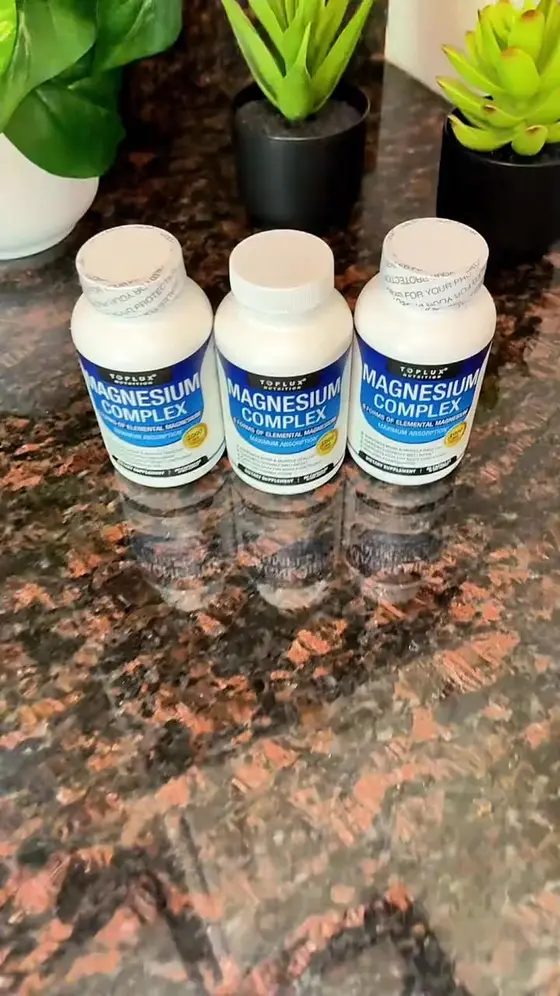
🩺 “This is the only magnesium I recommend to my patients.” – Dr. Lara Davis, MD Magnesium is essential for your entire body — from your brain and heart to your muscles, mood, and digestion. But most people are unknowingly deficient, and most supplements use cheap, low-absorbing forms your body can’t actually use. True Nutra’s Magnesium Complex contains 8 essential forms of highly absorbable magnesium — clinically dosed to actually work, so you feel the benefits fast. The result? ✅ Deeper, uninterrupted sleep ✅ Calmer mind and less anxiety ✅ Relief from cramps, tension, and migraines ✅ Clearer focus, better mood, and more daily energy ✅ Improved digestion and gut health Just 1 easy-to-swallow capsule with dinner, and your body will finally get what it’s been missing. 🚨 Our last restock sold out in under 48 hours, and this one's moving even faster. 👉 Tap below and enjoy our Buy 1 Get 1 FREE offer while supplies last: https://truenutrashop.com/products/fb-en-us-mc001 💸 100% money-back guarantee. No questions asked. No fine print.

🇮🇪 🇮🇹 🇳🇱 🇪🇸+23
InactiveJun 26, 26
PSA For Americans over 40 ONLY

truenutrahealth.com

PSA For Americans over 40 ONLY

Learn more

It breaks my heart when I see honest Americans rushed into the ER with an A1C level over 9. So many of us are going blind, losing limbs, and ending up on dialysis from Type 2 diabetes. And the worst part is, it is because of a hidden "Metabolic Clog" that starts the moment we cross age 40. My name is Dr. Robert Miller. I am a Board-Certified Endocrinologist specializing in diabetes and metabolic disorders. I have spent over 20 years working with patients who are dealing with severe Type 2 diabetes. I am writing this because I am tired of watching men and women over 40 come through my clinic with an A1C over 9... already losing their vision, already losing feeling in their feet, already fighting wounds that refuse to heal. Let me be blunt: the diabetes industry is valued at $116 BILLION dollars. That is a billion with a B. And most of that money comes from us folks over the age of 40. Once we cross that milestone, our risk of seeing our A1C spiral out of control skyrockets by nearly 50% compared to younger adults. The industry views us as an ATM. They make most of their money selling you metformin and insulin shots to manage the symptoms, but they never tell you how to actually lower the A1C at the cellular level. So they have ZERO incentive to tell you what actually causes your A1C to climb as we age... or how to actually stop the damage. Instead, they dish out basic advice like “eat more protein and avoid carbs”. Knowing that none of that stuff actually fixes the ROOT CAUSE of why your average blood sugar stays so high once you hit middle age. In fact, financial analysts are already projecting that the diabetes industry will be worth $283 billion in the next 10 years. Where will all that growth come from? It will come from the millions of people over 40 whose A1C is creeping into the danger zone right now and they do not even know it. People like us! There is a specific biological reason why we develop a Metabolic Clog as we age. It has nothing to do with willpower. As we age, our bodies lose the ability to process the specific nutrients that keep our "insulin receptors" open. Research from major institutions shows that after we cross age 40, our internal "signal relay" begins to fail. When our metabolic health declines with age, two specific things happen that keep your A1C dangerously elevated. 👉 1. Our Insulin Receptors "Rust" Shut According to studies published in the Journal of Molecular Biochemistry, our cells have a protein called IRS-1 (Insulin Receptor Substrate 1). This protein is like the "doorbell" for our cells. It tells them to open up and let glucose in for energy. As we age, if we lack specific micronutrients, that "doorbell" breaks. The insulin keeps ringing, but nobody inside the house can hear it. This means sugar stays in your blood for months at a time... which is exactly what a high A1C measurement is tracking. 👉 2. The Pancreatic "Plague" When our pancreas sees all this sugar building up, it goes into panic mode. It starts overproducing insulin at five to ten times the normal rate. Every time our pancreas secretes insulin, it also secretes a protein called Amylin. When our system is clogged, our bodies cannot clear the Amylin fast enough. It begins to aggregate into toxic "amyloid plaques" directly within our pancreatic tissue. These plaques physically suffocate our healthy cells. Eventually, our pancreas just gives up, and your A1C hits the point of no return. At this point, your A1C climbs: 7.5%... 8.2%... sometimes over 9%. This triggers Type 2 diabetes, which starts destroying everything. That includes the following: 🔴 1. YOUR VISION High A1C levels mean your blood is thick with sugar 24/7, causing the vessels in your eyes to leak and bleed. At first, we might notice our vision getting a little blurry. Then one day we wake up and realize we can barely see anything anymore. 🔴 2. YOUR KIDNEYS Our kidneys have to filter that high-A1C blood every second of the day. The tiny filtering units (nephrons) get damaged and start failing. At that point, we need dialysis to survive. 3 times a week. 4 hours each session. For the rest of our lives. 🔴 3. YOUR NERVES A high A1C damages the protective coating around your nerve fibers. It starts with tingling in your feet and hands. Then the tingling turns into burning pain. Then we lose feeling entirely. Small injuries turn into ulcers that refuse to heal. 🔴 4. YOUR HEART Unmanaged A1C levels damage our blood vessels and accelerate arterial calcification. In fact, 68% of us over 65 die from heart disease. Now, you might be thinking, "I'll just go buy a bottle of Berberine or Cinnamon from the drugstore." ❌ DO NOT DO THAT. Standard supplements just try to mask your blood sugar. To actually "unclog" a 40+ metabolism and drop your A1C, you need a professional-grade synergy of compounds. That is why I recommend True Nutra Blood Sugar Complex. It is a specific "Complex" because it targets the three stages of metabolic failure: ✅ The Unclogger (Berberine HCL & Panax Ginseng): These flip our "Metabolic Master Switch" (AMPK) to repair the IRS-1 doorbell so your cells can finally pull sugar out of the blood and lower your A1C naturally. ✅ The Transport (Ceylon Cinnamon & Chromium): These act as the delivery trucks, ensuring our cells can actually "grab" the insulin and stabilize our 3-month sugar average. ✅ The Fiber Barrier (Glucomannan): This creates a natural gel in the stomach that slows down sugar absorption, preventing the spikes that send your A1C into the red zone. ✅ The Inflammatory Guard (Turmeric & Bitter Melon): These dissolve the inflammation and plaques that suffocate our pancreas while mimicking the action of insulin. We need the whole team. If we miss one, the "clog" remains and your A1C stays high. What my patients experience within the first 8 weeks: ✅ Week 1 - 2: Post-meal energy crashes disappear. No more falling asleep on the couch after lunch. Energy stabilizes throughout the day. ✅ Week 3 - 4: When they check their daily numbers, they are in a healthy range. 85-95 mg/dL instead of creeping toward the diabetic range. ✅ Week 5 - 6: The body begins to clear out the metabolic fog, and A1C levels start to trend downward into a solidly non-diabetic range. ✅ Week 7 - 8: They feel like they have reclaimed their health. They have "dodged the bullet" that takes out so many people in their 50s and 60s. Now, before I made this post, I reached out to the good folks over at True Nutra to tell them I was going to expose what I am seeing happening to honest Americans over 40 with high A1C levels. They were so moved that they wanted to help get this supplement into the hands of more people who have been ignored by the system. So right now, they have set up a special link where you can get a supply of True Nutra Blood Sugar Complex for just $27.95. That is a massive 69% discount. BUT... it gets even better. You see, True Nutra knows that usually, when one person sees their A1C climbing... they might also have a wife, a husband, or just people they care about who are also at risk. So for a limited time, they are doing a Buy One Get One FREE offer at the same price of $27.95. That means you can get a bottle for yourself and a bottle for your spouse or family member for next to nothing. They are practically giving it away because they know once you see your A1C drop back to a healthy range... you will want to be a customer for life. So if you would like to give it a try... click here to check if it is still available: 👉 https://truenutrahealth.com/products/fb-en-bsc001 I know they sell out pretty quickly, so do yourself a favor and take advantage of the 69% discount + buy one get one free offer before they sell out. And the best part about all this is they offer a 30-day money-back guarantee. Which means you can try True Nutra Blood Sugar Complex for 30 days... and if you do not feel a massive difference or see your numbers improve, they will refund every penny. So don't wait until you are diagnosed with diabetes. Don't wait until you are going blind, on dialysis, or losing a limb. We have to take care of our own health because the system isn't going to do it for us. Click the link below to check if True Nutra still has the Blood Sugar Complex in stock: 👉 https://truenutrahealth.com/products/fb-en-bsc001 If they are in stock, grab a bundle. You will be glad you did.

🇮🇪 🇮🇹 🇳🇱 🇪🇸+23
InactiveJun 26, 26
Some Started Strong. One Finished Stronger.
2

reviews.jaclynsavage.com

Some Started Strong. One Finished Stronger.

Learn more

I wanted to see what actually holds up. Not just what tastes good for five minutes. Not just what looks good on a label. But what mixes well, stays stable, and delivers steady energy throughout the day. So I tested multiple powders under the same conditions — same timing, same mixing method, same daily routine. I tracked how they tasted after sitting. I paid attention to mid-afternoon energy. I looked closely at ingredient forms and dosing. Some started strong, then tapered off. Some separated after sitting. Some looked good on paper but didn’t feel consistent. One formula stood out. IM8 delivered clinically meaningful doses, mixed cleanly, and maintained steady support past the usual 3PM slump. It also replaces up to 16 separate supplements with one daily scoop, making consistency easier. If you’re curious how they compared side by side, I shared the full breakdown. 👉 See the full review and decide for yourself.

🇮🇪 🇮🇹 🇳🇱 🇪🇸+13
InactiveJun 26, 26
Your Routine, Finally Complete

im8health.com

Your Routine, Finally Complete

Shop now

You eat well, move your body, and prioritize sleep. But the supplement side is still a cluttered guessing game — bottles you're not sure are absorbing, labels that don't add up, a routine that should feel dialed in but doesn't quite. IM8 fixes that. One sachet, 90 clinically-dosed ingredients, everything disclosed. The clean finish your routine has been missing. Start with a free welcome kit with your first order. All orders are backed by a 30-day money-back guarantee.

🇮🇪 🇮🇹 🇳🇱 🇪🇸+13
InactiveJun 26, 26
PSA For black people ONLY

truenutrawellness.com

PSA For black people ONLY

Learn more

It was 3am in the morning when my husband, Marcus, and I woke up to a loud noise coming from downstairs ***CLANG*** We both froze in silence as we heard footsteps coming from below Marcus told me to stay put and call 911, then he grabbed a baseball bat from under the bed and headed downstairs I grabbed my phone from the nightstand and quickly dialed 911 I whispered to the operator that someone had broken into our home and my husband had gone to confront them That’s when I heard it… A loud crash followed by the sound of a struggle My heart was pounding hard in my chest I wanted to scream but the operator advised me to stay quiet Suddenly Marcus let out a yell and I heard footsteps running out the back door And just like that, everything went quiet I called Marcus but he didn’t answer I called his name again, louder this time… still no response The operator instructed me to remain upstairs and wait for help to arrive, but I couldn’t Something must have happened to Marcus I summoned all my courage and slowly got out of bed I remember trembling as I walked downstairs and into the kitchen The whole place was a mess And then I found him… My husband was laid out on the floor, hands clutching his chest, face twisted in agony His eyes were bloodshot and wide open… And he was making this horrible, wheezing sound I screamed and ran to his side The operator asked me what I saw and I told her my husband was on the floor and had been injured… She asked me if I heard a gunshot and I said no, the robber must have used a knife… Then she asked me to calm down and apply pressure on the wound. An ambulance was already on the way… I asked my husband where he was hurt but he only let out a low groan in response… I quickly put my phone on speaker and set it to the side… Then I frantically searched my husband’s body for the site of the wound… I even tore open his shirt to look at his chest… But there was no blood… I turned him over looking for a cut, a bruise… anything… But again, there was NOTHING… And yet my husband was still lying there on the floor, groaning like he was dying… I grabbed my phone and told the operator I couldn’t find any wound… Then she asked if he was still breathing… He was, but barely… She told me the ambulance was almost there… I sat there on the floor beside my husband, with no idea what to do… So I prayed and begged God to save his life. I don’t even remember how long we waited… But then I heard it… the sound of sirens coming towards my house… I felt a wave of relief wash over me… But then I heard a knock on the front door… “POLICE, OPEN UP”... My heart sank… Marcus needed a doctor not a cop… Yet I ran to the door to let them in. Two of them saw Marcus and immediately dropped to their knees and started CPR, while the other two cleared the house… Then the paramedics arrived and took over… As I went to stand in the corner, feeling completely useless while strangers tried to save my husband’s life, one of the officers approached me and took my statement Suddenly, the lead paramedic shouted that they had to move him immediately. They lifted him onto a stretcher and moved towards the front door I watched my husband, the strongest man I know, bouncing helplessly on that stretcher. They wheeled him out into the driveway, with the red and white emergency lights flashing against our house. The neighbors were already out on their porches, watching in silence. Then I climbed into the back of the ambulance, squeezing into the small corner seat while the EMTs hooked him up to more machines. The ride to the hospital was the longest 12 minutes of my life. Someone shouted for a trauma team. They rushed him down the bright white hallway, a swarm of doctors and nurses instantly surrounding him, shouting medical codes I didn’t understand. I tried to run after them, to hold his hand, but a nurse stepped firmly in front of me. She told me I had to wait there and let them work. And just like that, he disappeared behind the swinging double doors. The next four hours were a blur of fluorescent lights and freezing cold air in the ER waiting room. Finally, the double doors swung open. A doctor in blue scrubs came out. He was an older black man with a grey beard named Dr. Quintavius Carter. I stood up, shaking…knowing that the next words that would come out of his mouth would determine if I could burst into tears or breathe a sigh of relief. He told me Marcus was stable. I immediately let out a sigh of relief. But he continued with a serious expression, explaining that it was close. His blood vessels were blocked, and blood couldn’t flow to his heart. He told me that if help had arrived even ten minutes later, we would be having a very different conversation. I immediately asked if he had some kind of heart condition. Dr. Carter looked at me, then looked down at his clipboard, then back at me. He told me it was far from it. He said the only condition my husband had... was being a Black man. I looked at him, completely confused. He asked me to follow him. He led me to a small consultation room and opened my husband’s file. He had run a full panel on Marcus, and his Vitamin D levels were critically low at 7 ng/mL. I didn’t understand what that had to do with his heart. Dr. Carter explained that it had everything to do with it. He told me that every single day, he sees Black men and women come through the ER with heart failure, strokes, and blocked arteries. Most of them are in their 40s and 50s. And every single one of them has a severe Vitamin D deficiency. He explained it was all because of the melanin in our skin. Our melanin is beautiful. It protects us from the sun. But that same melanin blocks about 90% of the UV rays we need to produce Vitamin D naturally. A Black person needs 3 to 5 times more sun exposure than a white person to make the same amount of Vitamin D. He told me grimly that we aren’t getting it, and it is killing us. Dr. Carter then went on to explain that when a Black person’s Vitamin D drops as low as Marcus’s was, two specific things happen that could send you to an early grave. The first thing is inflammation of the blood vessels. He explained that Vitamin D acts like the body’s natural fire extinguisher… It keeps inflammation under control. But without enough of it, the lining of the blood vessels starts getting inflamed. And once those blood vessel walls are inflamed, they start to stiffen. They lose their flexibility. He explained that healthy arteries are supposed to expand and contract with each heartbeat… They’re elastic, like rubber bands. He stretched his hands far apart to demonstrate. And apparently, inflamed arteries can’t expand anymore. They tighten up… Which means, at that point, the heart isn’t just pumping blood through normal, flexible arteries… It’s fighting to force blood through stiff, narrow pipes. It’s like trying to sip through a pinched straw… You have to suck the straw really hard for anything to pass through. And as this happens, your heart is forced to work twice as hard just to push blood through… Which causes high blood pressure, chest pain, and eventually... sudden heart failure. Then he looked at me carefully and told me he understood there was an intruder in our house that night I nodded… He went on to explain that in someone with low Vitamin D levels like Marcus, with arteries already inflamed and stiffened… A sudden spike of adrenaline can act like a match to a fuse and trigger a heart attack He said it was an intruder this time, but it could have been triggered by him walking up a flight of stairs, or carrying groceries, or even just getting excited during a football game. That blockage was a ticking time bomb inside his chest that was ready to go off anytime And according to Dr. Carter… there’s an even more dangerous side to it… It has to do with calcium. He broke it down for me in a way that made my stomach turn. He explained that Vitamin D is like the "Gatekeeper" that lets your body absorb calcium from food. But because Marcus was deficient in Vitamin D, that gate was closed. The problem is, the heart needs calcium to beat. It’s not optional. So when Marcus’s body couldn’t get enough calcium from food because his Vitamin D was so low, it went into panic mode. To keep his heart beating, his body started pulling calcium directly from his bones and releasing it into his bloodstream. So he had all this calcium floating around in his blood with nowhere to go. And this is where it gets deadly. His arteries were already inflamed and damaged from the Vitamin D deficiency. That inflammation had turned the smooth inner walls rough and jagged…like sandpaper instead of glass. In healthy arteries, calcium just flows right past the smooth walls. But in damaged arteries, that floating calcium gets stuck on the rough spots where it settled and builds up layer by layer… And once enough of it builds up, it turns into plaque…and blocks the flow of blood and oxygen to the heart. That was what happened at 3am. That was what almost killed my husband. His arteries were BLOCKED. He told me softly that this is why strokes and heart attacks are the number one killer in our community. Us black folks are walking around with a deficiency that blocks our own arteries. As he said that, it started to make sense. I told Doctor Carter that my mother had heart issues. A few of my uncles too. Everyone just said it was ‘sugar’ or ‘stress’. Nobody ever said it was because of a Vitamin D deficiency. That’s when he explained to me that almost no doctor talks about it… They don’t even teach it in medical school… Mainly because Vitamin D deficiency is something that only really affects us black folks… And the American medical system doesn’t care about us. That’s why we still have black people dealing with things like sickle cell… High blood sugar… It’s also why so many black women die during child birth… The system just isn’t set up to cater to us… He then went on to explain that the only reason he knows about this is because he saw way too many black men and women in their 40s and 50s get brought in for heart emergencies… And many of them didn’t make it… But he’d rarely ever see white folks being rushed in like that for heart problems at that age… So he started to do his own research… combing through scientific journals...listening to Dr Sebi’s old seminars… And that’s when he discovered the link between vitamin D deficiency and sudden heart problems for black people. I asked if my husband just needed to take a Vitamin D pill, mentioning I could get one at CVS on the way home. Dr. Carter shook his head immediately. He warned me not to do that, explaining that taking Vitamin D alone could actually make his heart problem worse. I was shocked. But Dr. Carter explained that flooding his body with Vitamin D supplements would help him absorb more calcium from food, but without something to direct that calcium to his bones, it would just keep floating around in his bloodstream with nowhere to go. It would end up right back where it was before… settling into those rough, damaged artery walls and blocking blood flow. It would make things worse, not better. He told me I needed something to tell the calcium exactly where to go. And that thing is called Vitamin K2. Vitamin K2 acts like a GPS system for calcium. It directs it away from your arteries and towards your bones and teeth, where the calcium belongs. So if you’re going to take a Vitamin D3 supplement, you also NEED to take K2. But Dr. Carter didn’t stop there… He explained that even if you have the Vitamin D (The Gatekeeper) and the K2 (The GPS)... you still also NEED Magnesium. And he went on to explain why. You see, Vitamin D is actually a hormone, not just a vitamin. And when you swallow it, it enters your body in a "dormant" state. Magnesium is the “Ignition Key”. He compared it to a car with a full tank of gas and a perfect steering wheel. If you don’t turn the key, that car isn’t going anywhere. Magnesium is what physically converts Vitamin D from its sleepy form into its active form. Without magnesium, that Vitamin D just sits in your liver, doing absolutely nothing. And beyond Magnesium…You also need MCT oil… At this point, all I could think was “ANOTHER INGREDIENT???” But then he said something that made it all make sense. He asked me if I had ever tried to mix oil and water. I shook my head. He explained that blood is water-based, but Vitamin D is fat-based. They don’t mix. If you just take Vitamin D3 with water, your body will struggle to absorb it. Most of it will just slide right through your digestive system and end up in the toilet. He told me I needed a carrier. MCT Oil acts like a delivery truck. It surrounds the Vitamin D, protects it, and drives it through the gut wall directly into the bloodstream. So, he counted off on his fingers: ✅ MCT Oil delivers the package into the blood. ✅ Magnesium opens the package and turns it on. ✅ Vitamin D opens the gate for calcium. ✅ Vitamin K2 guides that calcium into the bone. He told me I needed all four steps. If I missed one, the whole chain would break. At this point, all I could think was I have to go find these four supplements… But the doc immediately gave me some good news… He explained that there’s a company that puts all those ingredients into one formula that us black folks can take to ramp up our Vitamin D levels and avoid heart failure. He personally takes it and gives it to his parents too. It’s a completely natural blend of Vitamin D3, Vitamin K2, Magnesium Glycinate, and Organic MCT Oil… Then he wrote the name on a piece of paper and handed it to me… It’s called “True Nutra’s D3 + K2”... It’s the only one he found that combines a high therapeutic dose of Vitamin D3, the right form of K2, Magnesium and MCT Coconut Oil into one formula… He warned me it is not sold in stores. I would have to order it online. But he told me this stuff is a godsend for black folks… better than any pharma pill he could recommend for my husband right now. He could prescribe blood thinners and statins to manage the symptoms, but unless we upped his Vitamin D levels correctly… it would happen again and who knows if he would be able to survive next time… And this went for me too… I might have been there for my husband… but he assured me I was also at risk of heart failure… Every black person over 40 is. Because past 40, it’s harder to synthesize Vitamin D in the first place… so while our black skin stops us from getting enough Vitamin D, as you grow older, your body actively works against absorption… So it was important to start taking this immediately to protect myself. Later that evening my husband was discharged but as soon as we got home, I immediately ordered a 3-month supply of True Nutra’s D3 + K2 supplement… I wasn’t taking any chances. The three bottles arrived just two days later…with instructions to take one softgel per day. Marcus and myself incorporated the supplement into our daily routines… And here’s what happened in the first four weeks of taking it; ✅ Week 1: We both started taking one softgel with dinner. I was surprised that there was no bad aftertaste or burping, which I usually get with vitamins. Marcus was still weak, but he was taking them religiously. ✅ Week 2: I noticed Marcus wasn’t needing his afternoon naps anymore. He looked more alert. Personally, I realized the "brain fog" I’d been dealing with for years was lifting. I felt sharper. ✅ Week 3: Marcus told me the "heavy" feeling in his chest…like an elephant was sitting on him…was gone. He was sleeping through the night without tossing and turning. I also felt a surge of energy I hadn’t felt since my 30s. It was like I had deep reservoirs of energy. ✅ Week 4: We went to see Dr. Carter for a follow-up. He ran the labs. Marcus’s Vitamin D levels were up to 48 ng/mL…perfectly optimal. His blood pressure had stabilized. I did my bloodwork too, and mine was 52 ng/mL. The doctor was beaming. Why am I telling you this? It’s because most black people over 40 don't know they are walking time bombs for heart disease because of this silent Vitamin D deficiency… And some of the folks who know may just be taking only Vitamin D, but without K2, Magnesium or MCT… they are driving a car with a gas pedal but no steering wheel. But if you want to ramp up your Vitamin D levels safely and protect yourself from arterial calcification… you need to be taking D3, K2, Magnesium, and MCT together. And as far as I know… True Nutra D3 + K2 is the best way to get all four in the right dosage. Now here’s the thing… Normally, a bottle of True Nutra costs around $90. But I have some incredible news. I sent an email to the good folks at True Nutra to tell them Marcus's story. They were so moved that they wanted to help get this into the hands of more brothers and sisters… So right now, they’ve set up a special link where you can get a supply of True Nutra for a massive discount. What’s more is, they’re running a “buy one get one free” offer at that already-heavily discounted price. And they’re backing it with a 30-day money back guarantee if you don’t like the supplement for whatever reason. 👉Click here to check if it’s still available => https://truenutrawellness.com/products/fb-en-vdk002 If they’re in stock, grab a bundle. It’ll be the cheapest, yet most effective Vitamin D supplement you can get your hands on today.

🇮🇪 🇮🇹 🇳🇱 🇪🇸+22
InactiveJun 26, 26
Unlock Your Brain's Full Potential
4

shop.savaly.com

Unlock Your Brain's Full Potential

Learn more

My Father-in-Law Lasted Eight Months After His Wife Died and Everyone Said He Died of a Broken Heart — But I Watched What Actually Happened to Him and It Had Nothing to Do With Grief I'm Robert. I'm 58. Eight months ago, my father-in-law Frank was alive. Now I need to tell you what actually killed him. Because it wasn't a broken heart. Frank was 79 when Helen died. Stroke. Dropped her on a Saturday morning while she was watering plants in the garden. One second she was alive. Next second she was on the concrete. Frank was inside watching TV. Didn't hear anything. My wife Sarah found her an hour later when she went over for lunch. Helen's hand was still holding the hose. The funeral was a blur. Everyone said the same things. Good woman. Great marriage. 52 years together. Inseparable. That last word kept coming up. Inseparable. I didn't think much of it at the time. Frank seemed okay at first. Quiet. Moved a little slower. But he showed up to the funeral. Shook hands. Thanked people. Ate something. Did what you do. It was about two weeks later that things started to go wrong. Sarah went over to check on him. Found the fridge full of food Helen had prepped before she died — untouched. Some of it had gone off. The milk was solid. Frank was sitting in his recliner. Said he'd eaten. Sarah opened the bin. Nothing in it. She couldn't find any sign he'd eaten in three days. "Dad, you have to eat," she told him. He looked at her like he genuinely didn't understand the instruction. Not like he was digging his heels in. Like opening the fridge and feeding himself was a skill he'd never once had to use. Because he hadn't. Helen made every meal. Breakfast. Lunch. Dinner. Set it on the table. Put the fork next to it. Frank ate it. That was the system. Had been the system for over 50 years. Take Helen away and the system stopped. Week three. Sarah found his pill bottles untouched. Blood pressure. Cholesterol. Prostate. Seven different bottles, all full. "Dad, when did you last take your meds?" He stared at the bottles. "Helen puts them out." Present tense. Like she was still going to walk in and set them on the counter next to his coffee. Sarah started driving over at 7 each morning. Laying out his pills. Stacking meals in the fridge he could heat up. Writing notes on the fridge. TAKE YOUR PILLS. EAT LUNCH. LOCK THE DOOR BEFORE BED. The notes lasted five days before he stopped seeing them. They just became part of the wall. She set up alarms on his phone. Frank dismissed every single one without reading what they said. Week five, he drove to the pharmacy to pick up a refill Helen had called in before she died. Got lost. Called Sarah from a petrol station he didn't recognise. He'd been going to the same pharmacy for 15 years. Frank wasn't stupid. He'd worked construction for 40 years. Built houses. Read blueprints. Managed crews. This was a man who could look at a bent beam and tell you what went wrong. But he couldn't get himself from Monday to Tuesday without someone telling him what needed doing and when to do it. Sarah took over. Drove him to appointments. Stocked his fridge. Sorted his pills into one of those daily dispensers. Called him every night to make sure he'd locked the door. She was exhausted. Working full time. Managing her own house. And now managing her father like he was a child. "He won't do anything unless I tell him to," she told me one night. Head in her hands at our kitchen table. "I'm not helping him. I'm running him. Like Mum did." I didn't say anything. Because I knew exactly what she meant. Month four. Frank left the stove on overnight. Smoke alarm at 2 AM. Neighbour called the fire department. Nobody hurt. But after that, Sarah started talking about a care home. He could walk. Talk. Dress himself. Nothing physically wrong with him that should've required a care facility. But he could not manage his own life. Month six. He stopped leaving the house. Same recliner. Same channel. Helen's sweater still on the arm of the couch. He'd lost maybe 12 kilos. Answered questions but didn't start conversations. Month seven. He fell getting up for the toilet in the middle of the night. Tripped over a work boot he hadn't put away. Helen used to put his slippers by the bed every night. After she died, his boots ended up wherever he kicked them off. Fractured his hip. He died nine days after the surgery. His heart just stopped. The death certificate said cardiac arrest. At the funeral, Frank's sister said what everyone was thinking. "He died of a broken heart. Couldn't live without her." People nodded. Some cried. It was a nice story. Clean. Romantic. Made sense. And it was wrong. Frank didn't die because he loved Helen too much. He died because Helen was doing something for him that he could not do for himself. Had never been able to do for himself. She was his calendar. His pharmacy. His kitchen. His alarm clock. His memory. She was his brain. And when she died, his brain died with her. For eight months, I watched a man who built houses with his hands fail to feed himself. A man who managed crews of 20 couldn't manage a pill dispenser. A man who read blueprints couldn't read a note on his own fridge. Not because he was grieving. Not because he was old. Because the part of his brain that organises, remembers, plans, and sequences — the part that turns "I need to eat" into actually eating — had never worked properly. And for 52 years, Helen had been the one making it work. That night after the funeral, I couldn't sleep. Not because of Frank. Because of me. I stayed in bed next to Sarah and I started counting. Every morning, she puts my keys and wallet on the kitchen counter. Same spot. If she doesn't do it, I can't find them. She reminds me to take my blood pressure pill. Every single day. For 11 years. She books every appointment. Dentist. Optician. The shoulder that's been killing me for two years. If she doesn't book it, I don't go. She manages the bills. The car insurance. The rates. I have no idea when any of them are due. If you put a gun to my head, I couldn't tell you what we pay for electricity. She tells me when we have plans. When our grandson's birthday party is. When I have to do things. Every single day. And I let her. Because I tried doing it myself, and I couldn't. Same as Frank. Couldn't track more than one thing at a time. Couldn't remember what I'd agreed to. Walk into a room and forget why. Lost my wallet three times in one month last year. Left the stove on twice. I was a plumber for 35 years. Good at it. Ran my own jobs — well, Sarah did the books. I did the work. But the other stuff? The appointments, the pills, the bills, the scheduling, the remembering — I never could. I always just said I wasn't a details guy. That's what I told myself. That's what everyone told me. "Men are just like that." "He's useless around the house, bless him." "You'd lose your head if it wasn't screwed on." Funny lines. Everyone laughed. Including me. Including Sarah. And then I watched Frank die in eight months because the woman who ran his life was gone. And I realised nobody was laughing. I'm the same man. If Sarah died tomorrow — stroke, car accident, anything — I would be Frank. Standing in the kitchen holding a frying pan I've used a thousand times, unable to remember how to turn on the stove. Missing my own meds. Driving to the pharmacy and getting lost. I didn't sleep that night. Or the next. Third night, around 1 in the morning, I gave up on sleep. Sat at the kitchen table with my phone. Started searching. Not "grief support for widowers." Not "elderly men living alone." I typed: "why can't some people remember to eat or take their own pills without help" The first few results were useless. Organisational tips. Productivity hacks. Life coaching nonsense. Then I found something. An article — written normal, not like a textbook — about something called executive function. I'd never heard the term before. But the description... Executive function is the part of your brain that plans, organises, remembers what needs doing, and actually gets you to do it. The difference between knowing you need to eat and actually making food. Between knowing your pills are on the counter and actually taking them. It's the management system. The part that runs the day. And in some people, it doesn't work. Not because they're lazy or stupid or careless. Because the brain chemicals that power it — the ones that handle focus and task management and follow-through — aren't being produced the way they should be. I kept reading. Found another article. This one was about dependency in relationships — people who seem completely capable at work or in specific areas of their lives but literally cannot function in daily management without their partner running it for them. It described Frank. Almost word for word. And then it said the word. ADHD. I almost closed the tab. That's what kids have. Hyperactive boys who can't sit still in school. Not a 79-year-old retired builder. But I kept reading. Because the article wasn't describing a kid bouncing off walls. It was describing a man who built houses and couldn't manage a grocery list. A man whose entire adult life had been held together by a woman who handled every single thing he couldn't. Frank. And me. The article explained it — simply, the way a regular person could understand. The brain has this chemical, dopamine, that basically runs your focus and your ability to manage tasks. In people with this thing, the brain doesn't make enough of it. Or it burns through it too fast. Either way, the management system is always running on empty. Like trying to run a work site with no foreman. The labourers are there. The materials are there. But nobody's coordinating anything. So nothing gets done unless someone from outside — a wife, a partner, a parent — steps in and does the coordinating for you. That was Helen. For 52 years, Helen was Frank's foreman. She wasn't just his wife. She was the part of his brain that didn't work. And I looked at Sarah sleeping in the next room and thought: She's mine. I kept reading. Went deeper into the articles. One of them mentioned that this thing — this chemical issue — isn't just about kids and it isn't just about men who are hyper. Most people who have it never get told. Especially older men. Because the world just calls it something else. "He's not a details guy." "She does everything for him." "Men are just like that." It's not "like that." It's a brain that can't make enough of the chemical it needs to run the day. And without it, you end up doing one of two things. You find someone who manages you — a Helen, a Sarah — or you fall apart. There's no third option. Not without fixing what's actually wrong. I must have been up until 3 in the morning. I found a page about something called saffron. Not the spice you cook with — a concentrated version of it. Something about how it supports the brain's own production of the chemicals that handle focus and task management. I almost scrolled past it. Sounded like every other supplement ad I'd ever seen. But the research behind it stopped me. Published comparisons between this stuff and the standard meds they give people for focus and attention issues. The results were... the same. Worked just as well. But without the side effects that make people quit the meds within a year — the appetite destruction, the emotional flatness, the insomnia. And sleep actually improved. People fell asleep faster. Slept deeper. I hadn't slept properly in years. Sarah had been shaking me awake three or four nights a week because I grind my teeth so hard it sounds like I'm cracking walnuts. I found a company that made it in the right dose. Savaly. Looked them up. ( https://shop.savaly.com/slp2 ) The saffron was the main thing. Same amount used in the research. Plus some other stuff — magnesium for the shortage most people with focus problems apparently have, something for stress and sleep, something to help it all absorb properly. 2 capsules before bed. Works while you sleep. Just helps your brain make the chemicals it's supposed to be making on its own. I read the reviews. Man after man talking about the same life I'd been living. "My wife does everything. I can't remember to take my own meds." "I tried it because I was tired of my wife running my entire life and resenting me for it." One review hit different. "My father depended on my mother for everything. When she got sick, he fell apart in weeks. I could see the same thing happening to me. Three weeks in and I'm doing things I haven't done on my own in 20 years." I just sat at the kitchen table. 1:47 in the morning. Sarah asleep upstairs. This won't do anything, I thought. Another thing that sounds promising at 2 AM and ends up in the back of a cupboard. But I thought about Frank standing in his kitchen holding a frying pan he didn't know how to use. I thought about eight months. I ordered it. It arrived five days later. Small bottle. Dark label. Directions on the back said take 2 capsules before bed with water. Cracked it open that night. Looked at the capsules. Right. One more thing to try. Took them anyway. Day one, nothing. Day two, same. Day three, Sarah didn't shake me awake. I slept through the whole night. First time in probably two years. No teeth grinding. No 3 AM wake-up. I didn't think much of it. Could've been coincidence. Day five, same thing. Full night. Woke up at 5:50. Not groggy. Not scrambling. Just... awake. Day seven, I remembered my blood pressure pill. Without Sarah telling me. She'd put it on the counter like always. I walked past it, picked it up, and took it. Didn't think about it. Didn't have to be reminded. Just did it. She didn't notice. But I did. Day eleven, I remembered again. And the next day. And the next. Three days in a row without being reminded. That had never happened. Not once in 11 years. Day fourteen, I paid the electricity bill. The email reminder came through and I actually opened it, logged in, and paid it. Before the due date. By myself. Without Sarah telling me it was due. When she saw the confirmation email, she didn't say anything for a second. "You paid the electric?" "Yeah." She just stared at me. Day nineteen, I drove to the pharmacy to pick up my blood pressure refill. Didn't get lost. Didn't have to check the GPS. Knew exactly where it was. Which sounds like nothing. But it's the same pharmacy Frank got lost going to. Day twenty-three, Sarah came home from work and the kitchen was clean. Not just clean. Dishes done. Counters wiped. Bin taken out. She stood in the doorway. Didn't move for a few seconds. "What happened?" she said. "Nothing. I just... did it." She turned around and went into the bedroom. I could hear her crying but I didn't follow her in. I think she needed a minute. I knew why she was crying. Because for 32 years she'd been Helen. Running the schedule. Managing the pills. Booking the appointments. Picking up after me. Carrying the whole management load because my brain couldn't do it and we both pretended that was just normal. And for the first time, I did something without being told. Day twenty-eight, I caught myself making a mental list of what I needed at the shop. Standing in the shower, running through it in my head — milk, bread, bin bags, the dishwasher tablets Sarah likes. Without writing it down. Without being told. My brain just... did it. Like a machine that had been sitting idle for 58 years and somebody finally put fuel in it. Day thirty-three, I took my blood pressure pill, made my own lunch, and called the optician to book an eye test. Three tasks. In sequence. Without losing the thread. Sarah was at work. Didn't remind me. Didn't write it down. Week six, something happened that I still think about. I was leaving the house to go to the shops. Got in the car. Started the engine. Pulled out of the driveway. I was already on the main road before I realised. I didn't check the stove. For the past two years, every time I left the house, I went back inside and checked the stove. Sometimes twice. Sometimes three times. Because I didn't trust my own brain to remember whether I'd turned it off. That morning, I just left. Didn't think about it. Didn't need to. Because I knew the stove was off. My brain knew. Without checking. The safety net I'd built because I couldn't trust myself — it was gone. And I didn't even notice it leaving. That's the part I can't explain properly. It wasn't like waking up one morning and feeling different. It was more like noticing — three, four, five weeks in — that things I used to struggle with were just happening. Quietly. Without effort. Without someone managing me through them. My brain was doing the job it was supposed to do. And I didn't have to force it. About two months in, Sarah said something to me while we were watching TV. She said it quiet. Wasn't looking at me. "I don't have to carry you anymore." I didn't answer. Didn't know what to say to that. But I knew what she meant. Because I'd watched her carry Frank's whole life until Helen died. And then I'd watched her try to carry Frank. And then I'd watched Frank die because even Sarah couldn't carry him the way Helen had. Sarah had been carrying me the same way. For 32 years. And she didn't have to anymore. If you made it this far, you recognise this story. Not Frank's part — yours. You're the man whose wife puts his keys by the door every morning. The man who's missed his own meds three times this week. The man who walks into a room and stands there because he forgot why he came in. You say you're not a details guy. You say men are just like that. But you know what you really are. You're a man whose brain can't run itself and whose wife's been doing it for him. Every single day. Without you asking. Without you saying thanks. Without her complaining — or at least not where you'd hear it. And somewhere in the back of your mind, there's a thought you won't say out loud. What happens when she stops? I watched what happens. I watched it for eight months. Frank didn't die of a broken heart. He died because his brain couldn't do the one thing it needed to do to keep him alive — manage itself. And for 52 years, nobody noticed. Because Helen was there. Making it invisible. If I hadn't found what was actually going on — the chemical thing, the dopamine thing, whatever you want to call it — I'd still be exactly where Frank was. One phone call away from the same outcome. Not because I loved Sarah too much. Because my brain can't run without someone running it for me. Give Savaly 90 days. See what shifts. See if you take your meds without being reminded. See if you remember where you put your keys. See if your wife still has to tell you things twice. If nothing changes — if you still can't manage a single day without someone running it for you — reach out and get every penny back. No questions asked. You risk nothing. Here's the truth though. You're standing at a fork right now. One path: Carry on the way you have been. Let your wife keep running your brain. Keep losing your wallet. Keep missing your pills. Keep telling yourself you're just "not a details guy." And hope she never gets sick. Hope she never has a stroke on a Saturday morning while she's watering the garden. Hope you never have to find out what happens when the person running your life stops running it. Another path: Find out if the problem is what I think it is. Try what the research showed works. Take an honest swing at it with nothing to lose. And see if your brain can learn to do the job your wife has been doing for it your entire marriage. I went with the second one. I didn't do it for me. I did it because I watched Frank die and I realised: the only difference between him and me is that Sarah is still alive. That's not a reason to relax. That's a reason to fix it. P.S. — I slept through the night by day three. Remembered my blood pressure pill without being told by day seven. Paid a bill on my own by day fourteen. Cleaned the kitchen without being asked by day twenty-three. Your pace might not match mine. But you'll never find out sitting on the fence. P.P.S. — Sarah doesn't have to carry me anymore. For the first time in 32 years, she can just be my wife. Not my manager. Not my calendar. Not my memory. Just my wife. That's what this gave me. That's what it could give your wife too. https://shop.savaly.com/slp2

🇮🇪 🇮🇹 🇬🇫 🇳🇱+25
InactiveJun 26, 26
🥗Diabetes Food List & Meal Planner
Video

etercitenal.com

🥗Diabetes Food List & Meal Planner

Shop now

Tired of feeling confused about what to eat with diabetes? 😲 Get instant access to our comprehensive food list & meal planner! ✔Low GI foods for stable blood sugar ✔Calories, glycemic index, and vitamin chart Take control of your diet today! Click the link to learn more!

🇮🇪 🇮🇹 🇳🇱 🇲🇫+24
InactiveJun 26, 26
IM8 Daily Ultimate Essentials — One Sachet. Done.

90 clinically-dosed ingredie…
Video

im8health.com

Learn more

IM8 Daily Ultimate Essentials — One Sachet. Done. 90 clinically-dosed ingredients in a single daily drink — engineered to replace a cabinet full of separate supplements, saving you time, saving you the hassle and most importantly, saving you money. 🦠 Gut health, done right. A complete 4-tier system: prebiotic fiber to feed your microbiome, 10 billion CFU of spore-forming probiotics (Bacillus coagulans + Bacillus subtilis), FloraSMART postbiotics, and digestive enzymes — all working together to support digestion and nutrient absorption. 💊 The essentials that actually matter. Vitamin D3 (vegan lichen) paired with K2 as MK-7 to direct calcium to your bones, not your arteries. Magnesium glycinate for absorption. And a full B-complex in bioactive, methylated forms — Methylcobalamin (B12), Quatrefolic methylfolate, and P5P (B6) — so your body can actually use them. Co-founded by football icon David Beckham and developed with a world-class scientific advisory board, drawing in experts from Mayo Clinic, NASA, Yale, and Cedars-Sinai. Trusted by elite athletes including tennis stars like Aryna Sabalenka, F1’s Ollie Bearman and NBA’s Giannis Antetokounmpo. NSF Certified for Sport. Third-party tested for purity and potency. One sachet. Real science. Your daily foundation for energy, focus, digestion, and whole-body wellness. ✨ Simplify your routine today. #im8affiliate #ad #im8partner #health

🇦🇹 🇭🇷 🇵🇱 🇱🇺+22
InactiveJun 25, 26
Reactivate your body
Video

trylymphaire.com

Reactivate your body

Learn more

I'm a cardiologist, and last week a patient of mine canceled her statin consultation. Not because she gave up. Because of something that happened during her lipid panel that I've never seen in 18 years of practice. I've been treating cardiovascular disease for 18 years. I've seen every stage of high cholesterol, every level of arterial damage, every type of plaque buildup. I can tell within 30 seconds of looking at someone's bloodwork what trajectory they're on. Last week, I couldn't. A patient came in expecting the worst. Her LDL had been climbing for four years. Her last panel six months ago showed LDL at 196, total cholesterol at 274. She was bracing for the conversation about starting statins. I pulled up her new lipid panel results. And I just… stopped. Her numbers looked different. Not worse. The opposite. Her LDL had dropped from 196 to 134. Her total cholesterol went from 274 to 208. Her triglycerides fell from 210 to 152. Her HDL actually climbed from 46 to 61. I looked at her. "What have you been doing?" "Nothing crazy. Just something my sister told me about." I didn't believe her. "No statins? No Repatha? No radical diet overhaul?" "Nothing like that. Just this one thing I've been taking for four months." I pulled up her previous panels and compared. Her cholesterol had reversed by what looked like five years. Her inflammation markers were dropping. I sat back in my chair. "I'm going to be honest with you. I don't think we need to discuss statins anymore." She looked confused. "But my cholesterol—" "Your cholesterol is better than it's been since before I started treating you." Long pause. "So what do I do now?" "Keep doing whatever you're doing. Because it's working better than anything I was about to prescribe." She walked out. And I spent the rest of the week wondering what she knew that I didn't. Here's what bothers me. I've been in cardiology my whole adult life. I know every treatment, every drug, every intervention that's supposed to work. And I see the same thing in my office every single day. Men and women in their 40s and 50s with cholesterol that keeps climbing no matter what they do. That constant fatigue that sleep doesn't fix. The brain fog that makes them feel 20 years older. Cold hands and feet no matter the weather. Shortness of breath doing things that used to be easy. Blood pressure creeping up year after year. And the worst part? The fear. Lying awake at 2 AM wondering if they're going to end up like their father. Watching the calendar and counting down to the next doctor visit where they know the statin conversation is coming. That's what I see all day long. People who are slowly losing their cardiovascular health no matter how many supplements they take, how clean they eat, how much they exercise. And I help them. Temporarily. I adjust their medications. Monitor their labs. Then they come back six months later with numbers that are the same or worse. Because medication manages the numbers. It doesn't drain the congestion. The lymphatic blockage. The cholesterol buildup trapped in your arterial interstitium that your body can no longer clear. I've known about this for years. But I'd never seen someone who figured out how to actually reverse course. Until last week. I called her that evening. "I know this is unusual, but I can't stop thinking about your lipid panel. What are you actually taking?" She didn't hesitate. "Something called lymphatic cholesterol drainage. Simple liquid drops." We talked for 25 minutes. She told me she'd spent years trying everything. Cut saturated fat to almost nothing. Oatmeal every morning. Fish twice a week. Walking 30 minutes a day. Her numbers kept getting worse. She tried red yeast rice. The supplement everyone recommends for cholesterol. Three months later, she had muscle aches — the exact side effect she was trying to avoid from statins — and her LDL barely moved. She tried plant sterols and fish oil. Took them religiously for six months. Her LDL dropped 8 points. Then climbed right back. She tried psyllium husk, bergamot, CoQ10 — built an entire supplement stack that cost her $85 a month. Her total cholesterol was still 274. She said she was about to give in. Super dejected. One last conversation with her doctor before she surrendered to statins. But four months ago, something changed. She told me she'd started researching why cholesterol actually accumulates and won't come down in the first place. Not treatments — mechanisms. She learned that when your LDL keeps climbing and nothing brings it down, it's not because you need another supplement or a stricter diet. It's because your body has lost the ability to REMOVE cholesterol from your tissues and arterial walls. And here's what nobody tells you: The system responsible for removing cholesterol from your body isn't your liver alone. It's your lymphatic system. Research published in Cell Metabolism — one of the most prestigious medical journals in the world — proved that lymphatic vessels are REQUIRED for a process called reverse cholesterol transport. This is how it works: HDL — your "good cholesterol" — enters the tissue space from your bloodstream. It picks up excess cholesterol from cells. Including from foam cells inside arterial plaque. That cholesterol-loaded HDL then has to travel through your LYMPHATIC VESSELS to get back to your bloodstream. From there, it reaches your liver, where cholesterol is converted to bile acids and flushed from your body. Without functioning lymphatic vessels, that entire removal system STOPS. Cholesterol can't get out. It accumulates. Plaque builds. Numbers climb. And nothing you take to reduce cholesterol PRODUCTION will fix a cholesterol REMOVAL problem. Here's what stopped me cold when I read the research. When your lymphatic vessels become compromised — through age, chronic inflammation, or years of elevated cholesterol damaging the vessel walls themselves — HDL's ability to transport cholesterol from your arterial tissue back to your bloodstream is reduced by up to 80%. Not slightly impaired. Up to 80%. That means even when your HDL is "good" on paper, four fifths of its ability to actually clear cholesterol from your tissues can be gone. And not one standard lipid panel measures that. Here's the part that made my stomach drop when I read the research. The same study showed that hypercholesterolemia — high cholesterol — is directly associated with IMPAIRED lymphatic drainage. Not the other way around. The lymphatic dysfunction comes FIRST. Then the cholesterol accumulates. Then the numbers climb. Then the plaque forms. And another study published in Scientific Reports by Nature found that lymphatic dysfunction was present BEFORE atherosclerotic lesions even formed. The lymphatic system fails. THEN the cardiovascular damage begins. Every statin, every supplement, every diet change your doctor has recommended targets cholesterol PRODUCTION or ABSORPTION. Statins block the enzyme in your liver that produces cholesterol. Plant sterols block cholesterol absorption in your gut. Red yeast rice is literally a weak, unregulated statin. Fish oil reduces triglycerides but doesn't touch LDL. Not a single one addresses the REMOVAL system. It's like your kitchen sink is clogged and overflowing, and everyone keeps telling you to turn down the faucet. Sure — less water coming in slows the overflow. But the sink is STILL clogged. The water you already have can't drain. And the moment you ease up on anything, it overflows again. That's why your cholesterol drops a little when you diet aggressively — then climbs right back when you relax even slightly. That's why statins "work" on paper but people on statins for twenty years still have heart attacks. That's why you've tried red yeast rice, plant sterols, fish oil, psyllium, bergamot, CoQ10 — and your LDL is still climbing. You've been turning down the faucet. Nobody has unclogged the drain. When you're young, your lymphatic system moves efficiently. Cholesterol gets removed. HDL carries it through lymphatic vessels. The liver processes it. Bile flushes it out. As you age — and especially after years of processed foods, chronic inflammation, and metabolic stress — something more fundamental happens. The lymphatic vessels throughout your body become congested. They slow down. They become leaky. They lose their ability to maintain the pressure needed to move fluid. And here's the cruel part: Your lymphatic system doesn't have a pump. Unlike your heart, which pushes blood through your veins, your lymphatic system relies entirely on movement, muscle contractions, and the right internal signals to keep flowing. After 40, lymphatic pumping capacity declines significantly. Chronic low-grade inflammation makes it worse — vessels become disorganized, leaky, and sluggish. They can't drain properly. They actually make congestion worse. So cholesterol-loaded HDL can't move through the lymphatic system. Cholesterol stays trapped in your tissues and arterial walls. Your liver never gets the chance to process it. Your LDL number keeps climbing because the cholesterol has nowhere to go. "You can cut saturated fat, take fish oil, eat oatmeal every morning… all of it," she said. "But without lymphatic drainage, the cholesterol stays trapped." "There's no clearance. No reduction. Just accumulation." "I learned that the hard way." "I was doing everything right on the surface," she told me. "Mediterranean diet, no red meat, daily walks, supplement stack that cost me $85 a month… and my LDL would stabilize for a few weeks, then climb right back." "What changed?" I asked. "I stopped chasing surface fixes — and started draining what was actually keeping the cholesterol trapped." She told me most cholesterol supplements don't address lymphatic function at all — they focus on blocking production or absorption while ignoring the drainage system that removes cholesterol from your body. "The formula I found combines Cleavers, Stillingia Root, Red Clover, and Prickly Ash," she said. "Not random herbs. Compounds that specifically target the lymphatic congestion so your body can actually remove cholesterol again." "That's when everything clicked." "Once my lymphatic system started moving again, my body could finally clear the cholesterol that had been trapped for years." "My energy came back." "The brain fog lifted." "And my numbers started dropping for the first time in four years." "And that's what changed your lipid panel?" I asked. "That's what let my body drain cholesterol again," she said. "For the first time in years." I didn't even ask what brand at first. I figured I'd research it myself. Then she said, "I know you're going to look it up, so I'll just tell you. It's called Lymphaire." I'd heard of lymphatic drainage before. Never in a targeted cholesterol formula. And never in liquid drop form. She pulled up the bottle. Four compounds. Liquid drops. Each one addressing a specific step in the cholesterol removal sequence. Cleavers — the most targeted lymphatic drainage herb in traditional medicine, documented in the British Herbal Pharmacopoeia specifically for clearing congested lymphatic channels. In the context of reverse cholesterol transport, Cleavers physically moves stagnant fluid through congested lymphatic vessels — carrying cholesterol-loaded HDL with it toward the liver for processing and excretion. Without this movement, HDL picks up cholesterol from arterial walls but has nowhere to transport it. Cleavers opens the path. Stillingia Root — the deep lymphatic cleanser. The lymphatic vessels responsible for cholesterol transport aren't just sluggish — in chronic hypercholesterolemia, high circulating lipids actively damage the vessel walls and harden deposits inside the lymphatic channels, blocking HDL transit completely. Stillingia dissolves those blockages at the source — opening the physical pathway that reverse cholesterol transport depends on. Without this step, the other compounds have nowhere to send what they mobilize. Red Clover — the compound that completes the elimination. Documented to support liver function and bile production. Bile is made FROM cholesterol. When the liver receives cholesterol-loaded HDL that has successfully traveled through the lymphatic system, it converts that cholesterol into bile acids for excretion. Red Clover stimulates that final elimination step — ensuring that what the lymphatic system carries to the liver actually gets converted and flushed from the body, rather than recirculating back into the bloodstream. Prickly Ash — the compound that restarts the pump. Your lymphatic system has no heart — it relies on vessel wall contractions and movement to push fluid through. After years of chronic inflammation and sedentary living, those contractions slow to almost nothing. The lymphatic vessels that should be transporting cholesterol-loaded HDL sit stagnant. Prickly Ash reactivates those contractions — warming circulation and driving the lymphatic pumping that forces cholesterol-laden fluid to finally move toward the liver for processing. I looked at it as a cardiologist who knows what drives cholesterol clearance. The ingredient selection addressed the actual mechanism — not just production, but REMOVAL. And then I noticed it was liquid drops — not capsules. In the context of reverse cholesterol transport, that distinction matters more than it does for almost any other condition. Capsules break down in your gut and travel through your portal vein to your liver before ever reaching your systemic circulation. Liquid drops absorb under your tongue and enter your bloodstream directly — available to the lymphatic vessels lining your tissues and arterial walls within minutes. These are the same vessels that need to be carrying cholesterol-loaded HDL toward your liver. Getting the compounds there without the gut detour isn't a marketing claim. It's the point. "How long did it take to work?" "I noticed more energy around week two. The afternoon crashes stopped. My hands and feet weren't cold all the time anymore by week three. The brain fog started lifting. I felt sharper. By week six, I could walk up stairs without getting winded. By week eight, I had more energy than I'd had in years. By month four, my lipid panel had improved for the first time in four years." She showed me her lab history. Four months ago: LDL climbing, total cholesterol 274, triglycerides elevated, HDL low. Last week: the numbers I'd seen in my office. Dropping. Stabilizing. Reversing. "I almost didn't try it," she said. "Because it sounded… too simple." "But that's why I stuck with it. A dropper in water. No complicated routine. And it actually targets why cholesterol accumulates in the first place." I ordered a bottle that night. Not for a patient — for myself. I'm 52 and my own cholesterol has been creeping up for three years. I follow the diet I recommend to patients. I don't drink excessively. I exercise regularly. My numbers were stable. Better than average for my age. But not improving. And I'd be lying if I said I wasn't thinking about what I'd watched happen to my own patients. The ones who waited too long. The ones whose plaque was already advanced by the time they got serious. Week one: I had more energy in the afternoons. Subtle, but noticeable. Week three: the mental fog I'd been blaming on "getting older" started clearing. Week five: I woke up actually feeling rested. My hands were warm for the first time in months. Week eight: I ran my own lipid panel. My LDL had dropped 22 points — the first decline in three years. My HDL was up. My triglycerides were down. Week ten: a colleague asked what I'd changed. Said I looked different. I'm a cardiologist. People ask me about heart health all the time. But this time she said, "You look less tired. Your energy is different." She was right. My cardiovascular system had regained something I didn't realize I'd lost. That efficient drainage. That clean energy. That clear-headed feeling. Not from medication. Not from a stricter diet. From restoring lymphatic flow so my body could actually remove cholesterol instead of just producing less of it. If your LDL keeps climbing no matter what you do… If your doctor is pushing statins and you're terrified of the side effects… If you've watched a parent suffer on cholesterol medication — the muscle pain, the brain fog, the fatigue… If you've tried red yeast rice, plant sterols, fish oil, psyllium — and nothing has moved the needle… If you're already on statins with numbers that look perfect on paper — but you still feel heavy, congested, and exhausted — this is why. The medication lowered your production. Your lymphatic system still hasn't cleared the cholesterol trapped in your arterial walls since before you started treatment. It's not the supplements' fault. It's that your lymphatic system can't clear the cholesterol they're supposed to help with. Your cholesterol didn't climb because you're eating wrong. It climbed because your lymphatic drainage failed — and your body lost the ability to REMOVE cholesterol from your tissues and arterial walls. You can't fix that with another production-blocking supplement. You can't fix it with a stricter diet. You can't fix it by turning down the faucet when the drain is clogged. You need to restore drainage from the inside. You need Cleavers to physically move cholesterol-loaded HDL through congested lymphatic vessels toward the liver. Stillingia Root to dissolve the hardened deposits blocking the lymphatic channels that reverse cholesterol transport depends on. Red Clover to complete the elimination — stimulating bile production so the cholesterol your lymphatic system delivers to the liver actually gets converted and flushed. Prickly Ash to restart the lymphatic pump — driving the vessel contractions that force stagnant, cholesterol-laden fluid to finally move. All of it together. In liquid form. Targeting the actual removal mechanism. Every cholesterol supplement you've tried focuses on PRODUCTION — blocking the enzyme that makes cholesterol, blocking absorption in your gut, reducing triglycerides. But if your lymphatic system can't REMOVE cholesterol from your body, reducing production is like bailing water from a boat with a hole in the hull. You have to fix the drain. That's what this formula does. I'm a cardiologist. I've been doing this for 18 years. I prescribe statins that manage numbers and slow the damage. But I can't unclog lymphatic vessels from the outside. That has to come from within. This is what's working for me — and for the patient who canceled her statin consultation because her cholesterol was actually improving on its own. If you want to try what we're using: https://trylymphaire.com/cholesterol It takes about 8–12 weeks to see real changes in your lipid panel. I spent years helping people manage their decline. Four months ago, I started restoring my own body's lymphatic cholesterol drainage from the inside. The difference showed up in my labs before anyone noticed it in my face. Not because I changed my diet. Because my lymphatic system finally had what it needed to clear the cholesterol that had been trapped for years. That's the part nobody talks about. Every supplement targets production. Nobody targets removal. Your body already knows how to clear cholesterol. It just needs the drainage system working again. That's all. P.S. — If your doctor is already pushing statins, your cholesterol has been accumulating for years because your lymphatic system couldn't clear it. Every month you wait, more cholesterol stays trapped in your arterial walls. More plaque builds. The window to address this naturally gets smaller. Most patients see meaningful improvement in 8-12 weeks. Your next lipid panel is your proof. P.P.S. — My patient's father was on statins for 16 years. Muscle pain so bad he stopped exercising. Brain fog that made him forget conversations. And his cholesterol was "controlled" the entire time — because the medication was forcing numbers down while his lymphatic system was still congested and his arteries were still accumulating damage. He had a heart attack at 67. Numbers "perfect" on paper. She refused to follow that path. Four months later, her LDL is 134. No statins. No side effects. No watching her mind fade. Just her body finally draining what it couldn't before. https://trylymphaire.com/pages/cardiovascular

🇮🇪 🇮🇹 🇬🇫 🇳🇱+26
InactiveJun 25, 26
Buy 1, Get 1 FREE!
Video

truenutrashop.com

Buy 1, Get 1 FREE!

Learn more

🩺 “This is the only magnesium I recommend to my patients.” – Dr. Lara Davis, MD Magnesium is essential for your entire body — from your brain and heart to your muscles, mood, and digestion. But most people are unknowingly deficient, and most supplements use cheap, low-absorbing forms your body can’t actually use. True Nutra’s Magnesium Complex contains 8 essential forms of highly absorbable magnesium — clinically dosed to actually work, so you feel the benefits fast. The result? ✅ Deeper, uninterrupted sleep ✅ Calmer mind and less anxiety ✅ Relief from cramps, tension, and migraines ✅ Clearer focus, better mood, and more daily energy ✅ Improved digestion and gut health Just 1 easy-to-swallow capsule with dinner, and your body will finally get what it’s been missing. 🚨 Our last restock sold out in under 48 hours, and this one's moving even faster. 👉 Tap below and enjoy our Buy 1 Get 1 FREE offer while supplies last: https://truenutrashop.com/products/fb-en-us-mc001 💸 100% money-back guarantee. No questions asked. No fine print.

🇮🇪 🇮🇹 🇳🇱 🇪🇸+22
InactiveJun 25, 26
Feel Like Yourself Again

mysimpledose.com

Feel Like Yourself Again

Shop now

My husband had been a man who came home from work whistling. For about two years, I watched him quietly stop whistling, and I did not know how to bring it up. I have been married to David for thirty-four years. My name is Margaret. We have lived in the same house in the Hudson Valley for twenty-eight of those years, raised two daughters here, and watched the maples in our front yard grow from the saplings David planted the spring after we moved in. David is sixty-one. He has worked for the same regional accounting firm for thirty-seven years, the last eleven as a partner. He is, by every measure that matters, a good man. I am telling you that because the story I am going to tell you does not make sense if you do not know what kind of man David has been. David came home from work whistling for thirty-three years. I do not mean that as a figure of speech. I mean it literally. He came in the back door at six-fifteen, hung his keys on the hook, and started whistling something — half the time it was a song from the radio that morning, half the time it was nothing in particular, just the sound of a man who was glad to be home. I would hear it from the kitchen and I would know he was back, and I would call out, David, and he would call back, Margaret, and that was the small daily ritual of our marriage for thirty-three years. About two years ago, the whistling started getting quieter. I noticed it the way you notice these things, which is over a long period of time, in small pieces, none of which I would have been able to point to individually. By the end of the first year, the whistling had mostly stopped. By the end of the second year, David was coming home at six-fifteen, hanging up his keys, and going straight to the chair in the living room. Quiet. He would say hi, sweetheart, and kiss the top of my head, but the whistling was gone. The whistling was not the only thing. He stopped suggesting the small Saturday outings we used to take. We have an antique-store loop we have been doing for twenty years — three small towns up the river from us, a few hours on the road, a small lunch somewhere along the way. David used to plan it on Friday nights. He stopped planning it. He stopped going to his Tuesday-night basketball at the community center. He had been playing pickup with the same group of men, mostly his age, for fourteen years. He stopped going one Tuesday and then stopped going the next Tuesday and then never went back, and when I asked him about it he said his knee had been bothering him, which was partly true but not the whole truth. He stopped doing the small house projects he used to do on Sunday afternoons. The trim on the back porch had needed repainting for a year and a half. The fence by the driveway had been leaning for nine months. He stopped reading at night. He had been a reader for thirty-four years. He stopped, in the small daily ways a wife notices, being the David I had married. I noticed all of it. He did not. I want to be clear that none of this was sudden. None of it was dramatic. He was not depressed. He was not sick. His annual physical, which he had at fifty-nine and then again at sixty, came back clean both times. His doctor told him he was in good shape for sixty. He was on a low-dose blood pressure medication that had been working for years and a low-dose cholesterol medication his doctor had started him on at fifty-eight, both of which were doing exactly what they were supposed to be doing. There was no chart-level problem to fix. There was just a man who had quietly stopped whistling. The thing that finally got me to say something out loud happened in late October. About fourteen months ago. Our older daughter, Anne, was getting married. The wedding was in Vermont. We drove up the Friday before and had dinner with the rehearsal party at a restaurant on the lake. David was seated next to Anne's father-in-law-to-be, a man named Tom who is about ten years older than David — early seventies, retired civil engineer, very fit, the kind of man who shows up to a rehearsal dinner having walked the four miles from his hotel and not mentioning that he walked the four miles from his hotel. I was at the other end of the table. I watched David and Tom talk for about half an hour. At first the conversation was the kind of thing the fathers of the bride and groom talk about — the kids, the wedding logistics, the weather forecast for Saturday. Then it became something else. I could not hear what they were saying. But I watched David's face change at some point in that conversation, in a way I had not seen his face change in two years. He was listening to Tom in a way that was not the way David had been listening to anybody. After dinner, on the walk back to our room at the inn, I asked David what they had been talking about. He was quiet for a minute. He said, Tom said something to me that I have been thinking about all evening. I asked him what. He said: Tom asked me how I was doing. Not the polite way. The other way. And then he told me what he had been doing for the last three years to feel like himself again. He said it took him a while to admit to himself that he had been needing to do something. He said he wished he had said something to his wife sooner. I asked David if Tom had told him what he had been doing. David said yes. He said the most important thing Tom had told him was to go to his doctor and have the conversation he had been avoiding. He told me Tom had told him about something he had been doing every night for the last three years — a simple ritual with castor oil, warmed and pressed over the belly with a cloth, worn through the night. Tom had told David it was something the old healers had done for thousands of years, and that modern research was finally starting to understand why it worked. He told David that the ritual was not the point. The point was the appointment. David and I walked the rest of the way back to the inn without saying anything. When we got to the room, he sat on the edge of the bed and he told me, for the first time in two years, that he had been noticing the same things in himself that I had been noticing about him, and that he had not known how to say so. I held his hand for a long time. We talked for almost two hours that night. The next morning, our daughter got married. The Monday after we got back from Vermont, David called his doctor's office and made an appointment. I want to tell you something about that appointment that matters for this letter, because David told me about it on the drive home and I have been thinking about it ever since. His doctor — a woman in her fifties he had been seeing for fifteen years — did not make a face. She did not rush him. She asked him careful questions. She ran the bloodwork she wanted to run. She looked at his medications and confirmed both the blood pressure medication and the cholesterol medication were doing what they were supposed to be doing for him. She talked to him for a long time about circulation, generally, and about how circulation matters for a great many functions of the body, and about how the cardiovascular care he was already receiving was doing what it was supposed to be doing. She talked through the medical options he had with him at the kind of level a doctor talks a patient through medical options. She told him to think about it. She told him there was no rush. She told him to come back when he had thought about it. She told him, before he left, that if he ever wanted to add anything new to what he was already doing — anything at all, from any source — to call her or the nurse line first, especially given the cardiovascular medications he was on. David came home that evening and we talked for another long evening about what he was going to do. He did not decide that night. He decided three weeks later, after he had read carefully about a number of things, including the nightly ritual Tom had mentioned at the rehearsal dinner. David read about castor oil the way David reads about anything, which is carefully, with a notepad, in the evenings, at the kitchen table. He read about the compound called ricinoleic acid — the primary fatty acid in castor oil that has been studied for its ability to support the body's natural processes. He read about how, when applied to the skin with warmth and gentle pressure, certain compounds can be absorbed in ways that oral intake cannot achieve. He read about the long relationship traditional healing systems have had with abdominal application of castor oil, and about how modern research into transdermal delivery and lymphatic movement was beginning to offer explanations for why these old practices may have worked. None of what he read was a fireworks story. He read it out loud to me at the kitchen table on several evenings, and I want to tell you what struck both of us about what he was reading. The language being used was language we had not been hearing in the supplement aisle of the drugstore. It was supports the body's natural processes, supports healthy circulation when applied topically, supports the body's own detoxification pathways — in the context of consistent, nightly use alongside proper medical care. Not fixes anything. Not replaces what your doctor has you on. Not cures anything. David said, on one of those evenings at the kitchen table, that it was the first language he had read in this context that he could square with how his doctor talked about his cardiovascular care. He picked Simple Dose — the brand Tom had mentioned — and he picked it because the approach made sense to him. The company makes organic cotton and bamboo packs designed specifically for castor oil. David liked that they had thought through the practical side of the old ritual — how to keep the oil from leaking, how to keep the pack in place through the night, how to make something that had been done with old cloths for thousands of years actually workable for a man who goes to work at seven in the morning. The other thing he liked was the simplicity. Warm the oil. Soak the pack. Wrap it around the belly. Wear it while you sleep. David likes things that fit into an existing rhythm rather than creating a new one. Now I want to tell you about the call he made before he started using it, because it is the most important part of this letter. His doctor had told him, at the appointment, to call her office before he added anything new to what he was already doing. He called. He spoke to the nurse line. They looked at his chart. They saw his blood pressure medication. They saw his cholesterol medication. They asked him about the castor oil, the protocol, the frequency. They put him on hold while they checked with his doctor. They called him back the same afternoon. The nurse told him his doctor had no concerns about adding the nightly ritual. She told him to keep doing what he was doing on the medication side. She told him not to change anything else without his doctor in the room. I want to say something now, on behalf of David and on behalf of myself. If your husband — or your father, or your brother, or whoever it is you are watching from across the kitchen — is on any prescription medication for blood pressure, cholesterol, or anything cardiovascular, please make sure he calls his pharmacist or his doctor's office before he adds anything new. This is not optional. Topical applications can interact with cardiovascular medications in ways that matter. The interaction is not necessarily anything. But it depends on the medication, the dose, what else he is taking, and what his prescribing physician would want for him. That is exactly the kind of small, specific, individualized question that the people who know his chart can answer in two minutes — and that we, as wives, are not qualified to answer for him. David made the call. He would not have added anything to his prescriptions without that call. If your husband is the kind of man who would skip the call, please ask him to make it anyway. Sit with him while he makes it if you have to. The two minutes are worth every second. David was adding the nightly castor oil ritual to his medications. Not stopping anything. Not adjusting anything. Not changing anything else. The medications continued, exactly as his doctor had them set, throughout everything that follows in this letter. David started on a Monday. The first two weeks I did not notice anything in particular. Neither did he. We had read enough alongside what Tom had said to know that bodies are different — some people notice something within the first week or two, some people take much longer, some people don't notice much at all — and we had both braced ourselves for any of those outcomes. What I noticed, I noticed slowly. I was the one watching. David was not. The first thing I noticed, around week four, was the whistling. Not the way it had been for thirty-three years. Not at six-fifteen at the back door. It was small. It was at the bathroom sink one Saturday morning while he was shaving. He was whistling something I did not recognize. He had not been whistling at the bathroom sink for two years. I did not say anything. I made a quiet note. The second thing I noticed, in week five or six, was that he started leaving the chair in the living room. He had been going straight to that chair after work, every evening, for two years. He would sit, read the paper, and eventually come to dinner. Most evenings, after dinner, he would go back to the chair until bedtime. Around week five, I noticed he had not gone back to the chair after dinner. He had come into the kitchen while I was finishing the dishes, and he had taken a dish towel from the drawer the way he used to, and we had finished the dishes together, the way we had done it for thirty years before the chair years. We did not make a thing of it. The next evening, he was in the kitchen again. The third thing I noticed was the porch. In late spring, about eight or nine weeks in, David was outside on a Saturday morning with the small paint-scraper and the porch trim that had been waiting for a year and a half. He spent most of the day out there. He came in for lunch with paint on his forearms, which is a sight I had been missing without realizing I had been missing it. By the end of that summer, he had painted the trim, fixed the leaning fence, replaced the cracked board on the back steps, and replanted the side bed of the front yard that had gone weedy. He had not done any of those things in two years. The fourth thing I noticed was the wedding photos. Our daughter had her photographer send us a thumb drive with the wedding photos about three months after the wedding. David and I sat on the couch on a Sunday afternoon and looked through them. There is a picture, somewhere in the middle of the set, of David and me on the dance floor at the reception, taken from a few feet away. David is looking at me with the kind of half-smile he had on his face on most days for the first thirty-one years of our marriage and that had not been on his face much during the second of those two years. I had not seen that half-smile in a photograph for some time. We sat with the photo for a moment. He squeezed my hand. We did not say anything. The whistling was back. The dishes were back. The porch was back. The half-smile was back. David was back. I want to be careful with what I am telling you now, because I am writing this to women I do not know, and I do not want to overstate anything. I am not telling you the castor oil ritual did any of those things on its own. David had gone to his doctor. He had told his doctor the truth about how he had been feeling. He had been on his medications, and the medications continued to do what they had been doing. He had been walking more — we had started taking the dog out together after dinner in the months after the rehearsal-dinner conversation with Tom. He had been getting to bed at a more regular hour. He had finally told me what had been quietly going on for two years. There were several things changing at once, the way there are when a man finally stops avoiding the things he has been avoiding. All I am telling you is that David added one small nightly ritual to a long list of things he was already doing — including the medications his doctor has him on — and a stretch of months followed that was qualitatively different from the two years that had preceded it. That is the honest version. I would not trust anyone who gave you a cleaner one. David went back to his doctor at his next annual physical, about seven months after the rehearsal dinner. She ran the bloodwork. It was where she wanted it, in the same ranges it had been the year before. She told him to keep doing what he was doing. She told him not to change a thing. He drove home from the appointment and we went out for dinner that night at the small restaurant we used to go to on our anniversary. He whistled in the car on the way home. If you are reading this and you are watching your own husband, or someone you love, in the way I had been watching David for two years — quietly, without quite knowing what to say, adjusting around small daily changes that you did not know how to name — I want to say a few things to you carefully. I do not know your husband. I do not know his bloodwork or his medications or what his doctor has said. Bodies are different. Some men notice something within the first week or two of adding something like this. Some men take much longer. Some men don't notice much at all. That is the honest version, and anyone offering you a cleaner one is selling you harder than I am. Here is how David and I think about the Simple Dose castor oil ritual now, in the words we would actually use. It is something the body uses when applied to the skin with warmth and gentle pressure. It supports the body's natural processes in ways that are different from what happens when something is taken by mouth. It is not a fix for anything. It is not a substitute for a blood pressure medication. It is not a substitute for a cholesterol medication. It is not a substitute for anything his doctor has him on. It is one small thing he adds to the long list of things he is already doing for himself, alongside everything else. Please — and I mean this — have him call his pharmacist or his doctor's office before he adds it. If he is on any cardiovascular medication, this is non-negotiable. If your husband is the kind of man who would skip that call, please ask him to make it anyway. The people who know his chart will tell him in two minutes whether the ritual is safe for him to add. I am a sixty-year-old wife in the Hudson Valley. I am not the person to ask. His pharmacist or his doctor is. The other thing I want to ask of you — and this is the part of this letter that matters more than the ritual — is that if your husband has not yet had the conversation that David had with his doctor, please find a way for him to have it. The point is not the castor oil. The point is the appointment. David did not start whistling again because of a cloth and some oil. He started whistling again because he finally went to his doctor about something he had been carrying for two years, and because the doctor took him seriously, and because we then made a number of small careful changes alongside his existing medical care — one of which was adding the nightly castor oil ritual. The appointment is the thing. The company has a sixty-day satisfaction guarantee. If he is not satisfied — for any reason at all, including just changing his mind — they refund you. It is not tied to his bloodwork. It is not tied to anything he has to prove to anybody. If he is not satisfied, he is not satisfied. That is the whole policy. The packs are made in small batches with organic cotton and bamboo fibers. There are stretches when they are in stock and stretches when they are not. I mention that not to push you — please do not let anybody push you into a health decision for someone you love — but so that if you go to the site and they are out, you know why. That is all I have. Thank you for reading this far. I hope something here was useful to you and to him. — Margaret P.S. I want to come back to the mechanism for a second, because David, the accountant, paid attention to this part. When castor oil is applied to the skin over the abdomen with warmth and gentle pressure, certain compounds can be absorbed in ways that oral intake cannot achieve. The warmth opens the blood vessels. The pressure helps move things through the tissue. The overnight timing puts the body in a state where it can do its own work without the interruptions of the day. David read about this. He understood it in the same way he understands compound interest — small, consistent actions over time that compound in ways you do not notice until one day you look up and something is meaningfully different. P.P.S. The ritual itself is simple. Warm the oil. Soak the pack. Wrap it around the belly. Wear it while you sleep. Take it off in the morning. That is the entire protocol. David keeps the bottle and the pack in the bathroom. He warms the oil while he brushes his teeth. He puts the pack on before he gets into bed. It has become part of the rhythm of his evening the same way his medications are part of the rhythm of his morning. P.P.P.S. I am going to say it one more time, because I have to. Please. If your husband is on any cardiovascular medication, have him call his pharmacist or his doctor's office before he adds anything new. If he won't, please make the call yourself and ask them what they would tell him. The people who know his chart have his whole picture. I have written you a letter. There is a difference, and the difference matters. The two minutes are the most important two minutes of any addition he might make. P.P.P.P.S. The guarantee, again, in case you skimmed. Sixty days. Any reason at all. You do not have to prove a single thing — not to them, not about anyone's numbers, not about how anyone feels. If he tried it and he is not satisfied, he is not satisfied, and they send the money back. That is the whole policy. A small-company policy. The kind of thing companies used to do when companies still answered the phone. P.P.P.P.P.S. The thing Tom said to David at the rehearsal dinner — the ritual is not the point. The point is the appointment — has stayed with me for over a year now. It is the truest sentence anyone has said to my husband about his health in his entire adult life. If your husband has been quietly carrying something for a long time, and you have been quietly adjusting around it without knowing what to say, I hope you find your version of Tom at the rehearsal dinner. If you don't find one, I hope this letter is a small piece of it. I hope your husband goes to his doctor. I hope his doctor takes him seriously. I hope, one evening eight or ten months from now, you hear him whistling at the bathroom sink while he shaves, and you know, in the small daily way that wives know things, that he is becoming more like himself again. I hope that for you. That is the whole reason I wrote this letter. — M. https://mysimpledose.com/products/castor-oil

🇳🇱 🇩🇰 🇸🇮 🇸🇰+3
InactiveJun 24, 26
Buy 1, Get 1 FREE!
Video

truenutrawellness.com

Buy 1, Get 1 FREE!

Shop now

Want to get more out of your GLP-1 treatment? True Nutra’s D3 & K2 Complex is designed to make you a GLP-1 hyper-responder — so your body responds faster, stronger, and with fewer side effects. It’s clinically dosed, with 10,000 IU of D3 and 300 mcg of K2, plus Triple Magnesium Complex and Coconut Oil for maximum absorption and effectiveness. The result? ✅ Enhanced GLP-1 response ✅ Better insulin sensitivity & glucose balance ✅ Reduced GLP side effects like nausea, bloating, and fatigue ☀️ Just one softgel a day with food — and you’ll feel the difference fast. Our last restock sold out in under 48 hours, and this one’s going even faster. 👉 If you’re on a GLP-1 and want the best results possible, don’t wait. Grab our Extra Strength D3 & K2 Complex while it’s still in stock: https://truenutrawellness.com/products/fb-en-vdk001 💸 Try it risk-free. 100% money-back guarantee. No questions asked.

🇮🇪 🇮🇹 🇳🇱 🇪🇸+23

There are 14 more ads behind this search

Create a free account to browse every page, filter by country and run time, and save winners to your swipe file.

Top advertisers here

Brands with the most active ads in this slice of the library.

Other niches

Frequently asked questions

How many health & supplements ads are in PixelSpyer?+

The library currently holds 38,291 health & supplements ads from 972 advertisers, with new ads added continuously.

How do I find winning health & supplements ads?+

Set the status filter to active and the running filter to 30+ days, then sort by longest running. Ads that survive that long are usually profitable; widen to ads running in 5+ countries to find the ones being scaled.

Can I track health & supplements competitors?+

Yes. Open any advertiser and click Track brand. PixelSpyer will notify you when they launch new ads.

See every ad, not just this page.

Free account, no card. Search the full library with filters for run time, reach and more.