
InactiveJun 27, 26

Video
pandadstore.shop
London Cotton Tee | Must-Have 2026
Feel the comfort. Wear the style 👕 2026 new London Cotton T-Shirt — soft, breathable & always in fashion. Limited time offer — get yours before it’s gone! ✨
🇮🇪 🇮🇹 🇳🇱 🇦🇽+20
17 ads in 0.01s
pandadstore.shop
London Cotton Tee | Must-Have 2026
Feel the comfort. Wear the style 👕 2026 new London Cotton T-Shirt — soft, breathable & always in fashion. Limited time offer — get yours before it’s gone! ✨


equestrianstockholm.com
Riding Tights & Leggings | Equestrian Stockholm
Your favorite Movement Tights just got some new fresh shades. 🎨 Which one's your favorite?


qingnian.short.gy
When I was six years old, I saw a book about the primeval forest called *True Stories*, which contained a wonderful illustration. It depicted a python devouring a wild beast. This is what it looks like when drawn exactly as it was. The book described it like this: "These pythons swallow their prey whole without chewing, and then they can't move anymore. They sleep for six months to digest what they've swallowed." At that time, I thought a lot about the dangers of the jungle, so I drew my first picture with colored pencils. My first picture looked like this. I showed my masterpiece to the adults and asked them if they were scared. They replied, "What's so scary about a hat?" I hadn't drawn a hat; I had drawn a python digesting an elephant. So I drew the inside of the python's belly so the adults could understand. These adults always needed explanations. Here's my second picture. The adults advised me to put aside these dissected or complete python drawings and focus more on geography, history, arithmetic, and grammar. And so, at the age of six, I had to give up my promising career as an artist. My first and second drawings were unsuccessful, which discouraged me. Adults themselves never seem to understand anything, and children have to explain things to them over and over again—it's incredibly annoying. Later, I had to choose a different career and learned to fly airplanes. I've flown almost all over the world. Indeed, geography has been a huge help. I can distinguish China from Arizona in the US at a glance. Geography is invaluable if you get lost at night. Thus, in my life, I've had frequent contact with many respectable people. I lived in adult circles for a long time, observing them carefully, but this didn't change my opinion of them much. Whenever I met a somewhat clear-headed adult, I would take out the first drawing I had kept and test it on him. I wanted to know if he could really understand it. But he always answered, "It's a hat." So I stopped talking to him about pythons, primeval forests, and stars, and instead talked about things he could understand. I talked to him about bridge, golf, politics, and ties. This pleased the adult, for he had made a reasonable friend. I lived a solitary life, never truly confiding in anyone, until the accident in the Sahara Desert six years ago, which brought an end to that existence. Something in my plane's engine broke down. With neither a mechanic nor passengers around, I attempted the difficult repair myself. For me, it was a matter of life and death; I only had enough water for eight days. The first night, I slept in that desolate desert, a world away from human habitation. I felt more alone and helpless than a shipwrecked person in a small boat on a vast ocean. And at dawn the next day, when a strange little voice woke me, you can imagine how surprised I was. The little voice said: "Excuse me… could you draw me a sheep?" "Yes!" "Draw me a sheep…" As if struck by lightning, I jumped up. I rubbed my eyes hard and looked closely. I saw a very unusual little fellow staring at me intently. This was later the best portrait I painted of him. Of course, the portrait didn't quite capture his radiance. It wasn't my fault. When I was six, those adults ruined my chances of becoming a painter. I hadn't studied painting since then, except for drawing complete and dissected pythons. I stared in astonishment at this unexpected visitor. Don't forget, I was in a desolate desert, a world away from human habitation. To me, this little fellow didn't seem lost. He showed no signs of exhaustion, thirst, or fear. In short, he didn't look like a child lost in the vast, uninhabited desert. It took me a long time to speak. I asked him, "What...what are you doing here?" He solemnly repeated in a low voice, "Please...draw me a sheep..." When something mysterious captivates you, how can you dare disobey? Even though I was in the desert thousands of miles away and facing the danger of death, my actions seemed absurd and unbelievable. I still took out a piece of paper and a pen from my pocket. Only then did I remember that I had mainly studied geography, history, arithmetic, and grammar, so I said to the little guy with some impatience, "I can't draw." He replied, "It's alright, just draw me a sheep." Because I had never drawn a sheep before, I chose one of the two pictures I could draw—the one of the pythons swallowing an elephant whole—and redraw it for him. But the little guy's answer surprised me greatly: "No! No! I don't want a python; it has an elephant inside. Pythons are too dangerous, and elephants take up too much space. My place is too small; I need a sheep. Draw me one." So I drew him one. He looked at it intently, then said: "I don't want it; this sheep is very sick. Draw me another one." I drew another one. My friend smiled innocently and politely refused: "Look, what you drew is clearly not a lamb; it's a ram, and it even has horns..." So I drew another one. Like the previous ones, he refused it again: "This one is too old. I want a lamb that can live a very, very long time." I was impatient because I was in a hurry to disassemble my airplane engine. So I hastily drew this picture. I said to him, "This is a box, and the little sheep you wanted is inside." To my astonishment, I saw a gleam of joy on my little judge's face. He said, "This is exactly what I wanted... Do you think this sheep needs to eat a lot of grass?" "Why do you ask?" "Because my place is very small..." "Small, but enough to feed it. I drew you a very small sheep." He looked down at the drawing and said, "Not so small... Look! It's sleeping..." And that's how I met the Little Prince.It took me a long time to figure out where he came from. The Little Prince asked me many questions, but he seemed not to hear me at all. Some of his unintentional remarks gradually revealed his origins to me. For example, when he first saw my airplane (I won't draw it, as it's too complicated for me), he asked me: "What is this thing?" "It's not a 'thing.' It can fly. It's an airplane. It's my airplane." I proudly told him I could fly. He exclaimed in surprise: "What? Did you fall from the sky?" "Yes," I replied humbly. "Oh? That's funny." At this, the Little Prince let out a clear laugh. This made me very unhappy. I demand that others take my misfortune seriously. Then he said, “So, you're from the sky too! Which planet are you from?” Instantly, I vaguely grasped a clue to his origins; so I suddenly asked, “Are you from another planet?” But he didn't answer. He looked at my plane, nodded slightly, and continued, “Of course, riding in this thing, you couldn't possibly have come from far away…” He then fell into deep thought for a long time. Then, he took out the little sheep I had drawn from his pocket and stared intently at his treasure. You can imagine how intrigued these vague remarks about “other planets” were. Therefore, I tried my best to know more about its mysteries. “Where did you come from, my little fellow? Where is your home? Where are you taking my little lamb?” He pondered for a moment, then answered me: “Luckily, I have the box you gave me; it can be a house for the lamb at night.” “Of course. If you are good, I will draw you a rope so you can tie it up during the day. And a stake.” My suggestion seemed to offend the little prince a bit. “Tie it up, what a strange idea.” “If you don’t tie it up, it will run around everywhere, and it will get lost.” My friend laughed again: “Where do you want it to run off to?” “Anywhere. It just keeps running forward…” At this point, the little prince said solemnly: “It doesn’t matter, my place is very, very small.” Then, with a touch of sadness, he added: “If it keeps running forward, it won’t go very far…” I also learned another important thing: the planet where he lived was not much bigger than a house. This didn't surprise me too much. I knew that besides the major planets like Earth, Jupiter, Mars, and Venus, there were hundreds of other celestial bodies, some so small they were difficult to see even with a telescope. When an astronomer discovered one of these stars, he assigned it a number, such as "Asteroid 325." I have important evidence that the Little Prince's home planet was asteroid B612. This asteroid was only seen once, in 1909, by a Turkish astronomer using a telescope. At that time, he presented important arguments for his discovery at an international congress of astronomers. However, because of his clothing, no one believed him. That's how adults are. Fortunately, a Turkish dictator, to protect the reputation of asteroid B612, forced his people to wear European-style clothing or face execution. In 1920, the astronomer, dressed in very fine attire, presented his arguments again. This time, everyone agreed with him. I'm telling you these details about asteroid B612 and its number because of these adults. These adults love numbers. When you tell them about a new friend, they never ask you any substantial questions. They never say, "What does he sound like? What games does he like? Does he collect butterfly specimens?" Instead, they ask, "How old is he? How many brothers does he have? How much does he weigh? How much does his father earn?" They think that's how they know their friend. If you tell them, "I saw a beautiful house made of rose-colored bricks, with geraniums in the windows and pigeons on the roof..." they can't imagine how nice that house could be. You have to tell them, "I saw a house worth 100,000 francs." Then they'll exclaim, "What a beautiful house!" If you tell them, "The proof that the Little Prince exists is that he's very handsome, he smiles, and he wants a sheep. He wants a lamb, and that proves his existence," they'll just shrug and treat you like a child! But if you tell them, "The Little Prince came from asteroid B612," they'll believe you completely, and they won't bombard you with a bunch of questions. That's just how they are. Children should be kinder to adults and not complain about them. Of course, for those of us who understand life, we don't care about those numbers! I really wish I could start this story like a myth, I really wish I could say it like this: "Once upon a time, there was a little prince who lived on a planet almost the size of himself. He wished he had a friend..." To those who understand life, this sounds so real. I don't like people reading my book so casually. It was very sad for me to tell these stories. My friend and his lamb have been gone for six years. The reason I'm trying so hard to describe him here is so that I won't forget him. Forgetting a friend is so sad. Not everyone has had a friend. Besides, I might become like those adults, only interested in numbers. That's why I bought a box of paints and some pencils. At my age, and having only drawn pythons with closed bellies and open bellies when I was six, I've never tried anything else. Now, drawing again is really difficult! Of course, I want to make these drawings as realistic as possible, but I'm not confident myself. One drawing is okay, another isn't. Also, the sizes are a bit inaccurate. In one place, the Little Prince is too big, and in another, too small. I'm also unsure about the color of his clothes. So I just experimented, trying this and that, making adjustments until it was roughly right. I might have made mistakes in some important details. Please forgive me for that. Because my friend never explains himself. He thinks I'm like him. But, unfortunately, I can't see the lamb through the box. I guess I'm a bit like adults. I must be getting old.Every day I learned something new about the Little Prince's planet, his departure, and his travels. These were all gleaned gradually from various reactions. And so, on the third day, I learned about the tragedy of the baobab tree. This time, it was about the sheep again. Suddenly, the Little Prince asked me, seemingly very worried: "Is it true that sheep eat shrubs?" "Yes, it is." "Ah, I'm so happy." I didn't understand why the sheep eating shrubs was so important. But the Little Prince then said: "So, they also eat baobab trees?" I told the Little Prince that baobab trees aren't shrubs, but trees as big as churches; even if you brought back a herd of elephants, you couldn't eat a single baobab tree. The idea of a herd of elephants made the Little Prince laugh: “Then you’d have to stack all those elephants on top of each other,” he said knowledgeably. “Baobab trees start out small before they grow up.” “That’s true. But why do you want your sheep to eat the little baobab trees?” He answered me, “Well, that goes without saying!” as if it were self-evident. But I myself had to exert a great deal of effort to understand this. It turns out that on the Little Prince’s planet, like on all other planets, there is good grass and bad grass; therefore, there are also seeds of good grass and seeds of poisonous grass, but the seeds are invisible. They sleep in the soil until one of them suddenly wants to wake up… and then it stretches out and begins to shyly grow a beautiful and lovely little seedling towards the sun. If it is a radish or rose seedling, let it grow freely. If it is a bad seedling, once it is identified, it should be pulled out immediately. Because on the Little Prince's planet, there are some very terrible seeds… these are baobab seeds. They are so numerous in the soil there that they are a plague. And if you pull up a baobab seedling too late, you can never get rid of it. It will take over the whole planet. Its roots can drill through the planet, and if the planet is small and there are many baobab trees, it will shatter the whole planet. "It's a matter of discipline," the Little Prince later explained to me. "When you've finished washing up in the morning, you must carefully wash up the planet, and you must make a rule to pull up the baobab seedlings on time. When these seedlings are small, they look almost like rose seedlings, and once you can distinguish them, you must pull them up. It's a very tedious job, but it's easy." One day, he encouraged me to draw a beautiful picture so that the children in my hometown would have a deep impression of this. He also told me, “This will be very useful if they travel someday. Sometimes, it’s not a problem for people to put off their work, but when it comes to things like uprooting baobab seedlings, it can cause a disaster. I once met a planet where a lazy fellow lived, and he let three seedlings go…” So, based on the Little Prince’s description, I drew this planet. I’ve never been one to speak in a moralistic tone, but the danger of baobab trees is not widely understood, and it’s extremely dangerous for those lost on asteroids. Therefore, this time, I boldly broke my usual habit of not lecturing. I said, “Children, beware of those baobab trees!” To warn my friends of this danger—a danger they, like myself, have long encountered without realizing its severity—I put a lot of effort into drawing this picture. The lesson I’m presenting is very significant, and the effort was well worth it. You might ask, why aren’t the other drawings in this book as magnificent as this one? The answer was simple: I had tried to paint other pictures better, but without success. But when I painted the baobab tree, a sense of urgency motivated me. VI. Ah! Little Prince, that's how I gradually came to understand your melancholy life. For a long time, your only pleasure was watching the gentle sunset. This new detail I learned on the morning of the fourth day. You said to me then: “I love watching the sunset. Let's go watch a sunset!” “But we have to wait…” “Wait for what?” “For the sun to go down.” At first, you seemed very surprised, then you laughed at your own confusion. You said to me: “I always thought I was in my hometown!” Indeed, everyone knows that in America it's noon, and in France it's sunset; you can see the sunset if you get to France within a minute. Unfortunately, France is so far away. But on your little asteroid, you only need to move your chair a few steps. That way, you can see the sunset whenever you want…

sonivita.net
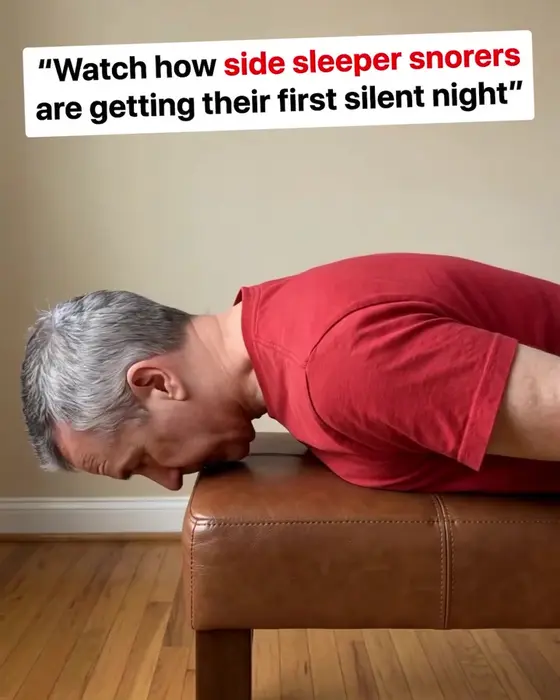
Snoring Stops Here!
Think nose strips help with snoring? Think again. 😨 Most men don’t know this but snoring has nothing to do with your nose, pillow placement, sleeping position or even weight… There is a hidden muscle that is responsible for 97% of snoring. Watch the video and find out how to control snoring in just one night 😴

play.google.com
🔥 Go Viral with AI Photos
See yourself in countless creative styles. From anime to luxury fashion and vintage aesthetics, AI makes every photo unforgettable.


qingnian.short.gy
When I was six years old, I saw a book about the primeval forest called *True Stories*, which contained a wonderful illustration. It depicted a python devouring a wild beast. This is what it looks like when drawn exactly as it was. The book described it like this: "These pythons swallow their prey whole without chewing, and then they can't move anymore. They sleep for six months to digest what they've swallowed." At that time, I thought a lot about the dangers of the jungle, so I drew my first picture with colored pencils. My first picture looked like this. I showed my masterpiece to the adults and asked them if they were scared. They replied, "What's so scary about a hat?" I hadn't drawn a hat; I had drawn a python digesting an elephant. So I drew the inside of the python's belly so the adults could understand. These adults always needed explanations. Here's my second picture. The adults advised me to put aside these dissected or complete python drawings and focus more on geography, history, arithmetic, and grammar. And so, at the age of six, I had to give up my promising career as an artist. My first and second drawings were unsuccessful, which discouraged me. Adults themselves never seem to understand anything, and children have to explain things to them over and over again—it's incredibly annoying. Later, I had to choose a different career and learned to fly airplanes. I've flown almost all over the world. Indeed, geography has been a huge help. I can distinguish China from Arizona in the US at a glance. Geography is invaluable if you get lost at night. Thus, in my life, I've had frequent contact with many respectable people. I lived in adult circles for a long time, observing them carefully, but this didn't change my opinion of them much. Whenever I met a somewhat clear-headed adult, I would take out the first drawing I had kept and test it on him. I wanted to know if he could really understand it. But he always answered, "It's a hat." So I stopped talking to him about pythons, primeval forests, and stars, and instead talked about things he could understand. I talked to him about bridge, golf, politics, and ties. This pleased the adult, for he had made a reasonable friend. I lived a solitary life, never truly confiding in anyone, until the accident in the Sahara Desert six years ago, which brought an end to that existence. Something in my plane's engine broke down. With neither a mechanic nor passengers around, I attempted the difficult repair myself. For me, it was a matter of life and death; I only had enough water for eight days. The first night, I slept in that desolate desert, a world away from human habitation. I felt more alone and helpless than a shipwrecked person in a small boat on a vast ocean. And at dawn the next day, when a strange little voice woke me, you can imagine how surprised I was. The little voice said: "Excuse me… could you draw me a sheep?" "Yes!" "Draw me a sheep…" As if struck by lightning, I jumped up. I rubbed my eyes hard and looked closely. I saw a very unusual little fellow staring at me intently. This was later the best portrait I painted of him. Of course, the portrait didn't quite capture his radiance. It wasn't my fault. When I was six, those adults ruined my chances of becoming a painter. I hadn't studied painting since then, except for drawing complete and dissected pythons. I stared in astonishment at this unexpected visitor. Don't forget, I was in a desolate desert, a world away from human habitation. To me, this little fellow didn't seem lost. He showed no signs of exhaustion, thirst, or fear. In short, he didn't look like a child lost in the vast, uninhabited desert. It took me a long time to speak. I asked him, "What...what are you doing here?" He solemnly repeated in a low voice, "Please...draw me a sheep..." When something mysterious captivates you, how can you dare disobey? Even though I was in the desert thousands of miles away and facing the danger of death, my actions seemed absurd and unbelievable. I still took out a piece of paper and a pen from my pocket. Only then did I remember that I had mainly studied geography, history, arithmetic, and grammar, so I said to the little guy with some impatience, "I can't draw." He replied, "It's alright, just draw me a sheep." Because I had never drawn a sheep before, I chose one of the two pictures I could draw—the one of the pythons swallowing an elephant whole—and redraw it for him. But the little guy's answer surprised me greatly: "No! No! I don't want a python; it has an elephant inside. Pythons are too dangerous, and elephants take up too much space. My place is too small; I need a sheep. Draw me one." So I drew him one. He looked at it intently, then said: "I don't want it; this sheep is very sick. Draw me another one." I drew another one. My friend smiled innocently and politely refused: "Look, what you drew is clearly not a lamb; it's a ram, and it even has horns..." So I drew another one. Like the previous ones, he refused it again: "This one is too old. I want a lamb that can live a very, very long time." I was impatient because I was in a hurry to disassemble my airplane engine. So I hastily drew this picture. I said to him, "This is a box, and the little sheep you wanted is inside." To my astonishment, I saw a gleam of joy on my little judge's face. He said, "This is exactly what I wanted... Do you think this sheep needs to eat a lot of grass?" "Why do you ask?" "Because my place is very small..." "Small, but enough to feed it. I drew you a very small sheep." He looked down at the drawing and said, "Not so small... Look! It's sleeping..." And that's how I met the Little Prince.It took me a long time to figure out where he came from. The Little Prince asked me many questions, but he seemed not to hear me at all. Some of his unintentional remarks gradually revealed his origins to me. For example, when he first saw my airplane (I won't draw it, as it's too complicated for me), he asked me: "What is this thing?" "It's not a 'thing.' It can fly. It's an airplane. It's my airplane." I proudly told him I could fly. He exclaimed in surprise: "What? Did you fall from the sky?" "Yes," I replied humbly. "Oh? That's funny." At this, the Little Prince let out a clear laugh. This made me very unhappy. I demand that others take my misfortune seriously. Then he said, “So, you're from the sky too! Which planet are you from?” Instantly, I vaguely grasped a clue to his origins; so I suddenly asked, “Are you from another planet?” But he didn't answer. He looked at my plane, nodded slightly, and continued, “Of course, riding in this thing, you couldn't possibly have come from far away…” He then fell into deep thought for a long time. Then, he took out the little sheep I had drawn from his pocket and stared intently at his treasure. You can imagine how intrigued these vague remarks about “other planets” were. Therefore, I tried my best to know more about its mysteries. “Where did you come from, my little fellow? Where is your home? Where are you taking my little lamb?” He pondered for a moment, then answered me: “Luckily, I have the box you gave me; it can be a house for the lamb at night.” “Of course. If you are good, I will draw you a rope so you can tie it up during the day. And a stake.” My suggestion seemed to offend the little prince a bit. “Tie it up, what a strange idea.” “If you don’t tie it up, it will run around everywhere, and it will get lost.” My friend laughed again: “Where do you want it to run off to?” “Anywhere. It just keeps running forward…” At this point, the little prince said solemnly: “It doesn’t matter, my place is very, very small.” Then, with a touch of sadness, he added: “If it keeps running forward, it won’t go very far…” I also learned another important thing: the planet where he lived was not much bigger than a house. This didn't surprise me too much. I knew that besides the major planets like Earth, Jupiter, Mars, and Venus, there were hundreds of other celestial bodies, some so small they were difficult to see even with a telescope. When an astronomer discovered one of these stars, he assigned it a number, such as "Asteroid 325." I have important evidence that the Little Prince's home planet was asteroid B612. This asteroid was only seen once, in 1909, by a Turkish astronomer using a telescope. At that time, he presented important arguments for his discovery at an international congress of astronomers. However, because of his clothing, no one believed him. That's how adults are. Fortunately, a Turkish dictator, to protect the reputation of asteroid B612, forced his people to wear European-style clothing or face execution. In 1920, the astronomer, dressed in very fine attire, presented his arguments again. This time, everyone agreed with him. I'm telling you these details about asteroid B612 and its number because of these adults. These adults love numbers. When you tell them about a new friend, they never ask you any substantial questions. They never say, "What does he sound like? What games does he like? Does he collect butterfly specimens?" Instead, they ask, "How old is he? How many brothers does he have? How much does he weigh? How much does his father earn?" They think that's how they know their friend. If you tell them, "I saw a beautiful house made of rose-colored bricks, with geraniums in the windows and pigeons on the roof..." they can't imagine how nice that house could be. You have to tell them, "I saw a house worth 100,000 francs." Then they'll exclaim, "What a beautiful house!" If you tell them, "The proof that the Little Prince exists is that he's very handsome, he smiles, and he wants a sheep. He wants a lamb, and that proves his existence," they'll just shrug and treat you like a child! But if you tell them, "The Little Prince came from asteroid B612," they'll believe you completely, and they won't bombard you with a bunch of questions. That's just how they are. Children should be kinder to adults and not complain about them. Of course, for those of us who understand life, we don't care about those numbers! I really wish I could start this story like a myth, I really wish I could say it like this: "Once upon a time, there was a little prince who lived on a planet almost the size of himself. He wished he had a friend..." To those who understand life, this sounds so real. I don't like people reading my book so casually. It was very sad for me to tell these stories. My friend and his lamb have been gone for six years. The reason I'm trying so hard to describe him here is so that I won't forget him. Forgetting a friend is so sad. Not everyone has had a friend. Besides, I might become like those adults, only interested in numbers. That's why I bought a box of paints and some pencils. At my age, and having only drawn pythons with closed bellies and open bellies when I was six, I've never tried anything else. Now, drawing again is really difficult! Of course, I want to make these drawings as realistic as possible, but I'm not confident myself. One drawing is okay, another isn't. Also, the sizes are a bit inaccurate. In one place, the Little Prince is too big, and in another, too small. I'm also unsure about the color of his clothes. So I just experimented, trying this and that, making adjustments until it was roughly right. I might have made mistakes in some important details. Please forgive me for that. Because my friend never explains himself. He thinks I'm like him. But, unfortunately, I can't see the lamb through the box. I guess I'm a bit like adults. I must be getting old.Every day I learned something new about the Little Prince's planet, his departure, and his travels. These were all gleaned gradually from various reactions. And so, on the third day, I learned about the tragedy of the baobab tree. This time, it was about the sheep again. Suddenly, the Little Prince asked me, seemingly very worried: "Is it true that sheep eat shrubs?" "Yes, it is." "Ah, I'm so happy." I didn't understand why the sheep eating shrubs was so important. But the Little Prince then said: "So, they also eat baobab trees?" I told the Little Prince that baobab trees aren't shrubs, but trees as big as churches; even if you brought back a herd of elephants, you couldn't eat a single baobab tree. The idea of a herd of elephants made the Little Prince laugh: “Then you’d have to stack all those elephants on top of each other,” he said knowledgeably. “Baobab trees start out small before they grow up.” “That’s true. But why do you want your sheep to eat the little baobab trees?” He answered me, “Well, that goes without saying!” as if it were self-evident. But I myself had to exert a great deal of effort to understand this. It turns out that on the Little Prince’s planet, like on all other planets, there is good grass and bad grass; therefore, there are also seeds of good grass and seeds of poisonous grass, but the seeds are invisible. They sleep in the soil until one of them suddenly wants to wake up… and then it stretches out and begins to shyly grow a beautiful and lovely little seedling towards the sun. If it is a radish or rose seedling, let it grow freely. If it is a bad seedling, once it is identified, it should be pulled out immediately. Because on the Little Prince's planet, there are some very terrible seeds… these are baobab seeds. They are so numerous in the soil there that they are a plague. And if you pull up a baobab seedling too late, you can never get rid of it. It will take over the whole planet. Its roots can drill through the planet, and if the planet is small and there are many baobab trees, it will shatter the whole planet. "It's a matter of discipline," the Little Prince later explained to me. "When you've finished washing up in the morning, you must carefully wash up the planet, and you must make a rule to pull up the baobab seedlings on time. When these seedlings are small, they look almost like rose seedlings, and once you can distinguish them, you must pull them up. It's a very tedious job, but it's easy." One day, he encouraged me to draw a beautiful picture so that the children in my hometown would have a deep impression of this. He also told me, “This will be very useful if they travel someday. Sometimes, it’s not a problem for people to put off their work, but when it comes to things like uprooting baobab seedlings, it can cause a disaster. I once met a planet where a lazy fellow lived, and he let three seedlings go…” So, based on the Little Prince’s description, I drew this planet. I’ve never been one to speak in a moralistic tone, but the danger of baobab trees is not widely understood, and it’s extremely dangerous for those lost on asteroids. Therefore, this time, I boldly broke my usual habit of not lecturing. I said, “Children, beware of those baobab trees!” To warn my friends of this danger—a danger they, like myself, have long encountered without realizing its severity—I put a lot of effort into drawing this picture. The lesson I’m presenting is very significant, and the effort was well worth it. You might ask, why aren’t the other drawings in this book as magnificent as this one? The answer was simple: I had tried to paint other pictures better, but without success. But when I painted the baobab tree, a sense of urgency motivated me. VI. Ah! Little Prince, that's how I gradually came to understand your melancholy life. For a long time, your only pleasure was watching the gentle sunset. This new detail I learned on the morning of the fourth day. You said to me then: “I love watching the sunset. Let's go watch a sunset!” “But we have to wait…” “Wait for what?” “For the sun to go down.” At first, you seemed very surprised, then you laughed at your own confusion. You said to me: “I always thought I was in my hometown!” Indeed, everyone knows that in America it's noon, and in France it's sunset; you can see the sunset if you get to France within a minute. Unfortunately, France is so far away. But on your little asteroid, you only need to move your chair a few steps. That way, you can see the sunset whenever you want…


play.google.com
🎨 Reimagine Yourself with AI
See yourself in countless creative styles. From anime to luxury fashion and vintage aesthetics, AI makes every photo unforgettable.


qingnian.short.gy
When I was six years old, I saw a book about the primeval forest called *True Stories*, which contained a wonderful illustration. It depicted a python devouring a wild beast. This is what it looks like when drawn exactly as it was. The book described it like this: "These pythons swallow their prey whole without chewing, and then they can't move anymore. They sleep for six months to digest what they've swallowed." At that time, I thought a lot about the dangers of the jungle, so I drew my first picture with colored pencils. My first picture looked like this. I showed my masterpiece to the adults and asked them if they were scared. They replied, "What's so scary about a hat?" I hadn't drawn a hat; I had drawn a python digesting an elephant. So I drew the inside of the python's belly so the adults could understand. These adults always needed explanations. Here's my second picture. The adults advised me to put aside these dissected or complete python drawings and focus more on geography, history, arithmetic, and grammar. And so, at the age of six, I had to give up my promising career as an artist. My first and second drawings were unsuccessful, which discouraged me. Adults themselves never seem to understand anything, and children have to explain things to them over and over again—it's incredibly annoying. Later, I had to choose a different career and learned to fly airplanes. I've flown almost all over the world. Indeed, geography has been a huge help. I can distinguish China from Arizona in the US at a glance. Geography is invaluable if you get lost at night. Thus, in my life, I've had frequent contact with many respectable people. I lived in adult circles for a long time, observing them carefully, but this didn't change my opinion of them much. Whenever I met a somewhat clear-headed adult, I would take out the first drawing I had kept and test it on him. I wanted to know if he could really understand it. But he always answered, "It's a hat." So I stopped talking to him about pythons, primeval forests, and stars, and instead talked about things he could understand. I talked to him about bridge, golf, politics, and ties. This pleased the adult, for he had made a reasonable friend. I lived a solitary life, never truly confiding in anyone, until the accident in the Sahara Desert six years ago, which brought an end to that existence. Something in my plane's engine broke down. With neither a mechanic nor passengers around, I attempted the difficult repair myself. For me, it was a matter of life and death; I only had enough water for eight days. The first night, I slept in that desolate desert, a world away from human habitation. I felt more alone and helpless than a shipwrecked person in a small boat on a vast ocean. And at dawn the next day, when a strange little voice woke me, you can imagine how surprised I was. The little voice said: "Excuse me… could you draw me a sheep?" "Yes!" "Draw me a sheep…" As if struck by lightning, I jumped up. I rubbed my eyes hard and looked closely. I saw a very unusual little fellow staring at me intently. This was later the best portrait I painted of him. Of course, the portrait didn't quite capture his radiance. It wasn't my fault. When I was six, those adults ruined my chances of becoming a painter. I hadn't studied painting since then, except for drawing complete and dissected pythons. I stared in astonishment at this unexpected visitor. Don't forget, I was in a desolate desert, a world away from human habitation. To me, this little fellow didn't seem lost. He showed no signs of exhaustion, thirst, or fear. In short, he didn't look like a child lost in the vast, uninhabited desert. It took me a long time to speak. I asked him, "What...what are you doing here?" He solemnly repeated in a low voice, "Please...draw me a sheep..." When something mysterious captivates you, how can you dare disobey? Even though I was in the desert thousands of miles away and facing the danger of death, my actions seemed absurd and unbelievable. I still took out a piece of paper and a pen from my pocket. Only then did I remember that I had mainly studied geography, history, arithmetic, and grammar, so I said to the little guy with some impatience, "I can't draw." He replied, "It's alright, just draw me a sheep." Because I had never drawn a sheep before, I chose one of the two pictures I could draw—the one of the pythons swallowing an elephant whole—and redraw it for him. But the little guy's answer surprised me greatly: "No! No! I don't want a python; it has an elephant inside. Pythons are too dangerous, and elephants take up too much space. My place is too small; I need a sheep. Draw me one." So I drew him one. He looked at it intently, then said: "I don't want it; this sheep is very sick. Draw me another one." I drew another one. My friend smiled innocently and politely refused: "Look, what you drew is clearly not a lamb; it's a ram, and it even has horns..." So I drew another one. Like the previous ones, he refused it again: "This one is too old. I want a lamb that can live a very, very long time." I was impatient because I was in a hurry to disassemble my airplane engine. So I hastily drew this picture. I said to him, "This is a box, and the little sheep you wanted is inside." To my astonishment, I saw a gleam of joy on my little judge's face. He said, "This is exactly what I wanted... Do you think this sheep needs to eat a lot of grass?" "Why do you ask?" "Because my place is very small..." "Small, but enough to feed it. I drew you a very small sheep." He looked down at the drawing and said, "Not so small... Look! It's sleeping..." And that's how I met the Little Prince.It took me a long time to figure out where he came from. The Little Prince asked me many questions, but he seemed not to hear me at all. Some of his unintentional remarks gradually revealed his origins to me. For example, when he first saw my airplane (I won't draw it, as it's too complicated for me), he asked me: "What is this thing?" "It's not a 'thing.' It can fly. It's an airplane. It's my airplane." I proudly told him I could fly. He exclaimed in surprise: "What? Did you fall from the sky?" "Yes," I replied humbly. "Oh? That's funny." At this, the Little Prince let out a clear laugh. This made me very unhappy. I demand that others take my misfortune seriously. Then he said, “So, you're from the sky too! Which planet are you from?” Instantly, I vaguely grasped a clue to his origins; so I suddenly asked, “Are you from another planet?” But he didn't answer. He looked at my plane, nodded slightly, and continued, “Of course, riding in this thing, you couldn't possibly have come from far away…” He then fell into deep thought for a long time. Then, he took out the little sheep I had drawn from his pocket and stared intently at his treasure. You can imagine how intrigued these vague remarks about “other planets” were. Therefore, I tried my best to know more about its mysteries. “Where did you come from, my little fellow? Where is your home? Where are you taking my little lamb?” He pondered for a moment, then answered me: “Luckily, I have the box you gave me; it can be a house for the lamb at night.” “Of course. If you are good, I will draw you a rope so you can tie it up during the day. And a stake.” My suggestion seemed to offend the little prince a bit. “Tie it up, what a strange idea.” “If you don’t tie it up, it will run around everywhere, and it will get lost.” My friend laughed again: “Where do you want it to run off to?” “Anywhere. It just keeps running forward…” At this point, the little prince said solemnly: “It doesn’t matter, my place is very, very small.” Then, with a touch of sadness, he added: “If it keeps running forward, it won’t go very far…” I also learned another important thing: the planet where he lived was not much bigger than a house. This didn't surprise me too much. I knew that besides the major planets like Earth, Jupiter, Mars, and Venus, there were hundreds of other celestial bodies, some so small they were difficult to see even with a telescope. When an astronomer discovered one of these stars, he assigned it a number, such as "Asteroid 325." I have important evidence that the Little Prince's home planet was asteroid B612. This asteroid was only seen once, in 1909, by a Turkish astronomer using a telescope. At that time, he presented important arguments for his discovery at an international congress of astronomers. However, because of his clothing, no one believed him. That's how adults are. Fortunately, a Turkish dictator, to protect the reputation of asteroid B612, forced his people to wear European-style clothing or face execution. In 1920, the astronomer, dressed in very fine attire, presented his arguments again. This time, everyone agreed with him. I'm telling you these details about asteroid B612 and its number because of these adults. These adults love numbers. When you tell them about a new friend, they never ask you any substantial questions. They never say, "What does he sound like? What games does he like? Does he collect butterfly specimens?" Instead, they ask, "How old is he? How many brothers does he have? How much does he weigh? How much does his father earn?" They think that's how they know their friend. If you tell them, "I saw a beautiful house made of rose-colored bricks, with geraniums in the windows and pigeons on the roof..." they can't imagine how nice that house could be. You have to tell them, "I saw a house worth 100,000 francs." Then they'll exclaim, "What a beautiful house!" If you tell them, "The proof that the Little Prince exists is that he's very handsome, he smiles, and he wants a sheep. He wants a lamb, and that proves his existence," they'll just shrug and treat you like a child! But if you tell them, "The Little Prince came from asteroid B612," they'll believe you completely, and they won't bombard you with a bunch of questions. That's just how they are. Children should be kinder to adults and not complain about them. Of course, for those of us who understand life, we don't care about those numbers! I really wish I could start this story like a myth, I really wish I could say it like this: "Once upon a time, there was a little prince who lived on a planet almost the size of himself. He wished he had a friend..." To those who understand life, this sounds so real. I don't like people reading my book so casually. It was very sad for me to tell these stories. My friend and his lamb have been gone for six years. The reason I'm trying so hard to describe him here is so that I won't forget him. Forgetting a friend is so sad. Not everyone has had a friend. Besides, I might become like those adults, only interested in numbers. That's why I bought a box of paints and some pencils. At my age, and having only drawn pythons with closed bellies and open bellies when I was six, I've never tried anything else. Now, drawing again is really difficult! Of course, I want to make these drawings as realistic as possible, but I'm not confident myself. One drawing is okay, another isn't. Also, the sizes are a bit inaccurate. In one place, the Little Prince is too big, and in another, too small. I'm also unsure about the color of his clothes. So I just experimented, trying this and that, making adjustments until it was roughly right. I might have made mistakes in some important details. Please forgive me for that. Because my friend never explains himself. He thinks I'm like him. But, unfortunately, I can't see the lamb through the box. I guess I'm a bit like adults. I must be getting old.Every day I learned something new about the Little Prince's planet, his departure, and his travels. These were all gleaned gradually from various reactions. And so, on the third day, I learned about the tragedy of the baobab tree. This time, it was about the sheep again. Suddenly, the Little Prince asked me, seemingly very worried: "Is it true that sheep eat shrubs?" "Yes, it is." "Ah, I'm so happy." I didn't understand why the sheep eating shrubs was so important. But the Little Prince then said: "So, they also eat baobab trees?" I told the Little Prince that baobab trees aren't shrubs, but trees as big as churches; even if you brought back a herd of elephants, you couldn't eat a single baobab tree. The idea of a herd of elephants made the Little Prince laugh: “Then you’d have to stack all those elephants on top of each other,” he said knowledgeably. “Baobab trees start out small before they grow up.” “That’s true. But why do you want your sheep to eat the little baobab trees?” He answered me, “Well, that goes without saying!” as if it were self-evident. But I myself had to exert a great deal of effort to understand this. It turns out that on the Little Prince’s planet, like on all other planets, there is good grass and bad grass; therefore, there are also seeds of good grass and seeds of poisonous grass, but the seeds are invisible. They sleep in the soil until one of them suddenly wants to wake up… and then it stretches out and begins to shyly grow a beautiful and lovely little seedling towards the sun. If it is a radish or rose seedling, let it grow freely. If it is a bad seedling, once it is identified, it should be pulled out immediately. Because on the Little Prince's planet, there are some very terrible seeds… these are baobab seeds. They are so numerous in the soil there that they are a plague. And if you pull up a baobab seedling too late, you can never get rid of it. It will take over the whole planet. Its roots can drill through the planet, and if the planet is small and there are many baobab trees, it will shatter the whole planet. "It's a matter of discipline," the Little Prince later explained to me. "When you've finished washing up in the morning, you must carefully wash up the planet, and you must make a rule to pull up the baobab seedlings on time. When these seedlings are small, they look almost like rose seedlings, and once you can distinguish them, you must pull them up. It's a very tedious job, but it's easy." One day, he encouraged me to draw a beautiful picture so that the children in my hometown would have a deep impression of this. He also told me, “This will be very useful if they travel someday. Sometimes, it’s not a problem for people to put off their work, but when it comes to things like uprooting baobab seedlings, it can cause a disaster. I once met a planet where a lazy fellow lived, and he let three seedlings go…” So, based on the Little Prince’s description, I drew this planet. I’ve never been one to speak in a moralistic tone, but the danger of baobab trees is not widely understood, and it’s extremely dangerous for those lost on asteroids. Therefore, this time, I boldly broke my usual habit of not lecturing. I said, “Children, beware of those baobab trees!” To warn my friends of this danger—a danger they, like myself, have long encountered without realizing its severity—I put a lot of effort into drawing this picture. The lesson I’m presenting is very significant, and the effort was well worth it. You might ask, why aren’t the other drawings in this book as magnificent as this one? The answer was simple: I had tried to paint other pictures better, but without success. But when I painted the baobab tree, a sense of urgency motivated me. VI. Ah! Little Prince, that's how I gradually came to understand your melancholy life. For a long time, your only pleasure was watching the gentle sunset. This new detail I learned on the morning of the fourth day. You said to me then: “I love watching the sunset. Let's go watch a sunset!” “But we have to wait…” “Wait for what?” “For the sun to go down.” At first, you seemed very surprised, then you laughed at your own confusion. You said to me: “I always thought I was in my hometown!” Indeed, everyone knows that in America it's noon, and in France it's sunset; you can see the sunset if you get to France within a minute. Unfortunately, France is so far away. But on your little asteroid, you only need to move your chair a few steps. That way, you can see the sunset whenever you want…


qingnian.short.gy
When I was six years old, I saw a book about the primeval forest called *True Stories*, which contained a wonderful illustration. It depicted a python devouring a wild beast. This is what it looks like when drawn exactly as it was. The book described it like this: "These pythons swallow their prey whole without chewing, and then they can't move anymore. They sleep for six months to digest what they've swallowed." At that time, I thought a lot about the dangers of the jungle, so I drew my first picture with colored pencils. My first picture looked like this. I showed my masterpiece to the adults and asked them if they were scared. They replied, "What's so scary about a hat?" I hadn't drawn a hat; I had drawn a python digesting an elephant. So I drew the inside of the python's belly so the adults could understand. These adults always needed explanations. Here's my second picture. The adults advised me to put aside these dissected or complete python drawings and focus more on geography, history, arithmetic, and grammar. And so, at the age of six, I had to give up my promising career as an artist. My first and second drawings were unsuccessful, which discouraged me. Adults themselves never seem to understand anything, and children have to explain things to them over and over again—it's incredibly annoying. Later, I had to choose a different career and learned to fly airplanes. I've flown almost all over the world. Indeed, geography has been a huge help. I can distinguish China from Arizona in the US at a glance. Geography is invaluable if you get lost at night. Thus, in my life, I've had frequent contact with many respectable people. I lived in adult circles for a long time, observing them carefully, but this didn't change my opinion of them much. Whenever I met a somewhat clear-headed adult, I would take out the first drawing I had kept and test it on him. I wanted to know if he could really understand it. But he always answered, "It's a hat." So I stopped talking to him about pythons, primeval forests, and stars, and instead talked about things he could understand. I talked to him about bridge, golf, politics, and ties. This pleased the adult, for he had made a reasonable friend. I lived a solitary life, never truly confiding in anyone, until the accident in the Sahara Desert six years ago, which brought an end to that existence. Something in my plane's engine broke down. With neither a mechanic nor passengers around, I attempted the difficult repair myself. For me, it was a matter of life and death; I only had enough water for eight days. The first night, I slept in that desolate desert, a world away from human habitation. I felt more alone and helpless than a shipwrecked person in a small boat on a vast ocean. And at dawn the next day, when a strange little voice woke me, you can imagine how surprised I was. The little voice said: "Excuse me… could you draw me a sheep?" "Yes!" "Draw me a sheep…" As if struck by lightning, I jumped up. I rubbed my eyes hard and looked closely. I saw a very unusual little fellow staring at me intently. This was later the best portrait I painted of him. Of course, the portrait didn't quite capture his radiance. It wasn't my fault. When I was six, those adults ruined my chances of becoming a painter. I hadn't studied painting since then, except for drawing complete and dissected pythons. I stared in astonishment at this unexpected visitor. Don't forget, I was in a desolate desert, a world away from human habitation. To me, this little fellow didn't seem lost. He showed no signs of exhaustion, thirst, or fear. In short, he didn't look like a child lost in the vast, uninhabited desert. It took me a long time to speak. I asked him, "What...what are you doing here?" He solemnly repeated in a low voice, "Please...draw me a sheep..." When something mysterious captivates you, how can you dare disobey? Even though I was in the desert thousands of miles away and facing the danger of death, my actions seemed absurd and unbelievable. I still took out a piece of paper and a pen from my pocket. Only then did I remember that I had mainly studied geography, history, arithmetic, and grammar, so I said to the little guy with some impatience, "I can't draw." He replied, "It's alright, just draw me a sheep." Because I had never drawn a sheep before, I chose one of the two pictures I could draw—the one of the pythons swallowing an elephant whole—and redraw it for him. But the little guy's answer surprised me greatly: "No! No! I don't want a python; it has an elephant inside. Pythons are too dangerous, and elephants take up too much space. My place is too small; I need a sheep. Draw me one." So I drew him one. He looked at it intently, then said: "I don't want it; this sheep is very sick. Draw me another one." I drew another one. My friend smiled innocently and politely refused: "Look, what you drew is clearly not a lamb; it's a ram, and it even has horns..." So I drew another one. Like the previous ones, he refused it again: "This one is too old. I want a lamb that can live a very, very long time." I was impatient because I was in a hurry to disassemble my airplane engine. So I hastily drew this picture. I said to him, "This is a box, and the little sheep you wanted is inside." To my astonishment, I saw a gleam of joy on my little judge's face. He said, "This is exactly what I wanted... Do you think this sheep needs to eat a lot of grass?" "Why do you ask?" "Because my place is very small..." "Small, but enough to feed it. I drew you a very small sheep." He looked down at the drawing and said, "Not so small... Look! It's sleeping..." And that's how I met the Little Prince.It took me a long time to figure out where he came from. The Little Prince asked me many questions, but he seemed not to hear me at all. Some of his unintentional remarks gradually revealed his origins to me. For example, when he first saw my airplane (I won't draw it, as it's too complicated for me), he asked me: "What is this thing?" "It's not a 'thing.' It can fly. It's an airplane. It's my airplane." I proudly told him I could fly. He exclaimed in surprise: "What? Did you fall from the sky?" "Yes," I replied humbly. "Oh? That's funny." At this, the Little Prince let out a clear laugh. This made me very unhappy. I demand that others take my misfortune seriously. Then he said, “So, you're from the sky too! Which planet are you from?” Instantly, I vaguely grasped a clue to his origins; so I suddenly asked, “Are you from another planet?” But he didn't answer. He looked at my plane, nodded slightly, and continued, “Of course, riding in this thing, you couldn't possibly have come from far away…” He then fell into deep thought for a long time. Then, he took out the little sheep I had drawn from his pocket and stared intently at his treasure. You can imagine how intrigued these vague remarks about “other planets” were. Therefore, I tried my best to know more about its mysteries. “Where did you come from, my little fellow? Where is your home? Where are you taking my little lamb?” He pondered for a moment, then answered me: “Luckily, I have the box you gave me; it can be a house for the lamb at night.” “Of course. If you are good, I will draw you a rope so you can tie it up during the day. And a stake.” My suggestion seemed to offend the little prince a bit. “Tie it up, what a strange idea.” “If you don’t tie it up, it will run around everywhere, and it will get lost.” My friend laughed again: “Where do you want it to run off to?” “Anywhere. It just keeps running forward…” At this point, the little prince said solemnly: “It doesn’t matter, my place is very, very small.” Then, with a touch of sadness, he added: “If it keeps running forward, it won’t go very far…” I also learned another important thing: the planet where he lived was not much bigger than a house. This didn't surprise me too much. I knew that besides the major planets like Earth, Jupiter, Mars, and Venus, there were hundreds of other celestial bodies, some so small they were difficult to see even with a telescope. When an astronomer discovered one of these stars, he assigned it a number, such as "Asteroid 325." I have important evidence that the Little Prince's home planet was asteroid B612. This asteroid was only seen once, in 1909, by a Turkish astronomer using a telescope. At that time, he presented important arguments for his discovery at an international congress of astronomers. However, because of his clothing, no one believed him. That's how adults are. Fortunately, a Turkish dictator, to protect the reputation of asteroid B612, forced his people to wear European-style clothing or face execution. In 1920, the astronomer, dressed in very fine attire, presented his arguments again. This time, everyone agreed with him. I'm telling you these details about asteroid B612 and its number because of these adults. These adults love numbers. When you tell them about a new friend, they never ask you any substantial questions. They never say, "What does he sound like? What games does he like? Does he collect butterfly specimens?" Instead, they ask, "How old is he? How many brothers does he have? How much does he weigh? How much does his father earn?" They think that's how they know their friend. If you tell them, "I saw a beautiful house made of rose-colored bricks, with geraniums in the windows and pigeons on the roof..." they can't imagine how nice that house could be. You have to tell them, "I saw a house worth 100,000 francs." Then they'll exclaim, "What a beautiful house!" If you tell them, "The proof that the Little Prince exists is that he's very handsome, he smiles, and he wants a sheep. He wants a lamb, and that proves his existence," they'll just shrug and treat you like a child! But if you tell them, "The Little Prince came from asteroid B612," they'll believe you completely, and they won't bombard you with a bunch of questions. That's just how they are. Children should be kinder to adults and not complain about them. Of course, for those of us who understand life, we don't care about those numbers! I really wish I could start this story like a myth, I really wish I could say it like this: "Once upon a time, there was a little prince who lived on a planet almost the size of himself. He wished he had a friend..." To those who understand life, this sounds so real. I don't like people reading my book so casually. It was very sad for me to tell these stories. My friend and his lamb have been gone for six years. The reason I'm trying so hard to describe him here is so that I won't forget him. Forgetting a friend is so sad. Not everyone has had a friend. Besides, I might become like those adults, only interested in numbers. That's why I bought a box of paints and some pencils. At my age, and having only drawn pythons with closed bellies and open bellies when I was six, I've never tried anything else. Now, drawing again is really difficult! Of course, I want to make these drawings as realistic as possible, but I'm not confident myself. One drawing is okay, another isn't. Also, the sizes are a bit inaccurate. In one place, the Little Prince is too big, and in another, too small. I'm also unsure about the color of his clothes. So I just experimented, trying this and that, making adjustments until it was roughly right. I might have made mistakes in some important details. Please forgive me for that. Because my friend never explains himself. He thinks I'm like him. But, unfortunately, I can't see the lamb through the box. I guess I'm a bit like adults. I must be getting old.Every day I learned something new about the Little Prince's planet, his departure, and his travels. These were all gleaned gradually from various reactions. And so, on the third day, I learned about the tragedy of the baobab tree. This time, it was about the sheep again. Suddenly, the Little Prince asked me, seemingly very worried: "Is it true that sheep eat shrubs?" "Yes, it is." "Ah, I'm so happy." I didn't understand why the sheep eating shrubs was so important. But the Little Prince then said: "So, they also eat baobab trees?" I told the Little Prince that baobab trees aren't shrubs, but trees as big as churches; even if you brought back a herd of elephants, you couldn't eat a single baobab tree. The idea of a herd of elephants made the Little Prince laugh: “Then you’d have to stack all those elephants on top of each other,” he said knowledgeably. “Baobab trees start out small before they grow up.” “That’s true. But why do you want your sheep to eat the little baobab trees?” He answered me, “Well, that goes without saying!” as if it were self-evident. But I myself had to exert a great deal of effort to understand this. It turns out that on the Little Prince’s planet, like on all other planets, there is good grass and bad grass; therefore, there are also seeds of good grass and seeds of poisonous grass, but the seeds are invisible. They sleep in the soil until one of them suddenly wants to wake up… and then it stretches out and begins to shyly grow a beautiful and lovely little seedling towards the sun. If it is a radish or rose seedling, let it grow freely. If it is a bad seedling, once it is identified, it should be pulled out immediately. Because on the Little Prince's planet, there are some very terrible seeds… these are baobab seeds. They are so numerous in the soil there that they are a plague. And if you pull up a baobab seedling too late, you can never get rid of it. It will take over the whole planet. Its roots can drill through the planet, and if the planet is small and there are many baobab trees, it will shatter the whole planet. "It's a matter of discipline," the Little Prince later explained to me. "When you've finished washing up in the morning, you must carefully wash up the planet, and you must make a rule to pull up the baobab seedlings on time. When these seedlings are small, they look almost like rose seedlings, and once you can distinguish them, you must pull them up. It's a very tedious job, but it's easy." One day, he encouraged me to draw a beautiful picture so that the children in my hometown would have a deep impression of this. He also told me, “This will be very useful if they travel someday. Sometimes, it’s not a problem for people to put off their work, but when it comes to things like uprooting baobab seedlings, it can cause a disaster. I once met a planet where a lazy fellow lived, and he let three seedlings go…” So, based on the Little Prince’s description, I drew this planet. I’ve never been one to speak in a moralistic tone, but the danger of baobab trees is not widely understood, and it’s extremely dangerous for those lost on asteroids. Therefore, this time, I boldly broke my usual habit of not lecturing. I said, “Children, beware of those baobab trees!” To warn my friends of this danger—a danger they, like myself, have long encountered without realizing its severity—I put a lot of effort into drawing this picture. The lesson I’m presenting is very significant, and the effort was well worth it. You might ask, why aren’t the other drawings in this book as magnificent as this one? The answer was simple: I had tried to paint other pictures better, but without success. But when I painted the baobab tree, a sense of urgency motivated me. VI. Ah! Little Prince, that's how I gradually came to understand your melancholy life. For a long time, your only pleasure was watching the gentle sunset. This new detail I learned on the morning of the fourth day. You said to me then: “I love watching the sunset. Let's go watch a sunset!” “But we have to wait…” “Wait for what?” “For the sun to go down.” At first, you seemed very surprised, then you laughed at your own confusion. You said to me: “I always thought I was in my hometown!” Indeed, everyone knows that in America it's noon, and in France it's sunset; you can see the sunset if you get to France within a minute. Unfortunately, France is so far away. But on your little asteroid, you only need to move your chair a few steps. That way, you can see the sunset whenever you want…

quirkmode.com
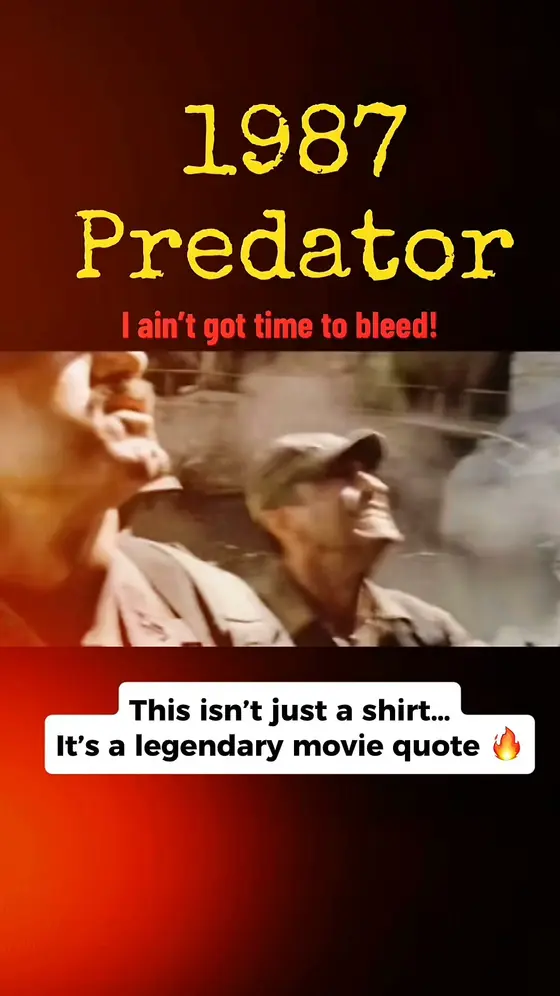
Want to collect endless compliments and start instant conversations this 4th of July? This legendary movie quote holiday tee acts as your ultimate wearable icebreaker. Melding traditional patriotic themes with an iconic piece of pop-culture history, the large back print pairs a battle-hardened hero and his heavy weaponry with glorious American flags and fireworks, transforming a standard top into a powerful nostalgic statement that people can't help but notice. Aimed at natural socializers, festival-goers, and anyone looking to bring unmatched charm and wit to their holiday itinerary. ◆ Social Media & Party Perks ◆ Instant Conversation Starter: The epic movie quote guarantees smiles and fist bumps from fellow fans. ◆ Camera Ready: Bold, high-saturation back graphics ensure you pop in every single holiday photo. ◆ All-Day Endurance: Feather-soft, light, and airy build that keeps up from daytime parades to late-night fireworks. 🎆 Level up your holiday wardrobe and let your clothing do the talking this weekend! Grab yours today and get ready to steal the spotlight at every event!👇


qingnian.short.gy
When I was six years old, I saw a book about the primeval forest called *True Stories*, which contained a wonderful illustration. It depicted a python devouring a wild beast. This is what it looks like when drawn exactly as it was. The book described it like this: "These pythons swallow their prey whole without chewing, and then they can't move anymore. They sleep for six months to digest what they've swallowed." At that time, I thought a lot about the dangers of the jungle, so I drew my first picture with colored pencils. My first picture looked like this. I showed my masterpiece to the adults and asked them if they were scared. They replied, "What's so scary about a hat?" I hadn't drawn a hat; I had drawn a python digesting an elephant. So I drew the inside of the python's belly so the adults could understand. These adults always needed explanations. Here's my second picture. The adults advised me to put aside these dissected or complete python drawings and focus more on geography, history, arithmetic, and grammar. And so, at the age of six, I had to give up my promising career as an artist. My first and second drawings were unsuccessful, which discouraged me. Adults themselves never seem to understand anything, and children have to explain things to them over and over again—it's incredibly annoying. Later, I had to choose a different career and learned to fly airplanes. I've flown almost all over the world. Indeed, geography has been a huge help. I can distinguish China from Arizona in the US at a glance. Geography is invaluable if you get lost at night. Thus, in my life, I've had frequent contact with many respectable people. I lived in adult circles for a long time, observing them carefully, but this didn't change my opinion of them much. Whenever I met a somewhat clear-headed adult, I would take out the first drawing I had kept and test it on him. I wanted to know if he could really understand it. But he always answered, "It's a hat." So I stopped talking to him about pythons, primeval forests, and stars, and instead talked about things he could understand. I talked to him about bridge, golf, politics, and ties. This pleased the adult, for he had made a reasonable friend. I lived a solitary life, never truly confiding in anyone, until the accident in the Sahara Desert six years ago, which brought an end to that existence. Something in my plane's engine broke down. With neither a mechanic nor passengers around, I attempted the difficult repair myself. For me, it was a matter of life and death; I only had enough water for eight days. The first night, I slept in that desolate desert, a world away from human habitation. I felt more alone and helpless than a shipwrecked person in a small boat on a vast ocean. And at dawn the next day, when a strange little voice woke me, you can imagine how surprised I was. The little voice said: "Excuse me… could you draw me a sheep?" "Yes!" "Draw me a sheep…" As if struck by lightning, I jumped up. I rubbed my eyes hard and looked closely. I saw a very unusual little fellow staring at me intently. This was later the best portrait I painted of him. Of course, the portrait didn't quite capture his radiance. It wasn't my fault. When I was six, those adults ruined my chances of becoming a painter. I hadn't studied painting since then, except for drawing complete and dissected pythons. I stared in astonishment at this unexpected visitor. Don't forget, I was in a desolate desert, a world away from human habitation. To me, this little fellow didn't seem lost. He showed no signs of exhaustion, thirst, or fear. In short, he didn't look like a child lost in the vast, uninhabited desert. It took me a long time to speak. I asked him, "What...what are you doing here?" He solemnly repeated in a low voice, "Please...draw me a sheep..." When something mysterious captivates you, how can you dare disobey? Even though I was in the desert thousands of miles away and facing the danger of death, my actions seemed absurd and unbelievable. I still took out a piece of paper and a pen from my pocket. Only then did I remember that I had mainly studied geography, history, arithmetic, and grammar, so I said to the little guy with some impatience, "I can't draw." He replied, "It's alright, just draw me a sheep." Because I had never drawn a sheep before, I chose one of the two pictures I could draw—the one of the pythons swallowing an elephant whole—and redraw it for him. But the little guy's answer surprised me greatly: "No! No! I don't want a python; it has an elephant inside. Pythons are too dangerous, and elephants take up too much space. My place is too small; I need a sheep. Draw me one." So I drew him one. He looked at it intently, then said: "I don't want it; this sheep is very sick. Draw me another one." I drew another one. My friend smiled innocently and politely refused: "Look, what you drew is clearly not a lamb; it's a ram, and it even has horns..." So I drew another one. Like the previous ones, he refused it again: "This one is too old. I want a lamb that can live a very, very long time." I was impatient because I was in a hurry to disassemble my airplane engine. So I hastily drew this picture. I said to him, "This is a box, and the little sheep you wanted is inside." To my astonishment, I saw a gleam of joy on my little judge's face. He said, "This is exactly what I wanted... Do you think this sheep needs to eat a lot of grass?" "Why do you ask?" "Because my place is very small..." "Small, but enough to feed it. I drew you a very small sheep." He looked down at the drawing and said, "Not so small... Look! It's sleeping..." And that's how I met the Little Prince.It took me a long time to figure out where he came from. The Little Prince asked me many questions, but he seemed not to hear me at all. Some of his unintentional remarks gradually revealed his origins to me. For example, when he first saw my airplane (I won't draw it, as it's too complicated for me), he asked me: "What is this thing?" "It's not a 'thing.' It can fly. It's an airplane. It's my airplane." I proudly told him I could fly. He exclaimed in surprise: "What? Did you fall from the sky?" "Yes," I replied humbly. "Oh? That's funny." At this, the Little Prince let out a clear laugh. This made me very unhappy. I demand that others take my misfortune seriously. Then he said, “So, you're from the sky too! Which planet are you from?” Instantly, I vaguely grasped a clue to his origins; so I suddenly asked, “Are you from another planet?” But he didn't answer. He looked at my plane, nodded slightly, and continued, “Of course, riding in this thing, you couldn't possibly have come from far away…” He then fell into deep thought for a long time. Then, he took out the little sheep I had drawn from his pocket and stared intently at his treasure. You can imagine how intrigued these vague remarks about “other planets” were. Therefore, I tried my best to know more about its mysteries. “Where did you come from, my little fellow? Where is your home? Where are you taking my little lamb?” He pondered for a moment, then answered me: “Luckily, I have the box you gave me; it can be a house for the lamb at night.” “Of course. If you are good, I will draw you a rope so you can tie it up during the day. And a stake.” My suggestion seemed to offend the little prince a bit. “Tie it up, what a strange idea.” “If you don’t tie it up, it will run around everywhere, and it will get lost.” My friend laughed again: “Where do you want it to run off to?” “Anywhere. It just keeps running forward…” At this point, the little prince said solemnly: “It doesn’t matter, my place is very, very small.” Then, with a touch of sadness, he added: “If it keeps running forward, it won’t go very far…” I also learned another important thing: the planet where he lived was not much bigger than a house. This didn't surprise me too much. I knew that besides the major planets like Earth, Jupiter, Mars, and Venus, there were hundreds of other celestial bodies, some so small they were difficult to see even with a telescope. When an astronomer discovered one of these stars, he assigned it a number, such as "Asteroid 325." I have important evidence that the Little Prince's home planet was asteroid B612. This asteroid was only seen once, in 1909, by a Turkish astronomer using a telescope. At that time, he presented important arguments for his discovery at an international congress of astronomers. However, because of his clothing, no one believed him. That's how adults are. Fortunately, a Turkish dictator, to protect the reputation of asteroid B612, forced his people to wear European-style clothing or face execution. In 1920, the astronomer, dressed in very fine attire, presented his arguments again. This time, everyone agreed with him. I'm telling you these details about asteroid B612 and its number because of these adults. These adults love numbers. When you tell them about a new friend, they never ask you any substantial questions. They never say, "What does he sound like? What games does he like? Does he collect butterfly specimens?" Instead, they ask, "How old is he? How many brothers does he have? How much does he weigh? How much does his father earn?" They think that's how they know their friend. If you tell them, "I saw a beautiful house made of rose-colored bricks, with geraniums in the windows and pigeons on the roof..." they can't imagine how nice that house could be. You have to tell them, "I saw a house worth 100,000 francs." Then they'll exclaim, "What a beautiful house!" If you tell them, "The proof that the Little Prince exists is that he's very handsome, he smiles, and he wants a sheep. He wants a lamb, and that proves his existence," they'll just shrug and treat you like a child! But if you tell them, "The Little Prince came from asteroid B612," they'll believe you completely, and they won't bombard you with a bunch of questions. That's just how they are. Children should be kinder to adults and not complain about them. Of course, for those of us who understand life, we don't care about those numbers! I really wish I could start this story like a myth, I really wish I could say it like this: "Once upon a time, there was a little prince who lived on a planet almost the size of himself. He wished he had a friend..." To those who understand life, this sounds so real. I don't like people reading my book so casually. It was very sad for me to tell these stories. My friend and his lamb have been gone for six years. The reason I'm trying so hard to describe him here is so that I won't forget him. Forgetting a friend is so sad. Not everyone has had a friend. Besides, I might become like those adults, only interested in numbers. That's why I bought a box of paints and some pencils. At my age, and having only drawn pythons with closed bellies and open bellies when I was six, I've never tried anything else. Now, drawing again is really difficult! Of course, I want to make these drawings as realistic as possible, but I'm not confident myself. One drawing is okay, another isn't. Also, the sizes are a bit inaccurate. In one place, the Little Prince is too big, and in another, too small. I'm also unsure about the color of his clothes. So I just experimented, trying this and that, making adjustments until it was roughly right. I might have made mistakes in some important details. Please forgive me for that. Because my friend never explains himself. He thinks I'm like him. But, unfortunately, I can't see the lamb through the box. I guess I'm a bit like adults. I must be getting old.Every day I learned something new about the Little Prince's planet, his departure, and his travels. These were all gleaned gradually from various reactions. And so, on the third day, I learned about the tragedy of the baobab tree. This time, it was about the sheep again. Suddenly, the Little Prince asked me, seemingly very worried: "Is it true that sheep eat shrubs?" "Yes, it is." "Ah, I'm so happy." I didn't understand why the sheep eating shrubs was so important. But the Little Prince then said: "So, they also eat baobab trees?" I told the Little Prince that baobab trees aren't shrubs, but trees as big as churches; even if you brought back a herd of elephants, you couldn't eat a single baobab tree. The idea of a herd of elephants made the Little Prince laugh: “Then you’d have to stack all those elephants on top of each other,” he said knowledgeably. “Baobab trees start out small before they grow up.” “That’s true. But why do you want your sheep to eat the little baobab trees?” He answered me, “Well, that goes without saying!” as if it were self-evident. But I myself had to exert a great deal of effort to understand this. It turns out that on the Little Prince’s planet, like on all other planets, there is good grass and bad grass; therefore, there are also seeds of good grass and seeds of poisonous grass, but the seeds are invisible. They sleep in the soil until one of them suddenly wants to wake up… and then it stretches out and begins to shyly grow a beautiful and lovely little seedling towards the sun. If it is a radish or rose seedling, let it grow freely. If it is a bad seedling, once it is identified, it should be pulled out immediately. Because on the Little Prince's planet, there are some very terrible seeds… these are baobab seeds. They are so numerous in the soil there that they are a plague. And if you pull up a baobab seedling too late, you can never get rid of it. It will take over the whole planet. Its roots can drill through the planet, and if the planet is small and there are many baobab trees, it will shatter the whole planet. "It's a matter of discipline," the Little Prince later explained to me. "When you've finished washing up in the morning, you must carefully wash up the planet, and you must make a rule to pull up the baobab seedlings on time. When these seedlings are small, they look almost like rose seedlings, and once you can distinguish them, you must pull them up. It's a very tedious job, but it's easy." One day, he encouraged me to draw a beautiful picture so that the children in my hometown would have a deep impression of this. He also told me, “This will be very useful if they travel someday. Sometimes, it’s not a problem for people to put off their work, but when it comes to things like uprooting baobab seedlings, it can cause a disaster. I once met a planet where a lazy fellow lived, and he let three seedlings go…” So, based on the Little Prince’s description, I drew this planet. I’ve never been one to speak in a moralistic tone, but the danger of baobab trees is not widely understood, and it’s extremely dangerous for those lost on asteroids. Therefore, this time, I boldly broke my usual habit of not lecturing. I said, “Children, beware of those baobab trees!” To warn my friends of this danger—a danger they, like myself, have long encountered without realizing its severity—I put a lot of effort into drawing this picture. The lesson I’m presenting is very significant, and the effort was well worth it. You might ask, why aren’t the other drawings in this book as magnificent as this one? The answer was simple: I had tried to paint other pictures better, but without success. But when I painted the baobab tree, a sense of urgency motivated me. VI. Ah! Little Prince, that's how I gradually came to understand your melancholy life. For a long time, your only pleasure was watching the gentle sunset. This new detail I learned on the morning of the fourth day. You said to me then: “I love watching the sunset. Let's go watch a sunset!” “But we have to wait…” “Wait for what?” “For the sun to go down.” At first, you seemed very surprised, then you laughed at your own confusion. You said to me: “I always thought I was in my hometown!” Indeed, everyone knows that in America it's noon, and in France it's sunset; you can see the sunset if you get to France within a minute. Unfortunately, France is so far away. But on your little asteroid, you only need to move your chair a few steps. That way, you can see the sunset whenever you want…

page.taponland.com
📚From Unwanted To Dominator: Her Comeback!🤩
My childhood had "three rules." No dresses. No long hair. And never—ever—take anything that belonged to Jasmine Hayes. Mom made those rules herself. She needed to protect Jasmine's place as the family's one and only princess. From the moment I could understand words, I was treated like Jasmine's servant. If she liked pink, I couldn't like pink. If she wanted to bring her stuffed animals on vacation, there was no seat left for me in the car. If her grades were bad, I wasn't allowed to be first in class. And still—even after all that—I was thrown away. Because Mom said, "Your birth was a mistake." … Mom hadn't had an easy childhood. As the oldest, she'd been forced to care for her younger siblings while growing up, and she carried deep wounds from her own mother's house. After marrying Dad, she swore they'd only ever have one child. But after Jasmine was born, they got pregnant again—by accident. With me. So I wasn't born into love. The day I came into the world, Mom didn't hold me. She wouldn't even look at me properly. I cried a lot as a baby. And she'd glare at me and say, "She's already learned to cry on purpose—to steal attention. What kind of person will she grow up to be?" The nanny who looked after me thought it was ridiculous and blurted out, "Kids cry—that's just what they do. How's that 'on purpose'?" Already in a fragile state, Mom completely unraveled at the nanny's comment. She grabbed fistfuls of her hair, shrieking hysterically—sending both the nanny and Dad stumbling back in shock. "What am I supposed to do?!" she shrieked, tears streaming down her face. "People already like her more! What about my Jasmine? My Jasmine is the only princess in this house! You little bitch—why are you trying to steal her love?!" Dad wrapped his arms around her, murmuring soft words until she collapsed against his chest, sobbing so hard she could barely breathe. Through gasps and tears, she clutched his shirt and begged, "Harrison Hayes… please. Send her away. Just… send her away." He didn't have a choice. He rented a tiny apartment across town and moved me out with my nanny, Doris Foster. I never tasted Mom's milk—not once. That was saved for Jasmine. Even though Jasmine was already two—old enough to wean—Mom kept nursing her, saying she "just couldn't bear to take it away." So Doris fed me formula. I couldn't stand the taste of formula—every feeding ended in violent vomiting. Doris panicked and dialed Mom, pleading with her to come check on me. Mom's reply was cold. "I'm not a doctor. What good would me looking at her do? Just take her to the hospital." A pause. Then, softer—but crueler. "I've got plans this afternoon. Jasmine and I are going to the amusement park. Don't bother me." Mom ended the call without a word. Doris pulled me into her arms and wept—great, shaking sobs that soaked my tiny shoulder. Until I turned six, I lived with Doris. Dad visited sometimes. But Mom? Never once. I was just a kid, full of questions. Again and again, I asked Doris, "Why don't I ever see Mom?" Whenever I brought it up, Doris would steer the conversation elsewhere—never giving me a real answer. Eventually, I just stopped asking. I didn't mind most days—but sometimes, watching other children walk hand in hand with their mom and dad, I'd feel that quiet ache of loss. Chapter 2 Three Rules I was brought back home when I turned six. Not because they'd suddenly grown to love me—but because Doris, the nanny who raised me, had retired. That was also the first time I ever saw Jasmine. She was wearing a pink princess dress, surrounded by scattered dolls in the living room. Mom sat beside her, patiently coaxing spoonfuls of food into her mouth with soft murmurs and gentle smiles. Dad led me through the front door. The moment Jasmine saw me, her expression went cold. Her brows pinched together like she'd just spotted something dirty—something that didn't belong. "Jasmine," Dad said gently, "this is your little sister, Annie Hayes." I stood frozen, barely whispering, "Sister…" Mom's frown deepened instantly. Jasmine stared at me for a long moment. Then her lip trembled, and she burst into tears. "Mom! You said I was the only princess in this house! Why do I have a sister now? And why is she wearing my favorite pink dress?! That's my color! Only I'm allowed to wear it!" "Jasmine, sweetie, don't cry! Don't cry, baby!" Mom's voice melted into honey the second her daughter sobbed. She pulled Jasmine into her arms, wiping away tears with feather-light touches—so tender it hurt to watch. It was the same woman who'd looked at me seconds ago like I was trash on her shoe. While cradling Jasmine, Mom snapped her head toward me. Her eyes—sharp as ice-coated blades—pierced right through me. "Who told you you could wear pink?" Her voice cracked like a whip. "Don't you know that's Jasmine's color?" I flinched, rooted to the spot, too scared to move or speak. Dad cleared his throat, voice strained and dry. "Claire Hayes… she just got here. It's just a dress…" But Mom wasn't listening. In one furious motion, she lunged forward and grabbed the fabric of my dress. With a harsh rip, she tore it clean down the front. The force yanked me off balance, and I crashed onto the hardwood floor. Pain shot up my arm. I screamed—not just from the fall, but from the shock, the shame, the crushing weight of betrayal. I cried until my throat burned, sobbing like my heart was splitting open. That dress… Doris had helped me put it on that morning. She'd smiled, smoothing the fabric with pride. "Annie, you look so pretty in this. Your mom's gonna be so happy to see you." But Mom wasn't happy. She was furious—and she'd shredded that hope along with the dress. She loomed over me, voice low and final. "You listen well. In this house, Jasmine is the only princess. Always. Starting today—you will never wear dresses. You will never grow your hair long. And you will never, ever take anything that belongs to Jasmine. Do you understand?!" Those "Three Rules" branded themselves into my six-year-old soul like red-hot iron. Above us, the living room light cast a harsh, sterile glare over Mom's face—cold, unyielding, absolute. Cradling Jasmine like a sacred relic, she stood like a goddess guarding her temple, shutting me out forever. Dad opened his mouth—maybe to protest, maybe to comfort me. But in the end, he just let out a heavy, exhausted sigh and turned away. From that day on, the "Three Rules" became law. My closet filled only with dull pants, oversized T-shirts, and shapeless athletic wear—all in gray, navy, black. No color. No joy. Just a permanent shadow I wore every day. I never owned a hair clip. My hair stayed cropped short, bristly like a hedgehog's back. The boys called me "tomboy." The girls wouldn't even look at me. Chapter 3 I Want Her Love Even though I knew Mom didn't love me, wanting her love was just… part of being a kid. So from as early as I could remember, I learned to be quiet, obedient—good. Because only then would she sometimes give me the tiniest flicker of a smile. But even being good could turn into a reason for her to hate me. Like that time at a dinner with my dad's friend, Owen Smith. Jasmine sat beside Mom, rattling off a long list of dishes without hesitation. She chatted with the adults like she owned the table, all bright eyes and confident giggles. Everyone cooed over how "poised" and "charming" she was. When the menu finally reached me, I didn't reach for it. I just shook my head softly. "I'm okay. I don't need anything." Because I knew—I didn't have the right to order. Order too much? I'd be "wasteful." Pick something expensive? I'd be "greedy." Choose wrong? I'd "upset Mom." Owen leaned over kindly. "Come on, Annie! Pick something you like. Don't be shy." Mom glanced at me—just once—then said flatly, voice dripping with disdain. "Don't bother. She spends all day with her head down, barely speaks a word. Honestly, just looking at her gives me a headache." Her words didn't just sting—they pierced. Like a needle driven straight into my chest. Owen flushed, trying to smooth things over. "Ah, Annie's just shy! She's not ordering because she doesn't want to waste food—see how thoughtful she is?" That did it. Mom's face twisted. "Thoughtful?" she snapped, eyes blazing. "So you're saying Jasmine's not thoughtful? That she's wasteful? Is that what you mean?" Owen froze, mouth opening and closing like a fish. He stammered something unintelligible, hands raised in surrender. Then Mom whirled on me. "And you—what are you playing at? Huh? Acting all sweet and quiet in front of Owen? Trying to make yourself look like the 'good' kid so everyone thinks Jasmine's spoiled? Trying to make us look like bad parents?" Every single word hit like a frozen whip—right where I wasn't ready to be hurt. And just like that, I was drowning in this huge, stupid wave of hurt and how wrong it all was. I hadn't done anything. I just… didn't want to cause trouble! "You're six years old," Mom hissed, voice shrill now, finger jabbing toward my face, "and already so calculating? So full of tricks?" My cheeks burned. My ears roared like ocean waves. Everything after that blurred—the rest of her yelling, the clinking glasses, the hushed whispers. All I felt were the stares: shocked, pitying, amused, indifferent… each one a thorn digging into my skin until I couldn't breathe. And in that moment, a single, broken question echoed in my mind— Why was being good… still wrong?
Create a free account to browse every page, filter by country and run time, and save winners to your swipe file.
Brands with the most active ads in this slice of the library.
 MC2 Saint Barth1.4K active · 2.5K total
 Zalando Brands822 active · 2.5K total
 Thrivin662 active · 8.7K total
 Tailored642 active · 2.5K total
 Rippl456 active · 750 total
 Sunfere410 active · 1.5K total
 Dr. James Wilson, MD394 active · 742 total
 Modlily330 active · 10K total
 Lilysilk282 active · 2.5K total
 OGLmove234 active · 10K total
 Langston & Reed220 active · 1.5K total
 Curvy-faja215 active · 10K total
The library currently holds 179,638 fashion & apparel ads from 1,114 advertisers, with new ads added continuously.
Set the status filter to active and the running filter to 30+ days, then sort by longest running. Ads that survive that long are usually profitable; widen to ads running in 5+ countries to find the ones being scaled.
Yes. Open any advertiser and click Track brand. PixelSpyer will notify you when they launch new ads.
Free account, no card. Search the full library with filters for run time, reach and more.