
oramalens.com
Your supplements are Working. Your Eyes Are Canceling It Every Night.
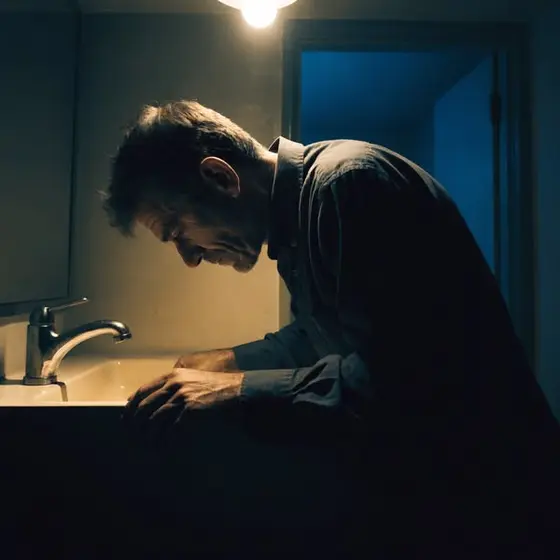
Stop taking ashwagandha to boost testosterone. You're chemically canceling it every single night - and you have no idea it's happening. I know because I did it for two years straight. Two years of doing everything the way you're supposed to. Lifting four times a week. Sleeping eight hours. Taking the stack - Ashwagandha. Zinc. Magnesium. Vitamin D. Eating enough protein. Keeping alcohol to a minimum. And still feeling like something was deeply, fundamentally wrong. Not broken in an obvious way. Not sick. Just... dulled. Like someone had turned the volume down on everything. My drive. My focus. My energy in the gym. My mood when I got home. My presence with the people around me. I was 29 and felt like I was running on half a tank permanently. The worst part wasn't the gym. It was the smaller things. Snapping at people over nothing. Sitting in meetings feeling like I was watching myself from the outside. Coming home with nothing left. Lying next to my girlfriend feeling miles away. I kept telling myself I was just tired. Overworked. That it would pass. It didn't pass. So I got bloodwork done. My testosterone came back at 368 ng/dL. The lab range said anything above 300 was "normal." My doctor glanced at it and said I was fine. I was 29. I was not fine. I started researching obsessively. Forums. Studies. Podcasts. YouTube rabbit holes at midnight. I added more supplements. Tried cold showers. Bought a red light therapy device. Cycled my caffeine. Cut alcohol entirely for 60 days. My next test three months later: 381 ng/dL. Essentially nothing moved. I remember sitting with that result and feeling something shift. Not motivation. Not anger. Just a quiet, exhausted realization that I'd been solving the wrong problem for two years. That whatever was suppressing my testosterone, it wasn't something more supplements were going to fix. That's when I stopped asking "how do I boost testosterone" and started asking something different. What is actually suppressing it. It was 2:17 AM on a Wednesday when I found something I wasn't looking for. I was following a chain of citations through a research paper on cortisol and testosterone. Not looking for anything specific. Just deep in a rabbit hole, eyes burning, phone brightness turned all the way down. The mechanism was simple but I'd never seen it explained this clearly. Cortisol and testosterone run on a direct inverse relationship. When cortisol rises, testosterone production falls. Not metaphorically - biochemically. They share the same biological resources and cortisol takes priority every single time, because your body treats it as a survival signal. High cortisol means your body thinks it's under threat. And a body under threat doesn't allocate resources to building testosterone. It conserves. It protects. It keeps you alive first and worries about everything else later. The paper wasn't about supplements or training programs. It was about cortisol timing. Specifically about what causes cortisol to spike at the wrong time of day. Cortisol is supposed to peak in the morning. That's normal - it's what pulls you out of sleep and gets you moving. By evening it should be dropping, which is what allows testosterone production to ramp up overnight while you sleep. But in men with chronically suppressed testosterone, the researchers kept finding something else. A second cortisol spike. In the evening. Right in the window when testosterone restoration is supposed to begin. And the primary driver - consistent across study after study - was light exposure after dark. Specifically, a narrow band of blue wavelength light, 445-480nm, that your retina is exquisitely sensitive to. When that wavelength hits your eyes after sunset, your brain interprets it as midday sun. Not metaphorically. Your suprachiasmatic nucleus - the part of your brain that controls your hormone clock - receives that signal and responds exactly as if it's noon. Cortisol rises. Melatonin gets suppressed. Your entire hormonal sequence gets pushed back by hours. And testosterone, which needs that evening wind-down to begin its overnight restoration cycle, never gets the signal to start. I sat there at 2:17 AM reading this. On my phone. In the dark. Sending that exact signal to my brain with every minute I kept reading. I thought about my evenings. TV until 10, phone in bed until 11, sometimes later. The stack sitting on my nightstand. Eight hours of sleep that never felt like it actually restored anything. My cortisol was spiking every evening right when it needed to be falling. My testosterone was trying to restore overnight in a body that was chemically convinced it was still afternoon. And I had been supplementing into that broken system for two years expecting different results. The ashwagandha wasn't the problem. The zinc wasn't the problem. None of the supplements were the problem. I was canceling them with my own eyes every single night. The paper referenced filtering that specific wavelength in the evening as the most direct intervention. Block it, and the cortisol spike doesn't happen. Your hormone clock reads the environment correctly. The wind-down begins on schedule. I'd heard of blue light glasses before. Everyone has. I'd always assumed they were something between a wellness gimmick and a solution for eye strain. The kind of thing that sounds plausible but doesn't actually move the needle on anything real. But what I'd seen before were the clear or pale yellow ones. Basically cosmetic. They cut surface glare and maybe a fraction of the relevant spectrum - nowhere near enough to affect your cortisol response. What the research consistently used was something different. Deep red lenses. Dark enough that everything looks different when you put them on. Filtering the specific 445-480nm range that triggers the evening cortisol spike - not just reducing it, actually blocking it. I almost didn't do anything with it. Glasses. The answer was glasses. After two years of bloodwork, protocols, specialist appointments, and a supplement bill that would make most people wince - the research was pointing at a pair of red lenses. It felt insulting. I actually closed the tab. Went to bed. Told myself I'd probably misread the methodology. But the idea kept coming back the next day in the way that inconvenient truths do. I'd gone looking for what was suppressing my testosterone and I'd found a credible answer. Dismissing it because it felt too simple wasn't logic. It was ego. So that evening, almost reluctantly, I looked up whether the right kind of lenses even existed outside of a research setting. Not a brand. Just - does this actually exist as a product you can buy. Turns out they do. But most of what's out there is essentially useless - pale yellow tints that cut surface glare and nothing else. What the research used was deep red. Dark enough that everything looks different through them. I found a pair that matched the spec. Ordered them without overthinking it because at that point my ego had already cost me two years. Put them on the first evening around 8pm feeling completely ridiculous. Watching TV in red-tinted glasses like some kind of biohacker. Nothing felt different at 9. Nothing at 10. But around 11, I noticed I'd stopped gripping the screen the way I usually do late at night. That restless, magnetic pull toward one more episode, one more scroll - it just wasn't there. I was tired. Not wired-tired. Just tired. I went to bed. Lay there waiting for the usual - that stretched-out feeling where your body is done but your mind keeps running. It didn't really come. I woke up naturally. Feeling… awake. I didn't make anything of it. One night is one night. Second night, same thing. In bed before 11. Woke up before the alarm. The third morning I was in the shower and realized I hadn't run my usual mental inventory of how tired I was. That background hum of fatigue I'd been carrying so long I'd stopped noticing it - it was quieter. Not gone. Just quieter. Like something had been turned down. The weeks after that were less dramatic than I expected and more real. The flatness started lifting. Not overnight - gradually. I remember one specific moment about three weeks in - sitting in a meeting and actually following the conversation instead of just waiting for it to end. It sounds small. It wasn't small. Less of that underwater feeling in the gym. Shorter recovery between sets. Waking up and actually wanting to start the day instead of immediately calculating how to get through it. Twelve weeks later I retested. Testosterone: 574 ng/dL. I checked the number three times. 206 points higher than my baseline. I hadn't changed my training. Hadn't added a single new supplement. Hadn't touched my diet. The ashwagandha I'd been taking for two years didn't suddenly become more powerful. It was probably always capable of working. My body just finally had the biological conditions to actually use it. You can't out-supplement a system that's running the wrong program. And that program runs through your eyes. If you're doing everything right - the training, the sleep, the supplements - and still feeling like you're operating at half of what you should be, it's worth asking one question before you add anything else to your stack. What signal are you sending your brain in the two hours before bed. Because your testosterone doesn't restore itself by accident. It needs a specific biological sequence to do it properly. Most men are accidentally breaking that sequence every single night. Not because they're doing anything wrong. Because nobody told them that the light hitting their eyes at 10pm is louder than any supplement they'll ever take. I just wish someone had told me two years and several hundred dollars ago. Because here's what I keep thinking about. Every night you go to bed after hours of screen time, your testosterone is trying to restore itself inside a body that's chemically convinced it's still 2pm. Your supplements are in your bloodstream. Your body just can't use them. And tomorrow morning you'll wake up tired, blame your genetics, add something new to your stack, and repeat the whole cycle again. I did that for two years. You don't have to. The lenses I found are linked below. Deep red, 445-480nm filtration - the same spec the research used. I put them on at 8pm, kept doing everything I was already doing, and let my body finally run the program it was always supposed to run. If you're already doing everything right and still not seeing results - this is the variable you haven't tested yet.