PixelSpyer

Laura Bennett ad: I Let My Daughter Host Thanksgiving For The Second Year In A Row. I Told Her It…

I Let My Daughter Host Thanksgiving For The Second Year In A Row. I Told Her It…
Laura Bennett

Education website, 146 followers, 3 ads in library

InactiveFitnessImageLibrary ID 1023698636811670
Launched Jun 25, 2026Run time unknown

New ads are still being tested; watch whether it survives past 30 days.

Ad copy

I Let My Daughter Host Thanksgiving For The Second Year In A Row. I Told Her It Was Because Her House Had More Room.

That wasn't the whole truth. The whole truth was that I didn't trust myself to be on my feet for four hours in the kitchen anymore. I've hosted Thanksgiving for twenty-three years. My kitchen. My recipes. My timing. Three things in the oven at once and I know exactly where everything is and how to manage it so nothing's cold when it hits the table. My daughter has never once gotten the gravy right. My son-in-law requests my stuffing by name every October, like a standing reminder of what's coming. Two years ago I handed all of that over and let my daughter think it was because her house has a bigger table. Her table is not bigger than mine. What was actually happening: standing at the counter for forty-five minutes had started being something I thought about before I did it. Not sharp pain, exactly — but my hip and both knees had started giving me feedback that made me calculate before I committed. By the time I'd been on my feet for two hours, the question had shifted from "should I sit down?" to "I need to sit down." And I did not want my family to see me need that, on Thanksgiving, in my own kitchen, while I was trying to be the person I had always been in that room. So I offered to let my daughter host. She was thrilled. She asked me twice if I was sure. I told her I was ready to relax and enjoy the holiday for once. I sat at her table watching her manage the timing wrong and thought about my gravy the whole afternoon. I'm 66. The Thanksgiving kitchen was just where I noticed it first. It was also the cookie baking I'd started doing in stages instead of in one afternoon. The trip to the farmers market I used to walk in full — all the aisles, all the vendors — that had become half the aisles and straight to the car. The kneeling in my garden that I'd replaced with sitting on a low stool and still found reasons to cut short. The church choir I'd been in for eleven years, which requires standing for an hour, that I'd quietly stopped going to in the spring and told people I was taking a break. None of it was a single decision. All of it had a reason that sounded fine when I said it out loud. I tried everything sensible. A low-impact fitness class at the recreation center — three weeks, then a bad hip day made me miss one session and I never quite got back. A stationary bike I got in January that I used steadily for almost a month before life got in the way and it stopped being something I came back to. An online workout specifically for women over sixty that I did four times. The standing balance sections left my hip aching enough the next day that I'd talk myself out of starting again until it cleared, and it never quite cleared before the next week's version of the same thing. My doctor, every appointment: your weight is a factor, stay as active as you can, these things take time after sixty. I know they take time after sixty. I've been sixty-four, sixty-five, and now sixty-six while things have been taking time. My doctor never explained why trying harder kept producing the same result. She didn't explain why the fitness class made the next morning worse, or why the walking that helped for a while eventually stopped helping, or why every reasonable attempt at fixing the problem seemed to push me a little further behind where I started. She just said to keep at it. I kept at it. I got further behind anyway. Then I saw my friend Sylvia at book club in September. Sylvia and I have known each other for fourteen years. We see each other once a month, sometimes more, and every few months I'd been registering the same quiet change I was experiencing in myself — the careful lowering into chairs, the not-quite-right way of moving that people our age learn to manage in public so nobody has to notice. Except in September Sylvia didn't look like that anymore. She got up twice during our meeting. No hands. No pre-stand pause. She just got up, the way you get up when getting up is not something you're thinking about. I waited until people were leaving and said: "Okay. What's changed." She laughed. "I know," she said. "I've been waiting for someone to ask." She told me over coffee after everyone else had gone. She'd started doing a chair tai chi program six weeks earlier. Twenty minutes, most mornings, in her own kitchen. She'd been skeptical — thought it sounded like the gentler-than-necessary seated exercise that gets advertised to people who've given up on real movement. But her doctor had suggested it specifically, and she'd been out of ideas, so she'd tried it. "The difference," she said, "is that it doesn't hurt the next day. Which sounds like a small thing until you realize that everything you've tried has been ending the same way — you do it, something's worse the next morning, and you stop. This just doesn't do that. And when there's no next-day cost, your body stops treating movement like a threat it needs to recover from." I asked her what she meant by that. "There's a reason everything we try stops working," she said. "Every time movement hurts the next day, your body learns something: moving is risky, protect yourself more. So you move a little less. And a body that moves less loses muscle faster than you'd think — the muscle that holds your hip steady, the muscle that catches you the fraction of a second before a stumble becomes a fall, the muscle that lets you stand at a counter for two hours without running a calculation about whether you can." "That disappearing muscle is what's actually behind the kitchen thing and the garden thing and all the rest of it. Not just the joints." "And every fitness class or walking program or online workout asks you to do more of exactly the movement your body has been deciding costs too much. So you try, and you hurt the next day, and you stop, and the muscle keeps disappearing, and the things you can do keep quietly getting fewer." "The doctor says stay active and you want to say: I'm trying to stay active, that's why I'm here, can you tell me how to stay active without it costing me the day after." "Chair tai chi takes that equation apart. The chair means your body doesn't have to manage all its resources toward the one outcome it's afraid of. All of that goes into the actual movement instead. The balance training, the hip and core engagement, the reaching and weight-shifting that rebuild the proprioceptive system — what your body uses to know where it is in space." "That's what was disappearing. That's what comes back." I looked up everything she'd told me that night. A physical therapist named Renata Cole had written almost exactly what Sylvia described — the fear-avoidance cycle, the muscle loss that follows, the specific reason standing exercise keeps reinforcing the problem instead of solving it. It all checked out. I read it twice and then ordered Chair Tai Chi. I started the following Monday. Same kitchen I'd handed over to my daughter. Same chair I eat breakfast in. Week one, nothing I could measure. Just that my hip didn't remind me the next day that I'd done something. I'd been so accustomed to that reminder that its absence felt like something had gone wrong. Week three, I stood at the counter making soup — chopping, stirring, the full thing — and only registered halfway through that I'd been on my feet for fifty minutes without sitting down. I stood there for a second just noticing that. Week five, I baked Christmas cookies. The whole batch. One afternoon. Standing the whole time. I finished, cleaned up, went and sat on the couch, and thought about what I'd just done for a while. Week eight, I called my daughter. "I'm hosting Thanksgiving," I told her. She said she'd already started planning. "I know," I said. "I'm hosting." There was a pause. Then: "Mom. Are you sure?" I told her I was sure. She asked what had changed. I told her about the chair sequences, twenty minutes most mornings. She was quiet for a moment and then said: "You seemed different when I saw you last month. I didn't want to say anything." Thanksgiving was three weeks ago. I was on my feet for four hours. I managed three things in the oven at the same time. My son-in-law had two servings of stuffing and announced it at the table like a verdict. My daughter watched me from the kitchen doorway at one point and I saw the look on her face and kept my back to her long enough to give her a moment. After dinner she texted me from the other room. Five words: "It tasted like always, Mom." That's the whole point. Not that I got better. That nothing was lost. That the twenty-three years of knowing exactly how to do this were still there, waiting, under two years of a body that had learned movement cost too much to risk. If you've been quietly handing things over — the hosting, the baking, the garden, the standing in the choir, the forty-five minutes at the counter — and finding reasons that sound fine when you say them out loud: I'm not saying you definitely have what I had. But I spent two years blaming the kitchen on my daughter's bigger table. There's a short quiz on the Chair Tai Chi site, about two minutes, that asks how you're actually moving today — not how you used to, not how you should be. And it matches a starting sequence to exactly that level. No standing required. Just the chair you probably already have. Take the quiz and see where you'd actually start. If by week five you're back in the kitchen the way you used to be in the kitchen, you'll wish you'd taken these two minutes two years ago. I know I do. --- P.S. — My daughter is already asking about Christmas. I told her I'd let her know. I'm going to let her wonder for a few more days because I have been waiting to do that for two years and I've earned it. P.P.S. — If you've tried seated exercise before and it didn't do anything: there is a specific mechanical difference between generic seated exercise and seated tai chi that matters. The weight-shifting between hips and the controlled reaching sequences retrain proprioception — the body's internal sense of where it is in space. That's the system that was degrading. Stretching filmed in a chair doesn't touch it. The right sequences do. P.P.P.S. — The quiz doesn't compare you to anything. It just asks where you actually are and matches a starting point to that. Including if where you are is two years further back than you'd like. P.P.P.P.S. — I told Sylvia about Thanksgiving at our November book club. She said: "I know. I could tell by October you were going to pull it off." She'd been watching me the same way I'd watched her in September. I hadn't known that until she said it.

digestiplan.comLearn more
Placements
FacebookInstagramAudience NetworkMessengerThreads
Reach (0 locations)
Not disclosed

Why this ad works

Hook, angle, audience and three ideas to borrow — written by AI from the ad copy.

Similar ads from other brands

InactiveJul 25, 26
Why The Neck Hump Won't Go

alignareset.com

Why The Neck Hump Won't Go

Learn more

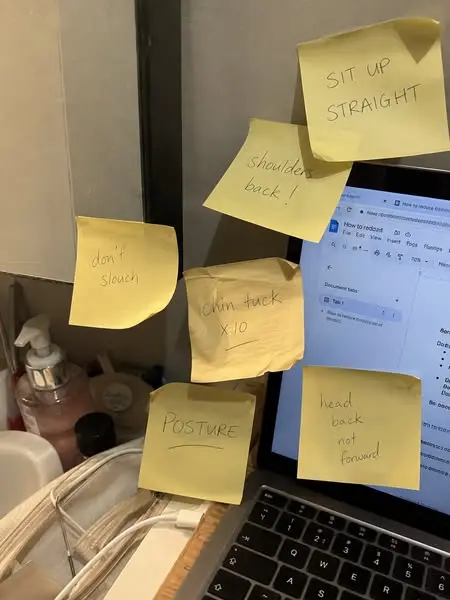
If good posture fixed neck humps, yours would be gone by now. There's a reason it isn't — and it isn't you. I'm Barbara. I'm 63. And I have never in my life tried harder at something and had less to show for it. It crept in slowly. I stopped wearing my hair up. I started buying tops by how high the collar sat. At my niece's wedding I asked someone to delete a photo of me from the side, light and breezy, like it was nothing. It wasn't nothing. But I'm not one to just let a thing happen to me. So I did what everyone tells you to do. I fixed my posture. Or I tried to. Chin tucks every morning. Ten of them, then ten more. Doorway stretches. Shoulder rolls. I set reminders on my phone — little buzzes through the day telling me to sit up straight. And I did. Every time it buzzed, I pulled myself up tall. For about thirty seconds. Then I'd be back on the laptop, or peeling the potatoes, and without ever deciding to, I'd have sunk right back down again. I told myself I just needed to be more disciplined. Try harder. Do it more often. So that's what I did. For months. And the hump didn't just refuse to go. It got worse. I'd wake with a tightness at the base of my skull that had been there so long it felt normal. I'd catch the back of my neck in a shop window and look away fast. I started turning my whole body to talk to someone at a table, rather than turn my head and let them see the side of me. I never decided to do any of that. I just found myself doing it. Late at night I'd be on my phone, in the forums, reading hundreds of other women saying the exact same thing. Doing the exercises. Sitting up straight. Watching it get worse anyway. I kept coming back to the same thought. I'm doing everything they said. Why is it getting worse? Then something happened that turned the whole thing on its head. I'd booked in with a cervical physio for a stiff shoulder. Nothing to do with the hump. Or so I thought. She had a look at the back of my neck. Asked how long I'd had the rounding. Asked what I'd been doing about it. So I told her. The chin tucks. The stretches. The reminders. Nearly a year of it. She nodded. Then she asked me to do something odd. "Sit up as straight as you can," she said. "Really lift out of it. And just hold it there for me." So I did. Tall as I could manage. "Now," she said. "Tell me when you can't hold it anymore." I lasted about thirty seconds before my shoulders started creeping forward and I had to consciously drag them back. She just nodded, like she'd seen it a hundred times. And then she said the thing I haven't stopped thinking about since. "That right there is why none of it worked. Good posture isn't something you can force. It's not an input. It's an output." I said — what on earth do you mean, an output. And she explained the bit that made everything fall into place. Sitting up straight isn't the fix, she said. It's the *result* of the fix. When the thing underneath is set the wrong way, your body can only hold the good position for a few seconds before the set tissue drags it back. That's not weakness. That's mechanics. Because the hump isn't on the surface, where all my effort was going. Your neck's meant to have a gentle curve that holds your head balanced over your shoulders. Years of looking down — the phone, the worktop, the telly — hold that curve forward and flat. And held flat long enough, it doesn't just bend. It sets. Like clay left to harden in a mould. The tissue actually shortens and locks around the wrong shape. Now the head sits forward. And to prop up that forward weight, the body builds a bit of padding at the base of the neck. That padding is the hump. And suddenly every frustrating morning made sense. The chin tucks pulled at the surface for thirty seconds — then the set curve underneath dragged everything straight back. The reminders told me to sit up, which I could only hold for thirty seconds anyway, for the exact same reason. I'd spent a year trying to force a position my body physically couldn't hold — because the thing stopping it from holding was set underneath, and I was never once touching it. It was never that I wasn't trying hard enough. God knows I was. It was that I'd been trying to input something that can only ever be an output. I sat in the car afterwards and felt the strangest mix of daft and relieved. Daft for the wasted year. Relieved because for the first time, it wasn't me that had failed. So I asked her the obvious question. If I can't force it — what actually changes it? And she said that's the thing — you can't yank it back either. Pull hard on tissue that's set and it braces and snaps straight back the moment you stop. You have to do three things together. You have to warm it, so the tissue that's gone hard can actually soften. You have to ease the curve back gently while it's soft. And you have to calm the muscles, so they stop guarding and let it happen. Warm it, ease it, calm it. All at once. Not for thirty seconds — long enough, every day, until the curve settles back instead of springing to its old shape. That was the one thing all my discipline had never done. Not because I was lazy. Because nobody had ever told me that was the thing that needed doing. So I went looking for something that could do all three at home. And I found one thing that does. It's called the Aligna Thera Pillow. There's nothing to hold, nothing to force. You just lie back on it for about fifteen minutes a day. A gentle warmth to soften what's set hard, a slow easing that guides the curve back, and a light vibration that settles the muscles so they stop fighting it. All three, together. Fifteen minutes on the sofa. The very opposite of straining. I'll be honest — after a year of white-knuckling my own posture, "lie back and do nothing" felt almost too easy to work. So I did something I'd never done. Because after all that effort, part of me still didn't quite believe anything would shift it — I took a photo of the side of my neck the day it arrived. Just to see. The first week, not a lot. A bit of something, nothing dramatic. By week two, the tightness at the base of my skull that I'd had for years — and stopped even noticing — had eased. I was getting out of bed without lying there first, working out which way I could turn. By week five, I took a second photo. And I sat looking at the two of them, side by side on my phone, for a long time. The line of my neck was longer. Less hunched. Not dramatic — I won't pretend it happened overnight. But there, in the exact spot a whole year of effort had never touched. A year of trying had given me nothing to photograph. Five weeks of the right thing gave me two pictures that didn't match. A couple of months in, there was a photo at a family lunch. I was at the front of the group, not edged off to the side the way I'd trained myself to stand. I didn't think about my neck once until I saw the picture that evening. I'm not going to tell you what to do. I'm not a doctor. But I'll tell you what I wish someone had told me before I gave a year to it. If you've been doing the exercises, faithfully, sitting up straight a hundred times a day, and the hump's still getting worse — please hear this. It isn't because you're not disciplined enough. It's that good posture was never something you could force. It's the result of a curve that's set underneath — and effort on the surface can't reach it, no matter how consistent you are. That's why it kept slipping back for me. That's why it keeps slipping back for you. If you want to see exactly why "sit up straight" can't work — and the one thing that actually reaches the set curve underneath — a cervical physio lays the whole thing out here. 👉 https://alignareset.com/pages/advertorial-breaking-news-before-and-after-image-jun-26-09-58-27?_ab=0&key=1782829198564


InactiveJul 25, 26
Fat Melt

newmindstart.com

Fat Melt

Learn more

You’re eating “pretty clean,” walking more, maybe even trying random workouts… but the Belly Fat stays, the waist feels soft, and your body feels heavy by noon. Fat Melt was built for men and women 40+ who don’t have time for gym punishment. In just 15 realistic minutes a day for busy people, you’ll wake up Deep Muscles, fire up Metabolism, build Core & Glute Strength, and move through fat-burning yoga flows that help your body feel lighter, tighter, and switched on again. Created by certified osteopathy and biomechanics expert with 30+ years of teaching experience. Access to the course is not limited in time — start now and continue anytime you want. If for some reason you don't like the course, we will refund the full amount within 14 days after the purchase. Get the course today with a 90% discount — click the button below the video and start your journey.

InactiveJul 25, 26
SoftFlare Pants – Snatched waist. Flare legs. Butter soft.
Video

hershapewearco.com

SoftFlare Pants – Snatched waist. Flare legs. Butter soft.

Shop now

The SoftFlare Pant hugs your curves, sculpts your waist, and flares out for that long, lean look — all while feeling like a second skin. High-waist sculpting band ✓ Wide flattering flare ✓ Ultra-soft 4-way stretch fabric ✓ Squat-proof & comfy all day ✓ Gym. Errands. Brunch. Yoga. These pants do it all. Tap to shop before they’re gone.

InactiveJul 24, 26
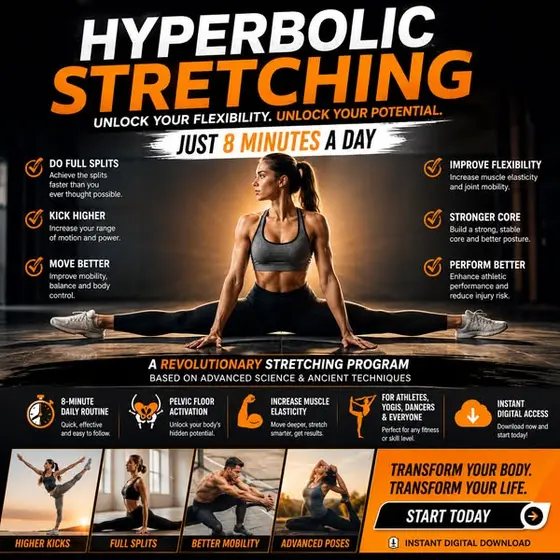
Unlock Your Flexibility in Just 8 Minutes a Day

cognitivereads.com

Unlock Your Flexibility in Just 8 Minutes a Day

Download

🔥 What if just 8 minutes a day could completely change the way your body moves? Imagine finally being able to... ✅ Do the full splits. ✅ Kick higher with ease. ✅ Move without stiffness. ✅ Improve your athletic performance. Most people think flexibility takes years to develop. It doesn't. The real problem isn't your body... It's the way you've been stretching. Hyperbolic Stretching is a step-by-step flexibility program designed to help you improve your range of motion, increase muscle elasticity, and move more freely using a smarter approach than traditional stretching routines. Inside you'll learn how to: ✅ Improve flexibility faster ✅ Perform full splits and high kicks ✅ Increase muscle elasticity ✅ Improve mobility and body control ✅ Enhance athletic performance ✅ Stretch effectively in just minutes a day Whether you're into fitness, martial arts, yoga, dancing, or simply want to move better... Your body is capable of far more than you think. 🚀 Unlock your flexibility. Unlock your potential. 👉 https://cognitivereads.com/product/hyperbolic-stretching/

Track Laura Bennett and get alerts for new ads

Create a free account to follow brands, save ads and search the full library.