PixelSpyer

HYCO ad: Proper hydration. Simply open and drink.

Proper hydration. Simply open and drink.
4
HYCO

Food & Drink, 174 followers, 9 ads in library

InactiveHealth & SupplementsCarouselLibrary ID 2243533483135020
Launched Jun 26, 2026Run time unknown

New ads are still being tested; watch whether it survives past 30 days.

Ad copy

Proper hydration. Simply open and drink.

Six electrolytes. Four vitamins. Zero sugar. Zero caffeine. Ready-made and ready to drink. Nothing else comes close. Shop now.

drinkhyco.co.ukShop now
Placements
FacebookInstagramAudience NetworkMessengerThreads
Reach (0 locations)
Not disclosed
Languages
English

Why this ad works

Hook, angle, audience and three ideas to borrow — written by AI from the ad copy.

Similar ads from other brands

InactiveJul 24, 26
40% Off Today

mykorvos.com

40% Off Today

Shop now

I am the on-set medical consultant for an adult film studio. I have personally examined 600 male performers over the last 14 years. About 8 percent of them age in a way the other 92 percent do not — still performing reliably in their late 40s and early 50s with no pharmaceutical help, with recovery times between scenes that match what 25-year-olds should be able to do but usually cannot. The reason that 8 percent ages differently is the same reason most men over 40 in this country are slowly losing function the rest do not have to lose. My name is Dr. Marcus Reilly. I am 56 years old. I graduated from UC San Diego School of Medicine in 1997 and completed my urology residency at Cedars-Sinai in 2002. I spent the first 9 years of my career running a conventional urology practice in West Los Angeles, treating prostate cancer, kidney stones, and the standard parade of erectile dysfunction patients that every urologist over 45 sees more of every year. In 2011 I took on what was supposed to be a part-time consulting role. A friend of a friend ran a large adult film production company in the San Fernando Valley. He needed a urologist who could provide confidential medical care to his male performers — bloodwork, vascular imaging, performance counseling, and the kind of private consultations that performers cannot get from their family doctors without raising questions they do not want raised. I took the contract because the money was good and the work was interesting. I did not expect what I was about to learn. In the 14 years since, I have personally examined and consulted with more than 600 male adult film performers, ranging in age from 22 to 67. I have ordered thousands of vascular ultrasounds, lipid panels, hormone panels, and endothelial function tests. I have followed individual performers for over a decade. I have watched some of them thrive into their late 50s with the vascular profile of men 20 years younger. I have watched others wash out of the industry at 34 with the vascular profile of men in their late 60s. And what I have learned in this unusual practice has completely changed how I understand erectile dysfunction, cardiovascular aging, and the medications the rest of the urology profession is prescribing. I am writing this because I am no longer willing to keep what I have learned inside the walls of a private studio. The pattern I have been documenting for 14 years applies to every man over 40 in this country, not just performers. And the medical profession has been treating it wrong for as long as I have been licensed. Let me start with what I see. Adult film performance is essentially a stress test for the vascular system. A male performer has to produce a full, sustained, reliable erection on demand, in front of cameras, under bright lights, sometimes multiple times in a single day, sometimes after only 90 minutes of recovery between scenes. Most men reading this could not do that even once in optimal conditions. Professional performers do it for a living. This means that performers' vascular systems are exposed to demand that the average man's vascular system never sees. And that means I get to watch vascular aging in fast-forward. A 28-year-old performer who is struggling with his second scene of the day has, biologically, the vascular response of a 45-year-old desk worker. A 45-year-old performer who is still doing reliable single-scene work has, biologically, the vascular response of a 30-year-old desk worker. The same body. The same age on paper. Completely different vascular age underneath. For 14 years I have been documenting which performers age well and which do not. I have been ordering bloodwork on them. I have been doing vascular imaging. I have been following the same individuals across decades. And I have learned three things that contradict almost everything we are taught in urology residency. The first thing I have learned is that erectile dysfunction is not a sexual disease. It is a vascular disease that happens to express itself sexually first. The penis has the smallest, most fragile arteries in the male body. When the vascular system starts constricting, the penis fails first because its tiny vessels are the first to feel the loss of blood flow. Everything else — the heart attack at 58, the stroke at 62, the kidney decline at 65 — comes later. ED is not an embarrassing aging problem. It is the earliest warning shot from a cardiovascular system that is already in decline. The second thing I have learned is that the standard treatments are not treating anything. Sildenafil and tadalafil — Viagra and Cialis — do not repair vessels. They force them open chemically for a few hours by inhibiting an enzyme called PDE5. The underlying constriction continues. The dose has to creep up over the years. Eventually the maximum dose stops working. I have watched performers go through this cycle in fast-forward, and I have watched my private practice patients go through it in slow-forward. The trajectory is the same. The drug does not heal anything. It just buys you time before the failure becomes irreversible. The third thing I have learned, and this is the thing that changed how I practice, is that there is a small group of performers — about 8 percent of the ones I have followed long-term — whose vascular function does not decline with age. They are still performing reliably in their late 40s and early 50s, with no medication, with no injections, with recovery times between scenes that match what 25-year-olds should be able to do but mostly can't. I started studying these men. I ran bloodwork comparisons. I imaged their vessels. I interviewed them about their habits, their diet, their supplement use, their training. And the pattern I found is the reason I am writing this. The performers who aged well had one thing in common that had nothing to do with genetics, diet, or training. Their autonomic nervous systems were regulated. The 92 percent who declined were all, without exception, running in a chronic state of sympathetic overdrive — what most people call fight-or-flight. Let me explain why this is the whole game. Your blood vessels do not open on their own. They open on a signal, and that signal is controlled by your autonomic nervous system — the unconscious system that runs your heart rate, your digestion, and the diameter of every artery in your body. It has two settings. Sympathetic, the stress state, which constricts vessels and shunts blood toward your muscles and heart to prepare you to fight or run. And parasympathetic, the recovery state, which relaxes vessels and allows full blood flow to return — including to the vessels responsible for an erection. An erection is, physiologically, a parasympathetic event. It can only happen when the body is in the recovery state. This is not opinion. This is first-year medical physiology. A body locked in the stress state physically cannot produce a reliable erection, no matter how much desire is present, no matter what the testosterone panel says. The 8 percent who aged well spent their lives in a regulated nervous state. Their vessels received the "open" signal cleanly, on demand, and recovered fast between events. Their vascular age did not match their chronological age because their nervous systems never got stuck in the state that keeps vessels clamped shut. The 92 percent were the opposite. Chronic stress — the pressure of the work, of money, of life — kept them locked in sympathetic overdrive. Their vessels stayed constricted. By 35 most of them were already needing pharmaceutical help. By 40 most of them had washed out of the industry. Once I saw this pattern, I started looking for it in my regular urology practice. It was there. It was everywhere. Every man over 40 with ED who was sitting in my exam room had the same problem the failing performers had. A nervous system stuck in the stress state. Constricted vessels. Collapsed blood flow. The pharmaceutical pills I was writing were not addressing any of it. They were forcing the vessels open chemically while the nervous system that controlled them stayed jammed in the wrong gear. I started telling these patients the truth. That their problem was not their age, not their testosterone, not their head. It was an autonomic nervous system that had forgotten how to leave the stress state. And that if we could get them out of sympathetic overdrive, their vessels would do what they were designed to do on their own. And then I started telling them about the thing the 8 percent had figured out — most of them without knowing the science behind it. Deep pressure. This is the part where most patients look at me sideways, the same way I did when one of my long-term performer patients first told me about it 11 years ago. He wore a heavy dark stone bracelet on his wrist. Never took it off. Even on set. He told me it was the only thing that had ever "shut his body up." I nearly dismissed it. But the science is not a joke. Continuous deep pressure on the body is one of the few things clinically shown to shift the autonomic nervous system out of sympathetic overdrive and into the parasympathetic recovery state. It is the documented mechanism behind weighted blankets, behind the deep-pressure therapy used for anxiety, PTSD, and surgical recovery. Constant, gentle, physical weight tells the nervous system, at a level below conscious thought, that the threat is over. Cortisol falls. The stress state releases. And the vessels the stress state was holding shut are finally allowed to open. The performers who aged well were, independently, all doing some version of this. Some used weighted therapy. Several of them wore dense stone — specifically hematite, one of the heaviest minerals worn on the body — against the pulse, 24 hours a day. They did not know they were regulating their autonomic nervous systems. They just knew that when they wore it, their bodies worked, and when they took it off, the old problems crept back. I started studying it. And here is the catch — the catch that fooled me for the first 18 months I started recommending this to my regular patients. Most of it does not work. I had patients who came back after 6 weeks wearing "hematite bracelets" they had bought online and told me they felt no difference. I was confused. The mechanism was clear. Deep pressure regulates the nervous system. Why was it not working for them? The answer turned out to be a delivery problem — just like the performers had warned me about. Deep pressure only works if the pressure is real. And almost everything sold online as a "hematite bracelet" is not hematite at all. It is plastic beads with a thin metallic coating, or low-density composite, weighing 5 to 8 grams. That is not enough mass to produce any meaningful proprioceptive signal. You are wearing decoration. Your nervous system does not even register it. For the deep-pressure mechanism to actually shift the autonomic state, the stone has to meet a specific threshold of density and weight. The performers who aged well had, independently, all figured this out. They were not wearing $8 accessories. They were wearing solid, heavy, genuine hematite — real iron-rich stone, cold to the touch, heavy enough to be felt with every movement of the wrist, worn continuously so the signal never stopped. Once I understood the density problem, I started directing my regular urology patients to do the same thing. To stop wasting money on painted plastic and get real stone on their wrist, worn 24/7. The results started to move. The patients who had been stuck on increasing doses of Cialis for years started reducing them under the supervision of their other doctors. And then about 18 months ago, I found a company that had finally made this correctly in a single product. They are called Korvos. The product is a bracelet of solid carved hematite, and the reason I now recommend it specifically is that it solves the problems that make almost every other version useless. First, it hits the weight threshold. 30 grams of genuine stone. Heavy enough that your nervous system actually registers the continuous pressure, instead of ignoring it the way it ignores a plastic bead. Second, it is real iron-rich hematite — roughly 70 percent iron oxide — not coated composite. It is cold to the touch because it is genuine mineral, and that density is the entire point. The weight is the medicine. Third, it is built to be worn 24/7. A reinforced cord, because the autonomic nervous system does not respond to an hour of pressure. It responds to a constant signal, all day and all night, until the stress state finally releases and stays released. Fourth, there is nothing to swallow, nothing to prescribe, and nothing that interacts with the blood pressure or heart medications so many men over 40 are already taking. For a physician, that last point matters more than you know. Most of my patients are already on two or three prescriptions. I cannot recommend anything that fights with them. This fights with nothing. I wear one myself. I have for the last 14 months. My vascular ultrasound last quarter showed arterial elasticity better than it was when I was 47. I am 56. I gave one to my older brother, who is 63 and was facing prostate surgery. His urologist last month said the same thing my colleagues say when their patients respond. He said, "Whatever you are doing, keep doing it." Here is what I want you to take from this letter. If you are a man over 40 and you have noticed that the response is not what it used to be — that the first attempt is not as immediate, that the second attempt in one night is harder than the first, that recovery time is creeping up, that you need more mental focus to make things work than you used to — what you are experiencing is not aging. It is your autonomic nervous system stuck in the stress state, and the vascular constriction that comes with it. It is the same thing the failing 35-year-old performers in my studio clinic are experiencing 5 years before their bodies will visibly age in any other way. The vessels in the most vulnerable part of your body are the first to feel it. That is your earliest warning signal. And if you do nothing about it, the same vascular constriction is going to show up next in your heart, your kidneys, your eyes, and your brain. The pills the urology profession will offer you are not going to stop any of it. They are going to mask the symptom while the underlying problem compounds. But the nervous system is not broken. It is just stuck. It can be shifted back. And the mechanism that shifts it has been hiding in plain sight in the deep-pressure research for over 15 years. If you want to try Korvos, you can order it from the official website at mykorvos.com. It is $30, and the company offers a 30-day money-back guarantee. Wear it every day for a month, and if you do not notice the changes I am describing — deeper sleep, a calmer baseline, faster response, more consistent morning function, a system that just works the way it used to — send it back, and they will refund every penny. Here is what I have learned to tell my patients about timing. Week 1, you will probably notice you are sleeping deeper and grinding less. The nervous system is beginning to release. You will not feel it in the bedroom yet. Week 2 to 3, you will start to notice that morning responses are more consistent. Not necessarily stronger. Just more reliable. Every morning instead of most mornings. Week 4 to 5, you will notice that the mental-to-physical connection is faster. You think about something and your body responds in 20 seconds instead of 2 minutes. Week 6 to 8, you will notice that recovery time between events has dropped. If you used to need 24 hours, you will need 12. If you used to need 4 hours, you will need 90 minutes. By week 10 to 12, the whole system will work the way it used to work when you were younger. Immediate response on the first signal. Fast recovery. No wondering if it is going to work. It just works. This is what nervous system regulation looks like. It is what the 8 percent of performers who aged well were getting their entire careers, and what the other 92 percent never knew was available to them. I am 56. I have spent 14 years watching this play out in slow motion and fast motion at the same time. The men who get their nervous systems out of the stress state age differently. The men who do not, fail predictably. Right now, your nervous system is probably stuck. Jammed in the stress gear, holding your vessels shut, running at a fraction of the blood flow you had at 25. That is why the response is slower than it used to be. That is why recovery takes longer. That is why the second attempt is harder than the first. The system is not gone. It is just stuck. You can shift it back. The 30-day guarantee means you find out at zero financial risk. If you have noticed the early signs, do not wait. The window is open right now. In 2 years it will be smaller. In 5 years it may be closed. Click the link below. Order one. Put it on and never take it off. Pay attention to your sleep, your morning function, your response time, and your recovery between events. If after a month you have not seen what I am describing, send it back. You will have lost nothing. If after a month you have seen it, you will know what I have known for 14 years. You will know what the 8 percent of performers who aged well figured out the hard way. And you will start telling the men in your life — your brother, your father, your best friend, your son — what almost no doctor in this country is willing to tell them. The link is below. mykorvos.com Your vessels are waiting. — Dr. Marcus Reilly, MD Board-Certified Urologist, 23 years in practice On-set medical consultant, 14 years

InactiveJun 29, 26
GLP-1 Protein Hacks

glp1transformationlab.com

GLP-1 Protein Hacks

Learn more

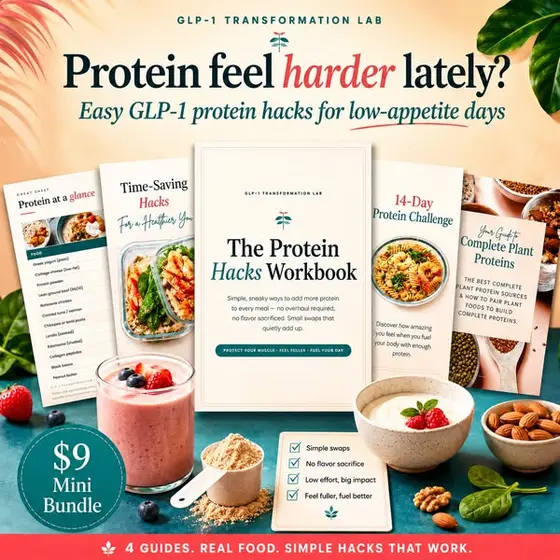
For GLP-1 users who know they need more protein… but eating more feels way harder than it used to. When your appetite is lower, meals are smaller, and food feels less exciting, hitting your protein goal can feel like one more thing to figure out. But protein still matters — especially when you’re losing weight and trying to support muscle, fullness, energy, and better body composition. That’s why I created the GLP-1 Protein Hacks Bundle. It’s a simple $9 digital bundle designed to help you add more protein in realistic, low-effort ways — without forcing huge meals, complicated recipes, or another overwhelming meal plan. Inside you’ll get: ✨The Protein Hacks Workbook Simple ways to add more protein to the meals and snacks you already eat. ✨ Protein at a Glance Cheat Sheet Quick protein ideas so you can stop guessing what actually adds up. ✨ Time-Saving Protein Hacks Easy grab-and-go ideas for busy days, low-energy days, and days when cooking is not happening. ✨14-Day Protein Challenge A simple way to build momentum and start making protein a daily habit. ✨ Complete Plant Protein Guide Plant-based protein options and how to pair foods to make them more complete. 🎉🎉 Bonus Smoothie Ideas for Low-Appetite Days Because sometimes drinking your protein feels easier than eating another meal. I’m Joanne — a personal trainer, nutrition coach, and someone who has personally used GLP-1s for my own weight loss and maintenance journey. I created this because I know how confusing it can feel when you’re eating less, but still trying to fuel your body well. This bundle helps make protein feel doable again. Grab the GLP-1 Protein Hacks Bundle for only $9.✨

InactiveJun 29, 26
Support stamina and heart health every day

track.tryrosabella.com

Support stamina and heart health every day

Learn more

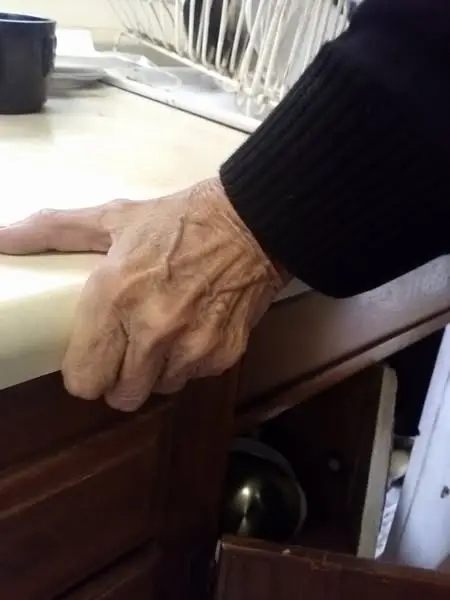
I Caught My Reflection in a Bakery Window Last March and Didn't Recognize the Way I Was Standing. I want to share what I've been doing the last few months, because my sister asked me about it on the phone last week and I realized I'd never said it out loud to anyone. I'm 62. I went through menopause at 51. The hot flashes faded after a couple of years. The sleep got mostly normal again. For about seven or eight years after that, I thought I'd come out the other side. I was teaching full-time then. Elementary school. Third grade, mostly. The kind of work that doesn't let you sit down for long stretches and doesn't let you be tired in front of the kids. I retired at 60. I picked up a few hours a week tutoring kids in reading. It keeps me in the work without the exhaustion of a full classroom. My husband Steve and I have been married 38 years. Two grown kids. Three grandchildren — six, four, and almost two. That's the bio. That's not really what I came to tell you. What I came to tell you started somewhere around my fifty-eighth birthday. It wasn't anything dramatic. It was a slow drift. I started getting cold in rooms other people weren't cold in. I started reading two fewer pages of my novel before falling asleep at night. I started suggesting we take the elevator at the movie theater instead of the stairs to the upper level — the same stairs I'd taken without thinking about for thirty years. I started telling my daughter, when she asked me to come along to the playground with the grandkids, that maybe next time. It was small. It was so small I didn't really see it as a pattern. I just thought: I'm 58, then I'm 59, then I'm 60, and this is what those numbers feel like. Last March I was downtown picking up a birthday cake for my husband. It was a Tuesday morning, gray and cold. The kind of late-winter day when the sidewalk is still salt-stained from the last snow. I walked from where I'd parked to the bakery — three blocks. It used to be a quick walk for me. That morning it felt like work. The bakery is in an old brick building with a big plate-glass window facing the street. I stopped in front of it to read the menu. And I caught my own reflection in the glass. For about three seconds I didn't recognize the woman I was looking at. She was leaning forward a little at the shoulders. Her hand was on the door handle the way you'd put your hand on a railing — to steady yourself, not to open something. Her chin was tucked down toward her collarbone. She looked tired in a way I hadn't realized I'd started to look. I stood there in front of that bakery window for what felt like a long minute. I straightened up. I rolled my shoulders back. I lifted my chin. I looked at the reflection again. That was the woman I was used to seeing. The one I'd just been looking at — the woman who'd been standing on that sidewalk three seconds earlier — was someone else. Someone who had been quietly taking over the way I held my body and I hadn't noticed. I bought the birthday cake. I drove home. I didn't tell Steve about the bakery window. I sat with it for a few days. I started paying attention. I noticed I was bracing the kitchen counter with one hand when I bent to get a pan out of the lower cabinet. I noticed I was sitting down on the bench in our front hall to put my boots on instead of leaning against the wall the way I had for thirty years. I noticed I was asking Steve to bring the groceries in from the car. I noticed I'd stopped pushing the grandkids on the backyard swing because the standing-and-pushing made my legs ache. None of it was a problem. All of it was something. I went to my doctor. Dr. Okafor has been my doctor for about nine years. She's a careful, unhurried woman. She listens. I told her the bakery window story. I told her about the bracing and the bench and the swing. I told her I wasn't depressed. I wasn't unhappy. I wasn't dealing with anything in particular. I was just slower and quieter than I used to be, and I'd seen myself standing differently in a bakery window and it had unsettled me. She listened the whole way through. She ran a comprehensive workup — full lipid panel, thyroid, vitamin D, B12, iron, blood sugar, cardiac markers. A week later she called me herself. She said: "Your bloodwork is fine. Vitamin D is on the low end of normal. Everything else is right where I'd want it for a woman your age." Then she said something I've been thinking about ever since. She said: "Linda, a lot of what you're describing is what we see in women who are ten or twelve years post-menopause. The estrogen that supported your cardiovascular system for decades has been gone for a while now, and the body has been adjusting to that. For some women that adjustment is smooth. For others it's a stretch of years where they feel slower and quieter and colder than they used to. It's not a disease. It's not a deficiency. It's a chapter of the body's life that doesn't have a single prescription answer." She talked about the foundation. Movement — keep walking, add a little resistance work if I could. Sleep — protect it. Sunlight when I could get it. Social connection. A thoughtful approach to what I was putting in my body — more vegetables, more antioxidant-rich food, plenty of water. She said: "If you want to add one thoughtful thing supplementally, I won't argue with it. Just call the office first so we can check for interactions. And don't expect a switch to flip. Expect a foundation to slowly hold you a little better." I thanked her. I drove home thinking about the word foundation. I'm not someone who jumps into supplements. I've watched my sister buy a bag full of pills from every health-food store she's ever walked into, and a month later they're under her bathroom sink and she's onto the next thing. I wanted to add one thing. One thoughtful thing. I sat with it for a few weeks. I did some reading. About a month after the bakery window, I went to breakfast with my friend Constance at the diner we've been meeting at every other Saturday for almost twenty years. I told her about the bakery window. About the bracing. About the swing. She listened the way Constance listens, which is over a cup of coffee with both hands wrapped around the mug. When I was done she set her coffee down. She said: "I want to tell you something, but I want you to know I'm not selling anything and I'm not promising anything." I said okay. She said her sister-in-law — a woman in her late sixties who'd been through a similar stretch of years — had added a beetroot supplement to her morning about a year ago with her doctor's approval. Constance's sister-in-law said it was part of what had helped her come back to herself. Not the whole thing. Part of it. Constance said the brand was something called Rosabella. A small farming community out in Lancaster County. She said she wasn't telling me to try it. She was telling me it was a thing her sister-in-law had done and felt good about, and she thought of me when I described the bakery window. I asked her to text me the name. She did. I went home that afternoon and did some reading. What I learned was that beetroot has been studied for decades for cardiovascular wellness and for supporting the body's antioxidant systems. The active compound is something called betalains — that deep crimson red pigment that stains your cutting board when you slice a beet. Betalains are one of the more potent antioxidants in the food supply, and they have a particular affinity for the cardiovascular system. They support the body's natural antioxidant balance. They support healthy circulation. They're part of the family of plant compounds researchers have been studying for their role in supporting cardiovascular wellness during the years after menopause, when the body's natural support systems shift. Beetroot is a structure-function ingredient, not a medication. It supports healthy cholesterol levels already within the normal range. It supports healthy circulation. It doesn't replace anything else you're doing — it works alongside it. That last part is what made me comfortable. I wasn't going to replace anything Dr. Okafor had recommended. I was going to add one thing to what I was already doing. Before I ordered, I called Dr. Okafor's office. I told the nurse what I was thinking. Told her the brand. Told her the dose on the bottle. Told her the only thing I take is a daily multivitamin and a low-dose vitamin D capsule. She talked to Dr. Okafor and called me back the next day. She said it was a sensible thing to add. No interactions to worry about. Have me mention it at my next visit. I ordered the bottle. When it arrived, I noticed the color of the capsules before anything else. A deep, almost-purple red. The reading I'd done explained why — Rosabella cold-presses their beets at low temperatures, which takes longer but preserves more of the betalains. That deep color is the visible marker of the active compound being intact. I set the bottle on my kitchen counter next to the coffeemaker. The next morning I put one capsule on the saucer next to my mug and took it with my first sip. I'm not going to tell you something happened in seventeen minutes. I don't think these things work like a switch flipping. What I will tell you is what I noticed over the next couple of months. The first thing was small. I caught myself, about three weeks in, carrying both bags of groceries into the house from the car in one trip instead of two. I didn't decide to do it. I just did it. I was already standing on the porch with both bags before I realized I hadn't asked Steve to come help. The second thing was the bench in our front hall. I started putting my boots on standing up again. Leaning against the wall, the way I used to. I didn't realize I'd stopped using the bench until I stopped using it. The third thing was the swing. I was at my daughter's house in June for a Sunday afternoon and my six-year-old grandson asked me to push him on the swing. I pushed him for almost ten minutes. My legs didn't ache. I came inside and sat at my daughter's kitchen island and drank a glass of water and felt the kind of pleasant tiredness you feel when you've done something physical instead of the kind of bone-deep tiredness I'd gotten used to. About four months in, I caught my reflection in a different window. This one was the window of a flower shop on the same downtown street as the bakery. I was walking past it on a Saturday morning to pick up something for Steve. I stopped in front of the glass. I looked at the woman in the reflection. Her shoulders were back. Her chin was up. Her hand wasn't on a railing. She looked like me. I stood there for a second and I'll tell you the truth — my eyes filled up. I'd thought the woman I'd seen in the bakery window in March was the woman I was now. She wasn't. She'd been a woman who'd been quietly slipping for a few years and I'd let her, and I'd assumed she was the new normal. She wasn't the new normal. She was the bottom of a stretch I'd been in. I walked into the flower shop and bought a small bunch of tulips and walked back to my car and drove home and didn't say anything to Steve about it. Some things you keep for yourself for a while before you say them out loud. At my next appointment with Dr. Okafor, my bloodwork was the same as it had been in March. Good. Where she wanted it. She didn't change anything. She didn't put me on a prescription. She asked me how I'd been feeling. I told her. The groceries. The boots. The swing. The flower shop window. I mentioned the beetroot. Same brand, same dose, every morning. She nodded. She said it sounded like a reasonable addition and she was glad I'd called the office before I started it. She said: "Linda, whatever combination of things you've been doing — the walking, the supplement, paying closer attention to your sleep and your water and your vegetables — keep doing it. The foundation is holding you." That was about two months ago. I want to be careful about what I'm claiming. I don't know how much of my coming back is the beetroot. I don't know how much is the resistance work I started doing with two-pound dumbbells in my living room a few times a week. I don't know how much is the better attention I started paying to my water and my vegetables. I don't know how much is the fact that I finally told my doctor the truth about how I'd been feeling and stopped pretending it was nothing. It's probably all of it together. Bodies are different and lives are different and I can't tell you that what worked for me would work for anyone else. What I can tell you is what I did. I stopped explaining away what I was noticing about myself. I told my doctor. I let her run the bloodwork to rule out anything specific. I listened when she said the answer wasn't a prescription but a foundation. I added the things she asked me to add — sleep, movement, water, vegetables, one thoughtful supplemental thing. I called the office before I added the supplement. I waited for the doctor's approval. I added the supplement to what I was already doing — not in place of anything. If you've been in a similar stretch — you're a decade or so past menopause, your numbers are fine, your doctor is happy with you, and yet you've been slowly getting colder and quieter and more tired than you used to be — it might be worth a conversation. Not a prescription conversation. A foundation conversation. What are you protecting in your sleep? What movement are you doing? What are you putting in your body? Is there one thoughtful thing you'd want to add, with your doctor's input? That conversation is what got me here. Talk to your doctor or pharmacist before adding any new supplement, especially if you're on medication for blood pressure or cardiovascular health. That one phone call is what made me comfortable starting, and it's what I'd tell anyone else to do first. The brand I used is Rosabella. 1,300 milligrams per capsule, cold-pressed at low temperatures, grown in Lancaster County. One capsule with a glass of water in the morning. That's the whole thing. P.S. Constance and I had breakfast at the diner two weekends ago. I told her about the flower shop window. She didn't say anything for a few seconds. Then she said: "I'm glad. I wasn't sure if I should have told you about it at all that morning. I didn't want to push." I told her she hadn't pushed. She'd offered. There's a difference. The women I trust most in my life are the ones who know the difference. P.P.S. Rosabella has a 90-day money-back guarantee. If you're not satisfied for any reason, every penny back. No questions asked. I think that's a sensible policy for a supplement — it gives you time to actually see whether it does anything for you. I'd give it a few weeks at minimum. Bodies are different. Some people notice something within the first week or two. Others take longer. P.P.P.S. I keep an extra bottle in the house just in case. They're a small operation and the harvest is once a year, so the bottling can run on its own schedule. P.P.P.P.S. Here's what I'd tell you to do. Call your doctor's office first. Tell them exactly what you're thinking and exactly what you're on. Wait for the callback. If the doctor approves, put one capsule on the saucer next to your morning coffee mug. Don't change anything else without your doctor's input. Give it a few weeks before you decide anything. And in the meantime — protect your sleep. Drink your water. Walk. Lift something heavier than your coffee cup a few times a week. Stand up straight when you catch yourself in a window. The bottle isn't the whole foundation. It's one piece of it. P.P.P.P.P.S. My daughter had us over for dinner last Sunday. After we ate I went out to the backyard with my grandson and we kicked a soccer ball around for about twenty minutes. I was the goalie. He scored on me probably fifteen times. I was sweating and laughing and my hair was a mess. My daughter came to the back door at one point and watched us. When I came inside she didn't say anything. She just hugged me longer than usual. There are moments where the people who love you tell you they've noticed the difference without using any words. That was one of them. https://track.tryrosabella.com/feb71eaf-4594-4b50-b39e-f5e5eeea7537 Individual experiences vary. These statements have not been evaluated by the FDA. This product is not intended to diagnose, treat, cure, or prevent any disease.

InactiveJun 29, 26
Stop Taking Laxatives. Read This.

get.lanural.com

Stop Taking Laxatives. Read This.

Learn more

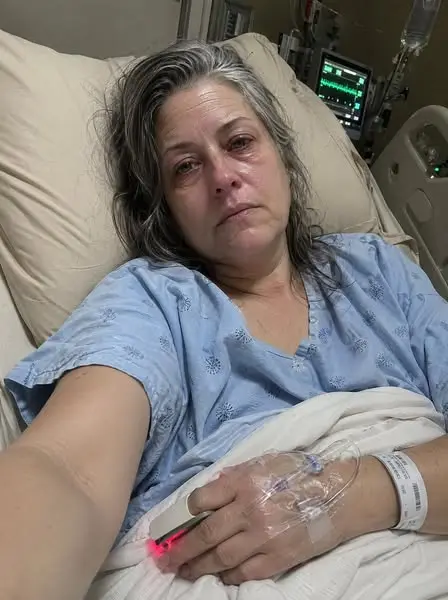
I hadn't gone to the bathroom in 14 days. I told my husband I was fine. I took another Miralax… then a Senna… then two Dulcolax… and washed it all down with a bottle of magnesium citrate the size of a small soda. Nothing. By day 15, I was doubled over on the bathroom floor, unable to stand up from the pressure in my abdomen. That's when my husband Robert picked me up off the cold tile, carried me to our SUV in nothing but a robe, and drove me to the ER at 2:47 in the morning. What the doctor said next… about WHY my bowels had stopped working completely… changed everything I thought I knew about my body. And it's the reason I'm writing this post tonight. Because if you're a woman over 45 who has been silently struggling with constipation, bloating, brain fog, or that "I look 5 months pregnant" feeling at the end of every day… Please read this all the way through. What I'm about to share with you is the same information that turned my life around in 4 weeks… and it could save yours too. My name is Margaret. I'm 52 years old. I live in suburban Pennsylvania with my husband Robert. And like a lot of women my age, I've been quietly battling a constipation problem for years. It started in my early 40s, around the time I went into perimenopause. Just little things at first. Going every other day instead of every day. Some bloating after dinner. A little discomfort. But by 47, I was barely going twice a week. By 49, I was on Miralax every single morning just to function. And by 51, I was doing everything you can imagine to get my bowels to move. I had tried EVERYTHING. All the laxatives. Magnesium. The teas. A gallon of water a day. 30 grams of fiber. Digestive enzymes. Probiotics. You name it, I'd taken it. Nothing was working. I had two gastroenterologists tell me I had "IBS-C" and to "just keep taking the Miralax." A third told me my colon was "redundant" and "kinked" and there was nothing to be done. A fourth ordered a colonoscopy that came back completely normal. And in the meantime, I was getting worse. I was looking 6 months pregnant by 4pm every day. The brain fog had gotten so bad I'd forget words mid-sentence. I had a constant low-grade headache that no one could explain. I was waking up at 3am with this terrible, gripping anxiety I'd never had before in my life. My joints ached. My energy was gone. My mood was in the toilet. I had become a stranger in my own body. And then came the night that nearly killed me. It started on a Tuesday. By Friday I realized I hadn't gone since the previous Wednesday. That's 9 days. I doubled my Miralax. Took a Senna. Drank a quart of warm prune juice. Saturday morning… still nothing. Sunday… I added Dulcolax to the mix and chugged a magnesium citrate. I felt some movement. I sat on the toilet for 45 minutes straining. A few small, hard pellets came out. I told myself I was "going." I wasn't. By Tuesday of the next week, I was on day 14. My stomach was so distended I couldn't button any of my pants. I felt like I had a bowling ball lodged behind my ribs. I couldn't take a deep breath without sharp pain. But I told Robert I was fine. Because I was so used to suffering through this in silence, I'd lost the ability to admit how bad it had gotten. Around 2 in the morning, I tried to get out of bed to go to the bathroom and just… collapsed. Robert woke up to me on the floor, pale, sweating, unable to speak. He didn't ask. He just picked me up, wrapped me in a robe, and carried me to the car. By 3:15am we were in the ER at our local hospital. By 4am I was on a stretcher, hooked up to an IV, getting wheeled in for an emergency CT scan. And by 5:30am, the ER doctor… a woman about my age named Dr. Sarah Chen… came to my bed with the scan results in her hand. She sat down on the edge of the bed and gently told me what they'd found. I had 14 days of impacted stool packed into my colon. It was so compacted that no laxative was going to move it. Not anymore. They were going to have to remove it manually, right there in the hospital. I cried. I'm not going to describe what happened next because it's the most humiliating experience of my life. But by 8am that morning, the impaction was out. I was exhausted, sore, embarrassed, and just wanted to go home and never speak of it again. But before I could leave, Dr. Chen came back into the room. She pulled up a chair next to my bed, looked me in the eye, and said something I wasn't expecting at all. "Mrs. Whitman, before you go home… I need you to understand something. The stool we just removed isn't your problem. It's the symptom. There's a reason you've been struggling with constipation for years that no doctor has ever told you about. And unless you address it, this is going to keep happening for the rest of your life." I just stared at her. For the first time in 6 years, a doctor was about to actually explain what was wrong with me. Dr. Chen took a breath and started from the beginning. She told me what I had wasn't really "IBS-C." It wasn't a "redundant colon." It wasn't "just menopause." She said the real problem was much simpler than that. 👉 "Mrs. Whitman, your gut is overrun with bad bacteria and fungi. They aren't supposed to be there. Or at least, not in the numbers they are." She explained that this happens to a lot of women my age. Sometimes it's triggered by a course of antibiotics 10 or 20 years ago. Sometimes it's the hormonal shift of menopause. Sometimes it's years of processed food, or chronic stress, or all of it together. But somewhere along the way, my gut had flipped. The good bacteria had been wiped out, and the bad bacteria had taken over. I asked her the obvious question. "Why hasn't my body just killed them off? Don't I have an immune system for that?" That's when she explained the part that made my jaw drop. 👉 "You DO have an immune system that's supposed to handle this. Plus stomach acid. Plus your good bacteria. Normally those three things would have wiped these pathogens out years ago." "But the bad bacteria in your gut have evolved a defense, Mrs. Whitman. When your body tries to attack them, they build a shield around themselves. An invisible slime they hide behind. It's called a biofilm." She paused for a second. "You've actually seen one before. That fuzzy film on your teeth in the morning before you brush? That's a biofilm. The bacteria in your mouth build it overnight to protect themselves from your saliva." "And the same exact thing is happening down in your colon right now." I felt sick. She kept going. 👉 "Once that shield is up, almost nothing can get through it. Your immune system can't reach them. Stomach acid can't dissolve it. And — this is the part that matters for you — antibiotics become up to 1,000 times less effective once a biofilm forms." "That's why every probiotic, every cleanse, every fiber supplement you've taken has failed. The shield was stopping all of it." It was finally starting to make sense. But I still didn't understand why specifically I couldn't poop. Dr. Chen leaned in for the last part. 👉 "Behind that biofilm shield, those bacteria aren't just sitting there. They're alive. They're fermenting your food, which is where your bloating and gas come from. But the worst part is, one specific type of bacteria living back there… called methanogens… releases a gas called methane." "And methane gas, Mrs. Whitman, literally paralyzes your colon." She explained that methane sends a chemical signal to the muscles of the colon that tells them to slow down. Studies out of UCLA have shown methane gas can slow gut transit by up to 59%. In other words, the bacteria hiding behind the biofilm were producing a gas that was paralyzing my own bowels from the inside out. Every laxative I took was just forcing stool past them… without ever touching them. So as soon as the laxative wore off, the methane started building back up, and I was right back where I started. I sat there as a 52-year-old woman in a hospital gown, hearing the explanation for everything that had been wrong with me for years. But Dr. Chen wasn't done. 👉 "And while that fortress sits inside you, the colony also leaks toxins through your gut wall into your bloodstream. That's where your brain fog comes from. The 3am anxiety. The joint pain. The constant low-grade headache. The exhaustion you've been chalking up to 'just being 52.'" "None of it is aging, Mrs. Whitman. Your body is being slowly poisoned by a colony of gut bacteria that your body can't get rid of." I sat there in that hospital bed in complete silence. Because every single one of my doctors had missed it. Six years. Six years of being told it was IBS-C. Six years of being told to "just take more Miralax." Six years of being told my colon was "kinked" and that nothing could be done. And the whole time, the answer had been sitting right there. I asked Dr. Chen the obvious question. "So how do I fix this?" She told me there IS a way. But it's not what I'd been doing for the last 6 years. And it's not what any of my gastroenterologists were going to suggest either. She said to actually solve the root cause of my constipation, three things had to happen, in this exact order: ✅ First, I had to dissolve the biofilm. As long as that shield was up, nothing I took could reach the bacteria behind it. That's the step every doctor and every supplement company in America has been skipping for the last 30 years. ✅ Second, once the shield was down, I had to kill the pathogens hiding behind it. The methane producers. The candida. The bad bacteria. Wipe them out before they could rebuild the shield. ✅ Third — and this was the one she stressed the most — whatever I used had to spare my good bacteria. Because antibiotics and harsh herbal cleanses nuke EVERYTHING. They wipe out the bad bacteria AND the good ones, leaving you with a wrecked microbiome and even worse symptoms 8 weeks later. "Antibiotics fail step 1 and step 3. Probiotics fail step 1 and step 2. Most herbal cleanses fail step 3." "But there's one compound that does all three. It's called SAC. Short for S-Allyl Cysteine." "And it's almost exclusively found in fermented black garlic." I told her I'd just stop at the grocery store on the way home and grab a head of garlic. She shook her head immediately. 🛑 "Please don't do that, Mrs. Whitman. It won't work." She explained why. Raw garlic barely contains any SAC at all. Just a trace amount. You could eat a pound of raw garlic a day for a year and not get enough SAC to dissolve a 6-year-old biofilm. 👉 "SAC only develops when garlic is fermented for 60 to 90 days under controlled heat and humidity," she said. "During that fermentation, something incredible happens. The SAC content multiplies by 6 times. The harsh compounds convert into something stable and gentle on the stomach. The garlic literally turns jet black. The smell disappears completely. And what's left is one of the most powerful biofilm-dissolving compounds ever discovered." "Most 'black garlic' supplements you'll find on Amazon or at the health food store are fermented for 30 days or less. They don't have anywhere near the SAC concentration to do the job." "You need a high enough dose of properly fermented black garlic to actually dissolve a decade of biofilm in the colon. Most products on the market won't get you there." She wrote a name down on a hospital pad and slid it across the bed. It was a brand called Lanural Fermented Black Garlic Extract. She told me it was the only fermented black garlic supplement she'd found that actually used the full 60-90 day fermentation, with 6,000mg of fermented black garlic in every single serving. Enough SAC to actually break down the biofilm shield, kill the bacteria hiding behind it, and let my good bacteria multiply back to normal levels. "I personally take it. I give it to my mother, who's 71 and was struggling with the same thing. And I recommend it to my female patients over 45 who are dealing with this exact issue." "It's not sold in stores. You have to order it online. But it's the closest thing to a real solution I've ever seen for what you're dealing with." That morning, after I'd been disimpacted and discharged… Robert drove me home at 9am. I didn't even change out of the hospital clothes. I sat down at the kitchen table, pulled up the website on my phone, and ordered a 5-bottle supply of Lanural Fermented Black Garlic Extract right then and there. The bottles arrived three days later. I started taking it that morning with breakfast. One capsule with a glass of water. Here's exactly what happened over the next four weeks. ✅ Week 1: I took one capsule with breakfast every single morning. There was no garlic taste, no garlic burps, no stomach upset. Nothing. By day 4, I had my first complete bowel movement in years. WITHOUT a laxative. I sat on the toilet and cried for 20 minutes. Robert thought something was wrong. I just kept saying "I went. I just went." ✅ Week 2: I went every single morning. Like clockwork. The bloating dropped by more than half. For the first time in years, my pants buttoned all the way up by 8pm. I noticed the brain fog starting to lift… I could feel myself getting sharper, faster, more like the woman I used to be at 40. ✅ Week 3: The 3am anxiety stopped. Just stopped. I slept through the night for 7 nights in a row, which I genuinely couldn't remember the last time I'd done. The constant low-grade headache I'd had for the last 4 years was gone. My joint pain disappeared. My energy came roaring back. ✅ Week 4: I went back to see Dr. Chen for a follow-up. She ran the breath test for methane and a few inflammation markers. The methane was down to a normal range. My inflammation markers had dropped significantly. She smiled, gave me a hug, and said: "You did it, Mrs. Whitman." I wasn't constipated anymore. I wasn't bloated anymore. I wasn't foggy anymore. I felt 30 years old again. And here's the thing. Before I posted this, I reached out to the folks at Lanural to tell them my story. The whole thing. The 14 days. The ER. The disimpaction. All of it. They were so moved that they wanted to help get this into the hands of more women going through what I went through. So right now, they've set up a special link where you can get a bottle of Lanural Fermented Black Garlic Extract for just $29.99. But it gets better. They know that if you've been suffering with this, your sister, your best friend, your mother probably has too. This isn't a one-person problem. Statistically, 1 in 3 women over 50 are walking around with the same biofilm-protected bacterial overgrowth I had. So for a limited time, they're running a Buy 2 Get 1 Free offer… and a Buy 3 Get 2 Free offer at that same low price. That means you can stock up on a 5-month supply for less than what I was spending on Miralax every 6 weeks. And the best part is they back it with a 60-day money-back guarantee. If after 60 days you're not having complete, daily, painless bowel movements… if your bloating hasn't gone down… if your brain fog hasn't lifted… you send the bottles back, even the empty ones, and they'll refund every single penny. So please, don't wait. Don't wait until you're being wheeled into an ER at 3am like I was. Don't wait until a stranger in scrubs has to manually remove a week and a half of stool from your body. Don't wait another single day looking 6 months pregnant in your own bathroom mirror. Click the link below to check if Lanural still has stock. 👉 https://get.lanural.com/pdp/ If they're in stock, grab a bundle. Grab one for yourself. Grab one for your sister. Grab one for your best friend who's been complaining about her stomach for years and quietly suffering just like you have been. You will be glad you did. Trust me. I'm 52 years old. I had 14 days of stool packed inside me. I was being slowly poisoned by my own gut. And one little fermented black garlic capsule a day got me my life back in 4 weeks. It can do the same for you. 👉 https://get.lanural.com/pdp/ — Margaret

Track HYCO and get alerts for new ads

Create a free account to follow brands, save ads and search the full library.