Hellenic National Archaeological Museum / Εθνικό Αρχαιολογικό Μουσείο ad

Museum, 78.4K followers, 1 ads in library
New ads are still being tested; watch whether it survives past 30 days.
Ad copy
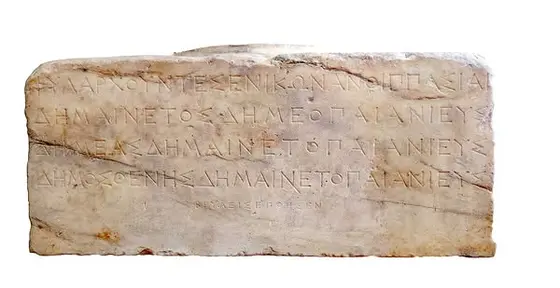
#ΈκθεμαΤουΜήνα ✒️ Μία αναθηματική βάση του 4ου αι. π.X. με καλλιτεχνική υπογραφή Το ανάγλυφο βάθρο αποκαλύφθηκε το 1891 κατά την εκσκαφή της κοίτης για τον Ηλεκτρικό Σιδηρόδρομο, βορειοανατολικά του «Θησείου». Στο σημείο εύρεσης παραμένει η τετράπλευρη ευθυντηρία της βάσης από Πειραϊκό λίθο. Στις τρεις πλευρές του εικονίζεται η ίδια σκηνή: ένας ώριμος, γενειοφόρος ιππέας κατευθύνει το άλογο, που τριποδίζει περήφανα, προς τον χάλκινο τρίποδα, το έπαθλο της ιππικής νίκης. Στην πρόσοψη της βάσης αναγράφονται τα ονόματα των νικητών στο αγώνισμα της ανθιππασίας. Το βάθρο είχε στηθεί πλησίον της αφέσεως της ανθιππασίας και των λοιπών αγωνισμάτων των Παναθηναίων, τα οποία διεξάγονταν επί του δρόμου της Αγοράς. Στην επάνω έδρα του βάθρου κυκλικό μέλος (τροχίλος) χρησίμευε για τη στερέωση του χάλκινου τρίποδα ή της τρίπλευρης βάσης του. Στην τελευταία σειρά της επιγραφής αναγράφεται η υπογραφή του καλλιτέχνη, λαξευμένη με μικρότερα γράμματα, όπως συνηθιζόταν: Βρύαξις επόησεν (μέσα 4ου αι. π.Χ.) ❓ Ποιος ήταν ο γλύπτης Βρύαξις; Ο Βρύαξις δραστηριοποιείται στο β’ μισό του 4ου αι. π.Χ. κυρίως στην Ανατολική Μεσόγειο, αναλαμβάνοντας σπουδαίες παραγγελίες: εργάζεται στο Μαυσωλείο της Αλικαρνασσού, ένα από τα Επτά Θαύματα της αρχαιότητας, μαζί με τον Σκόπα, τον Τιμόθεο και τον Λεωχάρη. Στη Ρόδο, κατασκευάζει 5 κολοσσικά αγάλματα θεών και εκεί σώζεται η δεύτερη υπογραφή του, στο Ασκληπιείο της πόλης, όπου προσδιορίζεται ως Αθηναίος. Στον Βρύαξι αποδίδονται το ακρόλιθο άγαλμα του Απόλλωνα Κιθαρωδού στη Δάφνη της Αντιόχειας, το εικονιστικό άγαλμα του βασιλιά της Συρίας Σελεύκου Νικάτορα (312 π.Χ.), αγάλματα θεών στα Πάταρα της Λυκίας και τα λατρευτικά αγάλματα του Ασκληπιού και της Υγείας στα Μέγαρα. Αλλά ίσως το πιο επιδραστικό έργο του είναι το κολοσσικό άγαλμα του Σεράπιδος στην Αλεξάνδρεια της Αιγύπτου, που απηχείται στην μικροτεχνία της εποχής και σε ρωμαϊκά αντίγραφα. 🔎Το Έκθεμα του Μήνα για τον Ιούνιο επιμελήθηκε η Δρ. Καλλιόπη Μπαϊράμη. 🔗 Μάθετε περισσότερα: https://www.namuseum.gr/monthly_artefact/%ce%b2%cf%81%cf%8d%ce%b1%ce%be%ce%b9%cf%82-%e1%bc%90%cf%80%cf%8c%ce%b7%cf%83%ce%b5%ce%bd/ 📍Χώρος έκθεσης: Συλλογή Γλυπτών, Αίθουσα 28 EN👇 #exhibitofthemonth ✒️Artist’s signature on a votive base of the middle of the 4th century B.C.E. The relief pedestal was uncovered in situ in 1891 during the excavation for the Electric Railway, northeast of “Theseion.” The four-sided lower part of the base made of Piraeus stone remains at the site where it was found. On the three sides of the relief base from the Agora the same scene is depicted: a mature, bearded horseman guides his horse, at a proud trot, towards the bronze tripod, the prize for victory in the equestrian race. On the front side of the base the names of the winners of the cavalry contest (anthippasia) are engraved. The pedestal had been erected near the starting line of the horse race and the other Panathenaic Games events, which took place on the main street of the Agora. At the top of the pedestal either the bronze tripod or its triangular base would have been secured to the circular moulding (trochilos). In the bottom row, the artist’s signature is carved in smaller letters, as was customary: Bryaxis made it (mid-4th century B.C.E.) ❓ Who was the sculptor Bryaxis? Bryaxis was active in the second half of the 4th century B.C.E. primarily in the Eastern Mediterranean, undertaking major commissions: He works in the Mausoleum of Halicarnassus, one of the Seven Wonders of the Ancient World, alongside Skopas, Timotheus, and Leochares. In Rhodes, he creates five colossal statues of gods. His second signature survives in the Rhodian Asclepieion, where he is identified as an Athenian. Bryaxis is credited with the acrolithic statue of Apollo Kitharoedus in Daphne of Antioch, the portrait statue of Seleucus Nicator, king of Syria (312 B.C.E.), statues of gods in Patara of Lycia, and the cult statues of Asclepius and Hygieia in Megara. But perhaps his most influential work is the colossal statue of Sarapis in Alexandria, Egypt, which is reflected in the miniature art of the time and in Roman copies. 🔎The exhibit of the month for June was written and edited by Dr Kalliope Bairami. 🔗 Check here for more: https://www.namuseum.gr/en/monthly_artefact/%ce%b2%cf%81%cf%8d%ce%b1%ce%be%ce%b9%cf%82-%e1%bc%90%cf%80%cf%8c%ce%b7%cf%83%ce%b5%ce%bd/ 📍 Display location: Sculpture Collection, Room 28 #Namuseumathens #nam #namgr
- Placements
- FacebookAudience Network
- Reach (2 locations)
- 🌐 Europe🇧🇬 Bulgaria
Why this ad works
Hook, angle, audience and three ideas to borrow — written by AI from the ad copy.
Track Hellenic National Archaeological Museum / Εθνικό Αρχαιολογικό Μουσείο and get alerts for new ads
Create a free account to follow brands, save ads and search the full library.