PixelSpyer

Health & Science ad: The Knot That's Actually Coming From Your Neck

The Knot That's Actually Coming From Your Neck
Health & Science

Health & wellness website, 26.4K followers, 1 ads in library

InactiveFitnessImageLibrary ID 1673764080549296
Launched Jun 24, 2026Run time unknown

New ads are still being tested; watch whether it survives past 30 days.

Ad copy

The Knot That's Actually Coming From Your Neck

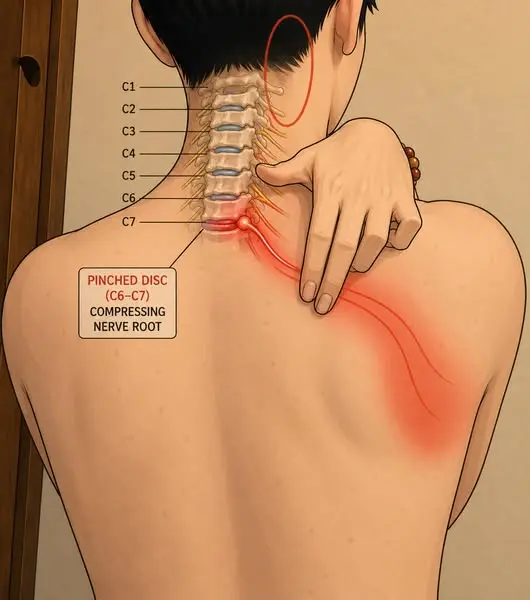
Most doctors miss THIS when that knot between the shoulder blade and neck won't go away – and STRETCHING only makes it worse. It's a pinched nerve in your neck. And the tell-tale signs are a deep, tender ache between your shoulder blade and your spine, a stiff neck, and sometimes tingling, numbness, or coldness that travels down into your arm or hand – pain that flares worse the moment you stretch it or do your exercises. Unfortunately, most people get told it's just a tight muscle or bad posture, without anyone checking what's actually being compressed… The result? Thousands of people needlessly suffering and left wondering… "Why does this knot in my shoulder keep getting worse no matter what I do?" I was one of those people. I still remember a therapist handing me a sheet of stretches when I said the deep ache between my shoulder blade and neck was getting worse and starting to tingle down my arm. "It's just a tight muscle. Stretch it out and strengthen your back." But if it was really just a tight muscle, then why did the stretches, the foam rolling, and the strengthening exercises make it flare up worse? It didn't make any sense. But if it wasn't a muscle… what could it be? None of the practitioners I saw could give me a straight answer. "Everyone gets knots there," was the usual response. 🙄 So I did the logical thing. I went to a spine specialist — someone who actually studied nerve compression and cervical issues. After examining my neck and reviewing my symptoms, the doctor said: "Just as I suspected. The pain in your shoulder blade isn't coming from the muscle. It's a pinched nerve in your neck." "A pinched nerve? But the pain is in my back," I said, confused. The doctor pulled up an image of the cervical spine before continuing: "See this nerve? It runs from your neck, through the area around your shoulder blade, and down into your arm. When a disc or vertebra in your neck shifts and presses on it, it sends pain, tightness, and tingling down that whole pathway. That's why you feel it between your shoulder blade and your spine. That's why it travels down your arm and your hand goes numb or cold. And that's exactly why stretching and exercising the spot makes it worse – you're irritating a nerve that's already being squeezed, not loosening a muscle. The most important thing to know is this: rubbing it, stretching it, and pushing through exercises won't help. Because it doesn't solve the root problem — the nerve being compressed in your neck." I sat there quietly, taking it in. It explained why everything I'd tried hadn't worked. The daily stretches… The foam roller and massage gun… The strengthening exercises… The painkillers… None of it was touching the real cause — the pinched nerve in my neck. "So how do I fix it, Doc? I don't want to live with this forever." The doctor nodded, then pulled out a white device: "You don't need injections or endless appointments. All you need is 15 minutes a day with this." It was called FisioRest — a cervical therapy device built around something called Tri-Phase Relief: gentle traction to take the pressure off the nerve, heat to relax the tight muscles, and targeted vibration massage to release the deep tension. "Most of my patients with a pinched nerve report feeling relief within the first few sessions," the doctor explained. I held it skeptically. Can this really help when nothing else did? I'd been let down by so many "solutions" before… But since it came with a 365-day money-back guarantee… why not? So I used FisioRest daily for 30 days. And the results honestly surprised me: Within the first week, that deep ache between my shoulder blade and neck started to ease. The tingling down my arm came less and less. By the end of 30 days, the knot that had lived between my shoulder blade and spine for YEARS was significantly reduced. The stiffness in my neck? Much better. The numbness in my hand? Gone. I loved how it felt so much that I kept using it every evening. By the end of 2 months, that spot I used to constantly reach over and press on? Almost completely released. I could move freely again. I could sit through a workday again. I felt like MYSELF again. I know it sounds hard to believe… but this is the truth: FisioRest gave me my life back. I highly recommend it to anyone with that stubborn knot between the shoulder blade and neck that only gets worse when you stretch it. This was a game-changer for me. And I hope it is for you too. ❤️ 🤩 Over 50,000 People Choose FisioRest To Relieve Pinched-Nerve Pain & Finally Move Freely Again 🤩 FisioRest combines gentle cervical traction, deep heat therapy, and massage in one simple device… So you can live without that knot between your shoulder blade and neck, the tingling down your arm, or endless appointments. Enjoy pain-free days with FisioRest today by clicking the link below.

artuvate.coLearn more
Placements
FacebookInstagramAudience NetworkMessengerThreads
Reach (0 locations)
Not disclosed
Languages
English

Why this ad works

Hook, angle, audience and three ideas to borrow — written by AI from the ad copy.

Similar ads from other brands

InactiveJul 25, 26
The Two Muscles Behind Headaches Nobody Trainс
Video

omniprehab.com

The Two Muscles Behind Headaches Nobody Trainс

See details

The scalenes anchor the first ribs and sit directly on the brachial plexus — which is why neck "tightness" can show up as headaches or tingling in the hand. Train them by their real function, not another stretch. Full course inside.

InactiveJul 25, 26
Why The Neck Hump Won't Go

alignareset.com

Why The Neck Hump Won't Go

Learn more

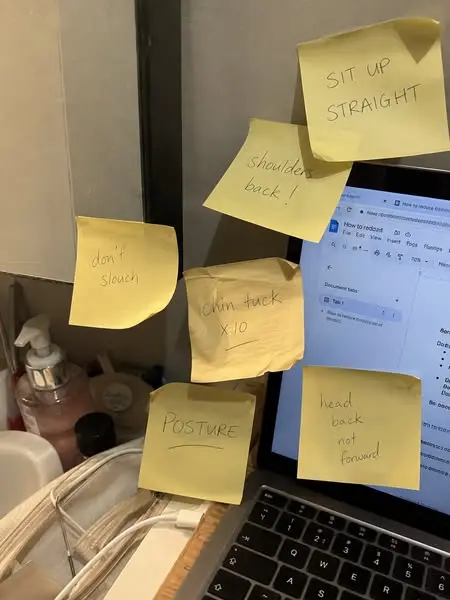
If good posture fixed neck humps, yours would be gone by now. There's a reason it isn't — and it isn't you. I'm Barbara. I'm 63. And I have never in my life tried harder at something and had less to show for it. It crept in slowly. I stopped wearing my hair up. I started buying tops by how high the collar sat. At my niece's wedding I asked someone to delete a photo of me from the side, light and breezy, like it was nothing. It wasn't nothing. But I'm not one to just let a thing happen to me. So I did what everyone tells you to do. I fixed my posture. Or I tried to. Chin tucks every morning. Ten of them, then ten more. Doorway stretches. Shoulder rolls. I set reminders on my phone — little buzzes through the day telling me to sit up straight. And I did. Every time it buzzed, I pulled myself up tall. For about thirty seconds. Then I'd be back on the laptop, or peeling the potatoes, and without ever deciding to, I'd have sunk right back down again. I told myself I just needed to be more disciplined. Try harder. Do it more often. So that's what I did. For months. And the hump didn't just refuse to go. It got worse. I'd wake with a tightness at the base of my skull that had been there so long it felt normal. I'd catch the back of my neck in a shop window and look away fast. I started turning my whole body to talk to someone at a table, rather than turn my head and let them see the side of me. I never decided to do any of that. I just found myself doing it. Late at night I'd be on my phone, in the forums, reading hundreds of other women saying the exact same thing. Doing the exercises. Sitting up straight. Watching it get worse anyway. I kept coming back to the same thought. I'm doing everything they said. Why is it getting worse? Then something happened that turned the whole thing on its head. I'd booked in with a cervical physio for a stiff shoulder. Nothing to do with the hump. Or so I thought. She had a look at the back of my neck. Asked how long I'd had the rounding. Asked what I'd been doing about it. So I told her. The chin tucks. The stretches. The reminders. Nearly a year of it. She nodded. Then she asked me to do something odd. "Sit up as straight as you can," she said. "Really lift out of it. And just hold it there for me." So I did. Tall as I could manage. "Now," she said. "Tell me when you can't hold it anymore." I lasted about thirty seconds before my shoulders started creeping forward and I had to consciously drag them back. She just nodded, like she'd seen it a hundred times. And then she said the thing I haven't stopped thinking about since. "That right there is why none of it worked. Good posture isn't something you can force. It's not an input. It's an output." I said — what on earth do you mean, an output. And she explained the bit that made everything fall into place. Sitting up straight isn't the fix, she said. It's the *result* of the fix. When the thing underneath is set the wrong way, your body can only hold the good position for a few seconds before the set tissue drags it back. That's not weakness. That's mechanics. Because the hump isn't on the surface, where all my effort was going. Your neck's meant to have a gentle curve that holds your head balanced over your shoulders. Years of looking down — the phone, the worktop, the telly — hold that curve forward and flat. And held flat long enough, it doesn't just bend. It sets. Like clay left to harden in a mould. The tissue actually shortens and locks around the wrong shape. Now the head sits forward. And to prop up that forward weight, the body builds a bit of padding at the base of the neck. That padding is the hump. And suddenly every frustrating morning made sense. The chin tucks pulled at the surface for thirty seconds — then the set curve underneath dragged everything straight back. The reminders told me to sit up, which I could only hold for thirty seconds anyway, for the exact same reason. I'd spent a year trying to force a position my body physically couldn't hold — because the thing stopping it from holding was set underneath, and I was never once touching it. It was never that I wasn't trying hard enough. God knows I was. It was that I'd been trying to input something that can only ever be an output. I sat in the car afterwards and felt the strangest mix of daft and relieved. Daft for the wasted year. Relieved because for the first time, it wasn't me that had failed. So I asked her the obvious question. If I can't force it — what actually changes it? And she said that's the thing — you can't yank it back either. Pull hard on tissue that's set and it braces and snaps straight back the moment you stop. You have to do three things together. You have to warm it, so the tissue that's gone hard can actually soften. You have to ease the curve back gently while it's soft. And you have to calm the muscles, so they stop guarding and let it happen. Warm it, ease it, calm it. All at once. Not for thirty seconds — long enough, every day, until the curve settles back instead of springing to its old shape. That was the one thing all my discipline had never done. Not because I was lazy. Because nobody had ever told me that was the thing that needed doing. So I went looking for something that could do all three at home. And I found one thing that does. It's called the Aligna Thera Pillow. There's nothing to hold, nothing to force. You just lie back on it for about fifteen minutes a day. A gentle warmth to soften what's set hard, a slow easing that guides the curve back, and a light vibration that settles the muscles so they stop fighting it. All three, together. Fifteen minutes on the sofa. The very opposite of straining. I'll be honest — after a year of white-knuckling my own posture, "lie back and do nothing" felt almost too easy to work. So I did something I'd never done. Because after all that effort, part of me still didn't quite believe anything would shift it — I took a photo of the side of my neck the day it arrived. Just to see. The first week, not a lot. A bit of something, nothing dramatic. By week two, the tightness at the base of my skull that I'd had for years — and stopped even noticing — had eased. I was getting out of bed without lying there first, working out which way I could turn. By week five, I took a second photo. And I sat looking at the two of them, side by side on my phone, for a long time. The line of my neck was longer. Less hunched. Not dramatic — I won't pretend it happened overnight. But there, in the exact spot a whole year of effort had never touched. A year of trying had given me nothing to photograph. Five weeks of the right thing gave me two pictures that didn't match. A couple of months in, there was a photo at a family lunch. I was at the front of the group, not edged off to the side the way I'd trained myself to stand. I didn't think about my neck once until I saw the picture that evening. I'm not going to tell you what to do. I'm not a doctor. But I'll tell you what I wish someone had told me before I gave a year to it. If you've been doing the exercises, faithfully, sitting up straight a hundred times a day, and the hump's still getting worse — please hear this. It isn't because you're not disciplined enough. It's that good posture was never something you could force. It's the result of a curve that's set underneath — and effort on the surface can't reach it, no matter how consistent you are. That's why it kept slipping back for me. That's why it keeps slipping back for you. If you want to see exactly why "sit up straight" can't work — and the one thing that actually reaches the set curve underneath — a cervical physio lays the whole thing out here. 👉 https://alignareset.com/pages/advertorial-breaking-news-before-and-after-image-jun-26-09-58-27?_ab=0&key=1782829198564
InactiveJul 22, 26
Non è grasso. È la parete addominale che ha perso il suo sostegno.
3

laonia.com

Non è grasso. È la parete addominale che ha perso il suo sostegno.

Learn more

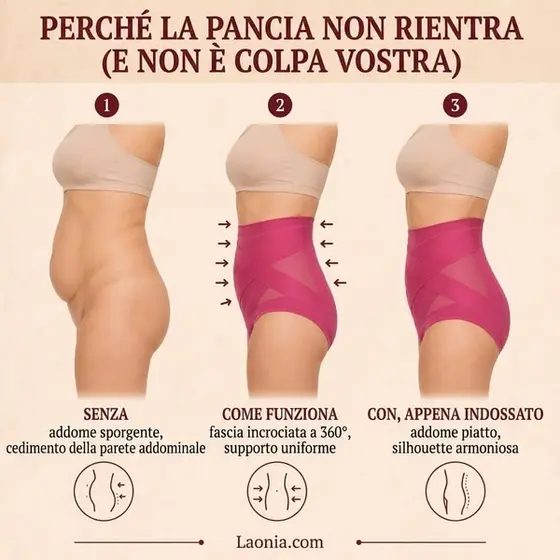
Non è grasso. È la parete addominale che ha perso il suo sostegno. Ho 41 anni e ci sono voluti due anni e mezzo per capire queste poche parole. Avevo perso tutti i chili della gravidanza. La bilancia diceva esattamente quello che volevo sentire. Ma la pancia era ancora lì. Morbida. Sporgente verso il basso. In un modo che prima della gravidanza non esisteva. E continuavo a trattarla come se fosse grasso. Diete. Addominali. Allenamenti. Stavo combattendo il problema sbagliato. Passavo le notti a cercare su Google, con il telefono sotto le coperte. "Perché la pancia non torna dopo il parto." "Rimedi per la pancia molle dopo la gravidanza." Finché una notte ho trovato due parole: Diastasi dei retti addominali. Durante la gravidanza i muscoli dell'addome si separano per fare spazio al bambino. È normale. Quello che non è automatico è che tornino ad avvicinarsi dopo il parto. In molte donne questa separazione può persistere e la parete addominale perde parte del suo sostegno naturale. Non era semplicemente grasso da eliminare. Era una struttura che aveva bisogno di recuperare. Ecco perché tutto quello che facevo non funzionava. Combattevo le calorie, mentre il problema era un altro. Ecco tutto quello che avevo provato. → Fasce contenitive con velcro. Tre marche diverse. 199 €. Scivolavano dopo un'ora. Lasciavano segni sulla pelle. Risultato: nessun cambiamento. → Personal trainer. Sei mesi. 900 €. Ho costruito muscoli sotto la pancia. La pancia era ancora lì. Risultato: nessun cambiamento. → Nutrizionista e programma alimentare. 280 €. Ho perso tre chili. Li ho ripresi. Circonferenza vita invariata. Risultato: nessun cambiamento. → Creme e integratori. 240 €. Pelle più bella. Pancia identica. Risultato: nessun cambiamento. Totale speso: 1.619 €. Risultato sull'addome: zero. Tutto questo perché cercavo di eliminare il grasso, quando il problema era il sostegno della parete addominale. Poi una donna, in un gruppo Facebook, scrisse una frase che lessi quattro volte. "Il problema non era il mio corpo. Le fasce comprimono solo davanti. Il mio corpo è tutto intorno." Ho iniziato a informarmi sul Bengkung. Un'antica tecnica malese praticata da oltre 500 anni. Dopo il parto, le donne avvolgevano completamente l'addome con una lunga fascia. Non solo davanti. Ma a 360°. Laonia ha trasformato questo principio in una culotte che si indossa in dieci secondi e rimane invisibile sotto qualsiasi abito. La prima volta che l'ho indossata ho sentito una differenza immediata. La compressione non era solo davanti. Era uniforme. Tutto intorno. Mi sentivo sostenuta. Non schiacciata. Mi sono guardata di profilo allo specchio. L'addome sembrava più raccolto. Ho preso il paio di jeans che evitavo da due anni. Si è chiuso. Subito. Senza trattenere il respiro. E nessuno sapeva che la stavo indossando. Vorrei dirti tre cose. Primo. Non è colpa tua. Il recupero della parete addominale dopo il parto richiede tempo e varia da donna a donna. Non dipende dalla forza di volontà. Secondo. Forse ciò che hai provato finora non era adatto al problema che stavi cercando di risolvere. Terzo. Esiste una culotte ispirata al Bengkung che offre una compressione uniforme a 360°, pensata per accompagnarti ogni giorno, sotto qualsiasi abito e in totale discrezione. E se entro 30 giorni non sei soddisfatta, ti rimborsiamo completamente. Non hai nulla da perdere. 👉 https://laonia.com/pages/recupero-addominale-post-parto P.S. L'offerta "Acquistane 2 e Ricevi 1 in Omaggio" è valida solo per oggi. E avendo più taglie a disposizione, puoi tenere quella che ti veste perfettamente, senza rischiare di sbagliare.

InactiveJul 21, 26
The No Bullsh*t Yoga Pose Library
Video

yogiflightschool.com

The No Bullsh*t Yoga Pose Library

Learn more

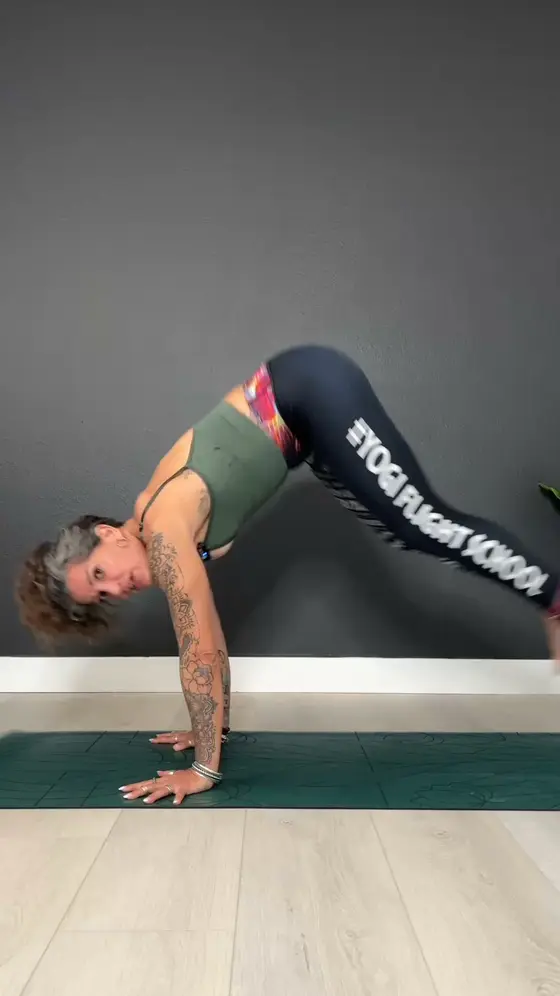
At some point in yoga class, you stopped understanding what you were doing and started just performing the shapes. Down Dog. Warrior II. Triangle. You’ve done them all a hundred times. But if someone asked you to explain what “square your hips” actually means in Warrior I… or what you’re supposed to feel in your hamstrings in Forward Fold… or why your body feels slightly off in every twist… you’d probably have to guess. That’s the part no one really says out loud. Most yoga classes don’t actually teach you the poses. They just guide you through them. So you end up learning by copying, not understanding. That’s exactly why I created the No Bullsh*t Yoga Pose Library. Inside, you’ll get step-by-step breakdowns of the yoga poses you see in class every single week, explained in actual human language that makes sense in YOUR body. ✅ Learn what each pose is actually supposed to feel like ✅ Understand common yoga cues instead of just memorizing them ✅ Discover why certain poses feel awkward, unstable, or uncomfortable ✅ Learn how to modify poses for your body instead of forcing yourself into shapes ✅ Understand how to use props like blocks and straps confidently ✅ Stop relying on copying other people in class The library includes breakdowns of over 90 of the most common yoga poses, so instead of constantly trying to keep up in class… you’ll finally understand what you’re doing and why you’re doing it. Ready to stop guessing your way through yoga class? Click “Learn More” to explore the No Bullsh*t Yoga Pose Library.

Track Health & Science and get alerts for new ads

Create a free account to follow brands, save ads and search the full library.