
PixelSpyer

GymBeam ad: Musujące Amino Fizzy - GymBeam | GymBeam.pl

Musujące Amino Fizzy - GymBeam | GymBeam.pl
GymBeam

Nutrition, 839.9K followers, 1 ads in library

InactiveHealth & SupplementsImageLibrary ID 1032062929268514
Launched Jun 24, 2026Run time unknown

New ads are still being tested; watch whether it survives past 30 days.

Ad copy

Musujące Amino Fizzy - GymBeam | GymBeam.pl

Wraz z zakupem Amino Fizzy otrzymasz od nas bezpłatne upominki! Do zamówienia dołączymy dwie witaminy C o smaku ananasowym i mango, czarny shaker Blend Bottle oraz Multivitamin Vitality 60 tabletek.

gymbeam.plShop now
Placements
FacebookInstagramMessengerThreads
Reach (0 locations)
Not disclosed

Why this ad works

Hook, angle, audience and three ideas to borrow — written by AI from the ad copy.

Similar ads from other brands

InactiveJun 27, 26
The Real Reason You Wake Up at 3AM Has Nothing to Do With Sleep
3

trymorvica.com

The Real Reason You Wake Up at 3AM Has Nothing to Do With Sleep

Shop now

You don't have insomnia. You don't have a sleep disorder. You don't have anxiety. I've practiced for long enough to tell you that for a large number of the women sitting across from me, what they actually have is a cortisol problem driven by a single mineral deficiency. One that no standard blood panel flags, and one that almost nobody is trained to look for. If you've spent years being told it's stress, it's hormones, it's perimenopause, or maybe it's just psychological, I'm asking you to read to the end. Because what I'm about to walk you through is probably the first explanation that's going to actually fit what you feel every night. Let me tell you who I see. Women in their 40s, 50s, and 60s. They come in with almost the identical story. They can't sleep. They fall asleep fine, then they're wide awake at 3AM, heart going, mind spinning about nothing in particular. They've seen specialists. And they've heard the same lines I'm sure you've heard. "Your labs look normal. Have you tried melatonin?" "It's probably perimenopause. We could try an antidepressant if you want." And here is what gets me about these women. They are not fragile. They are running companies, raising kids, caring for aging parents, holding entire households together. They are some of the most capable people I meet. They are exhausted in a way that eight hours in bed does not touch, because they are not actually getting eight hours. Not real sleep. Not the kind that restores anything. So let me tell you what I believe is actually happening. Your body has an alarm system. Under stress, your adrenal glands release cortisol. Cortisol lifts your heart rate, sharpens your focus, sends energy to your muscles. In the right moment it is exactly what you need. It is designed to protect you. The problem isn't the alarm. The problem is the off switch. Your nervous system needs a specific raw material to bring cortisol back down and signal that the danger has passed. When that raw material is in short supply, the alarm just keeps ringing quietly in the background. Your system stays half-locked in emergency mode. Your brain never fully gets the all-clear. So you lie there exhausted but wired. You fall asleep, then snap awake at 3AM with your heart pounding. You spend eight hours in bed and wake up feeling like you slept none of them. Because in a real sense, you didn't. Your stress response was running most of the night. And what do most women in this position get handed? Melatonin that works for a week or two and then quits. Sleeping pills that switch you off without giving you real, restorative sleep. Antidepressants that flatten the anxiety but fog your head and leave you feeling one step removed from your own life. A lot of prescriptions managing the symptom while the actual cause goes untouched. Here is the part I wish more of my colleagues said out loud. That off switch for your nervous system is not a drug. It is a mineral. Magnesium. This is not fringe. Magnesium's role in the nervous system has been studied for decades. It is one of the cofactors your body uses to activate GABA, the neurotransmitter that tells your nervous system to stand down. GABA is the brake pedal. Magnesium is part of what lets you press it. Magnesium also helps lower your core body temperature at night, which is one of the physical signals your brain uses to drop into deep sleep. It is involved in quieting racing thoughts, easing the heart rate, and releasing the jaw you probably don't even realize you clench all night. When magnesium runs low, that whole braking system gets weak. Cortisol loses its ceiling. And no amount of chamomile tea or sleep-hygiene advice fixes what is, underneath everything, a mineral problem. Now here is what makes it a trap. Your body does not stockpile magnesium the way it stores some other nutrients. And every time your cortisol spikes, every stressful email, every argument, every 2AM worry spiral, you burn through more of it. So the more stressed you are, the more magnesium you lose. The less magnesium you have, the less your cortisol can switch off. And the less your cortisol switches off, the more stressed your body stays. Around and around. A lot of women have been circling that drain for years without anyone naming it. And it's worse now than it used to be. The magnesium content of our food has dropped over the decades as soil has been farmed harder. Most of us aren't eating the leafy greens, nuts, and legumes in the quantities it would take to keep up. And chronic stress, the exact thing magnesium is supposed to buffer, is burning through what little we get faster than we replace it. So why didn't your own doctor lead with this? I'll be honest with you, because it's the more believable answer than any conspiracy. Across four years of medical school, nutrition gets a tiny handful of hours. Supplement absorption gets essentially none. When a physician tells you to "try some magnesium," they usually mean well. They just were never taught that the form you buy decides whether any of it reaches you at all. And that is the piece almost nobody gets right. Most of the magnesium on the shelf is magnesium oxide. It is cheap, and it is poorly absorbed. Study after study shows oxide is one of the worst-absorbed forms there is, with much of the dose passing straight through you. That is also why it is famous for sending people to the bathroom. The magnesium isn't getting in. It is mostly just irritating your gut on the way out. So you take it for weeks. You feel nothing. And you reach the only reasonable conclusion available to you. "Magnesium doesn't work for me." I want to be very clear with you. You're not broken. You were not doing it wrong. You were taking a form that was never going to reach the place it needed to go. Here is where it turns. Magnesium bisglycinate is a different molecule entirely. The magnesium is bonded to two molecules of the amino acid glycine, and that glycine acts like an escort, carrying the magnesium intact through your gut wall instead of leaving it to irritate your intestines. This isn't a marketing claim. Back in 1994, researchers in the Journal of Parenteral and Enteral Nutrition put the glycinate form head to head against oxide in patients whose guts struggled to absorb anything, and the glycinate form came out ahead, better absorbed and far easier on the stomach. More recently, the 2021 European clinical guidelines for magnesium-wasting disorders state it plainly: organic forms like glycinate are more bioavailable than oxide. The doctors who write the guidelines already know. It just never makes it to the exam room. And there's a bonus. Glycine on its own is calming. It is part of how your body lowers core temperature and quiets down for sleep. So with bisglycinate you are getting the mineral that powers your nervous system's brakes, plus a naturally soothing amino acid, working together to do what a sedative can't: help your system stand down on its own. Let me tell you about one woman. I'll change her name and call her Linda. 52. Hadn't slept a full night in five years. Same pattern every night, exhausted by nine, wide awake by two, heart pounding, mind racing. She'd been told it was perimenopause and put on two different antidepressants. Neither did a thing for her sleep. By the time I saw her she'd already been through melatonin, valerian, a magnesium oxide supplement, and a ninety-dollar sleep blend she found online. Nothing. I explained the cortisol-magnesium trap, the same way I just explained it to you. I explained why none of what she'd tried could reach her. And I asked her to switch to magnesium bisglycinate for two weeks and tell me what happened. She messaged me on day nine. She had slept through the night. And not as a one-off. Every night since about day five. By a month in, the brain fog had lifted. The low hum of anxiety that had been running under everything had gone quiet. The 3AM wake-ups had stopped. No new prescription. No sleeping pill. Just the mineral her nervous system had been starving for, finally in a form it could absorb. And Linda is not a one-off. That's the part I want you to understand. The reason I can tell you what's going to happen is that I've watched it happen the same way, in the same order, more times than I can count. The jaw lets go first, usually within a few days. The 3AM wake-ups start spacing out by the end of the first week. And somewhere around two weeks in, the fog lifts and the woman sitting across from me sounds like herself again. I want to be straight with you about why I'm not going to paper this page with a hundred glowing five-star quotes. You've seen those. So have I. Anyone can manufacture them, and you've been burned enough to scroll right past them. I'd rather you trust the thing those quotes can't fake: the mechanism, the published research, and the fact that this follows a schedule. Because here's what tells me it's real and not in anyone's head. Placebo is random. It hits some people the first night, some people never, scattered with no pattern. What I see isn't scattered. It clusters, again and again, around the same few days, because that's roughly how long it takes a depleted nervous system to start refilling once it's finally getting a form it can absorb. Random doesn't run on a schedule. This does. And here is what I want you to understand, because I have now watched this exact sequence play out in woman after woman in my practice. The day-three turnaround is so consistent that I stopped being surprised by it years ago. It is not luck and it is not the placebo of a new bottle. It is what happens when you finally give a depleted nervous system the raw material it has been missing. That was the moment it fully clicked for me. For a lot of these women, this was never a sleep disorder. It was a cortisol problem caused by one unmeasured deficiency, fed by the wrong form of the one mineral that could fix it. So before you go buy magnesium, let me save you the mistake almost everyone makes. Do not just grab the first bottle you see. The shelves are full of oxide fillers and underdosed blends in expensive-looking packaging. Worse, plenty of bottles print "Glycinate" in big letters on the front and then list oxide on the back, buffered, blended, hidden behind an "and." You take it, you feel nothing, and you wrongly conclude, again, that magnesium doesn't work for you. It does. That bottle just wasn't really giving you any. So I started telling my patients exactly what to look for. Pure bisglycinate. A real, full dose, not a sprinkle. No oxide hiding on the back. Third-party tested, with the results posted publicly, so you're not taking the company's word for what's inside. The one I keep coming back to, and the one I now point people to, is MORVICA. Pure magnesium bisglycinate. No oxide, no filler, nothing buried on the back of the label. They publish their third-party testing for both purity and potency, so you can read it yourself before you ever spend a dollar. And they don't just say 'third-party tested,' which means nothing, because anyone can print it. Every batch is sent to an independent lab and screened for potency and for heavy metals like lead and arsenic, and the full report is posted right on the product page. You don't have to trust me, and you don't have to trust them. You can read the actual numbers before you spend a cent. The routine is simple. Two gummies about an hour before bed. The magnesium and glycine go to work helping your nervous system do what it's been unable to do on its own: bring cortisol down, take the foot off the alarm, and let you sink into real sleep. What the women I work with describe, once they're a week or two in, is always some version of the same thing. The racing mind goes quiet. The jaw stops aching in the morning. The 3AM wake-ups taper off and then stop. And they wake up feeling like themselves again. Clear-headed. Calm. Actually rested, maybe for the first time in years. No prescription. No sedative hangover. Just the mineral your body should have had all along, in the form it can finally use. Now, here's the part I want to be straight with you about, because I know what you're thinking. You've bought magnesium before. It did nothing. You are understandably not eager to spend another forty dollars to be disappointed again. So MORVICA removes that risk entirely. Every order is backed by a 60-night sleep guarantee. Take two gummies every night for two months. If you are not sleeping through the night, if you don't wake up clearer and calmer and actually rested, you send it back, even an empty bottle, for a full refund. No interrogation, no hoops. The only thing you're risking is one more night lying awake doing the math on how few hours you have left, and you're doing that already. The one honest catch is supply. Real bisglycinate at a full dose costs far more to make than oxide, and MORVICA won't cut it to move faster, so it sells out periodically and the next batch often takes weeks. As I'm writing this there's limited stock left right now. If it's available when you click through, that is the night to start. You don't have insomnia. You never did. What you have is a cortisol loop that nobody measured and the wrong form of the one mineral that closes it. Tonight you can finally give your body the right one. 👇 Tap below to get MORVICA, read the lab results yourself, and start the form that actually works tonight. https://trymorvica.com/products/magnesium-bisglycinate-gummies


InactiveJun 27, 26
92 Nutrients In 2 Daily Capsules
Video

vitaleaf.store

92 Nutrients In 2 Daily Capsules

Order now

Why take 7 different vitamins when 2 capsules can do it all? 🌿 Vita Leaf Moringa packs 92+ nutrients & 46 antioxidants into one clean, plant-based capsule — sourced from one of the most nutrient-dense plants on Earth. 🌿 Complete plant protein (9 essential amino acids) ☀️ Supports steady energy — no caffeine, no crash 🛡️ Supports immune & antioxidant defense ✨ Supports skin, hair & vitality 🏆 Over 1 million bottles sold ⚠️ July 4th Sale: Get your 1st month FREE — limited time only. 👉 Tap "Shop Now" to start your moringa journey today. 🌱 Not intended to diagnose, treat, cure, or prevent any disease.

InactiveJun 27, 26
Feel like yourself again

trykorvina.com

Feel like yourself again

Shop now

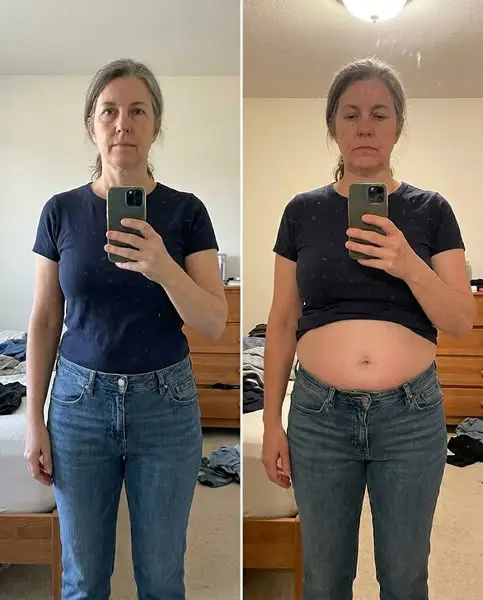
For two years I treated my bloating as a food problem. It was never the food — and the day I finally found out what it actually was, I sat at my kitchen table and cried with anger. I need to tell you the whole story, because if your stomach has turned into something you don't recognise, I think you've been lied to the same way I was. Not on purpose. But lied to all the same. My name's Frances. I'm 52. I live just outside Harrogate with my husband Geoff. I taught in a primary school for nineteen years. I'm the practical one — the one who organises everyone else. I am not someone who falls for things. It started about two years ago. My stomach would be flat when I woke up — properly flat, the way it always had been — and by mid-afternoon I'd be quietly undoing the button on my trousers under my desk. By evening I looked six months pregnant. The same lunch I'd eaten for twenty years, and my body had started treating it like an enemy. So I did what we all do. I decided it was the food. I cut out dairy. Then bread. Then anything fizzy, then onions, then garlic, until my plate was beige and bare — and I was still swollen by dinner. I did the low-FODMAP diet properly, weighing everything, cutting out half of all food. It helped for about a fortnight and then I was right back where I started, except now there was even less I felt safe eating. I took probiotics. Three different kinds, the expensive fridge ones, for months. Nothing. I had peppermint capsules and antispasmodics from the chemist that took the edge off a cramp for an hour, and then it came back. I went to my GP. She pressed on my stomach, asked if anything had changed, and said it was probably just my age and stress. Try cutting a few things out. And here's the part I'm ashamed of. By the end of two years, a darker thought had moved in. It had got so bad, so fast, that I'd started lying awake at night convinced it was something serious. I sat in a locked toilet at my own birthday dinner once, googling words I was too frightened to say out loud. I'd given up believing anyone could tell me what was actually wrong. Then my sister Carol came up for the weekend. She's four years older than me. I waved away the bread at dinner out of habit, started my usual little explanation, and she put her fork down and said, "Frances. I had this. Exactly this. And everything you're doing is aimed at the wrong thing." And then she told me what no doctor, no diet plan, no health-shop assistant had ever told me. I'm going to tell you, because it's the thing that changed everything, and it made me furious that I'd spent two years not knowing it. Your gut lining isn't just a tube food passes through. It's a living barrier, one cell thick, and it has one quiet job that runs your whole digestive comfort: it keeps the inside of your gut calm and sealed, so that normal food and normal gas pass through without you feeling a thing. When that barrier is healthy, you can eat what you like and never once think about your stomach — the same way you never think about breathing. But that barrier is exposed to everything. Every meal. Every stress hormone. Every year. And there is one thing that has quietly kept it calm and protected your entire adult life: estrogen. Estrogen keeps the inflammation in that lining in check. Then, in your 40s and 50s, when the change begins, estrogen starts to fall. And that barrier loses the protection it's had for thirty years. It becomes inflamed. Irritated. And an inflamed gut lining becomes hypersensitive — it starts overreacting to perfectly normal food, normal amounts of gas, things a calm gut wouldn't even notice. It treats your ordinary dinner like a threat, and it swells. That is the bloating. That is why it came out of nowhere at 50, on the exact same food you'd eaten for twenty years. It was never the food. It was never in your head. It is not "just your age." It is a barrier that lost its protection and became inflamed and oversensitive. I sat at the table while Carol explained it and I felt two years of anger rise up in me. Because the moment I understood the real cause, I understood why every single thing I'd tried had failed. Read this part slowly, because this is the part nobody tells you. Everything I'd been doing pressed on the symptom from the outside. None of it reached the inflamed lining. Cutting out foods — FODMAP, dairy, gluten — only removes the triggers. The lining stays inflamed underneath, so the moment a food comes back, so does everything else. That's why the relief never lasted. Probiotics add bacteria. But my problem was never a shortage of bacteria. They never touched the inflammation. Peppermint and the antispasmodics just numbed the cramp for an hour. They muffled the alarm. They never once reached what was setting it off. And "it's just your age, try cutting things out" — that wasn't an answer at all. That was being sent home to keep treating the food. Nothing I had tried was reaching the inflamed barrier. That is why my stomach never actually got better. Not once, in two years. Then Carol told me what had finally worked for her — and I'll be honest, I rolled my eyes at first. A fruit. Indian gooseberry. The name's amla. She said it was one of the most antioxidant-rich foods ever measured — that when researchers tested the antioxidant strength of hundreds of foods, this one came out at the very top, ahead of blueberries, ahead of green tea. And that it wasn't a probiotic and it wasn't another thing to cut out. It works on the lining itself: the antioxidants help calm the inflammation in that barrier, so the gut gradually stops overreacting to everything. Not on the food. Not on the bacteria. On the inflamed, oversensitive lining — the one thing none of my diets or probiotics or capsules had ever gone anywhere near. I'm not a doctor. I taught seven-year-olds to read. But it was the first thing in two years that explained both why my body had turned on me and why nothing had worked. She used a brand called Korvina. The only reason she'd risked it, she said, was that they gave you ninety days to send it back if it did nothing — and after everything I'd wasted, that guarantee was the only reason I was willing to try one more thing. I ordered it that night. I want to be honest about what to expect, because once I understood the mechanism, the timing made sense. It isn't a stimulant; there's no jolt. The first couple of weeks, you mightn't feel much at all — the antioxidants are quietly going to work on the inflammation in the lining. For me, the first thing I noticed wasn't even the bloating — it was that I felt less heavy and foggy after dinner. Around weeks two and three, the evening swelling started to ease. Less cramping after meals. I reached for the antispasmodics less and less. By the time I was six or seven weeks in, I'd had a run of evenings where I simply ate a normal dinner and went the whole night without once undoing a button. One Sunday I reached for the big cardigan I keep in the car out of pure habit — and stopped, because I didn't need it. Carol rang me that week, and partway through she went quiet and said, "You sound like yourself again." I had to put the phone down for a second. I'm not going to tell you it's a miracle, because it isn't, and Carol would clip me round the ear for saying so. Some days are still better than others. My stomach isn't fifteen years younger. But I eat bread again. There's no cardigan in the car. And I'm not lying awake at night frightened anymore. So let me say this plainly. If your stomach is flat in the morning and swollen like you're pregnant by evening, on food you've eaten your whole life — it was never the food. If you've cut out half of everything and you're still bloated by dinner — the diet was never going to work, because the lining stayed inflamed. If you've taken probiotics for months and felt nothing — they were never reaching the actual problem. If your doctor pressed on your stomach and said it's just your age — that wasn't an answer. Korvina is a clean amla extract. Two capsules a day with breakfast. It works on the inflamed lining the diets and probiotics never reached — and helps your gut do what it did calmly for thirty years before the change. It comes with ninety days. If your body doesn't tell you something's changed, you send the bottle back and you've lost nothing.

InactiveJun 27, 26
The $2,500 retreat secret that has nothing to do with meditation
3

trymorvica.com

The $2,500 retreat secret that has nothing to do with meditation

Shop now

The retreat sells silence, sound baths and mountain air. The thing that actually works costs us pennies a guest. I probably shouldn't be the one telling you this. I'm not a doctor. I'm not a wellness coach. I don't lead the breathwork or run the sound baths. I work at a $2,500-a-night retreat in Sedona. I set up the rooms. I run the evening program. And every night before bed, I carry a small tray to each guest's door with a cup of chamomile tea and two gummies on it. I've done it hundreds of times now. And what happens by day three is so predictable it almost feels like a magic trick I'm in on. Let me back up, because you need to see these women the way I see them when they arrive. They show up wrecked. I'm not being unkind, it's just the truth, and you might recognize yourself in it. Mostly women in their 40s and 50s. Dark circles. Puffy eyes. Moving like their body weighs twice what it should. Not regular tired. The kind of tired that's soaked all the way into them. The kind where the light behind the eyes has gone out. At check-in they tell me the same story almost word for word. They haven't slept through the night in years. They wake up at 2 or 3AM and lie there with the brain spinning. They've tried everything. Melatonin. Ambien. HRT. Progesterone. Lavender everything. Apps. Courses. Magnesium, of course, more than one kind. Some of them have spent thousands chasing it. They've come here because someone told them this place might help, or because they ran out of other things to try. So day one, they do the program. Breathwork in the morning. Sound bath in the afternoon. Yoga, meditation, clean food, the whole thing. They go to bed that first night, and most of them sleep a little better. They chalk it up to the mountain air, or the silence, or just being away from their life for a day. Fair enough. But day two is when it starts. I'll see a guest at breakfast and something's already different. Her face looks softer. Her jaw isn't clenched. She'll say something like "I don't know what happened but I slept so well last night," and she's almost confused by it, because it's only day two and she hasn't even done the deep emotional work yet. By day three it's like a switch flipped. She slept the whole night through. She comes to breakfast and the lights are back on behind her eyes. Calmer. Present. Some of them get emotional at the table because they can't remember the last time they felt like a person. And every single time, they think it's the retreat. The Sedona energy. The vortexes. The breathwork. The sound baths. They thank the instructors. They thank the chef. They go home and write these beautiful reviews about how this place gave them their life back. And I just smile and nod. Because by now I know what actually happened. It's the gummies. The two little gummies on the tea tray that nobody asks about. They take them with their chamomile like the chocolate on a hotel pillow and don't think twice. They have no idea that's the thing rebuilding their sleep while they're busy thanking a rock formation. The gummies are magnesium bisglycinate. Our wellness director, Dr. Perrin, has me put them on every single guest's tray on the first night. She calls them the most important part of the entire program. In the beginning she actually tried to explain it to guests, but nobody believed her. So she stopped explaining and just had me build it quietly into the evening tea. Now people credit the breathwork and she lets them. Here's the part I want to be honest about, because it's the reason I think you'll believe the rest of this. I didn't believe it either. When I started, I thought Dr. Perrin was being dramatic about her precious gummies. Magnesium? Come on. Everybody's heard of magnesium. My own mom has a bottle of it in the kitchen cabinet. It is not exactly some buried secret. I figured the real work was the meditation and the gummies were a nice bedtime ritual. Then I started actually paying attention. Guest after guest after guest. The same pattern every single time. Day one a little better. Day two the jaw lets go. Day three sleeping straight through. Day four a different woman at breakfast. I stopped being able to call it a coincidence somewhere around my fiftieth guest. There was one woman, day four, who walked up to me at breakfast with tears running down her face. She said, "I have not slept through the night in six years. Not once. And I just slept three nights in a row. What is happening to me?" I wanted so badly to point at her nightstand and tell her. But Dr. Perrin's rule is to let guests have their experience, so I just said, "The program works really well for a lot of people," and let her cry into her coffee. But that one stuck with me. Because I had my own version of the problem. Not as severe as the guests, but most nights I'd wake up around 2 or 3AM and my brain would just switch on and start running. Work, money, everything. I figured it was stress, or just how I was built. One night I mentioned to Dr. Perrin that I wasn't sleeping. She looked at me and said, "Are you taking the gummies?" I said, "No, those are for the guests." She said, "Take two tonight, an hour before bed." So I did. And I slept the entire night. First time in I honestly don't know how long. I took them again the next night. Same thing. Straight through. And my jaw wasn't aching in the morning, which I hadn't even told her about, because I'd been waking up with sore temples for months and assumed that was just my face now. By the end of that week I was getting seven hours straight, every night. I was a different person at work. More patient. Sharper. Not dragging myself through the afternoon anymore. So I went back to Dr. Perrin, kind of annoyed honestly, and said, "Okay, I get it now. But I don't understand. I took magnesium before this. My mom's bought it for the whole family for years. It never did a single thing for me." She said, "What kind was your mom buying?" I didn't know. She told me to go home and check the bottle. So I did. Nice label. Hundreds of good reviews on Amazon. Big letters on the front: "Magnesium Glycinate." Dr. Perrin said, "Now flip it over. Read the back. The actual ingredient line, not the front." It said: magnesium from magnesium glycinate and magnesium oxide. She said, "There it is. That little word 'and' is the whole scam. It means it's mostly oxide. Oxide is the cheapest magnesium there is, and your body absorbs about 4 percent of it. So you've been swallowing it for years and your cells never actually got the magnesium. You weren't failing magnesium. You were taking chalk and calling it magnesium." Then she said the thing that reframed it for me completely. "What I use at the retreat is pure bisglycinate. No oxide. No filler. In bisglycinate, the magnesium is bonded to two molecules of an amino acid called glycine, and that glycine carries it intact through your gut and into your cells, where oxide just sits in your intestines and gives people diarrhea. That's why mine works in two days when the bottle your mom buys didn't work in two years. Same word on the front of the label. Completely different molecule inside." And then she explained why it matters so much for sleep, and this is the part I now repeat to anyone who asks. "Magnesium is the off switch for your nervous system. It's literally the raw material your body uses to power down at night. When you're low, you don't get that signal. Your cortisol spikes at 3AM instead of staying down. Your jaw clenches. Your brain races. You're exhausted but completely wired, because the system that's supposed to shut you off has nothing to work with. Feed it the real thing and the switch starts working again. That's all day two is. It's not the vortexes. It's a nervous system finally getting fed after years of starving." She said almost every guest who walks in has already "tried magnesium and it didn't work." And almost every time, when she asks them to check, it's the same thing. Glycinate on the front, oxide hiding on the back. They've never once taken the real form. They just think they have. They wrote off the one mineral that would've fixed it, because the thing in the bottle was designed to fail them. I've been here almost two years now. I've watched hundreds of women go through the exact same arc. Arrive hollow. Two nights on the real gummies. Day three, sleeping through. Day four, a person again. Credit the retreat. Fly home. And honestly, I keep a rough tally in my own head at this point, and the day-three turnaround is so consistent that Dr. Perrin estimates the gummies are doing around 80 percent of the work the whole expensive program gets credit for. Here's how I know it's actually the gummies and not this place. There was a guest named Susan. She slept so well during her stay that she booked a second five-day visit three months later, just to get that sleep back. When she returned I asked if she'd been sleeping at home. She said no, it all fell apart the moment she left. So I asked if she'd kept taking the bisglycinate at home. She said, "I've been taking magnesium." I asked what kind. She went and checked her phone order. Oxide on the back. She was furious. She'd been faithfully taking the wrong form for months, thinking she was recreating what we do here, and getting nothing. She ordered the real thing from her room that same night. A week after she got home she texted me: "I'm sleeping through the night. At home. I cannot believe I paid for another five days here when all I needed was the right gummies." That happens way more than you'd think. It's the cleanest proof I have. When women take the real form, it travels home with them. When they go back to the pretty bottle from the shelf, the sleep disappears. It was never the mountain. It was always the mineral. Now, I want to be fair, because I actually love this place. The breathwork helps. The meditation helps. The silence, the food, stepping out of your life for five days, all of that is real and worth something. I'm not telling you it's a scam. I'm telling you that the thing quietly doing most of the heavy lifting is the cheapest item on the entire tray. And you do not have to fly to Arizona and spend $2,500 to get it. So let me just say the thing Dr. Perrin won't let me say to guests, directly to you. If you're not sleeping through the night, and you've tried magnesium and decided it doesn't work for you, you were almost certainly taking the wrong form. Go get your bottle right now and flip it over. Read the actual ingredient line on the back, not the name on the front. If you see the word "oxide," anywhere, even tucked behind an "and," that's your answer. That's not your body being broken. That's not you being one of the women who "just has it harder." That's a bottle that was built to fail you, doing exactly what it was built to do. You didn't fail. You were handed chalk and told it was medicine. The exact gummies we use at the retreat, the same pure MORVICA bisglycinate I take every night myself, are available direct from the company. No oxide. No filler. Nothing hiding on the back of the label. They post their third-party lab testing right on the page, so you don't have to take my word for any of this. You can read the purity and potency results yourself before you ever order. So here's what I can actually do for you, since I can't follow you home with a tea tray. The exact gummies we use at the retreat, the same pure MORVICA bisglycinate I take every night myself, are available direct from the company. No oxide. No filler. Nothing hiding on the back of the label. They post their third-party lab results right on the page, both the purity test and the potency test, so you don't have to take my word for a single thing I've told you. Read them yourself before you decide. And here's the part that matters most, because I know exactly what you're thinking. You've bought magnesium before. More than once. It did nothing, and you're not in a hurry to waste another forty dollars proving that again. So MORVICA takes that risk off the table completely. Every bottle comes with a 60-night sleep guarantee. Take two gummies every night for two months. If you are not sleeping through the night, if you don't wake up feeling like the lights came back on, you send the bottle back, even empty, and you get every dollar back. No form to fill out, no argument. You are not risking money. You are risking one more night of lying awake doing the math, which you're doing anyway. The only honest catch is supply. Real bisglycinate is slow to make and they refuse to cut it with oxide to move faster, so they sell out 2-4 times per year and the restock takes weeks. As I'm writing this they're down to a few hundred bottles. If it's in stock when you tap through, that's the moment to get it. If it says sold out, you waited too long. Two gummies, one hour before bed, starting tonight. The same two that go on every guest's tray. The same two that turn day three into the morning these women fly across the country for. Except you get to skip the flight, the $2,500, and the part where you thank a mountain for something a mineral did. 👇 Here's the link to the exact gummies we use, with the lab results and the guarantee. It's the thing I wish I could hand every guest on night one, instead of just quietly setting two on a tea tray and watching them credit the breathwork three days later. https://trymorvica.com/products/magnesium-bisglycinate-gummies

Track GymBeam and get alerts for new ads

Create a free account to follow brands, save ads and search the full library.