
InactiveJul 26, 26

Video
easy-quiz.dancefit.me
7 MIN HOME DANCE PLAN FOR BEGINNERS
NO GYM, NO STRESS JUST DANCING! BOOST YOUR MOOD QUICKLY BURN CALORIES Take a quiz and get your dance plan in DanceFitMe

Medical Service, 2 followers, 9 ads in library
New ads are still being tested; watch whether it survives past 30 days.
Taking Supplements. Kidneys Still Declining.
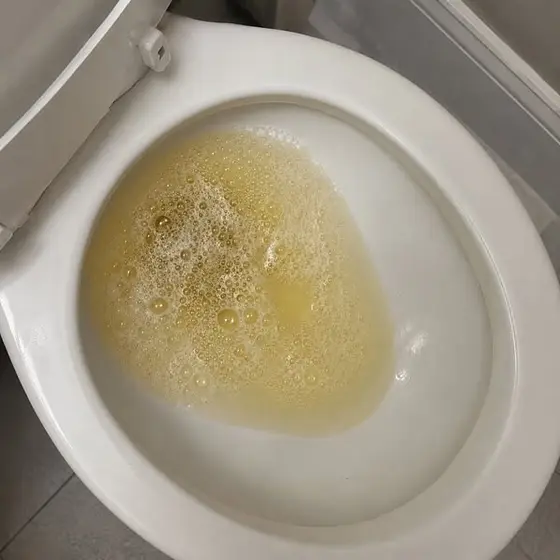
You have a cabinet full of them. CoQ10. Fish oil. Alpha lipoic acid. A generic kidney blend someone recommended. A cinnamon capsule from the health food shop that someone in a forum said changed their numbers. You take them every morning. You set them out the night before so you do not forget. You buy the good ones, not the cheapest versions. You read the labels. You do everything a responsible person does when they are trying to take care of themselves. And every time you go back for blood tests, the numbers are still moving in the wrong direction. You are not being careless. You are not being lazy. You are trying harder than most people would. And it is not working. That is not a supplement problem. That is a question nobody has answered for you. Not what to take. But why none of it is reaching the thing that is actually putting pressure on your kidneys. And until someone answers that question, you can fill that cabinet with every well-reviewed product on Amazon and your eGFR will keep dropping a point each quarter. I'm Dr Henry Caldwell. I've been a consultant nephrologist, a kidney specialist, for 20 years. I've watched blood sugar damage kidneys from the inside out. I've sat across from patients and explained what dialysis means. I've watched people lose toes. I've watched people lose vision. I've watched a man cry when I told him his kidneys were at 28 percent. And for most of my career, when a patient pulled a supplement out of their bag and asked me what I thought, I would smile, document it, and tell them to keep taking their prescribed medicine. I was wrong to do that. Not because the supplements were hurting them. Because I knew what their kidneys were actually up against and I knew those supplements were not getting close to it. And I never told them that. Six months ago, a patient set a bag on my desk. Ceylon cinnamon. Concentrated extract. 7,200mg equivalent in MCT oil. Called Glissé. Three months later his eGFR had climbed from 46 to 54. His urine protein had dropped from 58 mg/mmol to 22 mg/mmol. That night I went home and started reading everything I had never taken the time to read. About what every supplement my patients had been bringing me for years was actually doing, or failing to do, and why. Here is what your cabinet full of supplements is missing. The foam in your toilet every morning. The tingling that never leaves your feet. The fatigue that settles in before noon. The swelling that leaves sock marks on your ankles. The waking up at 3am to use the toilet. These do not feel like a single problem. But they are not separate problems. They are one problem showing up in different places. Your HbA1c measures one thing. A rolling picture of how much sugar has been in your blood over the last few months. That is all it measures. It does not see the tiny capillaries threading through your kidney tissue. It does not see the sustained pressure those filters have been under for years. It sees the level of the flood. Not where the flood is going. Every cell in your body has transporters on its surface. GLUT4 transporters. Their job is to open when insulin signals them, grab glucose from the blood, and pull it inside the cell where it gets converted to energy. In a healthy body that sequence is automatic. Insulin signals. Doors open. Glucose moves from blood into cell. Blood sugar comes down. In insulin resistance -- the thing underneath type 2 diabetes -- those doors stop responding properly. They are still there. They just stopped coming to the surface. Insulin gives the signal. Nothing happens. Your pancreas sends more insulin. Still nothing. The glucose has nowhere to go, so it stays in your blood and keeps circulating. Your cells are starved of energy. Your blood is flooded with glucose. Think of it like fine sand moving through a water pipe. It does not crack the pipe in one event. It makes no sound. It just grinds the inside walls thinner, grain by grain, until one day the pipe starts to fail in ways you cannot see from the outside. Your HbA1c is reading the water pressure. It is not reading the pipe walls. The foam in your toilet is made of pipe walls. So that is why the CoQ10 did not move your kidney markers. It does not open the doors. Much of it struggles with absorption and may never reach kidney tissue at meaningful levels. It addresses damage further down the line while the real pressure is still running upstream. That is why the fish oil did not move them. It may support general inflammation, but it does not touch the GLUT4 transporters. It does not stop glucose staying in your blood and moving through your kidney capillaries hour after hour. One consequence managed. The cause untouched. That is why the alpha lipoic acid did not move them. Better than the others, and it does get into cells. But it works broadly. The doors are still closed. And that is why the cinnamon capsule from the health food shop did not move them. This one was pointing at the right mechanism. But it failed at the delivery. Most cinnamon sold in supplements is cassia bark. A completely different plant from true Ceylon cinnamon. Same look. Similar smell. Completely different chemical profile. At the doses required to actually affect blood sugar, cassia can put strain on your liver because of its coumarin content. You were not taking the wrong amount. You were taking the wrong plant. And even if you found real Ceylon cinnamon, a dry powder capsule often does very little. The active compounds are fat-soluble. Your cell walls are a double layer of fat molecules. Fat-soluble compounds need fat to pass through them properly. A dry powder capsule has no fat carrier. The compounds reach the gut, find no carrier, and can pass through without ever reaching the cells that needed them. So that is why none of it moved. Not because you chose wrong. Not because you were not trying hard enough. Because every one of those products was working on a consequence of the problem instead of the mechanism behind it. And the one pointing at the right mechanism was failing at delivery. You were not failing the process. The products were failing to reach the problem. Here is what stopped me cold at midnight, reading in my study with 18 years of nephrology behind me. The research on how to open those doors exists. It has been published. Peer-reviewed. Sitting in databases that a short NHS appointment leaves no time to read. There is a specific compound in true Ceylon cinnamon that supports GLUT4 transporters directly. It goes to the cell, speaks to the machinery inside it, and helps wake the doors back up. Not by forcing more insulin into an already overwhelmed system. By going around the broken signal and supporting the cellular machinery that was always supposed to open the doors. When the doors open, glucose begins clearing from the blood into the cells. The pressure drops. The sand slows in the pipe. The kidney filters face less sustained assault. The protein leakage drops. The foam disappears. The drain opens. Your medicines manage the flood. This opens the drain. In 18 years of practising nephrology, not once had I mentioned it. You cannot patent a bark compound in the same way you can patent a drug. So no pharmaceutical company funds the kind of trials that would land it in every consultant’s inbox. The studies stay in databases. The patients keep filling their cabinets with CoQ10 and fish oil and watching their eGFRs drop another point each quarter. That is not your fault. The system was only giving you half the answer and never telling you the other half existed. The patient who set the bag on my desk had found the other half. He was taking Glissé. That is the logical next step once you understand the mechanism. The right plant. The right concentration. A delivery system that actually carries fat-soluble compounds through your cell walls. Glissé is true Ceylon cinnamon, Cinnamomum verum, sourced from Sri Lanka. DNA-verified at the species level -- not just a label claim, an actual Certificate of Analysis. Dosed at 7,200mg equivalent per softgel. A 12:1 concentrated extract, the dosing range that matches the published clinical research. Suspended in MCT oil from coconuts -- not as a filler, as the delivery system -- the fat bridge that carries the active compounds through your cell wall and into the cells where the GLUT4 transporters have been waiting for years to be told to surface. Third-party tested. GMP-certified. Every batch verified for purity, potency, and coumarin levels. It comes in a bag, not some bulk bottle. A study published in the Journal of the American College of Nutrition found that the active compounds trigger the same internal chemical cascade that insulin is supposed to trigger, and were 20 times more effective at activating this pathway than any other natural compound tested. Twenty times. A second study confirmed that Ceylon extract physically increases the number of GLUT4 transporters at the cell surface. The doors do not just crack open. They multiply. I went home that night and ordered one. Week 1, my energy levelled out. I had a fasting blood glucose stuck at 6.2 mmol/L for two years -- not alarming, but not moving. What I noticed first was not the meter. It was that I stopped hitting the wall at 2pm. Just steady, clear energy from morning through evening. Week 2, my fasting blood glucose dropped from 6.2 to 5.4 mmol/L. I tested three times. Week 3, the 3am trips to the toilet stopped. I was sleeping through the night for the first time in over a year. Week 8, my fasting blood glucose was consistently between 5.1 and 5.6 mmol/L. Week 10, my colleague ran my blood tests. My creatinine came back at 88 µmol/L. It was 115 six months earlier. He looked at it. Looked at me. "What did you change?" I handed him the research. He read for ten minutes. Closed the folder. "Your kidney function improved." "Keep doing whatever you're doing." That patient came back for his follow-up. eGFR at 54. Up from 46. Urine protein at 22 mg/mmol. Down from 58. "Your numbers are improving." He smiled. "The drain opened." I have recommended Glissé to nine patients now. Every single one has come back and reported the same pattern. Better sleep within the first week. Steady energy through the day. Lower fasting glucose within the first month. One patient -- a 61-year-old woman with protein leakage that had been climbing for three years -- came back at her 90-day follow-up with urine protein down 40 percent. She cried when she told me the foam in her toilet was gone. If you have been taking CoQ10, fish oil, alpha lipoic acid, or generic cinnamon capsules and your kidney markers are still moving in the wrong direction, try Glissé risk-free. Ninety-day money-back guarantee. No questions asked. If your fasting glucose does not come down, if your kidney markers do not move, if you see no difference in 90 days, you pay nothing. Most patients who see real movement in their kidney function committed to at least three months. That is how long it takes to give your eGFR a real chance to stabilise and shift. The 90-day guarantee means those three months cost you nothing if the numbers do not move. Here is what happens if they do. Your fasting glucose starts dropping between weeks 2 and 4. Your sleep improves within the first week. Your energy levels out through the day. And at your next blood test -- the one where your doctor has been saying let's keep an eye on it for two years -- she pauses. Looks at the numbers. Looks at you. Asks what you changed. You tell her. She is quiet for a moment. Then she uses a word you have not heard in years of appointments. "Improving." Not managed. Improving. One softgel daily with breakfast. That is the whole protocol. They sell out. It is a small company sourcing verified Ceylon from Sri Lanka and doing it properly. I have had patients wait weeks when they sold out. If it is available, order now. If you are dealing with foam in the toilet that will not go away, tingling in your feet your doctor calls neuropathy, fasting blood glucose that will not come below 7.2 mmol/L, or eGFR dropping a point or two every time you go back for blood tests, give it 90 days. Track your fasting glucose every morning. Go back for your next blood tests. If the numbers do not move, you get your money back. But if they do -- if your protein leakage drops, if your eGFR holds or climbs, if your doctor pauses over your blood tests and says the word you have been waiting to hear for years -- you will understand why I now have a standing conversation with every type 2 patient who walks into my clinic. The flood is being managed. The drain was never opened. You know now that it can be. ~ Dr Henry Caldwell, Consultant Nephrologist, 20 years
Hook, angle, audience and three ideas to borrow — written by AI from the ad copy.
easy-quiz.dancefit.me
7 MIN HOME DANCE PLAN FOR BEGINNERS
NO GYM, NO STRESS JUST DANCING! BOOST YOUR MOOD QUICKLY BURN CALORIES Take a quiz and get your dance plan in DanceFitMe


mykorvos.com
40% Off Today
I am the on-set medical consultant for an adult film studio. I have personally examined 600 male performers over the last 14 years. About 8 percent of them age in a way the other 92 percent do not — still performing reliably in their late 40s and early 50s with no pharmaceutical help, with recovery times between scenes that match what 25-year-olds should be able to do but usually cannot. The reason that 8 percent ages differently is the same reason most men over 40 in this country are slowly losing function the rest do not have to lose. My name is Dr. Marcus Reilly. I am 56 years old. I graduated from UC San Diego School of Medicine in 1997 and completed my urology residency at Cedars-Sinai in 2002. I spent the first 9 years of my career running a conventional urology practice in West Los Angeles, treating prostate cancer, kidney stones, and the standard parade of erectile dysfunction patients that every urologist over 45 sees more of every year. In 2011 I took on what was supposed to be a part-time consulting role. A friend of a friend ran a large adult film production company in the San Fernando Valley. He needed a urologist who could provide confidential medical care to his male performers — bloodwork, vascular imaging, performance counseling, and the kind of private consultations that performers cannot get from their family doctors without raising questions they do not want raised. I took the contract because the money was good and the work was interesting. I did not expect what I was about to learn. In the 14 years since, I have personally examined and consulted with more than 600 male adult film performers, ranging in age from 22 to 67. I have ordered thousands of vascular ultrasounds, lipid panels, hormone panels, and endothelial function tests. I have followed individual performers for over a decade. I have watched some of them thrive into their late 50s with the vascular profile of men 20 years younger. I have watched others wash out of the industry at 34 with the vascular profile of men in their late 60s. And what I have learned in this unusual practice has completely changed how I understand erectile dysfunction, cardiovascular aging, and the medications the rest of the urology profession is prescribing. I am writing this because I am no longer willing to keep what I have learned inside the walls of a private studio. The pattern I have been documenting for 14 years applies to every man over 40 in this country, not just performers. And the medical profession has been treating it wrong for as long as I have been licensed. Let me start with what I see. Adult film performance is essentially a stress test for the vascular system. A male performer has to produce a full, sustained, reliable erection on demand, in front of cameras, under bright lights, sometimes multiple times in a single day, sometimes after only 90 minutes of recovery between scenes. Most men reading this could not do that even once in optimal conditions. Professional performers do it for a living. This means that performers' vascular systems are exposed to demand that the average man's vascular system never sees. And that means I get to watch vascular aging in fast-forward. A 28-year-old performer who is struggling with his second scene of the day has, biologically, the vascular response of a 45-year-old desk worker. A 45-year-old performer who is still doing reliable single-scene work has, biologically, the vascular response of a 30-year-old desk worker. The same body. The same age on paper. Completely different vascular age underneath. For 14 years I have been documenting which performers age well and which do not. I have been ordering bloodwork on them. I have been doing vascular imaging. I have been following the same individuals across decades. And I have learned three things that contradict almost everything we are taught in urology residency. The first thing I have learned is that erectile dysfunction is not a sexual disease. It is a vascular disease that happens to express itself sexually first. The penis has the smallest, most fragile arteries in the male body. When the vascular system starts constricting, the penis fails first because its tiny vessels are the first to feel the loss of blood flow. Everything else — the heart attack at 58, the stroke at 62, the kidney decline at 65 — comes later. ED is not an embarrassing aging problem. It is the earliest warning shot from a cardiovascular system that is already in decline. The second thing I have learned is that the standard treatments are not treating anything. Sildenafil and tadalafil — Viagra and Cialis — do not repair vessels. They force them open chemically for a few hours by inhibiting an enzyme called PDE5. The underlying constriction continues. The dose has to creep up over the years. Eventually the maximum dose stops working. I have watched performers go through this cycle in fast-forward, and I have watched my private practice patients go through it in slow-forward. The trajectory is the same. The drug does not heal anything. It just buys you time before the failure becomes irreversible. The third thing I have learned, and this is the thing that changed how I practice, is that there is a small group of performers — about 8 percent of the ones I have followed long-term — whose vascular function does not decline with age. They are still performing reliably in their late 40s and early 50s, with no medication, with no injections, with recovery times between scenes that match what 25-year-olds should be able to do but mostly can't. I started studying these men. I ran bloodwork comparisons. I imaged their vessels. I interviewed them about their habits, their diet, their supplement use, their training. And the pattern I found is the reason I am writing this. The performers who aged well had one thing in common that had nothing to do with genetics, diet, or training. Their autonomic nervous systems were regulated. The 92 percent who declined were all, without exception, running in a chronic state of sympathetic overdrive — what most people call fight-or-flight. Let me explain why this is the whole game. Your blood vessels do not open on their own. They open on a signal, and that signal is controlled by your autonomic nervous system — the unconscious system that runs your heart rate, your digestion, and the diameter of every artery in your body. It has two settings. Sympathetic, the stress state, which constricts vessels and shunts blood toward your muscles and heart to prepare you to fight or run. And parasympathetic, the recovery state, which relaxes vessels and allows full blood flow to return — including to the vessels responsible for an erection. An erection is, physiologically, a parasympathetic event. It can only happen when the body is in the recovery state. This is not opinion. This is first-year medical physiology. A body locked in the stress state physically cannot produce a reliable erection, no matter how much desire is present, no matter what the testosterone panel says. The 8 percent who aged well spent their lives in a regulated nervous state. Their vessels received the "open" signal cleanly, on demand, and recovered fast between events. Their vascular age did not match their chronological age because their nervous systems never got stuck in the state that keeps vessels clamped shut. The 92 percent were the opposite. Chronic stress — the pressure of the work, of money, of life — kept them locked in sympathetic overdrive. Their vessels stayed constricted. By 35 most of them were already needing pharmaceutical help. By 40 most of them had washed out of the industry. Once I saw this pattern, I started looking for it in my regular urology practice. It was there. It was everywhere. Every man over 40 with ED who was sitting in my exam room had the same problem the failing performers had. A nervous system stuck in the stress state. Constricted vessels. Collapsed blood flow. The pharmaceutical pills I was writing were not addressing any of it. They were forcing the vessels open chemically while the nervous system that controlled them stayed jammed in the wrong gear. I started telling these patients the truth. That their problem was not their age, not their testosterone, not their head. It was an autonomic nervous system that had forgotten how to leave the stress state. And that if we could get them out of sympathetic overdrive, their vessels would do what they were designed to do on their own. And then I started telling them about the thing the 8 percent had figured out — most of them without knowing the science behind it. Deep pressure. This is the part where most patients look at me sideways, the same way I did when one of my long-term performer patients first told me about it 11 years ago. He wore a heavy dark stone bracelet on his wrist. Never took it off. Even on set. He told me it was the only thing that had ever "shut his body up." I nearly dismissed it. But the science is not a joke. Continuous deep pressure on the body is one of the few things clinically shown to shift the autonomic nervous system out of sympathetic overdrive and into the parasympathetic recovery state. It is the documented mechanism behind weighted blankets, behind the deep-pressure therapy used for anxiety, PTSD, and surgical recovery. Constant, gentle, physical weight tells the nervous system, at a level below conscious thought, that the threat is over. Cortisol falls. The stress state releases. And the vessels the stress state was holding shut are finally allowed to open. The performers who aged well were, independently, all doing some version of this. Some used weighted therapy. Several of them wore dense stone — specifically hematite, one of the heaviest minerals worn on the body — against the pulse, 24 hours a day. They did not know they were regulating their autonomic nervous systems. They just knew that when they wore it, their bodies worked, and when they took it off, the old problems crept back. I started studying it. And here is the catch — the catch that fooled me for the first 18 months I started recommending this to my regular patients. Most of it does not work. I had patients who came back after 6 weeks wearing "hematite bracelets" they had bought online and told me they felt no difference. I was confused. The mechanism was clear. Deep pressure regulates the nervous system. Why was it not working for them? The answer turned out to be a delivery problem — just like the performers had warned me about. Deep pressure only works if the pressure is real. And almost everything sold online as a "hematite bracelet" is not hematite at all. It is plastic beads with a thin metallic coating, or low-density composite, weighing 5 to 8 grams. That is not enough mass to produce any meaningful proprioceptive signal. You are wearing decoration. Your nervous system does not even register it. For the deep-pressure mechanism to actually shift the autonomic state, the stone has to meet a specific threshold of density and weight. The performers who aged well had, independently, all figured this out. They were not wearing $8 accessories. They were wearing solid, heavy, genuine hematite — real iron-rich stone, cold to the touch, heavy enough to be felt with every movement of the wrist, worn continuously so the signal never stopped. Once I understood the density problem, I started directing my regular urology patients to do the same thing. To stop wasting money on painted plastic and get real stone on their wrist, worn 24/7. The results started to move. The patients who had been stuck on increasing doses of Cialis for years started reducing them under the supervision of their other doctors. And then about 18 months ago, I found a company that had finally made this correctly in a single product. They are called Korvos. The product is a bracelet of solid carved hematite, and the reason I now recommend it specifically is that it solves the problems that make almost every other version useless. First, it hits the weight threshold. 30 grams of genuine stone. Heavy enough that your nervous system actually registers the continuous pressure, instead of ignoring it the way it ignores a plastic bead. Second, it is real iron-rich hematite — roughly 70 percent iron oxide — not coated composite. It is cold to the touch because it is genuine mineral, and that density is the entire point. The weight is the medicine. Third, it is built to be worn 24/7. A reinforced cord, because the autonomic nervous system does not respond to an hour of pressure. It responds to a constant signal, all day and all night, until the stress state finally releases and stays released. Fourth, there is nothing to swallow, nothing to prescribe, and nothing that interacts with the blood pressure or heart medications so many men over 40 are already taking. For a physician, that last point matters more than you know. Most of my patients are already on two or three prescriptions. I cannot recommend anything that fights with them. This fights with nothing. I wear one myself. I have for the last 14 months. My vascular ultrasound last quarter showed arterial elasticity better than it was when I was 47. I am 56. I gave one to my older brother, who is 63 and was facing prostate surgery. His urologist last month said the same thing my colleagues say when their patients respond. He said, "Whatever you are doing, keep doing it." Here is what I want you to take from this letter. If you are a man over 40 and you have noticed that the response is not what it used to be — that the first attempt is not as immediate, that the second attempt in one night is harder than the first, that recovery time is creeping up, that you need more mental focus to make things work than you used to — what you are experiencing is not aging. It is your autonomic nervous system stuck in the stress state, and the vascular constriction that comes with it. It is the same thing the failing 35-year-old performers in my studio clinic are experiencing 5 years before their bodies will visibly age in any other way. The vessels in the most vulnerable part of your body are the first to feel it. That is your earliest warning signal. And if you do nothing about it, the same vascular constriction is going to show up next in your heart, your kidneys, your eyes, and your brain. The pills the urology profession will offer you are not going to stop any of it. They are going to mask the symptom while the underlying problem compounds. But the nervous system is not broken. It is just stuck. It can be shifted back. And the mechanism that shifts it has been hiding in plain sight in the deep-pressure research for over 15 years. If you want to try Korvos, you can order it from the official website at mykorvos.com. It is $30, and the company offers a 30-day money-back guarantee. Wear it every day for a month, and if you do not notice the changes I am describing — deeper sleep, a calmer baseline, faster response, more consistent morning function, a system that just works the way it used to — send it back, and they will refund every penny. Here is what I have learned to tell my patients about timing. Week 1, you will probably notice you are sleeping deeper and grinding less. The nervous system is beginning to release. You will not feel it in the bedroom yet. Week 2 to 3, you will start to notice that morning responses are more consistent. Not necessarily stronger. Just more reliable. Every morning instead of most mornings. Week 4 to 5, you will notice that the mental-to-physical connection is faster. You think about something and your body responds in 20 seconds instead of 2 minutes. Week 6 to 8, you will notice that recovery time between events has dropped. If you used to need 24 hours, you will need 12. If you used to need 4 hours, you will need 90 minutes. By week 10 to 12, the whole system will work the way it used to work when you were younger. Immediate response on the first signal. Fast recovery. No wondering if it is going to work. It just works. This is what nervous system regulation looks like. It is what the 8 percent of performers who aged well were getting their entire careers, and what the other 92 percent never knew was available to them. I am 56. I have spent 14 years watching this play out in slow motion and fast motion at the same time. The men who get their nervous systems out of the stress state age differently. The men who do not, fail predictably. Right now, your nervous system is probably stuck. Jammed in the stress gear, holding your vessels shut, running at a fraction of the blood flow you had at 25. That is why the response is slower than it used to be. That is why recovery takes longer. That is why the second attempt is harder than the first. The system is not gone. It is just stuck. You can shift it back. The 30-day guarantee means you find out at zero financial risk. If you have noticed the early signs, do not wait. The window is open right now. In 2 years it will be smaller. In 5 years it may be closed. Click the link below. Order one. Put it on and never take it off. Pay attention to your sleep, your morning function, your response time, and your recovery between events. If after a month you have not seen what I am describing, send it back. You will have lost nothing. If after a month you have seen it, you will know what I have known for 14 years. You will know what the 8 percent of performers who aged well figured out the hard way. And you will start telling the men in your life — your brother, your father, your best friend, your son — what almost no doctor in this country is willing to tell them. The link is below. mykorvos.com Your vessels are waiting. — Dr. Marcus Reilly, MD Board-Certified Urologist, 23 years in practice On-set medical consultant, 14 years

m.lifesparking.com
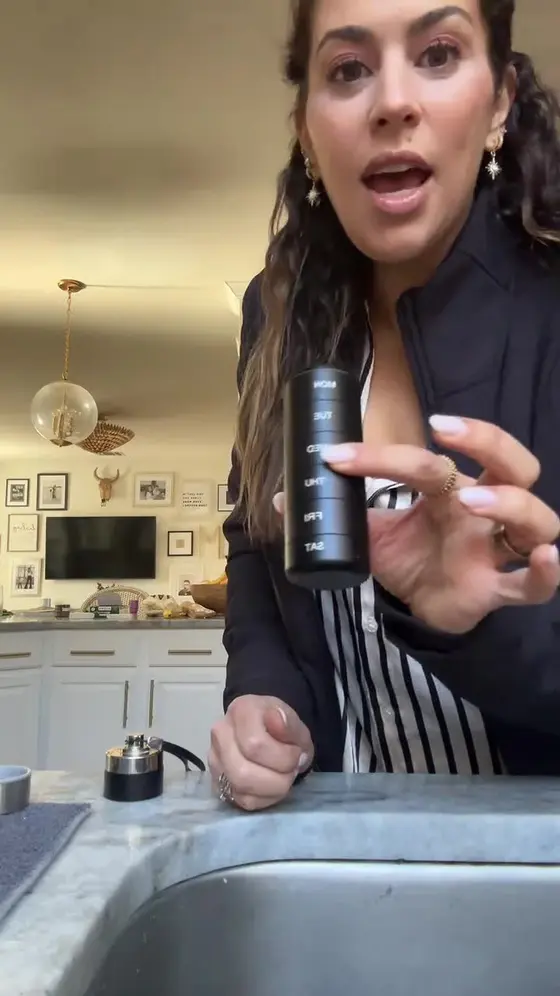
💊📅 Stay Organized, Stay Healthy — Never Miss a Dose Again! ✅ Meet the Large Weekly Pill Organizer — perfect for keeping your vitamins, supplements, and medications in check! 🌟 With its spacious compartments and easy-to-read layout, managing your weekly routine has never been simpler 😍


app.adjust.com
What's Really In Your Supplements?
😟 Worried that supplements might be HARMING your health instead of HELPING? ⚡ Get instant access to safety data and side effect risks that product labels don't mention. 🛑 Stop putting unknown substances in your body before checking the science. ☑️ Prove It reveals potential dangers and interactions based on actual research, not industry-funded studies. ❤️ Make safer choices for your long-term health. Click to get started today!
Create a free account to follow brands, save ads and search the full library.