PixelSpyer

Dr. Emily Carter ad: 🛒 Official Online Store — Guaranteed Authentic 🚚 Fast Local Delivery 🏥 Revie…

Dr. Emily Carter

Health & wellness website, 57 followers, 1 ads in library

InactiveFitnessVideoLibrary ID 1011397764611886
Launched Jun 27, 2026Run time unknown

New ads are still being tested; watch whether it survives past 30 days.

Ad copy

🛒 Official Online Store — Guaranteed Authentic 🚚 Fast Local Delivery 🏥 Reviewed and packed by licensed pharmacists at local pharmacy fulfillment centers 💯 180-Day Money-Back Guarantee A simple pair of 𝐟𝐚𝐭-𝐛𝐮𝐫𝐧𝐢𝐧𝐠 𝐲𝐨𝐠𝐚 𝐩𝐚𝐧𝐭𝐬 designed to help support body balance, daily energy, and long-term wellbeing.

I’ve been chubby ever since I was a kid. And not the kind of “baby fat that just never went away” chubby — I mean, ever since elementary school, I was always the one standing in the back row for class photos, taking up almost one and a half spaces by myself. My mom used to say, “Once you get taller, you’ll slim down naturally.” But I waited through high school, college, and even two years of working full-time… and that “you’ll get taller and slim down” moment never came. Every time I went clothes shopping, I would quietly look around first to make sure no one was watching. Then I’d grab the biggest size and rush into the fitting room. The worst part was when the zipper got stuck halfway — I’d pull harder, and then it would suddenly pop open, with the fat on my back spilling out. I’d stand there in front of the mirror, wishing I could just punch it all away. Being made fun of wasn’t new to me. In middle school, boys called me “lifebuoy.” In high school PE class, I was always the last one to finish running, and people would laugh. Even at work, when the company held a “health challenge,” my colleagues would joke, “Sophie, if you join, our team is definitely coming in last.” I’d laugh along on the outside, but once I got home and closed the door, I’d cry for a long time. It’s not like I never tried to lose weight. I starved myself until my stomach hurt at midnight, and I became irritable with everyone around me. I managed to lose about 4 kilos, but as soon as I went back to eating normally, the weight came right back — plus even more. I signed up for gym memberships twice, and both times I only lasted two or three weeks. It wasn’t that I didn’t want to keep going. After work, my legs felt like they were filled with lead, and I simply didn’t have the strength to exercise. I also tried diet pills, meal replacement shakes, and so-called “detox teas” — spending thousands of dollars in the process. And what did I get in return? A racing heart, diarrhoea, and insomnia. The worst time was when I took a pill that claimed I could lose around 4.5 kilos in three days. My heart was pounding so fast I thought I was going to die, and I had to call a friend to take me to the emergency room. After that, I completely gave up. I started to believe that maybe this was just who I was meant to be — a woman who got stared at wherever she went, who needed a seatbelt extender on flights, who only dared to sit on the aisle at the cinema because she was afraid of squeezing the person next to her. The real change started with my cousin. She used to be overweight too. But when I saw her last Christmas, she looked like a completely different person — noticeably slimmer, with skin that still looked firm and elastic. I almost chased after her to ask how she had done it. She told me she had been wearing a pair of fat-burning yoga shorts every day. No dieting, no exercise. Just 30 minutes a day, and her body started burning fat on its own. My first reaction was, “Here we go again — another scam.” But she told me there was a 180-day money-back guarantee. So I thought, honestly, things couldn’t really get any worse. I might as well try. The night they arrived, I took a shower and put them on. The first thing I felt was coolness. Not an uncomfortable chill, but a refreshing cooling sensation that slowly sank into my skin — like stepping from the summer heat into an air-conditioned room. I’d always hated shapewear because it felt tight and stuffy, and I usually wanted to take it off after less than two hours. But these were completely different. They had great stretch, held my lower belly in without making it hard to breathe, and kept the natural curve of my hips instead of flattening everything down. About five minutes later, my lower abdomen started warming up from the inside. It wasn’t an uncomfortable heat. It was a cosy, reassuring warmth, almost like an automatic heating pad. I touched my waist and realised I was already slightly sweating. I froze, because I hadn’t done anything. I was just sitting on the sofa, scrolling through my phone. Later, I learned that the fabric contains zeolite micro-points, along with moringa and berberine particles. Body heat and small everyday movements help trigger a kind of “passive fat-burning mode,” making it feel as if your body is exercising even while you’re resting. From that day on, I wore them for at least 30 minutes every day. But honestly, because they were so comfortable, I often ended up wearing them all day. They weren’t stuffy, they didn’t dig in, and they didn’t smell. In the past, I felt suffocated in almost anything during the summer, but this ice-silk fabric was breathable and kept me feeling dry and fresh even after a full day of wear. About a week later, I started noticing changes. My stomach no longer felt painfully bloated after meals, and my waistband didn’t feel as tight as before. For the first time, I stood in front of the mirror without immediately looking away. By day 14, I stepped on the scale and could hardly believe it — my weight had clearly gone down. I weighed myself again. The number was the same. I stood in the bathroom and cried. Not because I was sad, but because I was so happy. From that day on, I wore them every day. Sometimes I even wore them to the office, since most of my job involves sitting at a desk. I noticed that even after sitting all day, my legs and lower back didn’t swell the way they used to. Now it’s been about five weeks. The amount of weight I’ve lost has honestly gone far beyond what I imagined. The best part is — my skin hasn’t gone loose. I’ve seen people lose weight quickly, only for their skin to sag like a deflated balloon. But the zoned compression and micro-particle massage from these shorts really seem to help. My skin has been tightening gradually as the fat has come off. Even my lower belly feels firmer now. I can finally buy normal-sized clothes. Last week at the shopping centre, I picked up a medium dress. The zipper went up smoothly on the very first try. I stood in front of the mirror for a long time, just smiling. Another thing I love is that the shorts are machine washable. I’ve washed them many times, and the cooling and warming effects are still there. I even bought a second pair so I can rotate them. Now, every day feels clean, fresh, and dry. Even though I’ve slimmed down, I still wear them every day. Not because I’m afraid of gaining the weight back, but because they finally let me live like a normal person. No more worrying about people staring at me. No more avoiding mirrors. No more secretly crying in fitting rooms. If you’re like I used to be — chubby since childhood, having tried everything, only to feel betrayed by your own body again and again, and so worn down by teasing that you’ve almost gone numb — then you really might want to try these shorts. Even if it’s just for the chance to stand quietly in a fitting room one day and zip up a dress without fear. You might be shocked by your own transformation. Now, every morning before I leave the house, I stand in front of the mirror for a moment. Not to check which parts of me still look fat. But to see what looks good today. That feeling took me years to finally get back.

sleevina.comSee details
Placements
FacebookInstagramAudience NetworkMessengerThreads
Reach (0 locations)
Not disclosed
Languages
English

Why this ad works

Hook, angle, audience and three ideas to borrow — written by AI from the ad copy.

Similar ads from other brands

InactiveJul 25, 26
Why The Neck Hump Won't Go

alignareset.com

Why The Neck Hump Won't Go

Learn more

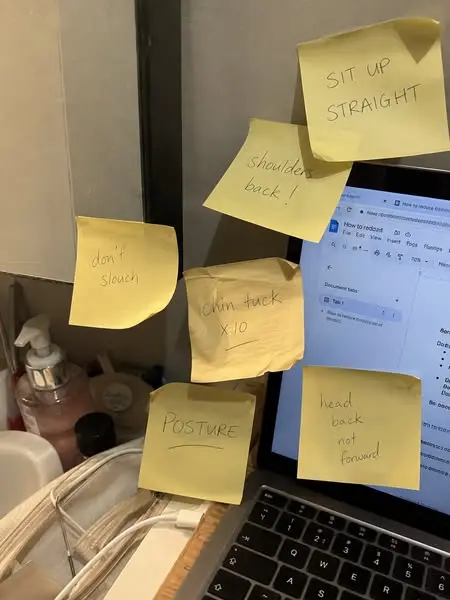
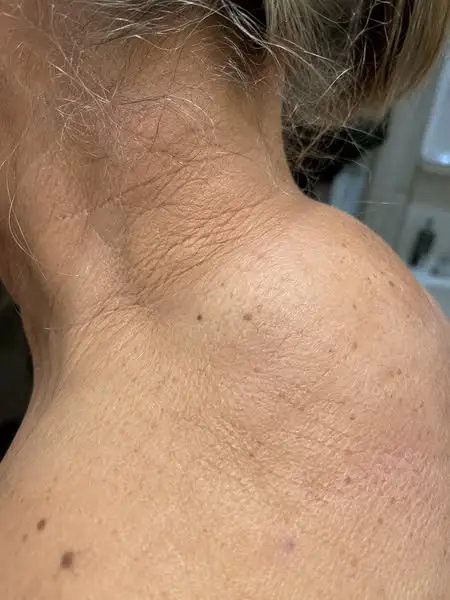
If good posture fixed neck humps, yours would be gone by now. There's a reason it isn't — and it isn't you. I'm Barbara. I'm 63. And I have never in my life tried harder at something and had less to show for it. It crept in slowly. I stopped wearing my hair up. I started buying tops by how high the collar sat. At my niece's wedding I asked someone to delete a photo of me from the side, light and breezy, like it was nothing. It wasn't nothing. But I'm not one to just let a thing happen to me. So I did what everyone tells you to do. I fixed my posture. Or I tried to. Chin tucks every morning. Ten of them, then ten more. Doorway stretches. Shoulder rolls. I set reminders on my phone — little buzzes through the day telling me to sit up straight. And I did. Every time it buzzed, I pulled myself up tall. For about thirty seconds. Then I'd be back on the laptop, or peeling the potatoes, and without ever deciding to, I'd have sunk right back down again. I told myself I just needed to be more disciplined. Try harder. Do it more often. So that's what I did. For months. And the hump didn't just refuse to go. It got worse. I'd wake with a tightness at the base of my skull that had been there so long it felt normal. I'd catch the back of my neck in a shop window and look away fast. I started turning my whole body to talk to someone at a table, rather than turn my head and let them see the side of me. I never decided to do any of that. I just found myself doing it. Late at night I'd be on my phone, in the forums, reading hundreds of other women saying the exact same thing. Doing the exercises. Sitting up straight. Watching it get worse anyway. I kept coming back to the same thought. I'm doing everything they said. Why is it getting worse? Then something happened that turned the whole thing on its head. I'd booked in with a cervical physio for a stiff shoulder. Nothing to do with the hump. Or so I thought. She had a look at the back of my neck. Asked how long I'd had the rounding. Asked what I'd been doing about it. So I told her. The chin tucks. The stretches. The reminders. Nearly a year of it. She nodded. Then she asked me to do something odd. "Sit up as straight as you can," she said. "Really lift out of it. And just hold it there for me." So I did. Tall as I could manage. "Now," she said. "Tell me when you can't hold it anymore." I lasted about thirty seconds before my shoulders started creeping forward and I had to consciously drag them back. She just nodded, like she'd seen it a hundred times. And then she said the thing I haven't stopped thinking about since. "That right there is why none of it worked. Good posture isn't something you can force. It's not an input. It's an output." I said — what on earth do you mean, an output. And she explained the bit that made everything fall into place. Sitting up straight isn't the fix, she said. It's the *result* of the fix. When the thing underneath is set the wrong way, your body can only hold the good position for a few seconds before the set tissue drags it back. That's not weakness. That's mechanics. Because the hump isn't on the surface, where all my effort was going. Your neck's meant to have a gentle curve that holds your head balanced over your shoulders. Years of looking down — the phone, the worktop, the telly — hold that curve forward and flat. And held flat long enough, it doesn't just bend. It sets. Like clay left to harden in a mould. The tissue actually shortens and locks around the wrong shape. Now the head sits forward. And to prop up that forward weight, the body builds a bit of padding at the base of the neck. That padding is the hump. And suddenly every frustrating morning made sense. The chin tucks pulled at the surface for thirty seconds — then the set curve underneath dragged everything straight back. The reminders told me to sit up, which I could only hold for thirty seconds anyway, for the exact same reason. I'd spent a year trying to force a position my body physically couldn't hold — because the thing stopping it from holding was set underneath, and I was never once touching it. It was never that I wasn't trying hard enough. God knows I was. It was that I'd been trying to input something that can only ever be an output. I sat in the car afterwards and felt the strangest mix of daft and relieved. Daft for the wasted year. Relieved because for the first time, it wasn't me that had failed. So I asked her the obvious question. If I can't force it — what actually changes it? And she said that's the thing — you can't yank it back either. Pull hard on tissue that's set and it braces and snaps straight back the moment you stop. You have to do three things together. You have to warm it, so the tissue that's gone hard can actually soften. You have to ease the curve back gently while it's soft. And you have to calm the muscles, so they stop guarding and let it happen. Warm it, ease it, calm it. All at once. Not for thirty seconds — long enough, every day, until the curve settles back instead of springing to its old shape. That was the one thing all my discipline had never done. Not because I was lazy. Because nobody had ever told me that was the thing that needed doing. So I went looking for something that could do all three at home. And I found one thing that does. It's called the Aligna Thera Pillow. There's nothing to hold, nothing to force. You just lie back on it for about fifteen minutes a day. A gentle warmth to soften what's set hard, a slow easing that guides the curve back, and a light vibration that settles the muscles so they stop fighting it. All three, together. Fifteen minutes on the sofa. The very opposite of straining. I'll be honest — after a year of white-knuckling my own posture, "lie back and do nothing" felt almost too easy to work. So I did something I'd never done. Because after all that effort, part of me still didn't quite believe anything would shift it — I took a photo of the side of my neck the day it arrived. Just to see. The first week, not a lot. A bit of something, nothing dramatic. By week two, the tightness at the base of my skull that I'd had for years — and stopped even noticing — had eased. I was getting out of bed without lying there first, working out which way I could turn. By week five, I took a second photo. And I sat looking at the two of them, side by side on my phone, for a long time. The line of my neck was longer. Less hunched. Not dramatic — I won't pretend it happened overnight. But there, in the exact spot a whole year of effort had never touched. A year of trying had given me nothing to photograph. Five weeks of the right thing gave me two pictures that didn't match. A couple of months in, there was a photo at a family lunch. I was at the front of the group, not edged off to the side the way I'd trained myself to stand. I didn't think about my neck once until I saw the picture that evening. I'm not going to tell you what to do. I'm not a doctor. But I'll tell you what I wish someone had told me before I gave a year to it. If you've been doing the exercises, faithfully, sitting up straight a hundred times a day, and the hump's still getting worse — please hear this. It isn't because you're not disciplined enough. It's that good posture was never something you could force. It's the result of a curve that's set underneath — and effort on the surface can't reach it, no matter how consistent you are. That's why it kept slipping back for me. That's why it keeps slipping back for you. If you want to see exactly why "sit up straight" can't work — and the one thing that actually reaches the set curve underneath — a cervical physio lays the whole thing out here. 👉 https://alignareset.com/pages/advertorial-breaking-news-before-and-after-image-jun-26-09-58-27?_ab=0&key=1782829198564
InactiveJul 24, 26
Why The Neck Hump Won't Go
4

alignareset.com

Why The Neck Hump Won't Go

Learn more

Stop holding your shoulders back — the neck hump won't go while you do. I know, because I did exactly what you're doing, for a year. I'm Barbara. I'm 63. And I have never in my life tried harder at something and had less to show for it. It crept in slowly. I stopped wearing my hair up. I started buying tops by how high the collar sat. At my niece's wedding I asked someone to delete a photo of me from the side, light and breezy, like it was nothing. It wasn't nothing. But I'm not one to just let a thing happen to me. So I did what everyone tells you to do. I fixed my posture. Or I tried to. Chin tucks every morning. Ten of them, then ten more. Doorway stretches. Shoulder rolls. I set reminders on my phone — little buzzes through the day telling me to sit up straight. And I did. Every time it buzzed, I pulled myself up tall. For about thirty seconds. Then I'd be back on the laptop, or peeling the potatoes, and without ever deciding to, I'd have sunk right back down again. I told myself I just needed to be more disciplined. Try harder. Do it more often. So that's what I did. For months. And the hump didn't just refuse to go. It got worse. I'd wake with a tightness at the base of my skull that had been there so long it felt normal. I'd catch the back of my neck in a shop window and look away fast. I started turning my whole body to talk to someone at a table, rather than turn my head and let them see the side of me. I never decided to do any of that. I just found myself doing it. Late at night I'd be on my phone, in the forums, reading hundreds of other women saying the exact same thing. Doing the exercises. Sitting up straight. Watching it get worse anyway. I kept coming back to the same thought. I'm doing everything they said. Why is it getting worse? Then something happened that turned the whole thing on its head. I'd booked in with a cervical physio for a stiff shoulder. Nothing to do with the hump. Or so I thought. She had a look at the back of my neck. Asked how long I'd had the rounding. Asked what I'd been doing about it. So I told her. The chin tucks. The stretches. The reminders. Nearly a year of it. She nodded. Then she asked me to do something odd. "Sit up as straight as you can," she said. "Really lift out of it. And just hold it there for me." So I did. Tall as I could manage. "Now," she said. "Tell me when you can't hold it anymore." I lasted about thirty seconds before my shoulders started creeping forward and I had to consciously drag them back. She just nodded, like she'd seen it a hundred times. And then she said the thing I haven't stopped thinking about since. "That right there is why none of it worked. Good posture isn't something you can force. It's not an input. It's an output." I said — what on earth do you mean, an output. And she explained the bit that made everything fall into place. Sitting up straight isn't the fix, she said. It's the *result* of the fix. When the thing underneath is set the wrong way, your body can only hold the good position for a few seconds before the set tissue drags it back. That's not weakness. That's mechanics. Because the hump isn't on the surface, where all my effort was going. Your neck's meant to have a gentle curve that holds your head balanced over your shoulders. Years of looking down — the phone, the worktop, the telly — hold that curve forward and flat. And held flat long enough, it doesn't just bend. It sets. Like clay left to harden in a mould. The tissue actually shortens and locks around the wrong shape. Now the head sits forward. And to prop up that forward weight, the body builds a bit of padding at the base of the neck. That padding is the hump. And suddenly every frustrating morning made sense. Every time I hauled my shoulders back, I was holding a good position for thirty seconds — then the set curve underneath dragged everything straight back. The reminders told me to sit up, which I could only hold for thirty seconds anyway, for the exact same reason. I'd spent a year trying to force a position my body physically couldn't hold — because the thing stopping it from holding was set underneath, and I was never once touching it. It was never that I wasn't trying hard enough. God knows I was. It was that I'd been trying to input something that can only ever be an output. I sat in the car afterwards and felt the strangest mix of daft and relieved. Daft for the wasted year. Relieved because for the first time, it wasn't me that had failed. So I asked her the obvious question. If I can't force it — what actually changes it? And she said that's the thing — you can't yank it back either. Pull hard on tissue that's set and it braces and snaps straight back the moment you stop. You have to do three things together. You have to warm it, so the tissue that's gone hard can actually soften. You have to ease the curve back gently while it's soft. And you have to calm the muscles, so they stop guarding and let it happen. Warm it, ease it, calm it. All at once. Not for thirty seconds — long enough, every day, until the curve settles back instead of springing to its old shape. That was the one thing all my discipline had never done. Not because I was lazy. Because nobody had ever told me that was the thing that needed doing. So I went looking for something that could do all three at home. And I found one thing that does. It's called the Aligna Thera Pillow. There's nothing to hold, nothing to force. You just lie back on it for about fifteen minutes a day. A gentle warmth to soften what's set hard, a slow easing that guides the curve back, and a light vibration that settles the muscles so they stop fighting it. All three, together. Fifteen minutes on the sofa. The very opposite of straining. I'll be honest — after a year of white-knuckling my own posture, "lie back and do nothing" felt almost too easy to work. So I did something I'd never done. After all that effort, part of me still didn't quite believe anything would move it — so I took a photo of the side of my neck the day it arrived. Just to see. The first week, not a lot. A bit of something, nothing dramatic. By week two, the tightness at the base of my skull that I'd had for years — and stopped even noticing — had eased. I was getting out of bed without lying there first, working out which way I could turn. By week five, I took a second photo. And I sat looking at the two of them, side by side on my phone, for a long time. The line of my neck was longer. Less hunched. Not dramatic — I won't pretend it happened overnight. But there, in the exact spot a whole year of effort had never touched. A year of trying had given me nothing to photograph. Five weeks of the right thing gave me two pictures that didn't match. A couple of months in, there was a photo at a family lunch. I was at the front of the group, not edged off to the side the way I'd trained myself to stand. I didn't think about my neck once until I saw the picture that evening. I'm not going to tell you what to do. I'm not a doctor. But I'll tell you what I wish someone had told me before I gave a year to it. If you've been sitting up straight, hauling your shoulders back a hundred times a day, and the hump's still getting worse — please hear this. It isn't because you're not disciplined enough. It's that good posture was never something you could force. It's the result of a curve that's set underneath — and effort on the surface can't reach it, no matter how consistent you are. That's why it kept slipping back for me. That's why it keeps slipping back for you. If you want to see exactly why holding your shoulders back can't work — and the one thing that actually reaches the set curve underneath — a cervical physio lays the whole thing out here. 👉 https://alignareset.com/pages/advertorial-breaking-news-before-and-after-image-jun-26-09-58-27?_ab=0&key=1782829198564

InactiveJul 15, 26 · 1d
Quante volte il tuo corpo ti ha chiesto di rallentare… e tu hai continuato ad a…
Video

instagram.com

Visit Instagram profile

Quante volte il tuo corpo ti ha chiesto di rallentare… e tu hai continuato ad andare avanti? Le tensioni, le contratture e la sensazione di pesantezza sono spesso il modo in cui il corpo ci ricorda che è tempo di prendersi cura di sé. Il Massaggio Decontratturante Olistico è un trattamento personalizzato che, attraverso manovre mirate e consapevoli, aiuta a sciogliere le rigidità muscolari, favorire il rilassamento profondo e ritrovare una piacevole sensazione di leggerezza e benessere. Ti accolgo nel mio studio Suono & Luce – Studio Olistico, a Sava (TA), in un ambiente riservato, elegante e dedicato alla tua rigenerazione. Per maggiori informazioni o per prenotare il tuo trattamento, scrivimi in privato. Un sentito grazie a Monia @costellazionifamiliari_online, per essersi affidata alle mie mani con disponibilità e sensibilità, a @lucreziadevincentis per la realizzazione di questo reel, e alla splendida cornice naturale della Riserva Naturale Regionale Dune di Campomarino, a Maruggio, che ha reso possibile raccontare questo momento di benessere in un luogo di straordinaria bellezza. Maryangela Leo Insegnante Yoga • Master Reiki • Operatrice Olistica #benessereolistico #massaggio #benessere #puglia #puglia

InactiveJun 29, 26 · 1d
He Raised My Rent, So My Family Shut Down His Mall
Video

website.novelbinger.com

He Raised My Rent, So My Family Shut Down His Mall

Learn more

"He Raised My Rent, So My Family Shut Down His Mall follows Avery Carter, the owner of a beloved dessert shop inside Riverton Galleria. After years of helping bring life and foot traffic to the once-empty mall, Avery is suddenly hit with a brutal forty-percent rent increase by the arrogant property manager, Ryan Cole. When she refuses to be bullied, Ryan cuts her power, blocks her move-out process, humiliates her in public, and prepares to replace her with Chloe Blake’s influencer-backed tea brand, StarSip Tea. But Ryan has badly underestimated her. To him, Avery is just a small tenant. What he does not know is that the mall’s most valuable traffic drivers are all tied to her family: Maison Velaire, the luxury jewelry store run by her mother; Pulse Fitness, operated by her husband; and Nexora Tech Club, owned by her younger brother. With one calm decision, Avery moves not only her own shop but her entire family’s businesses across the street to Aurelia Square, draining Riverton Galleria of its real customer base. From there, the story becomes a fast-paced business revenge drama. Avery uses customer loyalty, smart promotions, public opinion, and solid product reputation to turn her relocation into a victory. Meanwhile, Ryan and Chloe rely on influencer hype, smear campaigns, and shallow “high-end” branding, only to watch StarSip Tea collapse under scandals, bad strategy, and backlash. As Ryan’s extortion, corruption, and fraudulent leasing schemes are exposed, the old mall’s reputation crumbles. The drama delivers satisfying comeback moments, sharp business rivalries, viral public-opinion reversals, family support, and a strong female entrepreneur refusing to be controlled. In the final arc, Avery discovers that her powerful father-in-law, Daniel Carter, was secretly behind the plot to drive her out. Instead of surrendering, she reveals herself as a shareholder of Aurelia Square, proving that she is not a decorative wife in a wealthy family, but a self-made businesswoman who built her own value." *****

Track Dr. Emily Carter and get alerts for new ads

Create a free account to follow brands, save ads and search the full library.