
PixelSpyer

Dr. Daniel Harlow - Nephrologist, MD ad: Support Kidney Health Naturally

Dr. Daniel Harlow - Nephrologist, MD

Doctor, 49 followers, 4 ads in library

InactiveHealth & SupplementsVideoLibrary ID 1033830675841497
Launched Jun 26, 2026Run time unknown

New ads are still being tested; watch whether it survives past 30 days.

Ad copy

Support Kidney Health Naturally

I'm a nephrologist. Here are 15 questions about kidney decline — and the answers your doctor won't give you. Question 1: "My urine looks foamy every morning. Is that normal?" No. It's common. But it's not normal. Urine that looks like beer suds — the kind that sits there after you flush, doesn't dissolve, doesn't pop — is not something your body is supposed to produce. Healthy urine clears. It doesn't foam. What you're seeing is protein. Protein is supposed to stay in your bloodstream. Your kidney filters are designed to hold it there. When it appears in your toilet, it means something is forcing it through filters that are supposed to be keeping it in. The question is what's forcing it through. And the answer is not what you've been told. Most people dismiss the foam for months. They try drinking more water. They blame it on dehydration. Some start peeing against the side of the bowl to avoid disturbing the water — hoping that changes the picture. It doesn't. The foam is still there. That's not a hydration problem. That's a pressure problem. And by question 8, I'll explain exactly where that pressure is coming from — because it's not what your doctor is checking. Question 2: "I googled it and everything says foamy urine means kidney damage. Am I in kidney failure?" Not necessarily. But you are getting a signal you should take seriously. Protein in urine does not automatically mean your kidneys are destroyed. It means the filtration pressure inside your kidney tissue has exceeded what your filters can hold. Something is pushing against those filters from the outside and forcing protein through. Think of your kidney filters like a mesh screen. Normally, the screen holds protein back. But if you press against the screen from the outside hard enough, protein gets squeezed through the gaps — even if the screen itself is intact. What's pressing from the outside is the question. And the answer is not what any supplement on the market is targeting. Question 3: "My kidney panel came back completely normal. So why is the foam still there?" Because the test wasn't designed to catch what's wrong with you. The standard kidney panel measures two things: creatinine and eGFR. Both measure nephrons — the individual filter units in your kidneys — that have already been destroyed. Dead tissue. Permanent loss. Here's what no one explains: those numbers don't move until you've lost up to 70% of your kidney function. By the time your creatinine rises enough to flag on a standard panel, most of the damage is already permanent. You can have years — sometimes decades — of progressive kidney congestion with completely normal labs. The drainage system wrapped around your nephrons, the renal lymphatic network, has no standard test. It has no panel. It fails in complete silence. Your doctor has no instrument to measure it and no protocol to address it. So your labs come back normal. And the foam keeps coming back. And your doctor says everything looks fine. Both things are simultaneously true. That's not a contradiction — it's a gap in what standard medicine is designed to measure. Question 4: "I feel exhausted all the time and my lower back aches constantly. Is that connected?" Almost certainly. The fatigue associated with kidney congestion is different from ordinary tiredness. Patients describe it as cellular — like the exhaustion comes from inside the tissue, not from activity. A 2pm collapse that no amount of sleep seems to fix. Waking up feeling like you haven't slept at all. That's because you haven't recovered. When your kidney drainage is congested, inflammatory waste recirculates through your system instead of being cleared. Your body is running on a system that can't flush its own byproducts. The result feels like chronic, untreatable fatigue. The lower back ache is also characteristic. Unlike muscular back pain, which responds to stretching or movement, renal congestion creates a deep, dull ache that sits in the same place regardless of posture. It doesn't sharpen with movement or ease with rest. It's just there — a constant pressure in the kidney region that most people eventually stop mentioning because nothing seems to help. Both symptoms — the fatigue and the ache — are signs that your renal drainage system is backed up and your kidneys are operating under sustained pressure they can't relieve. Question 5: "I've been drinking more water every day. The foam keeps coming back. Why isn't it working?" Because water doesn't reach the problem. Water moves through your urinary system. It dilutes urine. In some cases it temporarily reduces the visual intensity of the foam. But it does not enter the lymphatic drainage network surrounding your nephrons. It cannot clear the waste that is building up in the tissue around your filters and pressing them from the outside. Drinking more water when your renal lymphatics are congested is like running clean water through clogged pipes. The water moves through. The blockage in the walls doesn't. The same logic applies to low-protein diets, cranberry supplements, and kidney detox teas. All of them address either what goes into the kidneys or the urine leaving them. None of them address the drainage system running alongside the filters — the system whose failure is causing the pressure that forces protein through in the first place. You haven't failed to fix the problem. You've been given tools that address the wrong half of it. Question 6: "My doctor told me to just watch my numbers and come back in three months. How worried should I be?" Worried enough to not wait three months. "Watch and wait" is not a treatment strategy. It is an observation strategy. Your doctor is monitoring the rate at which your kidney function declines. They are not stopping the decline. They are measuring it. Every month you spend watching is another month of waste accumulating in your renal lymphatic tissue. More inflammatory debris. More pressure on your nephron filters. More protein forced through. And by the time the numbers move enough to warrant intervention, most of the damage driving those numbers is already permanent. The creatinine and eGFR numbers your doctor is watching are lagging indicators. They report what has already happened. The lymphatic congestion causing the damage is happening now, in the weeks and months before those numbers move. Watching numbers that only respond to permanent damage is watching a fire through a smoke alarm that only goes off after the building has already burned. Question 7: "I've been on ACE inhibitors and blood pressure medication for years. My doctor says I'm stable. So why do I still feel terrible?" Because "stable" means your decline is being slowed. Not stopped. Not reversed. ACE inhibitors reduce the pressure inside your glomeruli — the tiny blood vessels inside each nephron. They slow the rate at which filtration pressure causes direct damage to the filters themselves. That's all they do. They do not enter the renal lymphatic network. They do not clear the inflammatory waste building up in the tissue around your nephrons. They do not address the congestion pressing against your filters from the outside. So you take the medication. Your creatinine stays relatively flat. Your doctor calls you stable. And you still feel exhausted. The foam is still there every morning. The back ache never fully goes away. Your energy hasn't returned. Your numbers are managed. Your kidney tissue is still congested. That's not medication failure. That's medication doing exactly what it was designed to do — and nothing more. The part that it wasn't designed to do — clearing the lymphatic drainage — is still not being addressed. Question 8: "So what IS actually causing the foam and the kidney decline?" This is the question that changes everything. And it's the one nobody answers. Your kidneys contain approximately one million nephrons — individual filter units. Each one is wrapped in a fine network of lymphatic vessels. This renal lymphatic network has one job: carry inflammatory waste, metabolic debris, dead cells, and excess fluid away from the nephron tissue so the filters stay clean and the pressure around them stays manageable. When this drainage flows properly, your nephrons operate at full capacity. Protein stays in the bloodstream. eGFR stays stable. The filters hold. But when the drainage fails, everything backs up. Waste accumulates in the interstitial space surrounding your nephrons. Pressure builds from the outside. The filters — which are intact — get compressed. Protein gets forced through gaps it should never pass through. That's the foam. The lymphatic system has no pump of its own. It relies on the movement of surrounding tissue to push fluid through the vessels. When circulation slows — through age, inflammation, or a sedentary lifestyle — lymphatic flow slows with it. After years of decline, waste doesn't just accumulate. It hardens. Fibrin deposits form. Inflammatory proteins solidify in the lymphatic channels surrounding your nephrons. The drainage doesn't just slow. It physically blocks. At that point, no amount of water, no low-protein diet, no medication addresses what's actually pressing against your filters. That's kidney decline. Not a broken filter. A drainage system so backed up that the pressure it creates is forcing protein through filters that were never supposed to let it through. And not one standard kidney treatment addresses the lymphatic drainage causing it. Question 9: "Why hasn't my doctor told me about this?" Three reasons. First — there is no pharmaceutical drug that targets renal lymphatic drainage. Botanical compounds that restore lymphatic flow cannot be patented. So no pharmaceutical company funds research on them. No drug rep walks into nephrology offices explaining them. No continuing medical education covers them. Your doctor was never trained on it because the industry that trains doctors has no financial interest in it. Second — there is no procedure code for renal lymphatic drainage support. Nephrologists are reimbursed for dialysis preparation, medication management, specialist consultations, and biopsy procedures. There is no billing code for "lymphatic drainage restoration." No revenue means no protocol. Third — the standard kidney panel was designed to detect late-stage organ damage, not early drainage failure. Creatinine and eGFR are excellent at confirming that nephrons have already been destroyed. They are completely blind to the lymphatic congestion that destroyed them. The test was built for a different problem. So your doctor looks where the instruments point. The instruments don't point at lymphatic drainage. The drainage fails. The numbers eventually move. By then, the conversation is about dialysis. Dialysis generates tens of thousands of dollars per patient per year. There is no revenue in preventing it. There is enormous revenue in managing it. The system profits from the progression. Not from clearing the drainage that causes it. Question 10: "What happens if I just keep monitoring it?" A congested renal lymphatic system does not unclog itself. Every month the drainage stays backed up is another month of inflammatory waste accumulating in the tissue around your nephrons. More pressure. More protein forced through. More foam. And the hardened deposits that form in congested lymphatic channels — the fibrin, the solidified inflammatory proteins — become increasingly difficult to clear the longer they sit. The sequence is not random. The foam gets worse. The fatigue deepens. The eGFR starts moving on the lab panel. The creatinine climbs. And then the conversation in your nephrologist's office changes. I called a patient last year who I had sent home with "watch your numbers." Three months later his eGFR was 44. The tissue had remodeled around the congestion. He stabilized on the protocol — but he did not reverse. The window for meaningful improvement had closed. The patients who reverse are the ones who start clearing the drainage while the nephrons are still compressed but intact. The patients who stabilize are the ones who wait until the tissue has already remodeled around the congestion. The difference between those two outcomes is not the severity of the original problem. It is the calendar. Monitoring without addressing drainage is watching a flood from behind sandbags. The water is still rising. Question 11: "Will this work if I'm already on ACE inhibitors or blood pressure medication?" Your renal lymphatic system operates independently of kidney medications. ACE inhibitors reduce glomerular pressure — the filtration pressure inside the nephrons themselves. Lymphatic drainage clears the waste building up in the tissue around those nephrons. These are completely separate mechanisms targeting completely different parts of the kidney's biology. Supporting lymphatic drainage while on medication means your kidneys are finally doing what the drugs alone cannot — reducing the filtration burden and clearing the accumulated waste that has been building up outside the filters for years. Many patients have been able to work with their prescribing physician to reassess their medication protocol once drainage was restored and labs began improving. That is a conversation for your doctor. But drainage support does not interfere with standard kidney therapy — it addresses the part of the problem that standard therapy was never designed to reach. Question 12: "Can I take this with my current medications?" Lymphatic-supporting botanicals work with your body's existing systems, not against them. If you are on blood thinners such as Warfarin or Eliquis, consult your doctor first — some botanicals may have mild interactions with anticoagulant therapy. For most people managing kidney decline, elevated creatinine, or early-stage CKD, lymphatic drainage botanicals are well-tolerated alongside ACE inhibitors, ARBs, antihypertensives, metformin, and standard cardiovascular medications. Because Lymphaire is delivered in liquid drop form — absorbed directly into the bloodstream within minutes — there is no digestive breakdown period where active compounds compete with medications in the gut. The absorption happens upstream of that entire process. The compounds reach the renal lymphatic tissue without being degraded on the way there. Question 13: "So what actually works to fix the drainage?" You need something that restores renal lymphatic flow — the waste removal system that no kidney panel measures and no kidney medication targets. And you need it in liquid drop form. Here is why that matters before I name the compounds. Kidneys that are already under congestion pressure are operating in a compromised metabolic environment. The renal lymphatic vessels are physically blocked — not just sluggish. Hard capsules compound that problem. The active botanical compounds designed to clear that blockage get broken down by stomach acid and digestive enzymes long before they reach the renal lymphatic network they are supposed to be activating. A significant portion of every capsule dose never arrives at the target tissue. Liquid drops absorb under the tongue and directly into the bloodstream within minutes. No stomach acid. No digestive enzymes. No breakdown period. The compounds reach the renal lymphatic network intact — which is the only way they can do what they are designed to do. That is why the same four compounds in liquid drop form produce results that capsule versions of the same herbs cannot. Now the four compounds. Each one addresses a specific step in the complete drainage sequence. Stillingia Root — this is the compound that dissolves the blockage. The renal lymphatic channels are not simply slow. They are physically obstructed. Hardened protein bonds. Fibrin deposits. Inflammatory debris that has been accumulating in the tissue surrounding your nephrons for years, solidifying in the lymphatic channels and preventing any waste from moving. Stillingia Root breaks those bonds apart at the source — dissolving the hardened sludge sitting in the renal lymphatic vessels so the drainage network can finally open. Without this step, every other compound in the protocol has nowhere to send what it mobilizes. Cleavers — this is the compound that moves the waste. Once Stillingia dissolves the physical blockage, Cleavers sweeps the released debris through the renal lymphatic channels and out through the lymph nodes toward elimination. Documented in the British Herbal Pharmacopoeia specifically as a renal lymphatic herb — used for centuries precisely for kidney inflammation and urinary tract congestion. Without Cleavers, you dissolve the congestion but it sits in the tissue in a different form with nowhere to go. Cleavers is the transport mechanism that finishes what Stillingia started and actually moves the cleared waste out of the kidney tissue. Prickly Ash — this is the compound that restarts the pump. Even after the physical blockage is dissolved and the waste is mobilized, the lymphatic pumping mechanism itself has stalled. Your renal lymphatic vessels rely on tiny muscular contractions in their walls to push fluid through. After years of chronic inflammation and reduced circulation, those contractions slow to almost nothing. The pump stops. Prickly Ash restarts it — warming circulation throughout the renal lymphatic network and reactivating the vessel contractions so that what Stillingia dissolved and Cleavers mobilized can actually exit the kidney tissue instead of pooling there. Red Clover — this is the compound that protects what you cleared. The first three compounds address the existing congestion. But your kidneys continue producing metabolic waste every single day. Without something preventing new inflammatory debris from reclogging the channels you just cleared, the congestion cycle simply restarts within weeks. Red Clover purifies the lymphatic fluid itself, reduces the ongoing inflammatory load in the renal drainage network, and maintains the channel integrity that allows your kidneys to sustain proper drainage long-term — instead of returning to the same congested state you started from. Four compounds. Four steps in the complete drainage sequence. Dissolve the blockage. Move the waste. Restart the pump. Protect what you cleared. In liquid drop form, so the compounds actually reach the renal lymphatic tissue instead of being destroyed on the way there. Question 14: "How long until I see results?" Most people notice the first shift by week 2-3. The foam starts thinning. Not gone — thinning. The suds that wouldn't dissolve begin to break up faster. That is the first signal that the lymphatic channels are beginning to open and waste is starting to move. By week 4-6, the mornings start getting clearer. The deep back ache begins easing — not from stretching or movement, but from the inside. The fatigue that has become your baseline starts lifting. You begin to feel like your body is clearing something it has been holding for a long time. By week 8-12, that is when the measurable changes appear. The proof starts showing up in your next labs. The drainage has to clear before the pressure drops. The pressure has to drop before the protein stops leaking. You are undoing years of accumulated congestion. Give it the full window. Question 15: "What brand should I use?" Most kidney supplements are the same recycled formula — cranberry, dandelion, nettle leaf, maybe some vitamin B6 — targeting urine acidity or basic detox support. None of them address lymphatic function. None of them reach the renal lymphatic network. None of them clear the congestion pressing against your nephron filters from the outside. And even the rare supplements that include lymphatic herbs typically deliver them in capsule form — which means a significant portion of the active compounds never reaches the renal tissue they are supposed to be clearing. The formula I now recommend to every patient with foam in their urine, declining eGFR, or early-stage kidney congestion is Lymphaire Lymphatic Drainage Drops. All four renal lymphatic drainage compounds at proper concentrations. In liquid drop form. Absorbed directly into the bloodstream within minutes — not degraded in the gut over hours. Stillingia Root. Cleavers. Prickly Ash. Red Clover. Every ingredient disclosed. No proprietary blends hiding doses. Third-party tested. Vegan. Alcohol-free. No artificial additives. 30-day money-back guarantee. If you don't see early signs of clearing by day 30 — the foam thinning, the mornings getting clearer, the fatigue beginning to lift — send it back for a full refund. You are not risking anything except staying exactly where you are. Because right now, your renal lymphatic system is backed up. Waste is accumulating around your nephrons. Pressure is building. Protein is leaking. And your standard labs won't show how far along the congestion is until a significant portion of the damage is already done. Your doctor will tell you to come back in three months. But the congestion isn't waiting three months. Every month without clearing the drainage is another month of inflammatory waste hardening in your renal lymphatic channels. More pressure on your nephron filters. More foam that won't flush. More fatigue that no amount of sleep fixes. More of the back ache that has become your permanent baseline. Until the conversation in your nephrologist's office shifts from "monitoring" to "preparation." You have been given the tools that manage the inputs — medications that slow the rate of damage. Lymphaire addresses what those medications were never designed to reach — clearing the accumulated lymphatic congestion that has been building pressure against your filters for years. The window for reversal is not permanent. You noticed the foam. That already puts you ahead of the patients who dismissed it for years. https://trylymphaire.com/nephrologists

trylymphaire.comLearn more
Placements
FacebookInstagramAudience NetworkMessengerThreads
Reach (0 locations)
Not disclosed
Languages
English

Why this ad works

Hook, angle, audience and three ideas to borrow — written by AI from the ad copy.

Similar ads from other brands

InactiveJul 24, 26
40% Off Today

mykorvos.com

40% Off Today

Shop now

I am the on-set medical consultant for an adult film studio. I have personally examined 600 male performers over the last 14 years. About 8 percent of them age in a way the other 92 percent do not — still performing reliably in their late 40s and early 50s with no pharmaceutical help, with recovery times between scenes that match what 25-year-olds should be able to do but usually cannot. The reason that 8 percent ages differently is the same reason most men over 40 in this country are slowly losing function the rest do not have to lose. My name is Dr. Marcus Reilly. I am 56 years old. I graduated from UC San Diego School of Medicine in 1997 and completed my urology residency at Cedars-Sinai in 2002. I spent the first 9 years of my career running a conventional urology practice in West Los Angeles, treating prostate cancer, kidney stones, and the standard parade of erectile dysfunction patients that every urologist over 45 sees more of every year. In 2011 I took on what was supposed to be a part-time consulting role. A friend of a friend ran a large adult film production company in the San Fernando Valley. He needed a urologist who could provide confidential medical care to his male performers — bloodwork, vascular imaging, performance counseling, and the kind of private consultations that performers cannot get from their family doctors without raising questions they do not want raised. I took the contract because the money was good and the work was interesting. I did not expect what I was about to learn. In the 14 years since, I have personally examined and consulted with more than 600 male adult film performers, ranging in age from 22 to 67. I have ordered thousands of vascular ultrasounds, lipid panels, hormone panels, and endothelial function tests. I have followed individual performers for over a decade. I have watched some of them thrive into their late 50s with the vascular profile of men 20 years younger. I have watched others wash out of the industry at 34 with the vascular profile of men in their late 60s. And what I have learned in this unusual practice has completely changed how I understand erectile dysfunction, cardiovascular aging, and the medications the rest of the urology profession is prescribing. I am writing this because I am no longer willing to keep what I have learned inside the walls of a private studio. The pattern I have been documenting for 14 years applies to every man over 40 in this country, not just performers. And the medical profession has been treating it wrong for as long as I have been licensed. Let me start with what I see. Adult film performance is essentially a stress test for the vascular system. A male performer has to produce a full, sustained, reliable erection on demand, in front of cameras, under bright lights, sometimes multiple times in a single day, sometimes after only 90 minutes of recovery between scenes. Most men reading this could not do that even once in optimal conditions. Professional performers do it for a living. This means that performers' vascular systems are exposed to demand that the average man's vascular system never sees. And that means I get to watch vascular aging in fast-forward. A 28-year-old performer who is struggling with his second scene of the day has, biologically, the vascular response of a 45-year-old desk worker. A 45-year-old performer who is still doing reliable single-scene work has, biologically, the vascular response of a 30-year-old desk worker. The same body. The same age on paper. Completely different vascular age underneath. For 14 years I have been documenting which performers age well and which do not. I have been ordering bloodwork on them. I have been doing vascular imaging. I have been following the same individuals across decades. And I have learned three things that contradict almost everything we are taught in urology residency. The first thing I have learned is that erectile dysfunction is not a sexual disease. It is a vascular disease that happens to express itself sexually first. The penis has the smallest, most fragile arteries in the male body. When the vascular system starts constricting, the penis fails first because its tiny vessels are the first to feel the loss of blood flow. Everything else — the heart attack at 58, the stroke at 62, the kidney decline at 65 — comes later. ED is not an embarrassing aging problem. It is the earliest warning shot from a cardiovascular system that is already in decline. The second thing I have learned is that the standard treatments are not treating anything. Sildenafil and tadalafil — Viagra and Cialis — do not repair vessels. They force them open chemically for a few hours by inhibiting an enzyme called PDE5. The underlying constriction continues. The dose has to creep up over the years. Eventually the maximum dose stops working. I have watched performers go through this cycle in fast-forward, and I have watched my private practice patients go through it in slow-forward. The trajectory is the same. The drug does not heal anything. It just buys you time before the failure becomes irreversible. The third thing I have learned, and this is the thing that changed how I practice, is that there is a small group of performers — about 8 percent of the ones I have followed long-term — whose vascular function does not decline with age. They are still performing reliably in their late 40s and early 50s, with no medication, with no injections, with recovery times between scenes that match what 25-year-olds should be able to do but mostly can't. I started studying these men. I ran bloodwork comparisons. I imaged their vessels. I interviewed them about their habits, their diet, their supplement use, their training. And the pattern I found is the reason I am writing this. The performers who aged well had one thing in common that had nothing to do with genetics, diet, or training. Their autonomic nervous systems were regulated. The 92 percent who declined were all, without exception, running in a chronic state of sympathetic overdrive — what most people call fight-or-flight. Let me explain why this is the whole game. Your blood vessels do not open on their own. They open on a signal, and that signal is controlled by your autonomic nervous system — the unconscious system that runs your heart rate, your digestion, and the diameter of every artery in your body. It has two settings. Sympathetic, the stress state, which constricts vessels and shunts blood toward your muscles and heart to prepare you to fight or run. And parasympathetic, the recovery state, which relaxes vessels and allows full blood flow to return — including to the vessels responsible for an erection. An erection is, physiologically, a parasympathetic event. It can only happen when the body is in the recovery state. This is not opinion. This is first-year medical physiology. A body locked in the stress state physically cannot produce a reliable erection, no matter how much desire is present, no matter what the testosterone panel says. The 8 percent who aged well spent their lives in a regulated nervous state. Their vessels received the "open" signal cleanly, on demand, and recovered fast between events. Their vascular age did not match their chronological age because their nervous systems never got stuck in the state that keeps vessels clamped shut. The 92 percent were the opposite. Chronic stress — the pressure of the work, of money, of life — kept them locked in sympathetic overdrive. Their vessels stayed constricted. By 35 most of them were already needing pharmaceutical help. By 40 most of them had washed out of the industry. Once I saw this pattern, I started looking for it in my regular urology practice. It was there. It was everywhere. Every man over 40 with ED who was sitting in my exam room had the same problem the failing performers had. A nervous system stuck in the stress state. Constricted vessels. Collapsed blood flow. The pharmaceutical pills I was writing were not addressing any of it. They were forcing the vessels open chemically while the nervous system that controlled them stayed jammed in the wrong gear. I started telling these patients the truth. That their problem was not their age, not their testosterone, not their head. It was an autonomic nervous system that had forgotten how to leave the stress state. And that if we could get them out of sympathetic overdrive, their vessels would do what they were designed to do on their own. And then I started telling them about the thing the 8 percent had figured out — most of them without knowing the science behind it. Deep pressure. This is the part where most patients look at me sideways, the same way I did when one of my long-term performer patients first told me about it 11 years ago. He wore a heavy dark stone bracelet on his wrist. Never took it off. Even on set. He told me it was the only thing that had ever "shut his body up." I nearly dismissed it. But the science is not a joke. Continuous deep pressure on the body is one of the few things clinically shown to shift the autonomic nervous system out of sympathetic overdrive and into the parasympathetic recovery state. It is the documented mechanism behind weighted blankets, behind the deep-pressure therapy used for anxiety, PTSD, and surgical recovery. Constant, gentle, physical weight tells the nervous system, at a level below conscious thought, that the threat is over. Cortisol falls. The stress state releases. And the vessels the stress state was holding shut are finally allowed to open. The performers who aged well were, independently, all doing some version of this. Some used weighted therapy. Several of them wore dense stone — specifically hematite, one of the heaviest minerals worn on the body — against the pulse, 24 hours a day. They did not know they were regulating their autonomic nervous systems. They just knew that when they wore it, their bodies worked, and when they took it off, the old problems crept back. I started studying it. And here is the catch — the catch that fooled me for the first 18 months I started recommending this to my regular patients. Most of it does not work. I had patients who came back after 6 weeks wearing "hematite bracelets" they had bought online and told me they felt no difference. I was confused. The mechanism was clear. Deep pressure regulates the nervous system. Why was it not working for them? The answer turned out to be a delivery problem — just like the performers had warned me about. Deep pressure only works if the pressure is real. And almost everything sold online as a "hematite bracelet" is not hematite at all. It is plastic beads with a thin metallic coating, or low-density composite, weighing 5 to 8 grams. That is not enough mass to produce any meaningful proprioceptive signal. You are wearing decoration. Your nervous system does not even register it. For the deep-pressure mechanism to actually shift the autonomic state, the stone has to meet a specific threshold of density and weight. The performers who aged well had, independently, all figured this out. They were not wearing $8 accessories. They were wearing solid, heavy, genuine hematite — real iron-rich stone, cold to the touch, heavy enough to be felt with every movement of the wrist, worn continuously so the signal never stopped. Once I understood the density problem, I started directing my regular urology patients to do the same thing. To stop wasting money on painted plastic and get real stone on their wrist, worn 24/7. The results started to move. The patients who had been stuck on increasing doses of Cialis for years started reducing them under the supervision of their other doctors. And then about 18 months ago, I found a company that had finally made this correctly in a single product. They are called Korvos. The product is a bracelet of solid carved hematite, and the reason I now recommend it specifically is that it solves the problems that make almost every other version useless. First, it hits the weight threshold. 30 grams of genuine stone. Heavy enough that your nervous system actually registers the continuous pressure, instead of ignoring it the way it ignores a plastic bead. Second, it is real iron-rich hematite — roughly 70 percent iron oxide — not coated composite. It is cold to the touch because it is genuine mineral, and that density is the entire point. The weight is the medicine. Third, it is built to be worn 24/7. A reinforced cord, because the autonomic nervous system does not respond to an hour of pressure. It responds to a constant signal, all day and all night, until the stress state finally releases and stays released. Fourth, there is nothing to swallow, nothing to prescribe, and nothing that interacts with the blood pressure or heart medications so many men over 40 are already taking. For a physician, that last point matters more than you know. Most of my patients are already on two or three prescriptions. I cannot recommend anything that fights with them. This fights with nothing. I wear one myself. I have for the last 14 months. My vascular ultrasound last quarter showed arterial elasticity better than it was when I was 47. I am 56. I gave one to my older brother, who is 63 and was facing prostate surgery. His urologist last month said the same thing my colleagues say when their patients respond. He said, "Whatever you are doing, keep doing it." Here is what I want you to take from this letter. If you are a man over 40 and you have noticed that the response is not what it used to be — that the first attempt is not as immediate, that the second attempt in one night is harder than the first, that recovery time is creeping up, that you need more mental focus to make things work than you used to — what you are experiencing is not aging. It is your autonomic nervous system stuck in the stress state, and the vascular constriction that comes with it. It is the same thing the failing 35-year-old performers in my studio clinic are experiencing 5 years before their bodies will visibly age in any other way. The vessels in the most vulnerable part of your body are the first to feel it. That is your earliest warning signal. And if you do nothing about it, the same vascular constriction is going to show up next in your heart, your kidneys, your eyes, and your brain. The pills the urology profession will offer you are not going to stop any of it. They are going to mask the symptom while the underlying problem compounds. But the nervous system is not broken. It is just stuck. It can be shifted back. And the mechanism that shifts it has been hiding in plain sight in the deep-pressure research for over 15 years. If you want to try Korvos, you can order it from the official website at mykorvos.com. It is $30, and the company offers a 30-day money-back guarantee. Wear it every day for a month, and if you do not notice the changes I am describing — deeper sleep, a calmer baseline, faster response, more consistent morning function, a system that just works the way it used to — send it back, and they will refund every penny. Here is what I have learned to tell my patients about timing. Week 1, you will probably notice you are sleeping deeper and grinding less. The nervous system is beginning to release. You will not feel it in the bedroom yet. Week 2 to 3, you will start to notice that morning responses are more consistent. Not necessarily stronger. Just more reliable. Every morning instead of most mornings. Week 4 to 5, you will notice that the mental-to-physical connection is faster. You think about something and your body responds in 20 seconds instead of 2 minutes. Week 6 to 8, you will notice that recovery time between events has dropped. If you used to need 24 hours, you will need 12. If you used to need 4 hours, you will need 90 minutes. By week 10 to 12, the whole system will work the way it used to work when you were younger. Immediate response on the first signal. Fast recovery. No wondering if it is going to work. It just works. This is what nervous system regulation looks like. It is what the 8 percent of performers who aged well were getting their entire careers, and what the other 92 percent never knew was available to them. I am 56. I have spent 14 years watching this play out in slow motion and fast motion at the same time. The men who get their nervous systems out of the stress state age differently. The men who do not, fail predictably. Right now, your nervous system is probably stuck. Jammed in the stress gear, holding your vessels shut, running at a fraction of the blood flow you had at 25. That is why the response is slower than it used to be. That is why recovery takes longer. That is why the second attempt is harder than the first. The system is not gone. It is just stuck. You can shift it back. The 30-day guarantee means you find out at zero financial risk. If you have noticed the early signs, do not wait. The window is open right now. In 2 years it will be smaller. In 5 years it may be closed. Click the link below. Order one. Put it on and never take it off. Pay attention to your sleep, your morning function, your response time, and your recovery between events. If after a month you have not seen what I am describing, send it back. You will have lost nothing. If after a month you have seen it, you will know what I have known for 14 years. You will know what the 8 percent of performers who aged well figured out the hard way. And you will start telling the men in your life — your brother, your father, your best friend, your son — what almost no doctor in this country is willing to tell them. The link is below. mykorvos.com Your vessels are waiting. — Dr. Marcus Reilly, MD Board-Certified Urologist, 23 years in practice On-set medical consultant, 14 years

InactiveJun 29, 26
Stop Taking Laxatives. Read This.

get.lanural.com

Stop Taking Laxatives. Read This.

Learn more

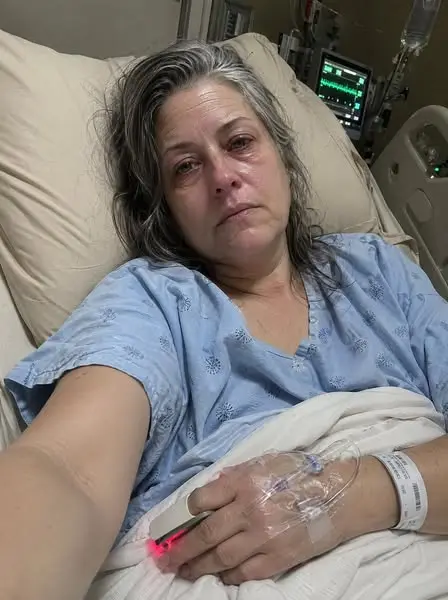
I hadn't gone to the bathroom in 14 days. I told my husband I was fine. I took another Miralax… then a Senna… then two Dulcolax… and washed it all down with a bottle of magnesium citrate the size of a small soda. Nothing. By day 15, I was doubled over on the bathroom floor, unable to stand up from the pressure in my abdomen. That's when my husband Robert picked me up off the cold tile, carried me to our SUV in nothing but a robe, and drove me to the ER at 2:47 in the morning. What the doctor said next… about WHY my bowels had stopped working completely… changed everything I thought I knew about my body. And it's the reason I'm writing this post tonight. Because if you're a woman over 45 who has been silently struggling with constipation, bloating, brain fog, or that "I look 5 months pregnant" feeling at the end of every day… Please read this all the way through. What I'm about to share with you is the same information that turned my life around in 4 weeks… and it could save yours too. My name is Margaret. I'm 52 years old. I live in suburban Pennsylvania with my husband Robert. And like a lot of women my age, I've been quietly battling a constipation problem for years. It started in my early 40s, around the time I went into perimenopause. Just little things at first. Going every other day instead of every day. Some bloating after dinner. A little discomfort. But by 47, I was barely going twice a week. By 49, I was on Miralax every single morning just to function. And by 51, I was doing everything you can imagine to get my bowels to move. I had tried EVERYTHING. All the laxatives. Magnesium. The teas. A gallon of water a day. 30 grams of fiber. Digestive enzymes. Probiotics. You name it, I'd taken it. Nothing was working. I had two gastroenterologists tell me I had "IBS-C" and to "just keep taking the Miralax." A third told me my colon was "redundant" and "kinked" and there was nothing to be done. A fourth ordered a colonoscopy that came back completely normal. And in the meantime, I was getting worse. I was looking 6 months pregnant by 4pm every day. The brain fog had gotten so bad I'd forget words mid-sentence. I had a constant low-grade headache that no one could explain. I was waking up at 3am with this terrible, gripping anxiety I'd never had before in my life. My joints ached. My energy was gone. My mood was in the toilet. I had become a stranger in my own body. And then came the night that nearly killed me. It started on a Tuesday. By Friday I realized I hadn't gone since the previous Wednesday. That's 9 days. I doubled my Miralax. Took a Senna. Drank a quart of warm prune juice. Saturday morning… still nothing. Sunday… I added Dulcolax to the mix and chugged a magnesium citrate. I felt some movement. I sat on the toilet for 45 minutes straining. A few small, hard pellets came out. I told myself I was "going." I wasn't. By Tuesday of the next week, I was on day 14. My stomach was so distended I couldn't button any of my pants. I felt like I had a bowling ball lodged behind my ribs. I couldn't take a deep breath without sharp pain. But I told Robert I was fine. Because I was so used to suffering through this in silence, I'd lost the ability to admit how bad it had gotten. Around 2 in the morning, I tried to get out of bed to go to the bathroom and just… collapsed. Robert woke up to me on the floor, pale, sweating, unable to speak. He didn't ask. He just picked me up, wrapped me in a robe, and carried me to the car. By 3:15am we were in the ER at our local hospital. By 4am I was on a stretcher, hooked up to an IV, getting wheeled in for an emergency CT scan. And by 5:30am, the ER doctor… a woman about my age named Dr. Sarah Chen… came to my bed with the scan results in her hand. She sat down on the edge of the bed and gently told me what they'd found. I had 14 days of impacted stool packed into my colon. It was so compacted that no laxative was going to move it. Not anymore. They were going to have to remove it manually, right there in the hospital. I cried. I'm not going to describe what happened next because it's the most humiliating experience of my life. But by 8am that morning, the impaction was out. I was exhausted, sore, embarrassed, and just wanted to go home and never speak of it again. But before I could leave, Dr. Chen came back into the room. She pulled up a chair next to my bed, looked me in the eye, and said something I wasn't expecting at all. "Mrs. Whitman, before you go home… I need you to understand something. The stool we just removed isn't your problem. It's the symptom. There's a reason you've been struggling with constipation for years that no doctor has ever told you about. And unless you address it, this is going to keep happening for the rest of your life." I just stared at her. For the first time in 6 years, a doctor was about to actually explain what was wrong with me. Dr. Chen took a breath and started from the beginning. She told me what I had wasn't really "IBS-C." It wasn't a "redundant colon." It wasn't "just menopause." She said the real problem was much simpler than that. 👉 "Mrs. Whitman, your gut is overrun with bad bacteria and fungi. They aren't supposed to be there. Or at least, not in the numbers they are." She explained that this happens to a lot of women my age. Sometimes it's triggered by a course of antibiotics 10 or 20 years ago. Sometimes it's the hormonal shift of menopause. Sometimes it's years of processed food, or chronic stress, or all of it together. But somewhere along the way, my gut had flipped. The good bacteria had been wiped out, and the bad bacteria had taken over. I asked her the obvious question. "Why hasn't my body just killed them off? Don't I have an immune system for that?" That's when she explained the part that made my jaw drop. 👉 "You DO have an immune system that's supposed to handle this. Plus stomach acid. Plus your good bacteria. Normally those three things would have wiped these pathogens out years ago." "But the bad bacteria in your gut have evolved a defense, Mrs. Whitman. When your body tries to attack them, they build a shield around themselves. An invisible slime they hide behind. It's called a biofilm." She paused for a second. "You've actually seen one before. That fuzzy film on your teeth in the morning before you brush? That's a biofilm. The bacteria in your mouth build it overnight to protect themselves from your saliva." "And the same exact thing is happening down in your colon right now." I felt sick. She kept going. 👉 "Once that shield is up, almost nothing can get through it. Your immune system can't reach them. Stomach acid can't dissolve it. And — this is the part that matters for you — antibiotics become up to 1,000 times less effective once a biofilm forms." "That's why every probiotic, every cleanse, every fiber supplement you've taken has failed. The shield was stopping all of it." It was finally starting to make sense. But I still didn't understand why specifically I couldn't poop. Dr. Chen leaned in for the last part. 👉 "Behind that biofilm shield, those bacteria aren't just sitting there. They're alive. They're fermenting your food, which is where your bloating and gas come from. But the worst part is, one specific type of bacteria living back there… called methanogens… releases a gas called methane." "And methane gas, Mrs. Whitman, literally paralyzes your colon." She explained that methane sends a chemical signal to the muscles of the colon that tells them to slow down. Studies out of UCLA have shown methane gas can slow gut transit by up to 59%. In other words, the bacteria hiding behind the biofilm were producing a gas that was paralyzing my own bowels from the inside out. Every laxative I took was just forcing stool past them… without ever touching them. So as soon as the laxative wore off, the methane started building back up, and I was right back where I started. I sat there as a 52-year-old woman in a hospital gown, hearing the explanation for everything that had been wrong with me for years. But Dr. Chen wasn't done. 👉 "And while that fortress sits inside you, the colony also leaks toxins through your gut wall into your bloodstream. That's where your brain fog comes from. The 3am anxiety. The joint pain. The constant low-grade headache. The exhaustion you've been chalking up to 'just being 52.'" "None of it is aging, Mrs. Whitman. Your body is being slowly poisoned by a colony of gut bacteria that your body can't get rid of." I sat there in that hospital bed in complete silence. Because every single one of my doctors had missed it. Six years. Six years of being told it was IBS-C. Six years of being told to "just take more Miralax." Six years of being told my colon was "kinked" and that nothing could be done. And the whole time, the answer had been sitting right there. I asked Dr. Chen the obvious question. "So how do I fix this?" She told me there IS a way. But it's not what I'd been doing for the last 6 years. And it's not what any of my gastroenterologists were going to suggest either. She said to actually solve the root cause of my constipation, three things had to happen, in this exact order: ✅ First, I had to dissolve the biofilm. As long as that shield was up, nothing I took could reach the bacteria behind it. That's the step every doctor and every supplement company in America has been skipping for the last 30 years. ✅ Second, once the shield was down, I had to kill the pathogens hiding behind it. The methane producers. The candida. The bad bacteria. Wipe them out before they could rebuild the shield. ✅ Third — and this was the one she stressed the most — whatever I used had to spare my good bacteria. Because antibiotics and harsh herbal cleanses nuke EVERYTHING. They wipe out the bad bacteria AND the good ones, leaving you with a wrecked microbiome and even worse symptoms 8 weeks later. "Antibiotics fail step 1 and step 3. Probiotics fail step 1 and step 2. Most herbal cleanses fail step 3." "But there's one compound that does all three. It's called SAC. Short for S-Allyl Cysteine." "And it's almost exclusively found in fermented black garlic." I told her I'd just stop at the grocery store on the way home and grab a head of garlic. She shook her head immediately. 🛑 "Please don't do that, Mrs. Whitman. It won't work." She explained why. Raw garlic barely contains any SAC at all. Just a trace amount. You could eat a pound of raw garlic a day for a year and not get enough SAC to dissolve a 6-year-old biofilm. 👉 "SAC only develops when garlic is fermented for 60 to 90 days under controlled heat and humidity," she said. "During that fermentation, something incredible happens. The SAC content multiplies by 6 times. The harsh compounds convert into something stable and gentle on the stomach. The garlic literally turns jet black. The smell disappears completely. And what's left is one of the most powerful biofilm-dissolving compounds ever discovered." "Most 'black garlic' supplements you'll find on Amazon or at the health food store are fermented for 30 days or less. They don't have anywhere near the SAC concentration to do the job." "You need a high enough dose of properly fermented black garlic to actually dissolve a decade of biofilm in the colon. Most products on the market won't get you there." She wrote a name down on a hospital pad and slid it across the bed. It was a brand called Lanural Fermented Black Garlic Extract. She told me it was the only fermented black garlic supplement she'd found that actually used the full 60-90 day fermentation, with 6,000mg of fermented black garlic in every single serving. Enough SAC to actually break down the biofilm shield, kill the bacteria hiding behind it, and let my good bacteria multiply back to normal levels. "I personally take it. I give it to my mother, who's 71 and was struggling with the same thing. And I recommend it to my female patients over 45 who are dealing with this exact issue." "It's not sold in stores. You have to order it online. But it's the closest thing to a real solution I've ever seen for what you're dealing with." That morning, after I'd been disimpacted and discharged… Robert drove me home at 9am. I didn't even change out of the hospital clothes. I sat down at the kitchen table, pulled up the website on my phone, and ordered a 5-bottle supply of Lanural Fermented Black Garlic Extract right then and there. The bottles arrived three days later. I started taking it that morning with breakfast. One capsule with a glass of water. Here's exactly what happened over the next four weeks. ✅ Week 1: I took one capsule with breakfast every single morning. There was no garlic taste, no garlic burps, no stomach upset. Nothing. By day 4, I had my first complete bowel movement in years. WITHOUT a laxative. I sat on the toilet and cried for 20 minutes. Robert thought something was wrong. I just kept saying "I went. I just went." ✅ Week 2: I went every single morning. Like clockwork. The bloating dropped by more than half. For the first time in years, my pants buttoned all the way up by 8pm. I noticed the brain fog starting to lift… I could feel myself getting sharper, faster, more like the woman I used to be at 40. ✅ Week 3: The 3am anxiety stopped. Just stopped. I slept through the night for 7 nights in a row, which I genuinely couldn't remember the last time I'd done. The constant low-grade headache I'd had for the last 4 years was gone. My joint pain disappeared. My energy came roaring back. ✅ Week 4: I went back to see Dr. Chen for a follow-up. She ran the breath test for methane and a few inflammation markers. The methane was down to a normal range. My inflammation markers had dropped significantly. She smiled, gave me a hug, and said: "You did it, Mrs. Whitman." I wasn't constipated anymore. I wasn't bloated anymore. I wasn't foggy anymore. I felt 30 years old again. And here's the thing. Before I posted this, I reached out to the folks at Lanural to tell them my story. The whole thing. The 14 days. The ER. The disimpaction. All of it. They were so moved that they wanted to help get this into the hands of more women going through what I went through. So right now, they've set up a special link where you can get a bottle of Lanural Fermented Black Garlic Extract for just $29.99. But it gets better. They know that if you've been suffering with this, your sister, your best friend, your mother probably has too. This isn't a one-person problem. Statistically, 1 in 3 women over 50 are walking around with the same biofilm-protected bacterial overgrowth I had. So for a limited time, they're running a Buy 2 Get 1 Free offer… and a Buy 3 Get 2 Free offer at that same low price. That means you can stock up on a 5-month supply for less than what I was spending on Miralax every 6 weeks. And the best part is they back it with a 60-day money-back guarantee. If after 60 days you're not having complete, daily, painless bowel movements… if your bloating hasn't gone down… if your brain fog hasn't lifted… you send the bottles back, even the empty ones, and they'll refund every single penny. So please, don't wait. Don't wait until you're being wheeled into an ER at 3am like I was. Don't wait until a stranger in scrubs has to manually remove a week and a half of stool from your body. Don't wait another single day looking 6 months pregnant in your own bathroom mirror. Click the link below to check if Lanural still has stock. 👉 https://get.lanural.com/pdp/ If they're in stock, grab a bundle. Grab one for yourself. Grab one for your sister. Grab one for your best friend who's been complaining about her stomach for years and quietly suffering just like you have been. You will be glad you did. Trust me. I'm 52 years old. I had 14 days of stool packed inside me. I was being slowly poisoned by my own gut. And one little fermented black garlic capsule a day got me my life back in 4 weeks. It can do the same for you. 👉 https://get.lanural.com/pdp/ — Margaret

InactiveJun 29, 26
70% OFF + Free Shipping - Last Day!
Video

healifeco.com

70% OFF + Free Shipping - Last Day!

Shop now

💥 Last Day: 70% Off 💥 Remove toxins and free radicals naturally with the At-Home Ionic Foot Spa. ✅ Immune system boost ✅ Reduce joint pain and soreness ✅ Reduce inflammation and swelling ✅ Remove toxins and heavy metals ✅ Increase energy The sale will end within 24 hours, so make sure not to miss out. 🌟 90-Day Money Back Guarantee for all orders Check it out here 👉 https://www.healifeco.com/pages/fsb

InactiveJun 29, 26
Buy 1, Get 1 FREE!

gonaturalgoods.com

Buy 1, Get 1 FREE!

Shop now

Your energy will be revitalized, your fatigue gone — and you’ll feel absolutely amazing. Go Natural’s Soursop isn’t like anything you’ve ever tried. It’s 100% natural, highly absorbable, and made with 4 powerful ingredients — including pure, concentrated soursop leaf extract, nature’s most potent antioxidant, Vitamin B6, Vitamin C, and Vitamin D. The result? ✅ Naturally boosted energy levels ✅ Reduced fatigue & no crashes ✅ Sustained vitality, improved mood, & sharper focus 🩸Just one dropper before meals — and you’ll feel the difference fast. Our last restock sold out in under 48 hours, and this one’s going even faster. 👉 If you’re ready to feel better than you have in years, don’t wait. Grab our Soursop supplement while it's still in stock: https://gonaturalgoods.com/products/organic-soursop-extract 💸 Try it risk-free. 100% money-back guarantee. No questions asked.

Track Dr. Daniel Harlow - Nephrologist, MD and get alerts for new ads

Create a free account to follow brands, save ads and search the full library.