PixelSpyer

DeShawn Williams ad: How I Stay Hard The Whole Time

How I Stay Hard The Whole Time
DeShawn Williams

Personal blog, 4K followers, 4 ads in library

InactiveFitnessImageLibrary ID 2061383647840179
Launched Jun 25, 2026Run time unknown

New ads are still being tested; watch whether it survives past 30 days.

Ad copy

How I Stay Hard The Whole Time

Somewhere in the last year, I started going soft in the middle of sex. And sometime after that, I started pretending to be asleep so I wouldn't have to face it. I'd hear her come up the stairs and I'd close my eyes and slow my breathing, and I'd lie there like a coward until I was sure she'd given up. Then I'd lie awake half the night hating myself for it. If you've ever done that you need to hear how close I came, and how it actually ends. Let me back up, because there was a night this all started. A little over a year ago, we were in the middle of it and I felt it start to slip. Halfway through, gone. I tried to get it back and couldn't, and I rolled off and stared at the ceiling and waited for her to say it was fine. She didn't say it was fine. She didn't say anything. She just got quiet, pulled the blanket up, and turned away from me. And for about a month after that, she didn't want to be touched at all. No reaching, no closeness, nothing. I told myself she just needed space. But something in me changed in that month. It stopped being about that one night. Every time after that, the second we started, this voice would start up in the back of my head — is it going to happen again, is she watching for it, is she about to feel that same thing — and the second that voice showed up, it was over. The fear made the exact thing I was afraid of happen. And then I'd have proof, again, and the voice would get louder next time. Then came the thing I haven't been able to put down since. One night, joking around, she laughed and said, "You're lucky you're good with your hands." She said it light. She probably forgot it by morning. But I have thought about that sentence nearly every day since. Because I don't actually know if she was joking. Maybe she was. Maybe it was nothing. Or maybe it was the most honest thing she's ever said to me — that I'd been reduced to one thing I'm still good for, and that's the only reason she's still here. I couldn't ask. I just carried it. And every time we got close after that, it wasn't only "don't fail" anymore. It was "fail, and you've handed her the reason to leave." So I stopped trying. Slowly, quietly, I became a man who hides in his own bed. I tried to fix it the way a man does when he's too ashamed to say it out loud. I started running. Cut the drinking. Looked up the breathing exercises, the "just relax and stay present" advice. Did the kegels at my desk like an idiot. Some nights I'd talk myself calm and it would still slip, and that was almost worse — because if I could be calm and it still happened, then it wasn't just nerves. Something was actually wrong. So I decided it had to be in my head, because the only other explanation was that my body had broken at thirty-four, and I wasn't ready to believe that. That's the trap I sat in for over a year — told by everyone that it was psychological, while a part of me knew that wasn't the whole story. Turns out I was half right. And that half is exactly why nothing worked. Here's what a doctor finally explained to me. An erection isn't about how aroused you are — it's a blood flow event. When it works, blood rushes into the penis and stays there, and that's what keeps you hard. The thing that opens those vessels and lets the blood in is one compound: nitric oxide. And after your mid-thirties, your body makes less of it every year — the modern stuff we're all swimming in, the processed food, the stress, the bad sleep, wrecks the tissue that produces it. So here's what had actually been happening to me. My nitric oxide was already low, which meant my erections were already running on a thin margin — fine on a good day, but quick to fade. And anxiety dumps cortisol and adrenaline into your system, which clamps those vessels down even further. So the fear wasn't just in my head. The fear was physically choking off what little blood flow I had left. That's why "just relax" never worked — you cannot think your way out of a problem that's half mechanical. The weak hardware made me anxious, and the anxiety made the hardware worse. A perfect loop, feeding itself, for over a year. And once I understood that, the fix became obvious. You can't break the loop from the anxiety side alone — every man who's tried knows that. You break it from the blood flow side. Fix the nitric oxide, give yourself a real margin again, and suddenly you're not failing — and when you stop failing, the fear has nothing left to feed on. It just dies. Now — before I understood any of this, I thought about the little blue pill. And I'm glad I know now what the doctor told me about it. Viagra doesn't make nitric oxide. It just forces the vessels open for a few hours, then wears off, and it does nothing for the anxiety underneath — in fact, knowing you needed a pill to perform makes the head part worse. It's a few hours of borrowed function on top of a problem that's still there. Same with the rest of it. None of it touches the actual collapse. The only thing that works is rebuilding the nitric oxide itself, so your body opens those vessels the way it used to, on its own. I found out how from a buddy. Divorced, and somehow looking ten years younger than the last time I'd seen him. He asked me over a beer why I seemed so far away, and that night, for whatever reason, I told him everything. He didn't laugh. He just said, "Man, that's not in your head. That's blood flow. Mine was the exact same. I fixed it." He'd been taking something called UltimaPeak. Two gummies every morning. And there's a reason it works where the pill and the breathing exercises don't — it goes at both ends of the loop at once: L-Arginine converts straight into nitric oxide inside the vessel walls and reopens the blood flow that had been shutting down. Panax ginseng keeps that nitric oxide working longer and holds the vessels open — so you stay hard instead of fading halfway through, which was my exact problem. Ashwagandha drops the cortisol that had been clamping everything shut every time I got nervous — a 27.9% reduction in a published trial. This is the one that quiets the voice in your head, because it does it chemically instead of asking you to "just relax." Saffron and Shilajit bring back the drive and the stamina to hold it from start to finish. The first week, nothing I'd swear to. A little more life, maybe. Then around two weeks in, I woke up hard. Actually hard, the way I hadn't been in longer than I could remember. I lay there almost afraid to move. It didn't go away. Mornings came back first. Then one night she reached for me and I didn't flinch — and for the first time in over a year, I went the whole way without the voice ever starting up. Because somewhere underneath, my body finally trusted itself again, and there was nothing for the fear to grab onto. And the joke — "you're good with your hands"? I still don't know if she meant it. But I stopped needing to know. Because I'm not auditioning for my place in my own marriage anymore. A man who isn't failing doesn't lie awake decoding a sentence she said laughing a year ago. The fear didn't get answered. It just lost its grip. So here's why I'm telling a stranger all this. If any of it sounds like you — the slipping, the voice in your head, the faking sleep, the one comment you can't stop replaying — do not do what I did and wait it out. Understand the part nobody told me: this isn't only in your head, and you cannot relax your way out of it. It's blood flow, it's nitric oxide, and the fear feeding on it only gets stronger the longer you let it win. It's fixable. But the time to fix it is while she's still reaching for you, not after she's stopped. They back it with a 60-day money-back guarantee — if nothing changes, every dollar back, no questions. Right now it's buy-two-get-one-free, though it sells out, because they don't manufacture in bulk. I wasted over a year hiding from the best thing in my life. You don't have to lose a single night more. Stop pretending to be asleep. Start here: https://ultimapeak.com/products/ultimapeak-daily-gummies

ultimapeak.comLearn more
Placements
FacebookInstagramAudience NetworkMessengerThreads
Reach (1 location)
🇬🇧 United Kingdom
Languages
English

Why this ad works

Hook, angle, audience and three ideas to borrow — written by AI from the ad copy.

Similar ads from other brands

InactiveJul 25, 26
Why The Neck Hump Won't Go

alignareset.com

Why The Neck Hump Won't Go

Learn more

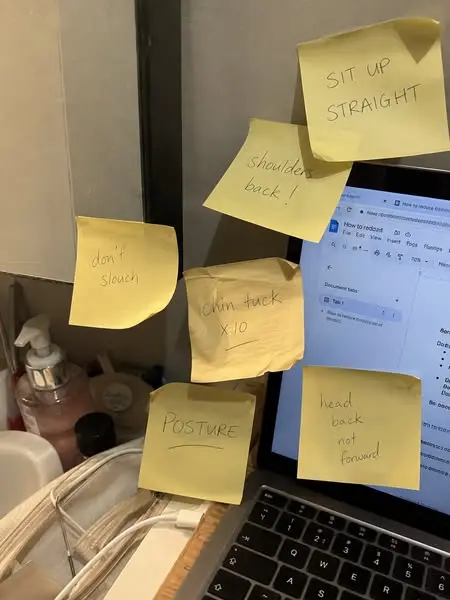
If good posture fixed neck humps, yours would be gone by now. There's a reason it isn't — and it isn't you. I'm Barbara. I'm 63. And I have never in my life tried harder at something and had less to show for it. It crept in slowly. I stopped wearing my hair up. I started buying tops by how high the collar sat. At my niece's wedding I asked someone to delete a photo of me from the side, light and breezy, like it was nothing. It wasn't nothing. But I'm not one to just let a thing happen to me. So I did what everyone tells you to do. I fixed my posture. Or I tried to. Chin tucks every morning. Ten of them, then ten more. Doorway stretches. Shoulder rolls. I set reminders on my phone — little buzzes through the day telling me to sit up straight. And I did. Every time it buzzed, I pulled myself up tall. For about thirty seconds. Then I'd be back on the laptop, or peeling the potatoes, and without ever deciding to, I'd have sunk right back down again. I told myself I just needed to be more disciplined. Try harder. Do it more often. So that's what I did. For months. And the hump didn't just refuse to go. It got worse. I'd wake with a tightness at the base of my skull that had been there so long it felt normal. I'd catch the back of my neck in a shop window and look away fast. I started turning my whole body to talk to someone at a table, rather than turn my head and let them see the side of me. I never decided to do any of that. I just found myself doing it. Late at night I'd be on my phone, in the forums, reading hundreds of other women saying the exact same thing. Doing the exercises. Sitting up straight. Watching it get worse anyway. I kept coming back to the same thought. I'm doing everything they said. Why is it getting worse? Then something happened that turned the whole thing on its head. I'd booked in with a cervical physio for a stiff shoulder. Nothing to do with the hump. Or so I thought. She had a look at the back of my neck. Asked how long I'd had the rounding. Asked what I'd been doing about it. So I told her. The chin tucks. The stretches. The reminders. Nearly a year of it. She nodded. Then she asked me to do something odd. "Sit up as straight as you can," she said. "Really lift out of it. And just hold it there for me." So I did. Tall as I could manage. "Now," she said. "Tell me when you can't hold it anymore." I lasted about thirty seconds before my shoulders started creeping forward and I had to consciously drag them back. She just nodded, like she'd seen it a hundred times. And then she said the thing I haven't stopped thinking about since. "That right there is why none of it worked. Good posture isn't something you can force. It's not an input. It's an output." I said — what on earth do you mean, an output. And she explained the bit that made everything fall into place. Sitting up straight isn't the fix, she said. It's the *result* of the fix. When the thing underneath is set the wrong way, your body can only hold the good position for a few seconds before the set tissue drags it back. That's not weakness. That's mechanics. Because the hump isn't on the surface, where all my effort was going. Your neck's meant to have a gentle curve that holds your head balanced over your shoulders. Years of looking down — the phone, the worktop, the telly — hold that curve forward and flat. And held flat long enough, it doesn't just bend. It sets. Like clay left to harden in a mould. The tissue actually shortens and locks around the wrong shape. Now the head sits forward. And to prop up that forward weight, the body builds a bit of padding at the base of the neck. That padding is the hump. And suddenly every frustrating morning made sense. The chin tucks pulled at the surface for thirty seconds — then the set curve underneath dragged everything straight back. The reminders told me to sit up, which I could only hold for thirty seconds anyway, for the exact same reason. I'd spent a year trying to force a position my body physically couldn't hold — because the thing stopping it from holding was set underneath, and I was never once touching it. It was never that I wasn't trying hard enough. God knows I was. It was that I'd been trying to input something that can only ever be an output. I sat in the car afterwards and felt the strangest mix of daft and relieved. Daft for the wasted year. Relieved because for the first time, it wasn't me that had failed. So I asked her the obvious question. If I can't force it — what actually changes it? And she said that's the thing — you can't yank it back either. Pull hard on tissue that's set and it braces and snaps straight back the moment you stop. You have to do three things together. You have to warm it, so the tissue that's gone hard can actually soften. You have to ease the curve back gently while it's soft. And you have to calm the muscles, so they stop guarding and let it happen. Warm it, ease it, calm it. All at once. Not for thirty seconds — long enough, every day, until the curve settles back instead of springing to its old shape. That was the one thing all my discipline had never done. Not because I was lazy. Because nobody had ever told me that was the thing that needed doing. So I went looking for something that could do all three at home. And I found one thing that does. It's called the Aligna Thera Pillow. There's nothing to hold, nothing to force. You just lie back on it for about fifteen minutes a day. A gentle warmth to soften what's set hard, a slow easing that guides the curve back, and a light vibration that settles the muscles so they stop fighting it. All three, together. Fifteen minutes on the sofa. The very opposite of straining. I'll be honest — after a year of white-knuckling my own posture, "lie back and do nothing" felt almost too easy to work. So I did something I'd never done. Because after all that effort, part of me still didn't quite believe anything would shift it — I took a photo of the side of my neck the day it arrived. Just to see. The first week, not a lot. A bit of something, nothing dramatic. By week two, the tightness at the base of my skull that I'd had for years — and stopped even noticing — had eased. I was getting out of bed without lying there first, working out which way I could turn. By week five, I took a second photo. And I sat looking at the two of them, side by side on my phone, for a long time. The line of my neck was longer. Less hunched. Not dramatic — I won't pretend it happened overnight. But there, in the exact spot a whole year of effort had never touched. A year of trying had given me nothing to photograph. Five weeks of the right thing gave me two pictures that didn't match. A couple of months in, there was a photo at a family lunch. I was at the front of the group, not edged off to the side the way I'd trained myself to stand. I didn't think about my neck once until I saw the picture that evening. I'm not going to tell you what to do. I'm not a doctor. But I'll tell you what I wish someone had told me before I gave a year to it. If you've been doing the exercises, faithfully, sitting up straight a hundred times a day, and the hump's still getting worse — please hear this. It isn't because you're not disciplined enough. It's that good posture was never something you could force. It's the result of a curve that's set underneath — and effort on the surface can't reach it, no matter how consistent you are. That's why it kept slipping back for me. That's why it keeps slipping back for you. If you want to see exactly why "sit up straight" can't work — and the one thing that actually reaches the set curve underneath — a cervical physio lays the whole thing out here. 👉 https://alignareset.com/pages/advertorial-breaking-news-before-and-after-image-jun-26-09-58-27?_ab=0&key=1782829198564


InactiveJul 25, 26
Fat Melt

newmindstart.com

Fat Melt

Learn more

You’re eating “pretty clean,” walking more, maybe even trying random workouts… but the Belly Fat stays, the waist feels soft, and your body feels heavy by noon. Fat Melt was built for men and women 40+ who don’t have time for gym punishment. In just 15 realistic minutes a day for busy people, you’ll wake up Deep Muscles, fire up Metabolism, build Core & Glute Strength, and move through fat-burning yoga flows that help your body feel lighter, tighter, and switched on again. Created by certified osteopathy and biomechanics expert with 30+ years of teaching experience. Access to the course is not limited in time — start now and continue anytime you want. If for some reason you don't like the course, we will refund the full amount within 14 days after the purchase. Get the course today with a 90% discount — click the button below the video and start your journey.

InactiveJul 21, 26
The No Bullsh*t Yoga Pose Library
Video

yogiflightschool.com

The No Bullsh*t Yoga Pose Library

Learn more

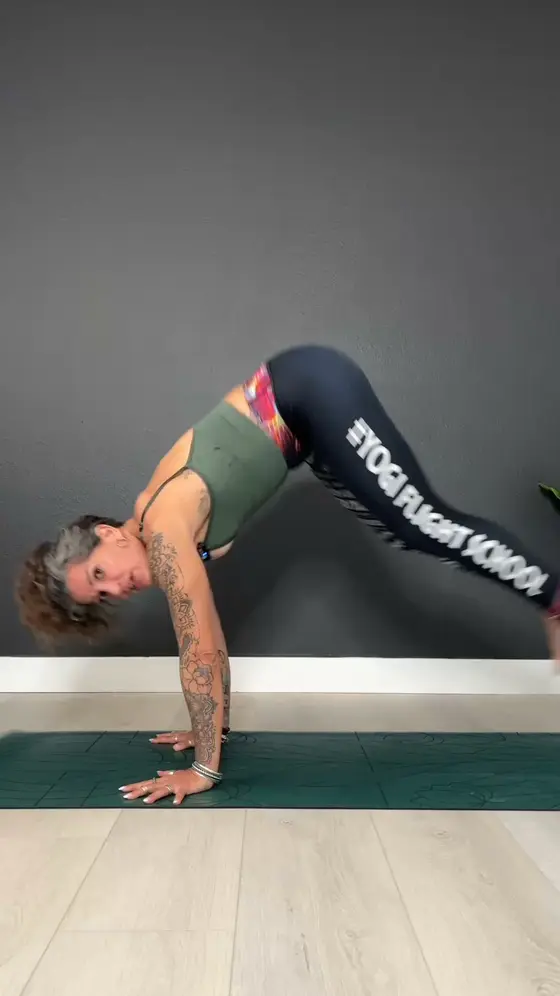
At some point in yoga class, you stopped understanding what you were doing and started just performing the shapes. Down Dog. Warrior II. Triangle. You’ve done them all a hundred times. But if someone asked you to explain what “square your hips” actually means in Warrior I… or what you’re supposed to feel in your hamstrings in Forward Fold… or why your body feels slightly off in every twist… you’d probably have to guess. That’s the part no one really says out loud. Most yoga classes don’t actually teach you the poses. They just guide you through them. So you end up learning by copying, not understanding. That’s exactly why I created the No Bullsh*t Yoga Pose Library. Inside, you’ll get step-by-step breakdowns of the yoga poses you see in class every single week, explained in actual human language that makes sense in YOUR body. ✅ Learn what each pose is actually supposed to feel like ✅ Understand common yoga cues instead of just memorizing them ✅ Discover why certain poses feel awkward, unstable, or uncomfortable ✅ Learn how to modify poses for your body instead of forcing yourself into shapes ✅ Understand how to use props like blocks and straps confidently ✅ Stop relying on copying other people in class The library includes breakdowns of over 90 of the most common yoga poses, so instead of constantly trying to keep up in class… you’ll finally understand what you’re doing and why you’re doing it. Ready to stop guessing your way through yoga class? Click “Learn More” to explore the No Bullsh*t Yoga Pose Library.

InactiveJun 29, 26
Transform your body in just 30 days
Video

itunes.apple.com

Transform your body in just 30 days

Install now

🌟🌟 You don't need a trainer with this app! FitnessAI optimizes sets, reps and weight every time you work out. Download to try it out!

Track DeShawn Williams and get alerts for new ads

Create a free account to follow brands, save ads and search the full library.