PixelSpyer

David M ad: How I stopped bladder leaks

How I stopped bladder leaks
David M

Health/beauty, 66 followers, 2 ads in library

InactiveFitnessImageLibrary ID 1323715759949308
Launched Jun 26, 2026Run time unknown

New ads are still being tested; watch whether it survives past 30 days.

Ad copy

How I stopped bladder leaks

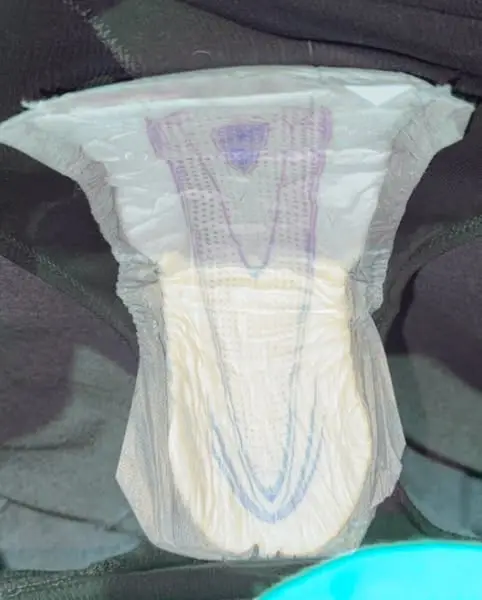
Every week you spend doing exercises for your bladder leakage that aren't working, your life gets smaller. And you don't notice until you look back and realise how much you've lost. I know because I lost two years before I saw it. My name is David. I'm 68. Retired electrician. Married to my wife Linda for 38 years. I had my prostatectomy two and a half years ago. The cancer is gone. The leaks never stopped. Four pads a day. Getting up four times a night. Dark trousers every day. Spare pads in every jacket pocket. My surgeon told me to do my Kegel exercises. I did them. Every day. For sixteen months. Nothing changed. But that's not the worst part. The worst part is what happened around the edges while I was squeezing and waiting and hoping. First thing I lost was my bowling league. Wednesday nights. Twelve years I'd been going. The chairs were plastic. The sessions ran two hours. I leaked through a pad during my second game and spent the rest of the evening with my jacket tied around my waist. Told the lads I had a stomach bug. Never went back. That was month three. Second thing I lost was the drive to see my daughter. She lives ninety minutes away. Ninety minutes means at least one stop. One stop means a service station bathroom. Means changing a pad under fluorescent lights in a stall that doesn't lock properly. Means coming back to the car and hoping Linda doesn't notice I was in there too long. After the third trip where I had to stop twice, I told Linda I didn't feel like driving that far anymore. She started going alone. She never asked why I stopped coming. That was month six. Third thing I lost was my grandchildren. Not completely. But the version of me they knew. I used to be on the floor with them. Building things. Chasing them. Letting them climb on me. Now I sit in the armchair and watch. Because getting on the floor means getting back up. And getting back up means a leak. My grandson is nine. He stopped asking me to play months ago. He just goes to Linda now. "Nana, come play." Not grandad. Nana. That was month ten. Fourth thing I lost was Linda. Not literally. She's here. She's always here. But we're not the same. She doesn't reach for my hand anymore because I stopped reaching for hers. I moved to the spare room eight months ago. Told her it was the nighttime trips. She knows the real reason. She's known for months. She found the pad boxes in the garage. She never said anything. Neither did I. We eat dinner together and watch television together and sleep in separate rooms and pretend this is normal. It's not normal. It's two people who've been married for 38 years slowly becoming strangers because one of them is too ashamed to be close to anyone. That was month fourteen. I lost all of that while doing the exercises my surgeon told me to do. Every single day. Sixteen months of squeezing. Sixteen months of nothing changing. Sixteen months of my life shrinking one thing at a time. And here's what terrifies me. If I hadn't found out what was actually wrong, I'd still be doing those squeezes right now. Still losing things. Still shrinking. At 70, I'd have lost five years. At 75, ten years. Ten years of my retirement — the years I worked my whole life for — spent in dark trousers in an armchair doing exercises that were never going to work. Because they were only working one part of the system. That's what I found out at 2 AM one night, sitting on the bathroom floor after my fourth trip. Your pelvic floor doesn't work alone. It's part of a foundation. Your inner thigh muscles — your adductors — are directly connected to your pelvic floor. They're part of the same system. They control your bladder together. When all of them are strong, you have control. When you only train the pelvic floor with Kegel squeezes and leave the inner thighs out, the foundation stays broken. One muscle trying to hold everything together while the other part of the system does nothing. That's why sixteen months of squeezes didn't work. I was training half the foundation and wondering why the whole thing wasn't holding. Nobody told me. Not my surgeon. Not my GP. Not anyone. Sixteen months and not one person mentioned that my inner thigh muscles are directly connected to my pelvic floor and need to be trained together. When I found the Fortis Control Trainer, it made immediate sense. You place it between your knees and squeeze. When you squeeze, it trains your inner thighs and your pelvic floor at the same time. Both parts of the foundation. Together. Every rep. I thought it looked like a thigh trainer at first. Almost scrolled past it. Then I read about the connection — how the inner thighs and the pelvic floor are part of the same system, directly linked — and I understood why it works when Kegels alone don't. It's training the whole foundation, not just one piece of it. Built-in counter. Simple printed instructions. Five minutes a day in your armchair. No insertion. No electrodes. No app. Nothing complicated. $79. Ships in a plain box. 30-day guarantee — keep it even if you want a refund. I ordered it because I'd already lost two years and I wasn't willing to lose a third. The box arrived. Plain. Unmarked. Small. Two padded arms. Digital counter. I put it between my knees and squeezed. The counter clicked. And I felt both parts of the foundation activate together for the first time. Not just the pelvic floor contracting on its own like a Kegel. My inner thighs engaging and my pelvic floor firing with them. Like they'd been waiting to work together and nobody had ever asked them to. After sixteen months of squeezing one muscle in isolation, feeling the whole system switch on was like finally finding the other half of the puzzle. Week one. Still in pads. But doing something that felt fundamentally different. Week two. Getting up twice instead of four. Linda mentioned I seemed less tired. I didn't tell her why. Week three. Two pads instead of four. I coughed in the garden and nothing happened. Stood there staring at the rake in my hand because after sixteen months of bracing for every cough, nothing happening didn't feel real. Week four. One pad. Barely needed it. Week five. No pad. I stood in the bathroom and looked at the empty space on the counter where the pad box used to sit. Sixteen months of that box being there. Sixteen months of opening it every morning as the first thing I did. Empty. I went to the spare room. Picked up my pillow. Walked into our bedroom and put it back on my side of the bed. Linda was reading. She looked up. "Coming back?" she said. "Coming back," I said. She put her book down and cried. I got into bed and held her hand and we lay there in the dark like we used to. Before the pads. Before the spare room. Before the shrinking. That was three months ago. Here's what I've gotten back since. Bowling. Went back last Wednesday. Colin handed me a beer and said "where the hell have you been." I told him my knee had finally healed. He didn't believe me. Didn't care. Just glad I was there. My daughter. Drove ninety minutes last weekend. No stops. Linda was in the passenger seat. She reached for my hand on the gearstick and held it for half the drive. My grandson. Got on the floor with him last Sunday. Built a tower of blocks. He knocked it over and laughed. I laughed. I got back up without thinking about it. Our bedroom. Together. Every night. No spare room. All of that was gone three months ago. Every bit of it. Lost to sixteen months of doing exercises that only trained half the system. There are cheap copies on Amazon. They're not the same. Different materials. Flimsy. They break. The real one is from tryfortis.store. If you're reading this and you've been doing Kegels for months and nothing is changing — every week you wait is a week you lose. Not just pads and discomfort. Real things. Friendships. Family. Your wife's hand. Your grandson's attention. Years of your retirement you'll never get back. I lost two years. Don't lose yours. Your pelvic floor and your inner thighs are part of the same foundation. They need to be trained together. That's what Kegels are missing. That's what Fortis provides. The Fortis Control Trainer costs $79. One time. No subscriptions. 30-day guarantee. Keep it no matter what. Ships in a plain unmarked box. Simple printed instructions. Here's the link: https://tryfortis.store/products/fortis-control-trainer — David M. P.S. — 16 months of Kegels. Training half the foundation. Lost bowling. Lost the drive to see my daughter. Lost my grandson's attention. Lost our bedroom. Week 1 with Fortis: Still in pads. But both parts of the foundation engaging together. Week 2: Down to twice a night. Week 3: 2 pads. Coughed without leaking. Week 4: 1 pad. Week 5: None. Moved my pillow back to our bedroom. Linda said "coming back?" I said "coming back." Drove 90 minutes. No stops. Got on the floor with my grandson. Every week I waited was a week I lost. Don't wait. $79 once. 30-day guarantee. Plain box.

tryfortis.storeLearn more
Placements
FacebookInstagramAudience NetworkMessengerThreads
Reach (1 location)
🇬🇧 United Kingdom
Languages
English

Why this ad works

Hook, angle, audience and three ideas to borrow — written by AI from the ad copy.

Similar ads from other brands

InactiveJul 25, 26
Why The Neck Hump Won't Go

alignareset.com

Why The Neck Hump Won't Go

Learn more

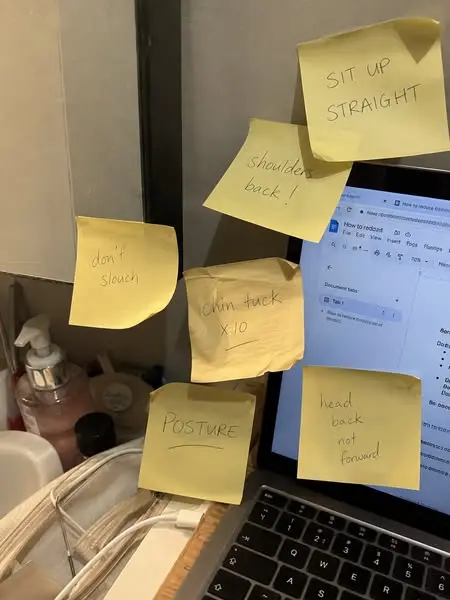
If good posture fixed neck humps, yours would be gone by now. There's a reason it isn't — and it isn't you. I'm Barbara. I'm 63. And I have never in my life tried harder at something and had less to show for it. It crept in slowly. I stopped wearing my hair up. I started buying tops by how high the collar sat. At my niece's wedding I asked someone to delete a photo of me from the side, light and breezy, like it was nothing. It wasn't nothing. But I'm not one to just let a thing happen to me. So I did what everyone tells you to do. I fixed my posture. Or I tried to. Chin tucks every morning. Ten of them, then ten more. Doorway stretches. Shoulder rolls. I set reminders on my phone — little buzzes through the day telling me to sit up straight. And I did. Every time it buzzed, I pulled myself up tall. For about thirty seconds. Then I'd be back on the laptop, or peeling the potatoes, and without ever deciding to, I'd have sunk right back down again. I told myself I just needed to be more disciplined. Try harder. Do it more often. So that's what I did. For months. And the hump didn't just refuse to go. It got worse. I'd wake with a tightness at the base of my skull that had been there so long it felt normal. I'd catch the back of my neck in a shop window and look away fast. I started turning my whole body to talk to someone at a table, rather than turn my head and let them see the side of me. I never decided to do any of that. I just found myself doing it. Late at night I'd be on my phone, in the forums, reading hundreds of other women saying the exact same thing. Doing the exercises. Sitting up straight. Watching it get worse anyway. I kept coming back to the same thought. I'm doing everything they said. Why is it getting worse? Then something happened that turned the whole thing on its head. I'd booked in with a cervical physio for a stiff shoulder. Nothing to do with the hump. Or so I thought. She had a look at the back of my neck. Asked how long I'd had the rounding. Asked what I'd been doing about it. So I told her. The chin tucks. The stretches. The reminders. Nearly a year of it. She nodded. Then she asked me to do something odd. "Sit up as straight as you can," she said. "Really lift out of it. And just hold it there for me." So I did. Tall as I could manage. "Now," she said. "Tell me when you can't hold it anymore." I lasted about thirty seconds before my shoulders started creeping forward and I had to consciously drag them back. She just nodded, like she'd seen it a hundred times. And then she said the thing I haven't stopped thinking about since. "That right there is why none of it worked. Good posture isn't something you can force. It's not an input. It's an output." I said — what on earth do you mean, an output. And she explained the bit that made everything fall into place. Sitting up straight isn't the fix, she said. It's the *result* of the fix. When the thing underneath is set the wrong way, your body can only hold the good position for a few seconds before the set tissue drags it back. That's not weakness. That's mechanics. Because the hump isn't on the surface, where all my effort was going. Your neck's meant to have a gentle curve that holds your head balanced over your shoulders. Years of looking down — the phone, the worktop, the telly — hold that curve forward and flat. And held flat long enough, it doesn't just bend. It sets. Like clay left to harden in a mould. The tissue actually shortens and locks around the wrong shape. Now the head sits forward. And to prop up that forward weight, the body builds a bit of padding at the base of the neck. That padding is the hump. And suddenly every frustrating morning made sense. The chin tucks pulled at the surface for thirty seconds — then the set curve underneath dragged everything straight back. The reminders told me to sit up, which I could only hold for thirty seconds anyway, for the exact same reason. I'd spent a year trying to force a position my body physically couldn't hold — because the thing stopping it from holding was set underneath, and I was never once touching it. It was never that I wasn't trying hard enough. God knows I was. It was that I'd been trying to input something that can only ever be an output. I sat in the car afterwards and felt the strangest mix of daft and relieved. Daft for the wasted year. Relieved because for the first time, it wasn't me that had failed. So I asked her the obvious question. If I can't force it — what actually changes it? And she said that's the thing — you can't yank it back either. Pull hard on tissue that's set and it braces and snaps straight back the moment you stop. You have to do three things together. You have to warm it, so the tissue that's gone hard can actually soften. You have to ease the curve back gently while it's soft. And you have to calm the muscles, so they stop guarding and let it happen. Warm it, ease it, calm it. All at once. Not for thirty seconds — long enough, every day, until the curve settles back instead of springing to its old shape. That was the one thing all my discipline had never done. Not because I was lazy. Because nobody had ever told me that was the thing that needed doing. So I went looking for something that could do all three at home. And I found one thing that does. It's called the Aligna Thera Pillow. There's nothing to hold, nothing to force. You just lie back on it for about fifteen minutes a day. A gentle warmth to soften what's set hard, a slow easing that guides the curve back, and a light vibration that settles the muscles so they stop fighting it. All three, together. Fifteen minutes on the sofa. The very opposite of straining. I'll be honest — after a year of white-knuckling my own posture, "lie back and do nothing" felt almost too easy to work. So I did something I'd never done. Because after all that effort, part of me still didn't quite believe anything would shift it — I took a photo of the side of my neck the day it arrived. Just to see. The first week, not a lot. A bit of something, nothing dramatic. By week two, the tightness at the base of my skull that I'd had for years — and stopped even noticing — had eased. I was getting out of bed without lying there first, working out which way I could turn. By week five, I took a second photo. And I sat looking at the two of them, side by side on my phone, for a long time. The line of my neck was longer. Less hunched. Not dramatic — I won't pretend it happened overnight. But there, in the exact spot a whole year of effort had never touched. A year of trying had given me nothing to photograph. Five weeks of the right thing gave me two pictures that didn't match. A couple of months in, there was a photo at a family lunch. I was at the front of the group, not edged off to the side the way I'd trained myself to stand. I didn't think about my neck once until I saw the picture that evening. I'm not going to tell you what to do. I'm not a doctor. But I'll tell you what I wish someone had told me before I gave a year to it. If you've been doing the exercises, faithfully, sitting up straight a hundred times a day, and the hump's still getting worse — please hear this. It isn't because you're not disciplined enough. It's that good posture was never something you could force. It's the result of a curve that's set underneath — and effort on the surface can't reach it, no matter how consistent you are. That's why it kept slipping back for me. That's why it keeps slipping back for you. If you want to see exactly why "sit up straight" can't work — and the one thing that actually reaches the set curve underneath — a cervical physio lays the whole thing out here. 👉 https://alignareset.com/pages/advertorial-breaking-news-before-and-after-image-jun-26-09-58-27?_ab=0&key=1782829198564


InactiveJul 24, 26
Train Smarter. Get Stronger.
Video

kexon.com

Train Smarter. Get Stronger.

Shop now

💪 Build chest, arms, and shoulders at home. Adjust resistance from 10–200KG, track every rep with the built-in counter, and get a powerful upper-body workout in minutes. No gym. No excuses. Just results.

InactiveJul 21, 26
The No Bullsh*t Yoga Pose Library
Video

yogiflightschool.com

The No Bullsh*t Yoga Pose Library

Learn more

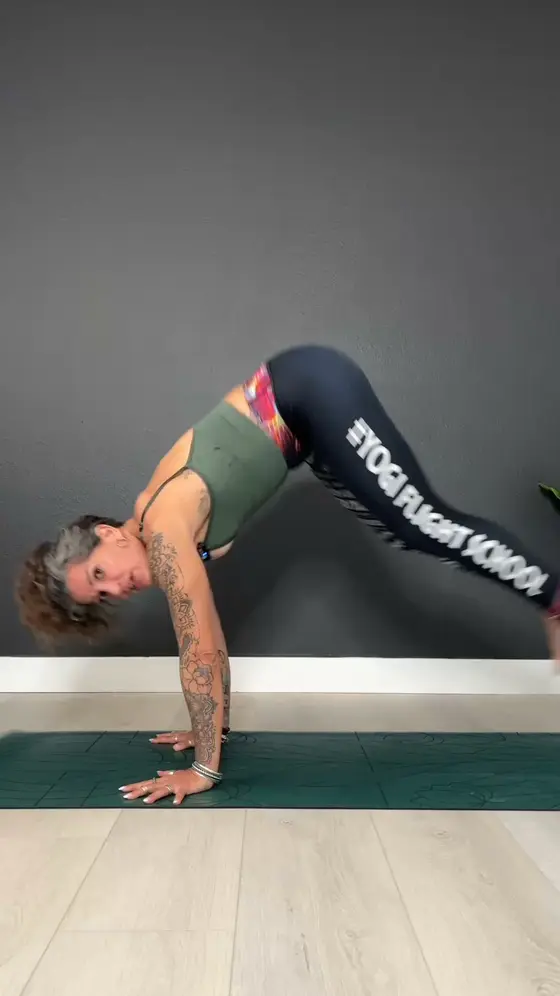
At some point in yoga class, you stopped understanding what you were doing and started just performing the shapes. Down Dog. Warrior II. Triangle. You’ve done them all a hundred times. But if someone asked you to explain what “square your hips” actually means in Warrior I… or what you’re supposed to feel in your hamstrings in Forward Fold… or why your body feels slightly off in every twist… you’d probably have to guess. That’s the part no one really says out loud. Most yoga classes don’t actually teach you the poses. They just guide you through them. So you end up learning by copying, not understanding. That’s exactly why I created the No Bullsh*t Yoga Pose Library. Inside, you’ll get step-by-step breakdowns of the yoga poses you see in class every single week, explained in actual human language that makes sense in YOUR body. ✅ Learn what each pose is actually supposed to feel like ✅ Understand common yoga cues instead of just memorizing them ✅ Discover why certain poses feel awkward, unstable, or uncomfortable ✅ Learn how to modify poses for your body instead of forcing yourself into shapes ✅ Understand how to use props like blocks and straps confidently ✅ Stop relying on copying other people in class The library includes breakdowns of over 90 of the most common yoga poses, so instead of constantly trying to keep up in class… you’ll finally understand what you’re doing and why you’re doing it. Ready to stop guessing your way through yoga class? Click “Learn More” to explore the No Bullsh*t Yoga Pose Library.

InactiveJun 29, 26
Transform your body in just 30 days
Video

itunes.apple.com

Transform your body in just 30 days

Install now

🌟🌟 You don't need a trainer with this app! FitnessAI optimizes sets, reps and weight every time you work out. Download to try it out!

Track David M and get alerts for new ads

Create a free account to follow brands, save ads and search the full library.