PixelSpyer

Carber ad: Minder kramp in de hitte

Carber

Vitamins/supplements, 294 followers, 3 ads in library

ActiveHealth & SupplementsVideoLibrary ID 1994360214526839
Launched Jun 26, 2026124 days running

Running 30+ days usually means the ad is profitable — advertisers switch off losers fast.

Ad copy

Minder kramp in de hitte

Het is niet de hitte die je training sloopt. Het is wat je eruit zweet. Je kent dat gevoel wel als het warm is. Benen die zwaar worden, energie die wegzakt, en soms de kramp die er net voor zorgt dat je inhoudt. Het ligt vaak niet aan je conditie. Tijdens het zweten verlies je zes elektrolyten, en alleen water bijvullen haalt die niet terug. 😮‍💨 6 elektrolyten weg, en water haalt ze niet terug ✅ CARBER vult ze aan met Marsel zeezout 💪 Minder kramp, minder dat zware gevoel halverwege Geen suiker, geen cafeïne. Eén schepje in je bidon en je traint mét de hitte mee in plaats van ertegen. Ontdek hoe het werkt

trycarber.nlOrder now
Placements
FacebookInstagramAudience NetworkMessengerThreads
Reach (0 locations)
Not disclosed
Languages
Dutch

Why this ad works

Hook, angle, audience and three ideas to borrow — written by AI from the ad copy.

Similar ads from other brands

InactiveJul 24, 26
40% Off Today

mykorvos.com

40% Off Today

Shop now

I am the on-set medical consultant for an adult film studio. I have personally examined 600 male performers over the last 14 years. About 8 percent of them age in a way the other 92 percent do not — still performing reliably in their late 40s and early 50s with no pharmaceutical help, with recovery times between scenes that match what 25-year-olds should be able to do but usually cannot. The reason that 8 percent ages differently is the same reason most men over 40 in this country are slowly losing function the rest do not have to lose. My name is Dr. Marcus Reilly. I am 56 years old. I graduated from UC San Diego School of Medicine in 1997 and completed my urology residency at Cedars-Sinai in 2002. I spent the first 9 years of my career running a conventional urology practice in West Los Angeles, treating prostate cancer, kidney stones, and the standard parade of erectile dysfunction patients that every urologist over 45 sees more of every year. In 2011 I took on what was supposed to be a part-time consulting role. A friend of a friend ran a large adult film production company in the San Fernando Valley. He needed a urologist who could provide confidential medical care to his male performers — bloodwork, vascular imaging, performance counseling, and the kind of private consultations that performers cannot get from their family doctors without raising questions they do not want raised. I took the contract because the money was good and the work was interesting. I did not expect what I was about to learn. In the 14 years since, I have personally examined and consulted with more than 600 male adult film performers, ranging in age from 22 to 67. I have ordered thousands of vascular ultrasounds, lipid panels, hormone panels, and endothelial function tests. I have followed individual performers for over a decade. I have watched some of them thrive into their late 50s with the vascular profile of men 20 years younger. I have watched others wash out of the industry at 34 with the vascular profile of men in their late 60s. And what I have learned in this unusual practice has completely changed how I understand erectile dysfunction, cardiovascular aging, and the medications the rest of the urology profession is prescribing. I am writing this because I am no longer willing to keep what I have learned inside the walls of a private studio. The pattern I have been documenting for 14 years applies to every man over 40 in this country, not just performers. And the medical profession has been treating it wrong for as long as I have been licensed. Let me start with what I see. Adult film performance is essentially a stress test for the vascular system. A male performer has to produce a full, sustained, reliable erection on demand, in front of cameras, under bright lights, sometimes multiple times in a single day, sometimes after only 90 minutes of recovery between scenes. Most men reading this could not do that even once in optimal conditions. Professional performers do it for a living. This means that performers' vascular systems are exposed to demand that the average man's vascular system never sees. And that means I get to watch vascular aging in fast-forward. A 28-year-old performer who is struggling with his second scene of the day has, biologically, the vascular response of a 45-year-old desk worker. A 45-year-old performer who is still doing reliable single-scene work has, biologically, the vascular response of a 30-year-old desk worker. The same body. The same age on paper. Completely different vascular age underneath. For 14 years I have been documenting which performers age well and which do not. I have been ordering bloodwork on them. I have been doing vascular imaging. I have been following the same individuals across decades. And I have learned three things that contradict almost everything we are taught in urology residency. The first thing I have learned is that erectile dysfunction is not a sexual disease. It is a vascular disease that happens to express itself sexually first. The penis has the smallest, most fragile arteries in the male body. When the vascular system starts constricting, the penis fails first because its tiny vessels are the first to feel the loss of blood flow. Everything else — the heart attack at 58, the stroke at 62, the kidney decline at 65 — comes later. ED is not an embarrassing aging problem. It is the earliest warning shot from a cardiovascular system that is already in decline. The second thing I have learned is that the standard treatments are not treating anything. Sildenafil and tadalafil — Viagra and Cialis — do not repair vessels. They force them open chemically for a few hours by inhibiting an enzyme called PDE5. The underlying constriction continues. The dose has to creep up over the years. Eventually the maximum dose stops working. I have watched performers go through this cycle in fast-forward, and I have watched my private practice patients go through it in slow-forward. The trajectory is the same. The drug does not heal anything. It just buys you time before the failure becomes irreversible. The third thing I have learned, and this is the thing that changed how I practice, is that there is a small group of performers — about 8 percent of the ones I have followed long-term — whose vascular function does not decline with age. They are still performing reliably in their late 40s and early 50s, with no medication, with no injections, with recovery times between scenes that match what 25-year-olds should be able to do but mostly can't. I started studying these men. I ran bloodwork comparisons. I imaged their vessels. I interviewed them about their habits, their diet, their supplement use, their training. And the pattern I found is the reason I am writing this. The performers who aged well had one thing in common that had nothing to do with genetics, diet, or training. Their autonomic nervous systems were regulated. The 92 percent who declined were all, without exception, running in a chronic state of sympathetic overdrive — what most people call fight-or-flight. Let me explain why this is the whole game. Your blood vessels do not open on their own. They open on a signal, and that signal is controlled by your autonomic nervous system — the unconscious system that runs your heart rate, your digestion, and the diameter of every artery in your body. It has two settings. Sympathetic, the stress state, which constricts vessels and shunts blood toward your muscles and heart to prepare you to fight or run. And parasympathetic, the recovery state, which relaxes vessels and allows full blood flow to return — including to the vessels responsible for an erection. An erection is, physiologically, a parasympathetic event. It can only happen when the body is in the recovery state. This is not opinion. This is first-year medical physiology. A body locked in the stress state physically cannot produce a reliable erection, no matter how much desire is present, no matter what the testosterone panel says. The 8 percent who aged well spent their lives in a regulated nervous state. Their vessels received the "open" signal cleanly, on demand, and recovered fast between events. Their vascular age did not match their chronological age because their nervous systems never got stuck in the state that keeps vessels clamped shut. The 92 percent were the opposite. Chronic stress — the pressure of the work, of money, of life — kept them locked in sympathetic overdrive. Their vessels stayed constricted. By 35 most of them were already needing pharmaceutical help. By 40 most of them had washed out of the industry. Once I saw this pattern, I started looking for it in my regular urology practice. It was there. It was everywhere. Every man over 40 with ED who was sitting in my exam room had the same problem the failing performers had. A nervous system stuck in the stress state. Constricted vessels. Collapsed blood flow. The pharmaceutical pills I was writing were not addressing any of it. They were forcing the vessels open chemically while the nervous system that controlled them stayed jammed in the wrong gear. I started telling these patients the truth. That their problem was not their age, not their testosterone, not their head. It was an autonomic nervous system that had forgotten how to leave the stress state. And that if we could get them out of sympathetic overdrive, their vessels would do what they were designed to do on their own. And then I started telling them about the thing the 8 percent had figured out — most of them without knowing the science behind it. Deep pressure. This is the part where most patients look at me sideways, the same way I did when one of my long-term performer patients first told me about it 11 years ago. He wore a heavy dark stone bracelet on his wrist. Never took it off. Even on set. He told me it was the only thing that had ever "shut his body up." I nearly dismissed it. But the science is not a joke. Continuous deep pressure on the body is one of the few things clinically shown to shift the autonomic nervous system out of sympathetic overdrive and into the parasympathetic recovery state. It is the documented mechanism behind weighted blankets, behind the deep-pressure therapy used for anxiety, PTSD, and surgical recovery. Constant, gentle, physical weight tells the nervous system, at a level below conscious thought, that the threat is over. Cortisol falls. The stress state releases. And the vessels the stress state was holding shut are finally allowed to open. The performers who aged well were, independently, all doing some version of this. Some used weighted therapy. Several of them wore dense stone — specifically hematite, one of the heaviest minerals worn on the body — against the pulse, 24 hours a day. They did not know they were regulating their autonomic nervous systems. They just knew that when they wore it, their bodies worked, and when they took it off, the old problems crept back. I started studying it. And here is the catch — the catch that fooled me for the first 18 months I started recommending this to my regular patients. Most of it does not work. I had patients who came back after 6 weeks wearing "hematite bracelets" they had bought online and told me they felt no difference. I was confused. The mechanism was clear. Deep pressure regulates the nervous system. Why was it not working for them? The answer turned out to be a delivery problem — just like the performers had warned me about. Deep pressure only works if the pressure is real. And almost everything sold online as a "hematite bracelet" is not hematite at all. It is plastic beads with a thin metallic coating, or low-density composite, weighing 5 to 8 grams. That is not enough mass to produce any meaningful proprioceptive signal. You are wearing decoration. Your nervous system does not even register it. For the deep-pressure mechanism to actually shift the autonomic state, the stone has to meet a specific threshold of density and weight. The performers who aged well had, independently, all figured this out. They were not wearing $8 accessories. They were wearing solid, heavy, genuine hematite — real iron-rich stone, cold to the touch, heavy enough to be felt with every movement of the wrist, worn continuously so the signal never stopped. Once I understood the density problem, I started directing my regular urology patients to do the same thing. To stop wasting money on painted plastic and get real stone on their wrist, worn 24/7. The results started to move. The patients who had been stuck on increasing doses of Cialis for years started reducing them under the supervision of their other doctors. And then about 18 months ago, I found a company that had finally made this correctly in a single product. They are called Korvos. The product is a bracelet of solid carved hematite, and the reason I now recommend it specifically is that it solves the problems that make almost every other version useless. First, it hits the weight threshold. 30 grams of genuine stone. Heavy enough that your nervous system actually registers the continuous pressure, instead of ignoring it the way it ignores a plastic bead. Second, it is real iron-rich hematite — roughly 70 percent iron oxide — not coated composite. It is cold to the touch because it is genuine mineral, and that density is the entire point. The weight is the medicine. Third, it is built to be worn 24/7. A reinforced cord, because the autonomic nervous system does not respond to an hour of pressure. It responds to a constant signal, all day and all night, until the stress state finally releases and stays released. Fourth, there is nothing to swallow, nothing to prescribe, and nothing that interacts with the blood pressure or heart medications so many men over 40 are already taking. For a physician, that last point matters more than you know. Most of my patients are already on two or three prescriptions. I cannot recommend anything that fights with them. This fights with nothing. I wear one myself. I have for the last 14 months. My vascular ultrasound last quarter showed arterial elasticity better than it was when I was 47. I am 56. I gave one to my older brother, who is 63 and was facing prostate surgery. His urologist last month said the same thing my colleagues say when their patients respond. He said, "Whatever you are doing, keep doing it." Here is what I want you to take from this letter. If you are a man over 40 and you have noticed that the response is not what it used to be — that the first attempt is not as immediate, that the second attempt in one night is harder than the first, that recovery time is creeping up, that you need more mental focus to make things work than you used to — what you are experiencing is not aging. It is your autonomic nervous system stuck in the stress state, and the vascular constriction that comes with it. It is the same thing the failing 35-year-old performers in my studio clinic are experiencing 5 years before their bodies will visibly age in any other way. The vessels in the most vulnerable part of your body are the first to feel it. That is your earliest warning signal. And if you do nothing about it, the same vascular constriction is going to show up next in your heart, your kidneys, your eyes, and your brain. The pills the urology profession will offer you are not going to stop any of it. They are going to mask the symptom while the underlying problem compounds. But the nervous system is not broken. It is just stuck. It can be shifted back. And the mechanism that shifts it has been hiding in plain sight in the deep-pressure research for over 15 years. If you want to try Korvos, you can order it from the official website at mykorvos.com. It is $30, and the company offers a 30-day money-back guarantee. Wear it every day for a month, and if you do not notice the changes I am describing — deeper sleep, a calmer baseline, faster response, more consistent morning function, a system that just works the way it used to — send it back, and they will refund every penny. Here is what I have learned to tell my patients about timing. Week 1, you will probably notice you are sleeping deeper and grinding less. The nervous system is beginning to release. You will not feel it in the bedroom yet. Week 2 to 3, you will start to notice that morning responses are more consistent. Not necessarily stronger. Just more reliable. Every morning instead of most mornings. Week 4 to 5, you will notice that the mental-to-physical connection is faster. You think about something and your body responds in 20 seconds instead of 2 minutes. Week 6 to 8, you will notice that recovery time between events has dropped. If you used to need 24 hours, you will need 12. If you used to need 4 hours, you will need 90 minutes. By week 10 to 12, the whole system will work the way it used to work when you were younger. Immediate response on the first signal. Fast recovery. No wondering if it is going to work. It just works. This is what nervous system regulation looks like. It is what the 8 percent of performers who aged well were getting their entire careers, and what the other 92 percent never knew was available to them. I am 56. I have spent 14 years watching this play out in slow motion and fast motion at the same time. The men who get their nervous systems out of the stress state age differently. The men who do not, fail predictably. Right now, your nervous system is probably stuck. Jammed in the stress gear, holding your vessels shut, running at a fraction of the blood flow you had at 25. That is why the response is slower than it used to be. That is why recovery takes longer. That is why the second attempt is harder than the first. The system is not gone. It is just stuck. You can shift it back. The 30-day guarantee means you find out at zero financial risk. If you have noticed the early signs, do not wait. The window is open right now. In 2 years it will be smaller. In 5 years it may be closed. Click the link below. Order one. Put it on and never take it off. Pay attention to your sleep, your morning function, your response time, and your recovery between events. If after a month you have not seen what I am describing, send it back. You will have lost nothing. If after a month you have seen it, you will know what I have known for 14 years. You will know what the 8 percent of performers who aged well figured out the hard way. And you will start telling the men in your life — your brother, your father, your best friend, your son — what almost no doctor in this country is willing to tell them. The link is below. mykorvos.com Your vessels are waiting. — Dr. Marcus Reilly, MD Board-Certified Urologist, 23 years in practice On-set medical consultant, 14 years


InactiveJun 29, 26
We’re taking over by changing the way people use supplements. 

Bulky tubs, mes…
Video

instagram.com

Visit Instagram profile

We’re taking over by changing the way people use supplements. Bulky tubs, messy scoops, wasted product, and carrying half your kitchen around are done. Stacked Up is bringing high-quality, all-in-one supplementation built for real life. Clean,convenient, portable, and ready whenever you are. Whether you’re heading to work, training, travelling, on site, or on the go, our single-serve sachets make it easy to stay fuelled, hydrated, recovered, and consistent without the hassle. Time to change the norm. Just add 💧and GO 🚀 #supplements #life #fitness #fyp #protein

InactiveJun 28, 26 · 1d
Read this if you're tired of treating the attack.

roguereignstore.com

Read this if you're tired of treating the attack.

See details

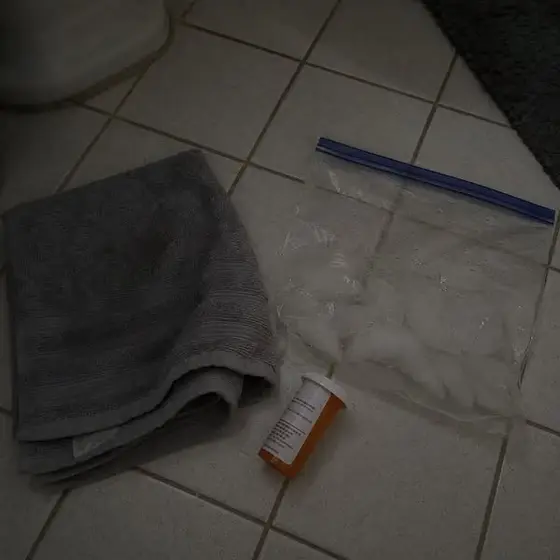
My husband has a system. Cold towel, folded in thirds, straight from the freezer in a Ziploc bag. He learned how to make it in year two of our marriage. I learned what it really meant in year six, when I realized he had stopped asking me why I was on the bathroom floor. I am 44 years old. I have had chronic migraines for twelve years. And if you are reading this, I don't need to explain the physical pain to you. You already know about the ice picks behind the eyes. You know about the light sensitivity. You know about the nausea. But the physical pain isn't the hardest part. The hardest part is watching the person you love adapt to your illness. In year one, when Marcus found me on the bathroom floor, he panicked. He wanted to call an ambulance. He paced the hallway. He was terrified. In year three, he stopped pacing. He would just come into the bathroom, sit on the edge of the bathtub in the dark, and put his hand on my ankle so I knew I wasn't alone. By year six, it was just logistics. He would step over me to get to the cabinet. He would say, "Cold or room temp?" I would say, "Cold." He would bring the Ziploc bag, place it on my neck, close the blinds, and quietly shut the door. He stopped asking if I was okay, because he knew the answer. He stopped buying concert tickets in advance, because he knew we would probably have to cancel. He stopped inviting people over for dinner, because the noise of a dinner party was a trigger I couldn't afford. The migraine didn't just take my days. It took our life. It shrunk our world down to the size of a dark bedroom and a quiet house. I tried to fix it. God, I tried. I have an Amazon order history that looks like a medical supply catalog. The weighted masks. The peppermint oils. The cooling caps that melted in twenty minutes. The $200 specialized pillows. I went to the neurologist. I took the topiramate that made me forget the names of my own coworkers. I took the triptans that made my chest feel tight. I paid $400 out of pocket every three months for Botox injections that worked for about four weeks before the attacks came creeping back. Nothing stopped the cycle. And every time a new treatment failed, I didn't just have to deal with my own disappointment. I had to watch Marcus try to hide his. Last November, we were supposed to go to his sister's wedding in Chicago. I had been dreading the flight for weeks. The pressure changes. The airport lights. The stress. Two days before the flight, the aura started. I was standing in the kitchen holding a coffee mug. The edges of my vision started to shimmer and blur. I put the mug down carefully on the counter. Marcus was at the sink. He turned around, looked at my face, and immediately reached for his phone to cancel the flights. He didn't sigh. He didn't complain. He just did it. And that was the moment that broke my heart. The absolute, resigned acceptance that this was just how our life was going to be forever. The thing came from a coworker. I work at a regional logistics firm. There is a woman on my floor named Marisol who I have known for 8 years and have never had lunch with because I do not have lunch, I have a sandwich at my desk because lunch is a migraine trigger if the room is loud. Marisol came over to my desk in February and put a small white box on my mouse pad. She said, "My sister-in-law had migraines. Try this. If it doesn't work give it back, I get the leftovers." She walked away. I sat there for the rest of the afternoon and I did not open the box because I was angry at it. I was angry the way you get angry when somebody nice gives you something you've already tried in 12 different forms. I have tried the magnesium. I have tried the riboflavin. I have tried the green light bulb. I have tried the peppermint roller. I have tried Botox in my forehead which did help some and which I cannot afford anymore. I did not need a small white box on my mouse pad. I took it home anyway because Marisol is the kind of person you do not throw away a gift from in front of her, even a small one, because she will know. I opened it at the kitchen table. It was a ring. A sleek, stainless steel ring. It came with a card the size of a business card that said NeuroCalm Ring by RogueReign, and a sentence about the pressure point on the inside of the index finger. I knew the pressure point. Anyone who has had migraines knows the pressure point. It is the LI4 meridian, the meaty bit between thumb and index finger, and you press on it during a migraine and it works for about 4 minutes and then your hand cramps from pressing it and you stop. The card explained that migraines aren't just random attacks—they are the result of a chronically irritated trigeminal nerve. The ring sits on the index finger and presses on the LI4 point continuously. That's it. That's the whole pitch. Stainless steel, perfectly positioned nodes, sits there. It uses the body's own "gate control" mechanism to calm the nerve and raise your pain threshold all day. Marcus is an engineer. He is the most skeptical person I know. I handed him the card and the ring and said, "Look at this." He read the card. He looked at the ring. He didn't say anything for a long time. Then he handed them back and said, "The mechanism is structurally sound. You have a nerve that's firing out of control. This applies continuous mechanical pressure to the access point of that nerve to interrupt the signal. It's not magic. It's mechanics." He paused. "How much is it?" "Thirty-nine dollars," I said, reading the website on the back of the card. He actually laughed. We had spent $400 on Botox. We had spent $1,200 on an ER visit when a migraine wouldn't break. "Put it on," he said. I put it on my right index finger. It looked like a premium piece of jewelry—heavy, polished, intentional. The pressure on the LI4 point was subtle but constant. I didn't say anything about it. I just wore it. The first week, I had a migraine. It was a bad one. I lay on the bathroom floor, Marcus brought the cold towel, and I felt the familiar, crushing weight of disappointment. Another failed experiment. But I didn't take the ring off. Because Marisol. The second week, I felt an attack coming on while I was at the grocery store. The familiar pressure behind the eyes. I braced myself. I hurried to the checkout. I got to the car and waited for the pain to hit. It didn't hit. The pressure just hovered there, dull and distant, and then slowly faded away. I drove home in complete silence, afraid that acknowledging it would break the spell. The third week, I had zero attacks. I did not tell anyone. I did not even let myself say the word "working" in my own head. I have done this before. I have had a "good month" before. I have had two in a row. Then it comes back. So I just kept logging the days in my app and not looking at the chart. The fourth week, I had zero attacks. It wasn't until week six that Marcus finally said something. We were sitting at the kitchen table on a Sunday morning. The sun was streaming through the window—the bright, harsh morning light that usually sent me running for the bedroom. He was watching me drink my coffee. "You haven't asked me to close the blinds," he said quietly. I looked at the window. I looked at him. "I haven't been on the floor in a month," I whispered. He reached across the table and took my hand. The hand with the silver ring on the index finger. He didn't say anything. He didn't have to. I could see the tension leaving his shoulders—a tension he had been carrying for six years. I am not going to tell you that this ring is a miracle cure. I do not use the word "cured" when it comes to my head. I am writing this eight months later. In the last eight months, I have had exactly four migraines. My baseline used to be fifteen a month. I still wear the NeuroCalm Ring 24/7. I shower in it. I sleep in it. It never stops applying that quiet, mechanical pressure to the nerve. It never stops keeping the threshold high. But the real result isn't the number of attack days I've saved. The real result is that Marcus doesn't check on me through the bathroom door anymore. The real result is that we bought non-refundable concert tickets for next month, and I am actually excited to go. The real result is that my illness is no longer the loudest thing in our marriage. If you are reading this, you know exactly what that bathroom floor feels like. You know what it feels like to watch your partner carry the weight of your pain. You have been disappointed so many times that you have trained yourself not to hope. I am not asking you to hope. I am asking you to try. The NeuroCalm Ring is $39. You can find it at roguereignstore.com/products/neurocalm-ring. You don't need a prescription. You don't need to argue with an insurance company. You just need to put it on your finger. If it doesn't work, you use their 30-Day Guarantee and get your money back. You lose nothing. But if it does work? If it calms the nerve the way it calmed mine? You get your life back. And your partner gets you back. Don't spend another year on the floor. https://roguereignstore.com/products/neurocalm-ring#shopify-section-template--28418723152247__main P.S. Last week, I opened the freezer to get some ice for a drink. The Ziploc bag with the folded cold towel was gone. Marcus had thrown it away. He didn't even tell me he did it. He just knew we didn't need it anymore. If you want that moment for yourself, go get the ring. You have nothing to lose but the pain.

InactiveJun 27, 26
I read this article about…

get.nuflos.com

I read this article about…

See details

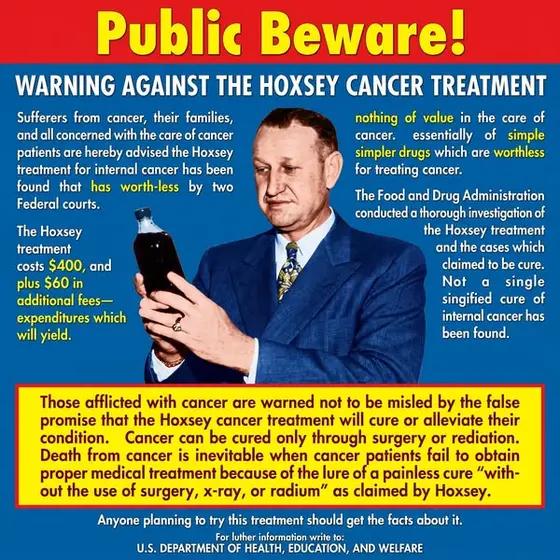
In 1956, the United States government printed warnings about a herbal formula and posted them in 46,000 post offices across the country. Every state. Every town. 46,000 buildings. Not for a drug. Not for a poison. For herbs. Herbs that had been used for centuries. Herbs that supported a system in your body your doctor has never mentioned — the system that controls your swelling, your stiffness, your inflammation, and your fatigue. The system she got 30 minutes of training on in four years of medical school. The man who used those herbs treated thousands of patients. Was arrested 100 times. Sued the medical establishment and won. Even his own prosecutor secretly used the herbs for his family — then switched sides and became his lawyer. They didn't ban the formula because it was dangerous. The AMA admitted it themselves: "He came into the community and got the business." And the reason you've never heard this story is the most infuriating part. In the mid-1800s, Hoxsey's family developed an herbal formula — a combination of plants that had been used for generations to support the body's ability to heal. They didn't invent the herbs. The herbs had existed long before them, documented across cultures, used by physicians and healers for centuries. The family just put them together. The formula worked well enough that Harry Hoxsey, the great-grandson, started treating people with it. Word spread. People came from other towns. Then other counties. Then other states. By the 1950s, Hoxsey's clinic in Dallas had become the largest privately owned center in the world. 8,000 patients a year. Clinics in 17 states. And that's when the problems started. Not because the herbs were hurting anyone. Not because patients were complaining. In fact, not a single patient ever testified against him. Not one. In decades of legal battles — not one patient stood up in court and said this man harmed me. The opposite happened. Every time Hoxsey was arrested, his patients showed up at the jail to demand his release. Senators endorsed him. Judges endorsed him. Even some doctors endorsed him. But none of that mattered. Because he was taking the medical establishment's business. The AMA came after him first. And when a leading AMA physician was asked years later why they'd fought Hoxsey so hard, he didn't talk about safety. He didn't talk about science. He said — and this is a direct quote from a published medical journal — "We must admit that we have never fought the homeopath on matters of principle; we fought him because he came into the community and got the business." Got the business! That's why they destroyed him. Not because the herbs were dangerous. Because they were competition. Harry Hoxsey was arrested over 100 times. Just in Dallas. More times than any person in U.S. medical history at that point. And here's the detail that should stop you cold. The prosecutor — the man whose job it was to arrest Hoxsey and shut him down — secretly brought his own brother to Hoxsey's clinic for treatment. In private. Away from the cameras and the courtrooms. Because his brother was sick and nothing else was working. The brother recovered. Thanks to Hoxsey! And the prosecutor quit his job and became Harry Hoxsey's defense lawyer. The man paid to destroy him became the man who defended him. Because the herbs worked. Even his enemies knew it. Hoxsey sued the Journal of the American Medical Association for libel and slander. He won. The jury agreed that the AMA had lied about him. They awarded damages. Two dollars. Yeah, you read that correctly - $2! Then in 1956, the FDA made its final move. They didn't just ban the formula. They launched a national campaign. Warnings printed and posted in 46,000 U.S. Post Offices. Every one of his clinics — all 17 states — padlocked. He was forced out of the country entirely. Ended up in Mexico, where his nurse quietly continued treating patients for decades. The herbs in his formula had been used for centuries before he was born. They'd continue growing in fields long after he was exiled. But for almost 70 years, the system made sure you'd never hear about them. Now here's what makes this personal. Three of the four herbs in Hoxsey's banned formula — Red Clover, Stillingia Root, and Prickly Ash Bark — all support a system inside your body that your doctor has almost certainly never mentioned. It's called the lymphatic system. I'd never heard the word until I was staring at my phone at 1 AM with swollen ankles and no answers. Three years of doctors. Three years of pills. Three years of "that's just aging." And not one of them — not ONE — ever said this word to me. Your body has two circulatory systems. Blood is the one you know about. Heart pumps it. You learned it in school. The second one clears everything your blood can't. The waste. The fluid. The dead cells. The inflammatory garbage your body produces every single day. If the lymphatic system doesn't move it out, it has nowhere to go. And here's what made me want to throw my phone across the room. It has no pump. Your heart beats 100,000 times a day whether you're awake or asleep. Your lymphatic system has nothing. It only moves when you move. When you breathe. When your muscles contract. And when it stalls, everything backs up. The swelling in your ankles every evening. The stiffness in your hands every morning. The puffiness in your face that makes you look like you've been crying even when you slept fine. The heaviness in your legs that turns a flight of stairs into something you have to plan for. The fatigue that sleep doesn't fix — because the problem isn't tiredness. It's a body filling up with waste it can't drain. That's not five problems. It's one system. Offline. For years. While my doctor — while YOUR doctor — handed us pills and said "stay active." And you want to know WHY they didn't catch it? Thirty minutes. That's how much lymphatic training doctors get in four years of medical school. Thirty minutes on the system that controls fluid balance, immune function, and inflammation in every organ in your body. A radiology journal called it "The Forgotten System." Not because it doesn't matter. Because there's no pharmaceutical money in a system that responds to herbs instead of prescriptions. The same herbs that were in Harry Hoxsey's formula. The formula that worked so well his own prosecutor switched sides. The formula the AMA fought because "he got the business." The formula the FDA banned and posted about in 46,000 post offices. The herbs didn't fail. They were buried. By people who couldn't profit from them. Here's what should make you furious. Doctors receive less than 30 minutes of lymphatic training in four years of medical school. Thirty minutes. On the system that controls fluid balance, immune function, and inflammation in every organ in your body. A radiology journal called it "The Forgotten System." Not because it doesn't matter. Because there's no pharmaceutical money in a system that responds to herbs and movement instead of prescriptions. And the herbs that support this system — the ones that clear the pathways, move the fluid, loosen the blockages, activate circulation — three of those herbs were in Harry Hoxsey's formula. The formula that worked so well his own prosecutor switched sides. The formula the AMA fought because "he got the business." The formula the FDA banned and posted about in 46,000 post offices. The herbs didn't fail. They were buried. By people who couldn't profit from them. And then there was a fourth herb that kept showing up in everything I read — one that wasn't in Hoxsey's formula but completed the picture. Cleavers. Herbalists have called it the "lymph broom" for centuries because it sweeps the lymphatic pathways clear. Published research. Documented in the British Herbal Pharmacopeia. Seeds found in archaeological sites thousands of years old. This wasn't some new supplement ingredient. This was ancient. Four herbs. Each one targeting a different part of the drainage system. Together, they cover the full pathway — loosening stagnation, clearing waste, moving fluid, activating circulation. They've existed for longer than modern medicine. Longer than the FDA. Longer than the AMA. And the system made sure you'd never hear about them. Because you can't patent a plant. And if you can't charge $500 a month for it, there's no incentive to tell you it exists. So they arrested the man who used them. Turned his own prosecutor into a secret patient. Won in court and got handed two dollars. Padlocked his clinics. Exiled him from the country. And went back to selling you ibuprofen. That was 1956. Almost 70 years ago. I found all of this at 1 AM on my phone. I wasn't looking for Harry Hoxsey. I wasn't looking for medical history. I was looking for why my body was swelling and nobody could tell me what was wrong. I'd typed "herbs for lymphatic drainage" into a search bar out of desperation — after three years of doctors, pills, and compression socks that didn't change anything. And the deeper I went, the more I kept seeing the same herbs come up. Red Clover. Stillingia. Prickly Ash. Over and over. In old herbal textbooks. In traditional formulas. In published pharmacopeias. And then I found Hoxsey's story. And I realized the herbs I'd been reading about — the ones that kept appearing in every lymphatic formula for centuries — were three of the four herbs in a formula that the FDA banned and a man was arrested 100 times for using. I sat there staring at my phone thinking — these herbs have been available this entire time. Growing in fields while I've been swelling up in doctor's offices. And the reason nobody told me is because a man used them 70 years ago and the industry couldn't let that stand. The herbs kept growing. They didn't need the FDA's permission. So I ordered the first lymphatic supplement I could find. Amazon. $16. One herb out of four. Dried powder in a capsule. Took it for three weeks. Nothing. I almost quit right there. Almost accepted this was just my life now — swelling, stiffening, shrinking. Another supplement that didn't work. Another dead end. But something bothered me. Everything I'd read said these herbs lose potency when dried and compressed into capsules. The traditional herbalists used liquid extracts for a reason — the active compounds, the iridoids, the flavonoids, they break down in powder form. I hadn't taken the real thing. I'd taken the gas station version and wondered why it didn't work. So I kept looking. All four herbs. Liquid extract. Together. The way they'd actually been used for centuries before anyone tried to press them into a pill. That's when I found Nuflos. Four herbs in a liquid dropper. Cleavers. Red Clover. Stillingia Root. Prickly Ash Bark. No sugar, no fillers, nothing artificial. A quarter teaspoon in water every morning. I checked every label I could find before I ordered. Nuflos was the only one that had all four in liquid form at real concentrations. Third party tested. 30-day money back guarantee — which is the only reason I tried, because at that point I didn't believe in supplements anymore. I believed in the herbs. I just didn't believe anyone was selling them the right way. Here's what happened when I took the right thing. First week — the bloating that had been my daily normal for years just went quiet. Like something inside me started moving that hadn't been moving. Not dramatic. Just different. Like a system coming back online after being off for years. Week two — I woke up and looked in the mirror and stopped. My face wasn't puffy. I could see my cheekbones for the first time in over a year. I stood there and touched my own face because the woman looking back at me looked like the woman I used to be. Week three — took my shoes off after work. No indentation. No swelling. My ankles looked like my ankles. I took a picture — I actually photographed my own ankles at 5 PM because I didn't think anyone would believe me. And something I wasn't expecting — I started sleeping through the night. For years I'd been up at 3 AM, legs aching, lying there for hours. By week three I was sleeping straight through. Didn't connect it to the drops at first. Thought I was just having a good stretch. But the good stretch didn't stop. Week four — walked up two flights of stairs without the railing. Without stopping. Without thinking about it. I stood at the top and realized I'd just done something I hadn't been able to do in over a year. My body just did it. Like it used to. Week eight — my sister visited. Hadn't seen me in three months. She looked at me for a long moment and said, "What are you doing differently? You look like yourself again." I told her about the herbs. About the lymphatic system. About Hoxsey and the arrests and the two-dollar verdict and the 46,000 post offices. About the prosecutor who secretly treated his own brother and then switched sides. She was quiet for a while. Then she said, "So the answer was there the whole time and nobody told us." That's the sentence I can't get out of my head. The answer was there the whole time. While I was swelling. While I was stiffening. While I was spending $160 a month on supplements that didn't work. While doctors told me "that's normal." While my body shut down one system at a time and nobody could explain why. The herbs were growing in fields. The way they've been growing for thousands of years. While the system that was supposed to help me had 30 minutes of training on the thing that was actually failing — and 70 years of making sure I'd never find the herbs that could support it. If your ankles are swelling. If your hands are stiff every morning. If your face is puffy. If you're exhausted and sleep doesn't fix it. If your body feels heavier and slower every year and nobody can tell you why. That's not aging. That's a drainage system your doctor was never taught about. And the herbs that support it have existed for centuries — they were just buried by people who couldn't profit from them. Nuflos. Four herbs. A quarter teaspoon in your morning water. Clinically backed. 30-day money back guarantee — full refund if you feel nothing. Link's below. https://get.nuflos.com/products/lymphatic-drops-generic P.S. — The prosecutor who arrested Harry Hoxsey a hundred times brought his own brother to Hoxsey's clinic in secret. When the brother recovered, the prosecutor quit and became Hoxsey's lawyer. Think about that. The man PAID to destroy these herbs used them to save his own family. And the system banned them anyway. That was 70 years ago. You're reading about them right now on a screen that could be taken down tomorrow. Screenshot this. Send it to every woman you know who's swelling up while her doctor says "that's normal." This information has been buried once. Don't let it happen again. P.P.S — I don't care if you buy Nuflos or find another brand. What I care about is that you stop taking pills for a drainage problem. Your body has been filling up with waste it can't move for years. The herbs that support the system responsible for moving it have been growing in fields since before your doctor's medical school existed. They survived 100 arrests. They survived a national ban. They survived 70 years of silence. They're still here. The only question is how much longer you're going to make your body wait.

Track Carber and get alerts for new ads

Create a free account to follow brands, save ads and search the full library.