PixelSpyer

Blood Pressure Secrets ad: Support stamina and heart health every day

Support stamina and heart health every day
Blood Pressure Secrets

Health/beauty, 7.3K followers, 5 ads in library

InactiveHealth & SupplementsImageLibrary ID 1968293410473151
Launched Jun 26, 2026Run time unknown

New ads are still being tested; watch whether it survives past 30 days.

Ad copy

Support stamina and heart health every day

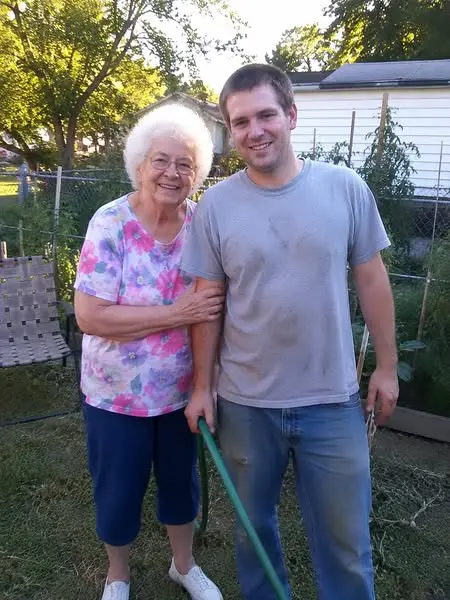
Everyone figured I looked after my 85-year-old neighbor for the inheritance. When she died, she left me nothing. The next morning, her lawyer knocked. "She left you one thing," he said. "She was very clear you couldn't have it until today, the day after the reading." Her name was Dorothy Rhode. Everyone on the block called her Mrs. Rhode. Nobody called her Dorothy except the mailman, and she didn't like the mailman. I was nineteen, just aged out of foster care. No family, no one. I'd been renting the basement apartment in the duplex next to her house for two months when she knocked on my door one Saturday morning and said: "You. The tall one. My rain gutters are full of leaves and I'm not climbing a ladder at my age. I'll pay you forty dollars." That was the beginning. She didn't need a caretaker. She needed someone to do the things her body wouldn't let her do anymore. Gutters, storm windows, the heavy bags of salt for the water softener. One afternoon she watched me reset a sticking hinge on her back door and said: "You've got a craftsman's hands. Somebody should've put you in a trade." Nobody had ever said a thing like that to me. Nobody had ever looked at the one thing I was good at and given it a name. She was sharp, and funny in a way that caught you off guard. She'd say something devastating with a completely straight face, then go back to watering her tomatoes like nothing happened. She insisted on cooking me dinner every Tuesday and Thursday. I told her she didn't have to do that. She told me she wasn't asking. "You eat like a boy who raised himself," she said once, watching me microwave a gas station burrito through her kitchen window. "Come over at six. Bring nothing. Don't be late." I came over at six, brought nothing, and wasn't late. For four years. Every Tuesday and Thursday. Pot roast, chicken and dumplings, a meatloaf she swore was Harold's recipe but had changed so much he wouldn't have recognized it. She talked about Harold sometimes. Her husband. Dead eleven years by the time I met her. Stroke at seventy-one. She kept his photo on the mantle and his reading glasses on the side table next to his chair, and never moved either one in the four years I knew her. I sorted her pills every Sunday night. The plastic Monday-through-Sunday organizer, the six prescriptions, the calcium supplement she took with dinner. I'd sit at her kitchen table on Sunday evenings and fill the little compartments while she told me stories about the neighborhood, about the old days, about the world. I thought the arrangement was simple. She needed help. I needed something I couldn't name. She gave me forty dollars for the gutters and what she really gave me was a kitchen table to sit at and a person who expected me to show up. In four years in the foster system nobody ever expected me to show up. Mrs. Rhode expected it. And not showing up was not an option. I pushed it exactly once. "James. You're three minutes late." "I was." "You were across the street. I watched you sit in your car for four minutes looking at your phone. Come in. The chicken is getting dry." It was on one of those Sunday evenings that I told her the one thing I knew about the family that gave me up. That the men in it died young. Strokes. My father at forty-four. His father before him, even younger. I didn't know much else about them. Not a face, not a town, not a reason. But I knew that. It was the only inheritance they ever left me. She didn't say anything for a long moment. Just set down the pill she was holding and looked at me. "Harold's doctor told him his blood pressure was perfect," she said. "Right up until it wasn't." She picked the pill back up. Put it in the compartment. Didn't say another word about it that night. I didn't think anything of it. I didn't know she was already turning it over. She was the closest thing to a mother I'd ever had. I didn't say that to her. I think she knew. The diagnosis came that spring. Pancreatic. The doctor gave her a few months, and she met it the way she met everything. A small nod, no drama, like she'd been handed a weather forecast. Then it was fast. The kind of fast that doesn't give you time to prepare. I drove her to the hospital. I sat in the waiting room. I went to her house and sorted her pills into the organizer even though she wasn't there to take them because I didn't know what else to do with my hands. She died on a Thursday. One of our dinner nights. Eighty-nine years old. I found out about the will from her lawyer. He called me and said there'd be a reading. That I was invited. He said it in a way that made me think being invited meant something. The lawyer's office was small. Wood paneling. A conference table that seated eight. I sat at the end. There were four of us. Me. A woman from the church. Mrs. Rhode had been a member for forty years. A representative from a children's charity. And a woman I'd never seen before, mid-forties, wearing a gray blazer and checking her phone. The lawyer opened the folder. The house, a three-bedroom colonial Mrs. Rhode and Harold had owned since 1971, went to the children's charity. To be sold, proceeds to the organization. The savings account, I didn't know how much, the lawyer didn't say, went to the church. All of it. Building fund. The jewelry. Harold's mother's ring, a pearl necklace Mrs. Rhode wore to church every Sunday, two bracelets I'd seen in the velvet box on her dresser. Went to the woman in the gray blazer. A great-niece. I learned later she'd visited twice in four years. Once at Christmas. Once when Mrs. Rhode was already in the hospital. That was it. The lawyer closed the folder. The church woman shook his hand. The great-niece signed something and left without looking at me. I sat there. Four years. Every gutter, every storm window, every bag of salt. Every Tuesday and Thursday. Every Sunday evening sorting her pills at her kitchen table while she told me about the neighborhood and the world. Nothing. Not a sentence. Not a mention. Not my name anywhere in the document. I drove home with my hands tight on the wheel and my jaw clenched and I told myself I didn't do it for the money. I told myself it wasn't about that. And it wasn't about the money. It was about the fact that she didn't think of me at all. Four years of showing up and she walked out of this life without putting my name on a single piece of paper. I sat in my apartment that night and I was twenty-three years old and I had no one again. The knock came at 8:15 the next morning. Her lawyer. Standing on my doorstep in a coat and tie, holding something under his arm. A dented metal lunchbox. Green. The paint chipped at the corners. The kind of lunchbox a man would carry to a factory in 1965. "Mrs. Rhode left specific instructions," he said. "This was to be delivered to you separately. Not at the reading. The morning after." He held it out. "She was very clear about the timing." I took it. It was heavier than it looked. "There's a letter inside," he said. "And a key. She asked that I tell you the key opens a safe deposit box at First National on Carroll Street. Box 7414. She added your name to the access list months ago. Long before the end." He paused. "She also asked me to tell you, and these are her words. 'He's going to be angry. Tell him to read the letter before he does anything stupid with the key.'" That sounded exactly like her. I closed the door. Set the lunchbox on my kitchen table. Sat down and stared at it. I didn't open it. I was too angry. Too raw. I'd spent the night convincing myself I meant nothing to her, and now here was this object. Harold's lunchbox, the one from the photo on her mantle. Inside was a letter I didn't want to read. What if it made it worse? What if it was an apology? What if it was an explanation that didn't explain anything? I picked it up. Carried it to the closet in my hallway. Set it on the top shelf behind a box of winter clothes. Closed the door. I was twenty-three. I was grieving. And yes, I was angry at a dead woman for not loving me the way I thought she had. But anger burns off. A year, maybe two, and I wasn't angry at her anymore. That's not what kept the box shut for thirty years. Fear did. Because part of me was afraid of what it was about. It was Harold's, after all, and Harold had been taken by a stroke. And I was the one who'd sat at Mrs. Rhode's table and told her the only thing I knew about my own blood: that it takes the men who carry it, and it takes them young. Whatever she'd left me in that box was about how I end. And for thirty years, I wasn't ready to look at that. So it moved with me. Top shelf, behind the winter coats, through every apartment of my life. I never took it down. Not once. I didn't open that lunchbox for thirty years. You don't really notice the years passing until you catch your reflection and wonder, for the first time, if you've started to look like the father you never saw. I became what Mrs. Rhode said I'd become. I went into a trade. Finish carpentry first, then furniture. The slow kind, the kind almost nobody orders anymore. Hand-cut joinery. Dovetails you fit by eye. Tables and chests built to outlast the people who bought them. The orphan who owned nothing made a living building things other families would keep for a hundred years. My hands did that. The same hands Mrs. Rhode had given a name to, over a sticking hinge, when I was nineteen. And six years ago a doctor took the shop away from me. He just never told me that's what he was doing. I'd walked into his office at forty-seven and told him the same thing I'd once told Mrs. Rhode across her kitchen table. That the men in my family died young, that it was strokes, that it was the one thing I knew about my own blood. I thought I was being responsible. He ran a panel, checked my pressure twice, and put me on Lisinopril. The same kind of drug Harold had taken for years. I didn't know that then. Harold never crossed my mind. I just took the pill the way you're supposed to, every morning, and trusted the man in the coat. The first thing to come was the cough. Three months in. A dry, nagging cough that wouldn't leave my throat. Wouldn't break loose. Wouldn't go quiet. I'd be measuring a board and have to set the pencil down to cough into my sleeve. Customers in the shop would look up from the chair and ask if I was okay. I told them allergies. I told myself allergies. The doctor told me allergies too, when I finally asked him, and offered me something for it. The cough stayed. Then it was the ankles. Year two, my work boots stopped lacing all the way. The leather wouldn't close around the swelling by the end of the day. I started leaving the top eyelets open. Then the next pair. Then I bought a wider boot. By the third year I was wearing the wider boot loose, with the laces tied halfway up the foot, and pretending I'd just changed my preference. Then came the dizziness. I'd bend over the workbench to set a piece of stock, stand up, and the room would tilt for half a second. Just long enough for me to grab the edge of the bench and wait it out. The first time it happened I thought I'd skipped breakfast. Then it kept happening on full stomachs. Then it started happening when I crouched to pick up a tool, when I climbed down off a stool to walk across the shop, when I straightened up after stooping over a chair. Curtis, my foreman, started leaving things at waist height for me without saying anything about it. And there was a fog. It came down in the afternoons. I'd lose the back half of a sentence. Walk into the shop and forget what I'd come in for. Measure a board twice because I couldn't trust the first number. I blamed all of it on age. I blamed everything on age. The doctor had taught me how. Because I did go to him. I told him about the cough, the swelling, the dizziness. He looked at my chart instead of my body and told me my pressure had never looked better. 124 over 78. "This is exactly where we want you," he said. The cough was a common side effect. Manageable. The swelling was probably fluid retention, not unusual at my age. The dizziness, well, was I drinking enough water? He could bump the dose if I wanted, get the pressure even lower. He never once looked at my boots. Then came the morning it stopped being something I could tell myself a story about. I was at the back bench, cutting a tenon on a leg for a Windsor chair. The dust hood was running. I bent over to mark a line on the bottom of the stock, stood up too fast, and the shop tilted hard. Not for half a second. For three. I grabbed for the edge of the bench and my hand caught the corner wrong, and my legs went out from under me, and I went down sideways against the bench and put my forehead into the vise on the way down. Curtis got me up. There was blood in my eye. The cut was small, an inch maybe, but the impact had rung my head like a bell and I sat on a stool for forty minutes with a wet rag against my forehead before I could see straight enough to drive. I stood there afterward and looked at my own shop like it belonged to a stranger. And for the first time in two years I let myself think the thing I'd been holding off. It was happening. The thing in my blood. The thing that took the men in my family young, my father, his father, faces I never even saw. It had found me. I was fifty-three years old and the shop, the only thing I'd ever owned that was worth a damn, was becoming a place I might die in. I didn't go in the next day. Or the day after. And that night, for the first time in thirty years, I thought about the lunchbox. The old woman who'd left me something I was always too afraid to open. Who'd looked at me across her kitchen table and said Harold's pressure was perfect right up until it wasn't. Who'd spent her dying months on something she never told me about, and left me a key. She'd known something. And I'd been so afraid of what it said about how I end that I'd never found out what it was. While the thing she was trying to warn me about walked into my shop and picked up exactly where my father left off. I'd carried her answer on the top shelf of every closet I'd owned for thirty years. Too scared to look at it. While the drug took my shop one morning at a time. I went to the closet. I reached past the winter coats, past thirty years of boxes I'd never unpacked. It was still there. Dusty. The green paint still chipped. I carried it to my own kitchen table and sat down the way I used to at hers on Sunday nights. The latch was stiff. I had to work it with my thumb. It opened with a click that echoed off the walls. Inside: a sealed envelope, yellowed at the edges. My name on the front in her handwriting. And a key. Small. Brass. Taped to an index card that read: First National. Carroll Street. Box 7414. I picked up the envelope. Slid my finger under the seal. The paper tore unevenly. A stack of pages. Her handwriting filling every line. James, If you're reading this, I'm gone. And if I know you, and I do, better than you ever let me, you didn't read it right away. You took the box, you got angry, and you put it somewhere high and dark and told yourself you'd never open it. So I don't know what day it is for you. Maybe it's the morning after the reading. Maybe it's been twenty years. Maybe more. Knowing you, it's been a long time, and something finally happened that made you climb up and take it down. If that's it. If it's been years, if you're tired in a way that frightens you, if there's a cough that won't quit and ankles that won't fit your boots and a head that spins when you stand up. Then you already know why I wrote this. You don't need me to tell you what's coming. You're living it. The way Harold lived it. So let me tell you about Harold. Quickly. Because you don't have the time for the long version, and neither did he. My husband took a pill for his blood pressure every morning for fourteen years. Never missed a dose. Every six months a doctor checked the cuff, smiled, shook his hand, and sent him home, and the number was always beautiful. And the whole time, the man was disappearing. First the cough. A dry one that wouldn't quit. He'd cough between bites of dinner for a year before either of us thought it might be anything. Then the swelling in his feet. Then the dizziness when he stood up. Then the days he was too tired to do the things he'd done his whole life. Then his mind, the end of his own sentences going missing. The doctor called it age. Called it manageable. Called it anything but the pill. Fourteen years of perfect numbers. I found him on the kitchen floor on a Saturday morning with the coffee still dripping. The cuff at the hospital that day, after they couldn't bring him back, read 120 over 76. Right where his doctor wanted him. I buried him believing it was bad luck. Genetics. The things people tell you. And then one Sunday you sat at my table and told me the one thing you knew about your own blood. That it takes the men in your family young, that it's their strokes. And I knew. I'd just watched it. I knew exactly what was coming for you, because I'd already lost a man to it. I wasn't fast enough for Harold. I decided that night I would be fast enough for you. So I spent the last months I had finding out what really killed him. Not the version the doctor gave me, the real one. It's in the safe deposit box. Every study, every page, written down by people far smarter than an old woman with a library card and a stubborn streak. I couldn't fit it in a lunchbox. And if I'm honest, I knew that if I handed you a folder of medical studies you'd bury it in a closet faster than you'd bury this. So I made you come find it. When you read it, you'll understand the thing I can't explain in a letter. That the number everyone kept watching was never what was killing him. They were all looking at the wrong thing. Harold's doctor. My Harold. Me. All of us staring at a number while the real thing went on underneath, where nobody was looking. There's a checklist in the box too. Five things. When you go to find what those studies point to, follow it exactly. Don't skip a line, and don't settle for the cheap one to save a few dollars. The cheap one is dead before it ever reaches you, and you'll have thrown away the one thing I'm trying to leave you. Promise me that much. Somewhere along the way a doctor handed you a pill for your blood pressure and called it the gold standard. Maybe you've been taking it for years now, the way Harold did, trusting it the way we all did. If you have, I'm not angry, and you shouldn't be either. We were all trusting the wrong thing. But now you'll know. Read what's in that box before you trust that pill one more day. I love you like you were my own. Dorothy I read it three times. Then I put my head on the kitchen table and I cried. Not the angry crying of thirty years ago, the night I'd buried the box in a closet. A different kind. The kind that comes when you find out someone saw you, really saw you, and you never knew it. The kind that comes thirty years too late. She hadn't forgotten me. She'd seen me more clearly than anyone ever had. Not the way you see a neighbor, or a boy who does your gutters. The way you see your own. I'd sat at that table once and told her the single thing I knew about my blood, and where everyone else in my life had heard a sad little fact and moved on, she'd heard a countdown. She'd already buried a husband to the same clock. And instead of looking away, she spent the months she had left, dying, in a library, so that the kid nobody had ever fought for would have something to fight with. Nobody had ever done that for me. Nobody had ever looked at what was coming for me and stood in front of it. And she'd been right. About all of it. Right that a doctor would hand me that pill one day and call it the gold standard. Right that I'd trust him and swallow it. Right that the cough and the swelling and the dizziness would come for me the way they came for Harold. Right, even, that I'd be too scared to open her box until it was nearly too late. She wrote that letter knowing I'd let it sit for years, because she knew me better than I knew myself. Thirty years. The answer had been on a shelf in my own closet for thirty years, while the drug did exactly what she said it would. One morning at a time. I didn't sleep. By morning I'd read it so many times I could have recited it, and at nine I was standing outside First National on Carroll Street with a brass key in my hand and thirty years of dust still on the lunchbox in my passenger seat. Showed my ID. They looked up the box. My name was on the access list, just like the lawyer said. Added thirty years ago, by a woman who'd been dead almost as long, who'd walked into this same bank while she was dying and put my name on a steel drawer because she believed I'd come for it eventually. She was right about that, too. Box 7414 was small. Inside it, one manila folder, thick, held shut with a rubber band that snapped the second I touched it. Studies. Printed off library computers, the edges gone soft. Some highlighted yellow, some pink. And in the margins, her handwriting. The same steady hand as the letter, but smaller, more crowded, like she was running out of paper and time at the same rate. I carried it to my car meaning to drive home and read it there. I didn't make it out of the parking lot. The first page she'd marked wasn't about what I expected. I expected blood pressure too high. A number too big. That's the whole story anyone had ever told me. Harold's doctor, my doctor, the commercials. That's not what the study was about. It was about what's actually happening inside the blood vessels of a man whose number looks fine. She'd highlighted one line and written beside it, pressed hard: THIS. This is what happened to Harold. Your arteries are supposed to be flexible. Picture a garden hose with give in it. When water surges through, the hose flexes. Absorbs the pressure, releases it. That flex is how blood pressure regulates itself, all day long, without you ever thinking about it. After fifty, the hose gets stiff. Why? Same reason a rubber hose left in the sun for a year gets stiff. Slow chemistry, eating at the material. Inside the body, the studies kept calling it oxidation. The same word as rust on a fender. The same thing that happens to a sliced apple on the counter. Cut one in the morning and by lunch the face of it has gone brown and soft, and nobody added a thing to it. The air did that. Oxidation did that. Inside Harold, that same slow chemistry was eating the lining of his arteries. Year after year. The lining lost its flex. The hose hardened. Same amount of blood, but the hose couldn't give. So the pressure had to go up just to push the same blood through. That's what high blood pressure actually is. Not a number. A hose that lost its give. And the cuff on your arm, the one they squeeze every six months, doesn't measure any of that. It measures the pressure. It says nothing about the hose. The hose can be cracking from the inside while the cuff says fine. You can have a beautiful number and stiffening arteries in the same body. Harold did. For fourteen years. In the margin she'd written: The number was the cover of the book. Nobody ever read what was inside. The next study answered the question that had been sitting in my chest since the letter. If the number was beautiful, why didn't the pill save him? Because the pill never touched the hose. A blood pressure pill like the one Harold took, the same kind the doctor put me on, works by forcing the hose open with chemistry. It blocks the body's natural signal that tells vessels to squeeze, so they open whether they're capable of it or not. The cuff number drops. The doctor is happy. But the hose is still stiff. The damage to the lining is still happening. The pill is just overriding it. Like turning up the water at the main valve to push past a kink in the line. You haven't fixed the kink. You've just forced past it. That's why people on these pills cough. Why their ankles swell. Why they get dizzy standing up. The pill is forcing the body to do something the body can't naturally do anymore. The body fights back. The doctor calls the fighting back side effects. Mrs. Rhode had written in the margin: not side effects. The body telling the truth. She'd read past the standard pill, too. There were pages on the things people reach for when they want to do it naturally. Hibiscus tea. Garlic supplements. Standard beetroot powder. A line drawn through every one, with a note on why. Most of them work the same way the pill does, just gentler. They add a signal that tells vessels to relax. The problem is the vessels are too stiff to respond to the signal. It's like blowing more air into a balloon that's hardened in the sun for a year. The signal is there. The receivers are damaged. The balloon won't expand because the rubber is gone. By the bottom of that stack, Mrs. Rhode had quietly walked me to the only place the road could go. And she'd done it without naming a cure. She'd done something smarter. She'd made the problem name its own answer. If the killer wasn't the pressure itself but the slow oxidation eating the lining underneath, then forcing the pressure down was never going to be enough. For anyone. What a man like Harold actually needed was something that did two things at once, and nothing on that shelf could do either. One. It had to stop the oxidation itself. Reach the lining of the vessels and keep it from being eaten in the first place. Not force the pressure down. Let the hose heal. Two. It had to do that without forcing anything. Without overriding signals the body needs. Without the cough and the swelling and the dizziness that come from chemical pushing. Stop the rust. Let the hose heal. That was the whole specification, and she'd crystallized it in the margin in four words: Stop the rust. Free the flex. I had no idea such a thing existed. Mrs. Rhode already knew it did. She'd just made me earn the answer one page at a time, the way she earned everything. I turned the page expecting another dead end. Instead I found the thing that met both lines of her specification, and a margin note that just said: Here. This is it. It had a name I'd never heard. Betalains. The deep red pigment that gives a beet its color. The same stain that won't scrub off your hands or your cutting board. That stain, it turned out, is one of the most selective rust-fighters anyone has ever measured. Most things people call antioxidants work like a carpet bomb. They flood the body and knock out every loose radical they touch, including the ones you need to fight off infection. That's why throwing more of them at the problem never did much. You can't blanket-bomb your own bloodstream and expect it to go well. Betalains don't do that. They hunt one specific kind of damage. The exact rusting reaction that eats the lining of the blood vessels. And they neutralize it, converting it to plain water, while leaving the radicals your body actually needs alone. A smart missile instead of a carpet bomb. That was the first line of her spec. Stop the rust. Betalains hit it dead center. And the second line. Free the flex. Once the oxidation stops landing on the vessel lining, the lining starts to heal on its own. The hose softens. The pressure normalizes by the body's own regulation. No forcing. No override. No cough, no swelling, no dizziness. The body doing what it was built to do, once the damage stops. Two things at once. The exact two things she'd written that nothing else could do. There was proof, and she'd marked the hardest number on the page. A twelve-week clinical trial: people taking concentrated betalains saw their systolic pressure drop an average of 8 points and their diastolic drop 5. But that wasn't the line she'd underlined twice. The line she underlined was the vessel flexibility measurement, the one that tracks how much give the arteries have. It improved in nearly every patient. Beside it: Not about forcing the pressure down. About letting the hose do its own job again. I kept waiting for the catch. Some compound you could only get by prescription. Some name I'd never be able to find or afford. There wasn't one. The richest source of betalains on earth was something I'd pushed a cart past a thousand times. A beet. Which is where, if you didn't know better, you'd get this exactly wrong. And Mrs. Rhode had circled the trap in heavy ink so I couldn't. Because almost none of the beetroot you can actually buy will do a single thing for you, and for two separate reasons. The first is the beet itself. The common beet, the one in every store, in every cheap capsule, has been bred for more than a hundred years for one trait: sugar. Sweeter, sweeter, sweeter, season after season, until the thing that made it medicine got bred right out of it. The beet that used to be medicine became candy. The old heirloom strain, the one nobody bothered to sweeten, still carries close to ten times the betalains of the grocery beet. But you'd never know to ask for it, because the label just says "beet." The second is heat. Betalains are fragile, and heat tears them apart. Spray-drying, high-temperature processing, the fast cheap way every commodity supplement gets made. All of it cooks the betalains down to nothing before the bottle is ever sealed. What's left is a brown powder she had a name for in the margin: red dust. Dead before you buy it. The color is the tell. Real betalains are deep crimson. Cook them and they go a dull, lifeless brown. So most of what calls itself beetroot is either candy or dust. Sugar-bred, or heat-killed, or both. You could swallow it every morning for the rest of your life and never come within reach of the thing in the studies. That was when I reached the back of the folder and found the last thing she'd left in it. Not a study. An index card, clipped to the inside cover, where she'd buried it on purpose. Because she knew me, and she knew that if she put it on top I'd skip the reading and run straight to the shopping. Block letters. Underlined twice: JAMES. FOLLOW THIS. DON'T SKIP A LINE. 1. Heirloom strain. The Blutwurzel beet. Not the grocery beet. They bred the medicine out of that one a century ago to make it sweet. The old strain carries ten times what the common one does. 2. Shade-dried, never heat-processed. Heat kills it. If it's been spray-dried or cooked, it's red dust, and it was dead before it reached you. 3. At least 1,300 mg a capsule. That's the dose in the studies that worked. Most sell you a fraction and hope you don't check. 4. A Certificate of Analysis. A real lab, testing a real batch, publishing exactly what's inside. The betalain content, the purity, the metals. If they won't show you what's in it, they're hiding what isn't. 5. Trust the lab, not the reviews. Anyone can buy five stars. Nobody can fake a number on a lab sheet. That was Mrs. Rhode. Dying in a library, and still she'd boiled four months of work down to a grocery list and warned me not to come home with the wrong thing. On the back of the card, smaller, like she'd added it last, two more lines. The first: too late for Harold. Scratched out, pressed so hard the pen tore the card. Under it, the one she let stand: In time for you. Don't waste it. She'd done all of this in the last four months of her life. Dying. Printing studies off a library computer, asking strangers to explain words she'd never heard, writing it out by hand for one person who wouldn't open the box for thirty years. I closed the folder and held it against my chest in that parking lot, and thirty years of believing she'd left me nothing finally came apart. She didn't leave me nothing. She left me everything. I went home and did what any man in my position would do. I ignored the checklist. Not completely. I read it. I understood it. I set it on the kitchen table next to the folder and told myself I'd follow it to the letter. But that same night I found a bottle of beetroot capsules online. Twenty-two dollars, four and a half stars, two thousand reviews. And I ordered it, because I'm the kind of man who buys the first thing he finds even when a dead woman has told him, in writing, not to. Mrs. Rhode knew me better than I knew myself. The capsules came in three days. Small. Cheap. I swallowed two the next morning and waited. For the cough to ease. For the swelling to come down. For any sign of the man the studies said I could get back. Nothing. The next morning, nothing. The morning after that, nothing. No change in the cough. No change in the swelling. Nothing that felt any different from the cheap multivitamins I'd started and quit a dozen times before. I gave it two and a half weeks. Every morning. Waiting. It never came. Then one night I was sitting at the kitchen table staring at the bottle, and her index card was lying right there beside it. Where it had been the whole time. I picked it up and went down it line by line, and the bottle failed before I reached the bottom. I twisted a capsule open over a white saucer. And there it was. A dull, brick-brown powder, not the deep crimson she'd described on every page of those studies. The red dust. Heat-killed, dead before it ever reached me. I read the rest of the card anyway. The label said only "beet root powder." No strain, the sugar-bred grocery beet she'd warned me about. Just 500 milligrams where the studies used 1,300, and even that buried in a "proprietary blend." No certificate of analysis anywhere. And I'd bought the whole thing on four and a half stars, the one thing her last line told me never to trust. Five rules. The cheap bottle failed every one. I'd spent two and a half weeks swallowing a product a dying woman had told me, in advance, would do nothing. Because she'd watched me long enough to know the first thing I'd do with her checklist was set it down and buy the wrong thing anyway. Fifty-three years old, and still the same kid trying to fix a gutter with the wrong screws. I threw the bottle in the trash and picked the card back up. This time I read it like my life depended on it. Because by now I understood that it did. Then I did what I should have done from the start. I went through every beetroot supplement I could find, one at a time, against her five rules. And one at a time, the whole shelf came up short. I crossed off every last one. Exactly the way she would have. Then I found the one that passed. Rosabella. Heirloom Blutwurzel beetroot. The old strain, saved by hand for a hundred and fifty years, the one nobody ever bred the medicine out of. Rule one. Grown by Amish families in Lancaster County, hand-harvested after the first frost and shade-dried at low temperature, so the betalains reach the capsule deep crimson and alive instead of cooked to dust. Rule two. 1,300 milligrams a capsule. The exact dose in the studies that worked. Rule three. A certificate of analysis published right on their site. The betalain content, the purity, the heavy-metal screening, all of it third-party tested and posted for anyone to read. Rules four and five. Every line on her card. Check, check, check, check, check. I could almost hear her. See? Was that so hard? It cost more than the bottle I'd thrown away. Of course it did. She hadn't sent me to a bank vault to save a few dollars. When it came, I knew before I ever swallowed one. I twisted a capsule open over the same white saucer I'd used for the cheap one. Where that powder had been a dull, dead brown, this was deep crimson, almost violet, and the second a drop of water touched it, it bled red across the dish like a fresh cut. A completely different thing, in every way that mattered. The thing she spent the last four months of her life making sure I'd find. I made two decisions at that kitchen table, and I made them in the same breath. The first was to start the Rosabella. The second was harder, and it was the one Mrs. Rhode had been pointing at for thirty years without ever quite saying it out loud. I stopped taking the Lisinopril. Six years I'd swallowed that pill every morning on faith. Six years it had been forcing my body to do what it could no longer naturally do, and charging me a cough, two boot sizes, and a fall in the shop for the trouble. I was done handing it my mornings. If the studies in that folder were right, and every page of my own body said they were, then the pill had never been protecting me from anything. It was overriding a body that had stopped working underneath, and the override was what was costing me my life. I won't pretend that's an easy decision, or tell you to make it without looking a doctor in the eye first. I'd earned mine with two and a half weeks, a folder full of research, and thirty years of a dead woman's work. But I made it. I pushed the orange bottle to the back of a drawer and shook two crimson capsules into my palm instead. Twenty minutes. That's when I felt it. A lift. A clarity, like someone had wiped a film off a window I didn't know was dirty. The fog that fell every afternoon, that had been falling for years. It just wasn't there. My head was clear. Sharp. Present in a way I'd forgotten was supposed to be normal. I told myself it was placebo. But I'd swallowed the cheap capsules seventeen mornings straight and felt exactly nothing, and this was not nothing. This was real. I started taking my own pressure that morning. Bought a cuff at the pharmacy on the way to the shop. Same time every day, sitting in the same chair at my kitchen table. Week one. The cough went quiet for hours at a stretch. Then for a whole afternoon. By Friday I realized I hadn't coughed once in the shop since lunch. Cuff reading at the end of week one: 142 over 88. Off the pill entirely. Week two. The swelling started going down. I noticed it when I went to put my boots on Monday morning and the laces tied without a fight for the first time in three years. I sat on the bench in the front hall and looked at the laces and didn't move for a while. Cuff at the end of week two: 134 over 84. Week three. No dizziness when I stood up. None. I tested it on purpose. Bent over to pick up a dropped screw in the shop, stood up fast, waited for the tilt. It didn't come. I did it again. Nothing. Cuff at the end of week three: 128 over 80. In the fifth week I went out to the shop and stood in front of the workbench where I'd put my head into the vise. I bent down to pick up a piece of stock. Stood up. The shop held steady. I picked up a chisel and went back to the Windsor chair I'd left half-finished six weeks before, and I worked through the afternoon and into the evening, and when Curtis turned out the lights and went home at eight I was still cutting. It took me two more weeks of evenings, but I finished that chair. Cut new stock for the parts I'd ruined the morning I went down. Did the joinery by hand, the way I'd done it for thirty years. When I delivered it I stood in the customer's hallway and watched her look at it. The first piece I'd finished in three months. And I had to sit down in her front room and ask for a glass of water because the last time my body had let me do work like that, I'd still believed the pill was keeping me alive. In the eighth week I made an appointment with my doctor. I didn't tell him why. Just said I wanted a check. He came in, asked the usual questions, wrapped the cuff. Pumped it. Watched the screen. Frowned. Released. Pumped it again. A third time. "122 over 76, James." He pulled up the chart. Twelve weeks earlier I'd been at 148 over 94 on the prescription. Today, 122 over 76, off the pill entirely. The kind of numbers a man twenty years younger walks in with. He sat back. "James. Your pressure is better than it's been in a decade. What have you been doing?" So I told him. The beetroot. The strain. The dose. And that I'd stopped the Lisinopril eight weeks ago. I braced for the lecture. The warning about quitting a prescribed drug. It didn't come. He looked at the screen, then at the man in front of it. For the first time in six years of appointments, he actually looked at me. At my hands resting easy on my knees, at the swelling gone from my face, at a man sitting up in the chair instead of folding down into it. Then he told me something I haven't been able to forget. He said there is no standard test for what actually changed underneath. The cuff measures the pressure in the line. Nothing on the standard panel measures the condition of the vessel walls themselves. The flexibility. The damage to the lining. The stiffness underneath. That, he said, is why people with perfect cuff readings still have strokes. The number is the smoke. Nothing routine measures the fire. He said it twice. Then he told me he was not putting me back on Lisinopril. He told me whatever I was doing, to keep doing it. He never said the word "supplement." Didn't endorse it. Just shook his head slow, the way a man shakes his head at something that won't line up with everything he was taught. For six years he'd watched my chart and called me fine while my body fell apart underneath. It took a dead woman, a lunchbox, and a fall in my own shop to make him finally look up from the screen and see the man it belonged to. I drove to the cemetery that afternoon. Her headstone is small. Gray granite. Next to Harold's. Dorothy Mae Rhode. Beloved wife of Harold. I stood there with the folder in my hands. The one she'd assembled. The studies. The checklist on the index card. Her notes in every margin. Including the one that said the number was the cover of the book. "You left me everything," I said. The wind moved through the trees. "I thought you forgot me. For thirty years I thought you forgot me. And you were the only person who ever really saw me." I set my hand on the stone. Cold granite. The October sun low behind me. "Harold would be proud of you. You figured out what his doctor couldn't. And you left it for a kid too scared to open it for thirty years. And too stubborn to follow your checklist even when he finally did." A long pause. "Thank you, Mrs. Rhode." I drove home and set the folder on the kitchen table. The one where I'd opened her lunchbox, read her letter, and thrown the wrong bottle in the trash. I shook two Rosabella capsules into my palm and took them with a glass of water, sitting where I'd sat through all of it. That was seven months ago. My last cuff reading: 124 over 78. Holding. No Lisinopril. No cough. No swollen ankles. No dizziness in the shop. No fog. No version of Harold's fourteen years playing out in mine. I'm fifty-three years old. I grew up with no one. But I had Mrs. Rhode. And Mrs. Rhode left me the one thing that mattered more than a house or a savings account or a ring. She left me the truth about what killed her husband. And it saved my life. I'm writing this because Mrs. Rhode can't. She spent the last four months of her life assembling research for one person. Me. She didn't have Facebook. She didn't have a platform. She had a library card, a lunchbox, and not enough time. If she'd had more, she'd have told everyone. She'd have knocked on every door on the block. I know that, because I knew her. So I'm knocking for her. And here's the one thing she taught me. Mrs. Rhode wasn't a doctor. For fourteen years she watched a number wreck the man she loved while his doctor called it perfect. She watched the man, not the chart, and she was right. Then a grieving kid sat at her table and told her what ran in his blood, and she recognized the same thing coming for him. She trusted what she saw over what any chart said. That's the whole of it. The doctor watches the chart. The person who loves you watches the man. And the one watching the man is almost always closer to the truth. You're standing where I stood. Maybe a doctor just handed you the prescription and called it the gold standard. Maybe you've been swallowing it for years already. The way I did, the way Harold did. You already know the signs. You've just been calling them by the wrong name. The cough that won't quit. Ankles that won't fit your boots by the end of the day. The half-second the room tilts when you stand up too fast. The back half of your own sentences going missing. The afternoon that's over by four, in a chair, with the evening still ahead of you. The doctor has a single word for all of it. Age. It's the same word he had for Harold. For fourteen years. One path leads where Harold's led. Take the pill. Watch the cuff number drop and trust that the number means you're safe. Hope the cough is just allergies. Hope the swelling is just standing too long. Hope the dizziness doesn't mean what you're afraid it means. And every six months, shake the doctor's hand and hear "looking good" while the vessels underneath keep stiffening into the rigidity nobody is testing for. Harold walked that path for fourteen years. Perfect numbers. Perfect compliance. Mrs. Rhode found him on the kitchen floor on a Saturday morning. There's another path. The one Mrs. Rhode spent her last four months building. The one I was too scared to walk for thirty years. Address the rust the pill was never built to touch. Let the vessels heal so they can do their own job again. Track your numbers with your own cuff. Verify the change with your own readings. Walk into your next appointment with something the chart can't argue with. That's what I did. That's what Mrs. Rhode wanted me to do. It's what she'd have wanted for Harold, if she'd found it in time. She ran out of time for Harold. She didn't run out of time for me. And you're reading this now. Which means she didn't run out of time for you, either. P.S. — The product Mrs. Rhode's research led me to is called Rosabella. You can check availability here: https://track.tryrosabella.com/cdc16426-3e48-40a7-9fad-21098084f6cf When I first ordered it, I didn't know they had a 90-day money-back guarantee. I wish I had. Would have saved me the anxiety during those first few weeks of waiting for results. If Rosabella doesn't work for you, you get every penny back. No questions asked. In fourteen years, nobody ever offered Harold a refund when the pill took his cough and his strength and his mind. The system doesn't do refunds. Rosabella does. Mrs. Rhode would have appreciated that. She hated wasting money almost as much as she hated being lied to. P.P.S. — Here's what I'd tell you to do, because it's what I did: shake two capsules into your palm and take them with a tall glass of water. Set a timer for twenty minutes. You're going to feel something shift. A clarity, a lift, like someone adjusted the focus on a camera you didn't know was blurry. That's not placebo. I took the cheap capsules for seventeen days and felt nothing. The first morning on Rosabella I felt it in twenty minutes. That's the betalains crossing your gut wall and reaching your cells for the first time as a real dose. Mrs. Rhode taught me to read the color. Crimson alive, brown dead. The rest I learned myself, over seventeen wasted mornings. If you feel it, it's real. If you don't, the betalains are dead and you bought the red dust. Even gone, she was still telling me what to watch for. P.P.P.S. — Rosabella is a small company. They sell out. It's one heirloom strain, grown by a handful of Amish families in Lancaster County, hand-harvested after the first frost. When a season's batch is gone, it's gone until the next harvest. When I tried to reorder my second bottle, it took over a week to come back in stock. I keep two bottles in my apartment now. If your next blood pressure check is in thirty to sixty days, check availability now. They currently have a buy 3 get 3 free deal that I used to stock up. Not next week. Now. Mrs. Rhode ran out of time. Harold ran out of time. You still have yours. P.P.P.P.S. — For the women reading this. The ones who found this post because you're up at midnight worrying about your husband's blood pressure the way Mrs. Rhode worried about Harold's, the way she worried about mine without me knowing. Here is the one thing I need you to hear. His doctor is watching a number on a cuff. You are watching the man across the kitchen table. You are closer to the truth than that chart is, and you have been the whole time. Don't let anyone tell you the worry is just in your head. Rosabella works the same way in women as it does in men. The vessels don't care whether you're a man or a woman. And if he's on a blood pressure pill right now, every day he stays on it is another day it forces a body that has stopped working underneath. If YOUR pressure is high, if YOUR doctor is pushing medication, if YOUR cuff hasn't budged despite doing everything right, this is for you too. Mrs. Rhode didn't just research this for Harold. She researched it for me. She researched it for anyone she loved enough to leave a lunchbox for. You're reading this because someone, maybe you, loves someone enough to stay up at midnight looking for answers. Mrs. Rhode would have understood. She was you. P.P.P.P.P.S. — Do not forget about their 90-day money-back guarantee. https://track.tryrosabella.com/cdc16426-3e48-40a7-9fad-21098084f6cf

track.tryrosabella.comLearn more
Placements
FacebookInstagramAudience NetworkMessengerThreads
Reach (0 locations)
Not disclosed
Languages
English

Why this ad works

Hook, angle, audience and three ideas to borrow — written by AI from the ad copy.

Similar ads from other brands

InactiveJul 24, 26
40% Off Today

mykorvos.com

40% Off Today

Shop now

I am the on-set medical consultant for an adult film studio. I have personally examined 600 male performers over the last 14 years. About 8 percent of them age in a way the other 92 percent do not — still performing reliably in their late 40s and early 50s with no pharmaceutical help, with recovery times between scenes that match what 25-year-olds should be able to do but usually cannot. The reason that 8 percent ages differently is the same reason most men over 40 in this country are slowly losing function the rest do not have to lose. My name is Dr. Marcus Reilly. I am 56 years old. I graduated from UC San Diego School of Medicine in 1997 and completed my urology residency at Cedars-Sinai in 2002. I spent the first 9 years of my career running a conventional urology practice in West Los Angeles, treating prostate cancer, kidney stones, and the standard parade of erectile dysfunction patients that every urologist over 45 sees more of every year. In 2011 I took on what was supposed to be a part-time consulting role. A friend of a friend ran a large adult film production company in the San Fernando Valley. He needed a urologist who could provide confidential medical care to his male performers — bloodwork, vascular imaging, performance counseling, and the kind of private consultations that performers cannot get from their family doctors without raising questions they do not want raised. I took the contract because the money was good and the work was interesting. I did not expect what I was about to learn. In the 14 years since, I have personally examined and consulted with more than 600 male adult film performers, ranging in age from 22 to 67. I have ordered thousands of vascular ultrasounds, lipid panels, hormone panels, and endothelial function tests. I have followed individual performers for over a decade. I have watched some of them thrive into their late 50s with the vascular profile of men 20 years younger. I have watched others wash out of the industry at 34 with the vascular profile of men in their late 60s. And what I have learned in this unusual practice has completely changed how I understand erectile dysfunction, cardiovascular aging, and the medications the rest of the urology profession is prescribing. I am writing this because I am no longer willing to keep what I have learned inside the walls of a private studio. The pattern I have been documenting for 14 years applies to every man over 40 in this country, not just performers. And the medical profession has been treating it wrong for as long as I have been licensed. Let me start with what I see. Adult film performance is essentially a stress test for the vascular system. A male performer has to produce a full, sustained, reliable erection on demand, in front of cameras, under bright lights, sometimes multiple times in a single day, sometimes after only 90 minutes of recovery between scenes. Most men reading this could not do that even once in optimal conditions. Professional performers do it for a living. This means that performers' vascular systems are exposed to demand that the average man's vascular system never sees. And that means I get to watch vascular aging in fast-forward. A 28-year-old performer who is struggling with his second scene of the day has, biologically, the vascular response of a 45-year-old desk worker. A 45-year-old performer who is still doing reliable single-scene work has, biologically, the vascular response of a 30-year-old desk worker. The same body. The same age on paper. Completely different vascular age underneath. For 14 years I have been documenting which performers age well and which do not. I have been ordering bloodwork on them. I have been doing vascular imaging. I have been following the same individuals across decades. And I have learned three things that contradict almost everything we are taught in urology residency. The first thing I have learned is that erectile dysfunction is not a sexual disease. It is a vascular disease that happens to express itself sexually first. The penis has the smallest, most fragile arteries in the male body. When the vascular system starts constricting, the penis fails first because its tiny vessels are the first to feel the loss of blood flow. Everything else — the heart attack at 58, the stroke at 62, the kidney decline at 65 — comes later. ED is not an embarrassing aging problem. It is the earliest warning shot from a cardiovascular system that is already in decline. The second thing I have learned is that the standard treatments are not treating anything. Sildenafil and tadalafil — Viagra and Cialis — do not repair vessels. They force them open chemically for a few hours by inhibiting an enzyme called PDE5. The underlying constriction continues. The dose has to creep up over the years. Eventually the maximum dose stops working. I have watched performers go through this cycle in fast-forward, and I have watched my private practice patients go through it in slow-forward. The trajectory is the same. The drug does not heal anything. It just buys you time before the failure becomes irreversible. The third thing I have learned, and this is the thing that changed how I practice, is that there is a small group of performers — about 8 percent of the ones I have followed long-term — whose vascular function does not decline with age. They are still performing reliably in their late 40s and early 50s, with no medication, with no injections, with recovery times between scenes that match what 25-year-olds should be able to do but mostly can't. I started studying these men. I ran bloodwork comparisons. I imaged their vessels. I interviewed them about their habits, their diet, their supplement use, their training. And the pattern I found is the reason I am writing this. The performers who aged well had one thing in common that had nothing to do with genetics, diet, or training. Their autonomic nervous systems were regulated. The 92 percent who declined were all, without exception, running in a chronic state of sympathetic overdrive — what most people call fight-or-flight. Let me explain why this is the whole game. Your blood vessels do not open on their own. They open on a signal, and that signal is controlled by your autonomic nervous system — the unconscious system that runs your heart rate, your digestion, and the diameter of every artery in your body. It has two settings. Sympathetic, the stress state, which constricts vessels and shunts blood toward your muscles and heart to prepare you to fight or run. And parasympathetic, the recovery state, which relaxes vessels and allows full blood flow to return — including to the vessels responsible for an erection. An erection is, physiologically, a parasympathetic event. It can only happen when the body is in the recovery state. This is not opinion. This is first-year medical physiology. A body locked in the stress state physically cannot produce a reliable erection, no matter how much desire is present, no matter what the testosterone panel says. The 8 percent who aged well spent their lives in a regulated nervous state. Their vessels received the "open" signal cleanly, on demand, and recovered fast between events. Their vascular age did not match their chronological age because their nervous systems never got stuck in the state that keeps vessels clamped shut. The 92 percent were the opposite. Chronic stress — the pressure of the work, of money, of life — kept them locked in sympathetic overdrive. Their vessels stayed constricted. By 35 most of them were already needing pharmaceutical help. By 40 most of them had washed out of the industry. Once I saw this pattern, I started looking for it in my regular urology practice. It was there. It was everywhere. Every man over 40 with ED who was sitting in my exam room had the same problem the failing performers had. A nervous system stuck in the stress state. Constricted vessels. Collapsed blood flow. The pharmaceutical pills I was writing were not addressing any of it. They were forcing the vessels open chemically while the nervous system that controlled them stayed jammed in the wrong gear. I started telling these patients the truth. That their problem was not their age, not their testosterone, not their head. It was an autonomic nervous system that had forgotten how to leave the stress state. And that if we could get them out of sympathetic overdrive, their vessels would do what they were designed to do on their own. And then I started telling them about the thing the 8 percent had figured out — most of them without knowing the science behind it. Deep pressure. This is the part where most patients look at me sideways, the same way I did when one of my long-term performer patients first told me about it 11 years ago. He wore a heavy dark stone bracelet on his wrist. Never took it off. Even on set. He told me it was the only thing that had ever "shut his body up." I nearly dismissed it. But the science is not a joke. Continuous deep pressure on the body is one of the few things clinically shown to shift the autonomic nervous system out of sympathetic overdrive and into the parasympathetic recovery state. It is the documented mechanism behind weighted blankets, behind the deep-pressure therapy used for anxiety, PTSD, and surgical recovery. Constant, gentle, physical weight tells the nervous system, at a level below conscious thought, that the threat is over. Cortisol falls. The stress state releases. And the vessels the stress state was holding shut are finally allowed to open. The performers who aged well were, independently, all doing some version of this. Some used weighted therapy. Several of them wore dense stone — specifically hematite, one of the heaviest minerals worn on the body — against the pulse, 24 hours a day. They did not know they were regulating their autonomic nervous systems. They just knew that when they wore it, their bodies worked, and when they took it off, the old problems crept back. I started studying it. And here is the catch — the catch that fooled me for the first 18 months I started recommending this to my regular patients. Most of it does not work. I had patients who came back after 6 weeks wearing "hematite bracelets" they had bought online and told me they felt no difference. I was confused. The mechanism was clear. Deep pressure regulates the nervous system. Why was it not working for them? The answer turned out to be a delivery problem — just like the performers had warned me about. Deep pressure only works if the pressure is real. And almost everything sold online as a "hematite bracelet" is not hematite at all. It is plastic beads with a thin metallic coating, or low-density composite, weighing 5 to 8 grams. That is not enough mass to produce any meaningful proprioceptive signal. You are wearing decoration. Your nervous system does not even register it. For the deep-pressure mechanism to actually shift the autonomic state, the stone has to meet a specific threshold of density and weight. The performers who aged well had, independently, all figured this out. They were not wearing $8 accessories. They were wearing solid, heavy, genuine hematite — real iron-rich stone, cold to the touch, heavy enough to be felt with every movement of the wrist, worn continuously so the signal never stopped. Once I understood the density problem, I started directing my regular urology patients to do the same thing. To stop wasting money on painted plastic and get real stone on their wrist, worn 24/7. The results started to move. The patients who had been stuck on increasing doses of Cialis for years started reducing them under the supervision of their other doctors. And then about 18 months ago, I found a company that had finally made this correctly in a single product. They are called Korvos. The product is a bracelet of solid carved hematite, and the reason I now recommend it specifically is that it solves the problems that make almost every other version useless. First, it hits the weight threshold. 30 grams of genuine stone. Heavy enough that your nervous system actually registers the continuous pressure, instead of ignoring it the way it ignores a plastic bead. Second, it is real iron-rich hematite — roughly 70 percent iron oxide — not coated composite. It is cold to the touch because it is genuine mineral, and that density is the entire point. The weight is the medicine. Third, it is built to be worn 24/7. A reinforced cord, because the autonomic nervous system does not respond to an hour of pressure. It responds to a constant signal, all day and all night, until the stress state finally releases and stays released. Fourth, there is nothing to swallow, nothing to prescribe, and nothing that interacts with the blood pressure or heart medications so many men over 40 are already taking. For a physician, that last point matters more than you know. Most of my patients are already on two or three prescriptions. I cannot recommend anything that fights with them. This fights with nothing. I wear one myself. I have for the last 14 months. My vascular ultrasound last quarter showed arterial elasticity better than it was when I was 47. I am 56. I gave one to my older brother, who is 63 and was facing prostate surgery. His urologist last month said the same thing my colleagues say when their patients respond. He said, "Whatever you are doing, keep doing it." Here is what I want you to take from this letter. If you are a man over 40 and you have noticed that the response is not what it used to be — that the first attempt is not as immediate, that the second attempt in one night is harder than the first, that recovery time is creeping up, that you need more mental focus to make things work than you used to — what you are experiencing is not aging. It is your autonomic nervous system stuck in the stress state, and the vascular constriction that comes with it. It is the same thing the failing 35-year-old performers in my studio clinic are experiencing 5 years before their bodies will visibly age in any other way. The vessels in the most vulnerable part of your body are the first to feel it. That is your earliest warning signal. And if you do nothing about it, the same vascular constriction is going to show up next in your heart, your kidneys, your eyes, and your brain. The pills the urology profession will offer you are not going to stop any of it. They are going to mask the symptom while the underlying problem compounds. But the nervous system is not broken. It is just stuck. It can be shifted back. And the mechanism that shifts it has been hiding in plain sight in the deep-pressure research for over 15 years. If you want to try Korvos, you can order it from the official website at mykorvos.com. It is $30, and the company offers a 30-day money-back guarantee. Wear it every day for a month, and if you do not notice the changes I am describing — deeper sleep, a calmer baseline, faster response, more consistent morning function, a system that just works the way it used to — send it back, and they will refund every penny. Here is what I have learned to tell my patients about timing. Week 1, you will probably notice you are sleeping deeper and grinding less. The nervous system is beginning to release. You will not feel it in the bedroom yet. Week 2 to 3, you will start to notice that morning responses are more consistent. Not necessarily stronger. Just more reliable. Every morning instead of most mornings. Week 4 to 5, you will notice that the mental-to-physical connection is faster. You think about something and your body responds in 20 seconds instead of 2 minutes. Week 6 to 8, you will notice that recovery time between events has dropped. If you used to need 24 hours, you will need 12. If you used to need 4 hours, you will need 90 minutes. By week 10 to 12, the whole system will work the way it used to work when you were younger. Immediate response on the first signal. Fast recovery. No wondering if it is going to work. It just works. This is what nervous system regulation looks like. It is what the 8 percent of performers who aged well were getting their entire careers, and what the other 92 percent never knew was available to them. I am 56. I have spent 14 years watching this play out in slow motion and fast motion at the same time. The men who get their nervous systems out of the stress state age differently. The men who do not, fail predictably. Right now, your nervous system is probably stuck. Jammed in the stress gear, holding your vessels shut, running at a fraction of the blood flow you had at 25. That is why the response is slower than it used to be. That is why recovery takes longer. That is why the second attempt is harder than the first. The system is not gone. It is just stuck. You can shift it back. The 30-day guarantee means you find out at zero financial risk. If you have noticed the early signs, do not wait. The window is open right now. In 2 years it will be smaller. In 5 years it may be closed. Click the link below. Order one. Put it on and never take it off. Pay attention to your sleep, your morning function, your response time, and your recovery between events. If after a month you have not seen what I am describing, send it back. You will have lost nothing. If after a month you have seen it, you will know what I have known for 14 years. You will know what the 8 percent of performers who aged well figured out the hard way. And you will start telling the men in your life — your brother, your father, your best friend, your son — what almost no doctor in this country is willing to tell them. The link is below. mykorvos.com Your vessels are waiting. — Dr. Marcus Reilly, MD Board-Certified Urologist, 23 years in practice On-set medical consultant, 14 years

InactiveJun 29, 26
GLP-1 Protein Hacks

glp1transformationlab.com

GLP-1 Protein Hacks

Learn more

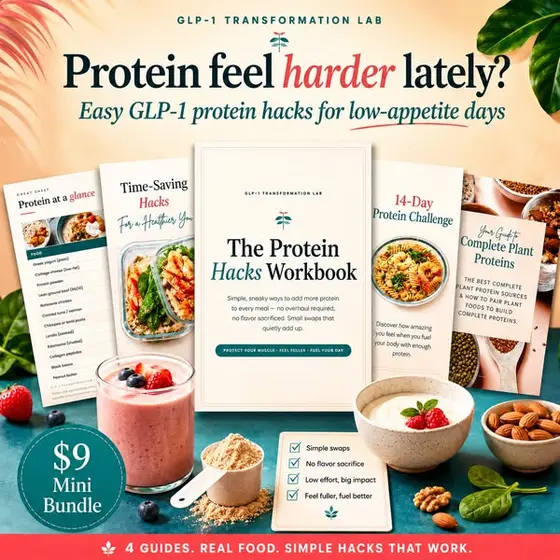
For GLP-1 users who know they need more protein… but eating more feels way harder than it used to. When your appetite is lower, meals are smaller, and food feels less exciting, hitting your protein goal can feel like one more thing to figure out. But protein still matters — especially when you’re losing weight and trying to support muscle, fullness, energy, and better body composition. That’s why I created the GLP-1 Protein Hacks Bundle. It’s a simple $9 digital bundle designed to help you add more protein in realistic, low-effort ways — without forcing huge meals, complicated recipes, or another overwhelming meal plan. Inside you’ll get: ✨The Protein Hacks Workbook Simple ways to add more protein to the meals and snacks you already eat. ✨ Protein at a Glance Cheat Sheet Quick protein ideas so you can stop guessing what actually adds up. ✨ Time-Saving Protein Hacks Easy grab-and-go ideas for busy days, low-energy days, and days when cooking is not happening. ✨14-Day Protein Challenge A simple way to build momentum and start making protein a daily habit. ✨ Complete Plant Protein Guide Plant-based protein options and how to pair foods to make them more complete. 🎉🎉 Bonus Smoothie Ideas for Low-Appetite Days Because sometimes drinking your protein feels easier than eating another meal. I’m Joanne — a personal trainer, nutrition coach, and someone who has personally used GLP-1s for my own weight loss and maintenance journey. I created this because I know how confusing it can feel when you’re eating less, but still trying to fuel your body well. This bundle helps make protein feel doable again. Grab the GLP-1 Protein Hacks Bundle for only $9.✨

InactiveJun 29, 26
Support stamina and heart health every day

track.tryrosabella.com

Support stamina and heart health every day

Learn more

I Caught My Reflection in a Bakery Window Last March and Didn't Recognize the Way I Was Standing. I want to share what I've been doing the last few months, because my sister asked me about it on the phone last week and I realized I'd never said it out loud to anyone. I'm 62. I went through menopause at 51. The hot flashes faded after a couple of years. The sleep got mostly normal again. For about seven or eight years after that, I thought I'd come out the other side. I was teaching full-time then. Elementary school. Third grade, mostly. The kind of work that doesn't let you sit down for long stretches and doesn't let you be tired in front of the kids. I retired at 60. I picked up a few hours a week tutoring kids in reading. It keeps me in the work without the exhaustion of a full classroom. My husband Steve and I have been married 38 years. Two grown kids. Three grandchildren — six, four, and almost two. That's the bio. That's not really what I came to tell you. What I came to tell you started somewhere around my fifty-eighth birthday. It wasn't anything dramatic. It was a slow drift. I started getting cold in rooms other people weren't cold in. I started reading two fewer pages of my novel before falling asleep at night. I started suggesting we take the elevator at the movie theater instead of the stairs to the upper level — the same stairs I'd taken without thinking about for thirty years. I started telling my daughter, when she asked me to come along to the playground with the grandkids, that maybe next time. It was small. It was so small I didn't really see it as a pattern. I just thought: I'm 58, then I'm 59, then I'm 60, and this is what those numbers feel like. Last March I was downtown picking up a birthday cake for my husband. It was a Tuesday morning, gray and cold. The kind of late-winter day when the sidewalk is still salt-stained from the last snow. I walked from where I'd parked to the bakery — three blocks. It used to be a quick walk for me. That morning it felt like work. The bakery is in an old brick building with a big plate-glass window facing the street. I stopped in front of it to read the menu. And I caught my own reflection in the glass. For about three seconds I didn't recognize the woman I was looking at. She was leaning forward a little at the shoulders. Her hand was on the door handle the way you'd put your hand on a railing — to steady yourself, not to open something. Her chin was tucked down toward her collarbone. She looked tired in a way I hadn't realized I'd started to look. I stood there in front of that bakery window for what felt like a long minute. I straightened up. I rolled my shoulders back. I lifted my chin. I looked at the reflection again. That was the woman I was used to seeing. The one I'd just been looking at — the woman who'd been standing on that sidewalk three seconds earlier — was someone else. Someone who had been quietly taking over the way I held my body and I hadn't noticed. I bought the birthday cake. I drove home. I didn't tell Steve about the bakery window. I sat with it for a few days. I started paying attention. I noticed I was bracing the kitchen counter with one hand when I bent to get a pan out of the lower cabinet. I noticed I was sitting down on the bench in our front hall to put my boots on instead of leaning against the wall the way I had for thirty years. I noticed I was asking Steve to bring the groceries in from the car. I noticed I'd stopped pushing the grandkids on the backyard swing because the standing-and-pushing made my legs ache. None of it was a problem. All of it was something. I went to my doctor. Dr. Okafor has been my doctor for about nine years. She's a careful, unhurried woman. She listens. I told her the bakery window story. I told her about the bracing and the bench and the swing. I told her I wasn't depressed. I wasn't unhappy. I wasn't dealing with anything in particular. I was just slower and quieter than I used to be, and I'd seen myself standing differently in a bakery window and it had unsettled me. She listened the whole way through. She ran a comprehensive workup — full lipid panel, thyroid, vitamin D, B12, iron, blood sugar, cardiac markers. A week later she called me herself. She said: "Your bloodwork is fine. Vitamin D is on the low end of normal. Everything else is right where I'd want it for a woman your age." Then she said something I've been thinking about ever since. She said: "Linda, a lot of what you're describing is what we see in women who are ten or twelve years post-menopause. The estrogen that supported your cardiovascular system for decades has been gone for a while now, and the body has been adjusting to that. For some women that adjustment is smooth. For others it's a stretch of years where they feel slower and quieter and colder than they used to. It's not a disease. It's not a deficiency. It's a chapter of the body's life that doesn't have a single prescription answer." She talked about the foundation. Movement — keep walking, add a little resistance work if I could. Sleep — protect it. Sunlight when I could get it. Social connection. A thoughtful approach to what I was putting in my body — more vegetables, more antioxidant-rich food, plenty of water. She said: "If you want to add one thoughtful thing supplementally, I won't argue with it. Just call the office first so we can check for interactions. And don't expect a switch to flip. Expect a foundation to slowly hold you a little better." I thanked her. I drove home thinking about the word foundation. I'm not someone who jumps into supplements. I've watched my sister buy a bag full of pills from every health-food store she's ever walked into, and a month later they're under her bathroom sink and she's onto the next thing. I wanted to add one thing. One thoughtful thing. I sat with it for a few weeks. I did some reading. About a month after the bakery window, I went to breakfast with my friend Constance at the diner we've been meeting at every other Saturday for almost twenty years. I told her about the bakery window. About the bracing. About the swing. She listened the way Constance listens, which is over a cup of coffee with both hands wrapped around the mug. When I was done she set her coffee down. She said: "I want to tell you something, but I want you to know I'm not selling anything and I'm not promising anything." I said okay. She said her sister-in-law — a woman in her late sixties who'd been through a similar stretch of years — had added a beetroot supplement to her morning about a year ago with her doctor's approval. Constance's sister-in-law said it was part of what had helped her come back to herself. Not the whole thing. Part of it. Constance said the brand was something called Rosabella. A small farming community out in Lancaster County. She said she wasn't telling me to try it. She was telling me it was a thing her sister-in-law had done and felt good about, and she thought of me when I described the bakery window. I asked her to text me the name. She did. I went home that afternoon and did some reading. What I learned was that beetroot has been studied for decades for cardiovascular wellness and for supporting the body's antioxidant systems. The active compound is something called betalains — that deep crimson red pigment that stains your cutting board when you slice a beet. Betalains are one of the more potent antioxidants in the food supply, and they have a particular affinity for the cardiovascular system. They support the body's natural antioxidant balance. They support healthy circulation. They're part of the family of plant compounds researchers have been studying for their role in supporting cardiovascular wellness during the years after menopause, when the body's natural support systems shift. Beetroot is a structure-function ingredient, not a medication. It supports healthy cholesterol levels already within the normal range. It supports healthy circulation. It doesn't replace anything else you're doing — it works alongside it. That last part is what made me comfortable. I wasn't going to replace anything Dr. Okafor had recommended. I was going to add one thing to what I was already doing. Before I ordered, I called Dr. Okafor's office. I told the nurse what I was thinking. Told her the brand. Told her the dose on the bottle. Told her the only thing I take is a daily multivitamin and a low-dose vitamin D capsule. She talked to Dr. Okafor and called me back the next day. She said it was a sensible thing to add. No interactions to worry about. Have me mention it at my next visit. I ordered the bottle. When it arrived, I noticed the color of the capsules before anything else. A deep, almost-purple red. The reading I'd done explained why — Rosabella cold-presses their beets at low temperatures, which takes longer but preserves more of the betalains. That deep color is the visible marker of the active compound being intact. I set the bottle on my kitchen counter next to the coffeemaker. The next morning I put one capsule on the saucer next to my mug and took it with my first sip. I'm not going to tell you something happened in seventeen minutes. I don't think these things work like a switch flipping. What I will tell you is what I noticed over the next couple of months. The first thing was small. I caught myself, about three weeks in, carrying both bags of groceries into the house from the car in one trip instead of two. I didn't decide to do it. I just did it. I was already standing on the porch with both bags before I realized I hadn't asked Steve to come help. The second thing was the bench in our front hall. I started putting my boots on standing up again. Leaning against the wall, the way I used to. I didn't realize I'd stopped using the bench until I stopped using it. The third thing was the swing. I was at my daughter's house in June for a Sunday afternoon and my six-year-old grandson asked me to push him on the swing. I pushed him for almost ten minutes. My legs didn't ache. I came inside and sat at my daughter's kitchen island and drank a glass of water and felt the kind of pleasant tiredness you feel when you've done something physical instead of the kind of bone-deep tiredness I'd gotten used to. About four months in, I caught my reflection in a different window. This one was the window of a flower shop on the same downtown street as the bakery. I was walking past it on a Saturday morning to pick up something for Steve. I stopped in front of the glass. I looked at the woman in the reflection. Her shoulders were back. Her chin was up. Her hand wasn't on a railing. She looked like me. I stood there for a second and I'll tell you the truth — my eyes filled up. I'd thought the woman I'd seen in the bakery window in March was the woman I was now. She wasn't. She'd been a woman who'd been quietly slipping for a few years and I'd let her, and I'd assumed she was the new normal. She wasn't the new normal. She was the bottom of a stretch I'd been in. I walked into the flower shop and bought a small bunch of tulips and walked back to my car and drove home and didn't say anything to Steve about it. Some things you keep for yourself for a while before you say them out loud. At my next appointment with Dr. Okafor, my bloodwork was the same as it had been in March. Good. Where she wanted it. She didn't change anything. She didn't put me on a prescription. She asked me how I'd been feeling. I told her. The groceries. The boots. The swing. The flower shop window. I mentioned the beetroot. Same brand, same dose, every morning. She nodded. She said it sounded like a reasonable addition and she was glad I'd called the office before I started it. She said: "Linda, whatever combination of things you've been doing — the walking, the supplement, paying closer attention to your sleep and your water and your vegetables — keep doing it. The foundation is holding you." That was about two months ago. I want to be careful about what I'm claiming. I don't know how much of my coming back is the beetroot. I don't know how much is the resistance work I started doing with two-pound dumbbells in my living room a few times a week. I don't know how much is the better attention I started paying to my water and my vegetables. I don't know how much is the fact that I finally told my doctor the truth about how I'd been feeling and stopped pretending it was nothing. It's probably all of it together. Bodies are different and lives are different and I can't tell you that what worked for me would work for anyone else. What I can tell you is what I did. I stopped explaining away what I was noticing about myself. I told my doctor. I let her run the bloodwork to rule out anything specific. I listened when she said the answer wasn't a prescription but a foundation. I added the things she asked me to add — sleep, movement, water, vegetables, one thoughtful supplemental thing. I called the office before I added the supplement. I waited for the doctor's approval. I added the supplement to what I was already doing — not in place of anything. If you've been in a similar stretch — you're a decade or so past menopause, your numbers are fine, your doctor is happy with you, and yet you've been slowly getting colder and quieter and more tired than you used to be — it might be worth a conversation. Not a prescription conversation. A foundation conversation. What are you protecting in your sleep? What movement are you doing? What are you putting in your body? Is there one thoughtful thing you'd want to add, with your doctor's input? That conversation is what got me here. Talk to your doctor or pharmacist before adding any new supplement, especially if you're on medication for blood pressure or cardiovascular health. That one phone call is what made me comfortable starting, and it's what I'd tell anyone else to do first. The brand I used is Rosabella. 1,300 milligrams per capsule, cold-pressed at low temperatures, grown in Lancaster County. One capsule with a glass of water in the morning. That's the whole thing. P.S. Constance and I had breakfast at the diner two weekends ago. I told her about the flower shop window. She didn't say anything for a few seconds. Then she said: "I'm glad. I wasn't sure if I should have told you about it at all that morning. I didn't want to push." I told her she hadn't pushed. She'd offered. There's a difference. The women I trust most in my life are the ones who know the difference. P.P.S. Rosabella has a 90-day money-back guarantee. If you're not satisfied for any reason, every penny back. No questions asked. I think that's a sensible policy for a supplement — it gives you time to actually see whether it does anything for you. I'd give it a few weeks at minimum. Bodies are different. Some people notice something within the first week or two. Others take longer. P.P.P.S. I keep an extra bottle in the house just in case. They're a small operation and the harvest is once a year, so the bottling can run on its own schedule. P.P.P.P.S. Here's what I'd tell you to do. Call your doctor's office first. Tell them exactly what you're thinking and exactly what you're on. Wait for the callback. If the doctor approves, put one capsule on the saucer next to your morning coffee mug. Don't change anything else without your doctor's input. Give it a few weeks before you decide anything. And in the meantime — protect your sleep. Drink your water. Walk. Lift something heavier than your coffee cup a few times a week. Stand up straight when you catch yourself in a window. The bottle isn't the whole foundation. It's one piece of it. P.P.P.P.P.S. My daughter had us over for dinner last Sunday. After we ate I went out to the backyard with my grandson and we kicked a soccer ball around for about twenty minutes. I was the goalie. He scored on me probably fifteen times. I was sweating and laughing and my hair was a mess. My daughter came to the back door at one point and watched us. When I came inside she didn't say anything. She just hugged me longer than usual. There are moments where the people who love you tell you they've noticed the difference without using any words. That was one of them. https://track.tryrosabella.com/feb71eaf-4594-4b50-b39e-f5e5eeea7537 Individual experiences vary. These statements have not been evaluated by the FDA. This product is not intended to diagnose, treat, cure, or prevent any disease.

InactiveJun 29, 26
My mother did everything her oncologist said. She died anyway 👉

gonaturalgoods.com

My mother did everything her oncologist said. She died anyway 👉

See details

I'm going to lose my f*cking mind if one more person tells their mother with breast cancer to "just do the chemo and stay positive" and thinks that's enough. Or tells their father with stage 3 colon cancer "the oncologist knows best, just trust the protocol." Or posts in one of these cancer support groups asking "what should I give my parents alongside treatment?" and gets 40 comments saying "turmeric" and "CBD oil" and "have them eat organic." YOU ARE NOT DOING ANYTHING WRONG. AND NEITHER WERE THEY. Chemotherapy is 30-40% effective for most solid tumors. That means 6 out of 10 times, it fails. Your mother did the chemo. Your father did the radiation. They're still progressing. They're still ending up in hospice. They're still dying. Because cancer cells have abnormal metabolism. And chemotherapy doesn't target that specifically. Nothing you've given them does. My name is Sarah Mitchell. I'm 48. I live in Arlington, Virginia. And my mother died in a hospice bed on September 14th because I did exactly what you're doing right now — I told her to trust her oncologist and do the chemo and I thought that was enough. It wasn't enough. She was 71. Linda Mitchell. Mom. Lived alone since my dad died in 2016. Called me every Sunday at 9 AM for 25 years. Got her mammogram every year. Ate organic. Took her vitamins. Did yoga. Did everything right. Everything everyone told her to do. And stage 3 breast cancer killed her in 11 months. Because none of it — not the chemo, not the radiation, not the organic food — targeted the cancer where it actually lives. The mitochondria. The cellular energy factory. The place where cancer cells produce energy differently than normal cells and chemotherapy barely touches. That "minor fatigue" your mother mentioned two months ago? That wasn't early stage. That was her immune system already failing. The cancer had been growing for months, maybe years. By the time the scan showed a 3.2cm tumor — the invasion was months old. And nothing you gave her was stopping it at the cellular level. I need you to understand this because I didn't understand it until my mother was unconscious on morphine with her hand going cold in mine while I whispered "I'm sorry" for things I didn't even know I should have done. Let me tell you what I did AFTER the funeral. I went to Whole Foods. I stood in the supplement aisle for 35 minutes. I read every label. I picked up every bottle. And I researched every single one. Turmeric. Curcumin. Nature Made. Life Extension. Anti-inflammatory. That's it. Reduces inflammation around cancer cells. Does not kill a single cancer cell. Not one. Not a fraction of one. My mother took 2,000mg daily and believed she was fighting cancer. She was reducing inflammation while cancer cells multiplied. CBD Oil. Full Spectrum. Broad Spectrum. Pain relief. Anxiety reduction. That's all. Does not target cancer metabolism. What it DOES do in people over 65: drowsiness. Interaction with medications. I gave this to my mother during treatment. She slept 16 hours a day and could barely stay awake when I visited. That's what CBD gave her. Essiac Tea. Four-herb formula. Alternative medicine staple. Beautiful marketing. Then clinical studies: no effect on tumor growth. My mother drank it three times daily for $48 per month. Her tumor went from 3.2cm to 4.8cm in three months. The tea did nothing while the cancer grew. Vitamin C. High-dose. Emergen-C. Immune support. Antioxidant. My mother was already on chemo. Her oncologist said high-dose vitamin C could interfere with treatment. But people recommend it in support groups every single day like it's harmless. To 70-year-olds on carboplatin. "Just take vitamin C." Green Tea Extract. EGCG. Resveratrol. Medicinal Mushrooms. Water pistols at a forest fire. My mother took them religiously. She was a $127-per-month customer at the supplement aisle. None of it touched the cancer where it actually metabolized energy. $127. That's what was on her counter and in her bathroom. $127 worth of supplements, all recommended by people like you and me, and not one — NOT ONE — targets cancer cell mitochondria at the point of energy production. I threw it all in the trash in the Whole Foods parking lot. A woman loading her car stared at me. I was holding a bottle of turmeric over a garbage can and crying in 38-degree weather and I'm sure she thought I was losing my mind. I was. My mother was dead because everyone told her the right things and all the right things were pointed at the wrong target. After six weeks of not sleeping, Maria called me. Maria Santos. My mother's hospice nurse. Three days a week. 39. From the Philippines. Loved my mother. Voice shaking when she spoke. "Miss Sarah. I have another patient. Mrs. Chen. 76. Stage 3 ovarian cancer. Her daughter started her on something last year. Not CBD. Not turmeric. Something called soursop extract. From Southeast Asia. Like what Filipino healers used for generations." She paused. "Her tumor markers dropped 60% in four months. Her oncologist called it 'unexpected response.' CA-125 went from 680 to 240. Four months. I've never seen that without chemo working perfectly." Then the sentence that broke me: "If I had known when Miss Linda was alive, I would have brought it to her myself every visit." I went home and I researched. Every cancer cell — breast, colon, lung, ovarian, the next one nobody's studying yet — has abnormal mitochondrial metabolism. It produces energy differently than normal cells. Relies on specific pathways. Chemo tries to kill all rapidly dividing cells. But it doesn't specifically target the metabolic abnormality. The mitochondria is the engine room. Nothing at Whole Foods shuts down the engine room. The chemo doesn't target it specifically. Turmeric doesn't target it. CBD doesn't target it. Vitamin C supports general immunity. Essiac tea does nothing. Green tea extract is a mild antioxidant. Every supplement I gave my mother was treating symptoms while the actual cancer metabolism ran unchecked. Then I found what acetogenins from soursop actually do. They're compounds found in soursop fruit. Used in Southeast Asian traditional medicine for generations. They inhibit Complex I in mitochondria — the exact pathway cancer cells depend on for energy production. Cancer cells can't produce energy. They die. Normal cells have metabolic flexibility. They adapt. They survive. Research from Johns Hopkins. Memorial Sloan Kettering. Published studies showing up to 76% growth inhibition in certain cancer cell lines. And nobody put it in a bottle for my mother. I called Dr. Ramirez. My mother's oncologist for 18 months. Long pause. "Sarah. Your mother's tumor had high metabolic activity on the PET scan. If there had been a compound specifically targeting mitochondrial Complex I — reducing cancer cell energy production while chemo worked — her immune system may have been able to control the disease better. She was strong for her age." Another pause. "There is a real possibility the outcome would have been different." A real possibility my mother would be alive. Because of a $59 extract that research has validated for decades and nobody told us. I went looking for it. Soursop supplements. I found 11 brands. I researched every one. Sent samples to an independent lab. Amazon Soursop Capsules: Powder-based. Heat-dried. Lab test showed 0.6% acetogenins. Label didn't even list a percentage. Worthless. Another supplement with marketing. Whole Foods Graviola: Low-concentration extract. Underdosed. Lab showed 1.2% acetogenins. Research requires 10-15% for therapeutic effect. Underdosed by 90%. GNC Soursop: No third-party testing. No certificate of analysis. Label said "graviola extract." No way to verify concentration. Could be anything. Amazon Brand A: Same. Mislabeled. One review said "this doesn't seem to do anything." Because it probably doesn't contain real acetogenins. NaturalHealth Soursop: Heat processing destroyed active compounds. Lab confirmed degraded acetogenins. Oxidized. Basically inert. VitaSoursop: Contamination. Heavy metals. Arsenic 4x safe limit. Generic health store brand: Fillers. Rice starch. Magnesium stearate blocking absorption. Ten products. Ten failures. Underdosed, contaminated, degraded, or not even real soursop extract. Then I found Go Natural. Skeptical. Obviously. After turmeric failed my mother. After CBD made her drowsy. After every supplement either did nothing or made things worse. But I ordered it. Cold-pressed liquid extract. Standardized to 15% acetogenins. The same concentration used in research studies. Third-party tested. Certificate of Analysis published. No heat processing. Preserved in amber glass. I stood in my kitchen and took it. Under my tongue. Waited for the bitterness. Waited for the burn. Waited for side effects. Nothing. Mild earthy taste. Gone in 30 seconds. No burn. No nausea. Nothing like the pills my mother choked down. Two dropperfuls. Three times daily. 30 seconds under the tongue. Eight weeks later my friend Karen called. Stage 3 breast cancer. 3.8cm tumor. ER-positive. Scheduled for chemo. Karen stood in my living room. "Sarah, are you sure? My oncologist said supplements interfere with treatment." I looked at her and I thought about my mother. She would have tried anything to avoid what chemo did to her body. Because that's what you do when you're fighting for your life. And she died because she trusted the protocol and nobody gave her something that actually targeted cancer metabolism. "Talk to your oncologist. Show them the research. But don't do what I did. Don't just accept that chemo alone is enough." Karen started Go Natural alongside her chemo. Two dropperfuls, three times daily. Three months later. Her tumor marker dropped from 185 to 48. PET scan showed 60% reduction in tumor size. Her oncologist said "excellent response to treatment." Karen finished chemo. Kept taking Go Natural. Two years later. No recurrence. Tumor markers normal. Same cancer type that killed my mother 18 months earlier. Different approach. The only difference: Karen targeted the mitochondria while chemo did its work. Maria uses it with her hospice patients now who are still trying. Works with families every day. Three patients have had "unexpected improvements" this year. Carol, my neighbor — 68, stage 2 colon cancer — was terrified of chemo. I gave her information about Go Natural. Six months later she called me crying. "Sarah, my CEA dropped from 98 to 23. My oncologist said I'm responding better than expected." Father Tom at St. Catherine's — 64, prostate cancer — "If Linda had known about this, she might still be calling you every Sunday." Karen takes it every day. Doesn't talk about Mom. That's her kindness. But she uses the extract. Every day. You don't need a prescription. You don't need your oncologist's permission to add immune support. Soursop extract is not a drug. It's a plant-based compound that's been researched for decades and reformulated to pharmaceutical-grade standards. If she'd known. But don't buy random soursop supplements from Amazon or Whole Foods. I tested 11 brands. 10 were underdosed, contaminated, degraded, or not even real soursop. The only one that passed every test — the only one I trust — is Go Natural. Cold-pressed. Standardized to 15% acetogenins. Third-party tested. Certificate of Analysis available. Right now, they're running a Buy 2 Get 1 Free deal—three bottles for $59. 90-day money-back guarantee. Free shipping. 👉 https://gonaturalgoods.com/products/organic-soursop-extract-1 If you are the person telling your mother to "just do the chemo and stay positive." If you are the person recommending turmeric in a support group. If you are the person who thinks CBD oil is protecting your 70-year-old father's immune system. You are doing what I did. You are treating inflammation. The cancer metabolism is running unchecked. $59 for three bottles. The turmeric your mother takes costs $22 and it's 0% effective against cancer cells. The Whole Foods aisle cost her $127 and none of it targets mitochondria. The chemo costs $150,000. The hospice cost $12,000. The funeral cost $9,200. $59. Start today. Not after the next scan. Not after you "talk to the oncologist." Today. Because cancer cells are multiplying right now with abnormal metabolism that chemo alone may not stop. Every day you wait is a day the mitochondria keep producing energy for cancer growth. Sarah Mitchell 48, Arlington, VA P.S. — My mother did everything right. Mammograms every year. Organic food. Yoga. Vitamins. Trusted her oncologist completely. She died in hospice 11 months after diagnosis with her hand going cold in mine while I apologized for things I didn't know I should have done. The extract costs $59 for three bottles. She spent more than that on turmeric that prevented nothing. If your parent has cancer — if your mother says "the chemo is working" — send them this. Don't do what I did. Don't wait. P.P.S. — I tested 11 soursop brands. 10 failed — underdosed (0.6-1.2% instead of 15%), contaminated with arsenic, heat-destroyed, or not even real soursop. Amazon brands had no third-party testing. Whole Foods brand was 90% underdosed. The only brand that passed: Go Natural. Cold-pressed, 15% acetogenins, third-party tested, pharmaceutical-grade. I researched this for six months after my mother died. Karen uses it. Maria recommends it. Carol uses it. Father Tom uses it. Only buy from: https://gonaturalgoods.com/products/organic-soursop-extract-1

Track Blood Pressure Secrets and get alerts for new ads

Create a free account to follow brands, save ads and search the full library.